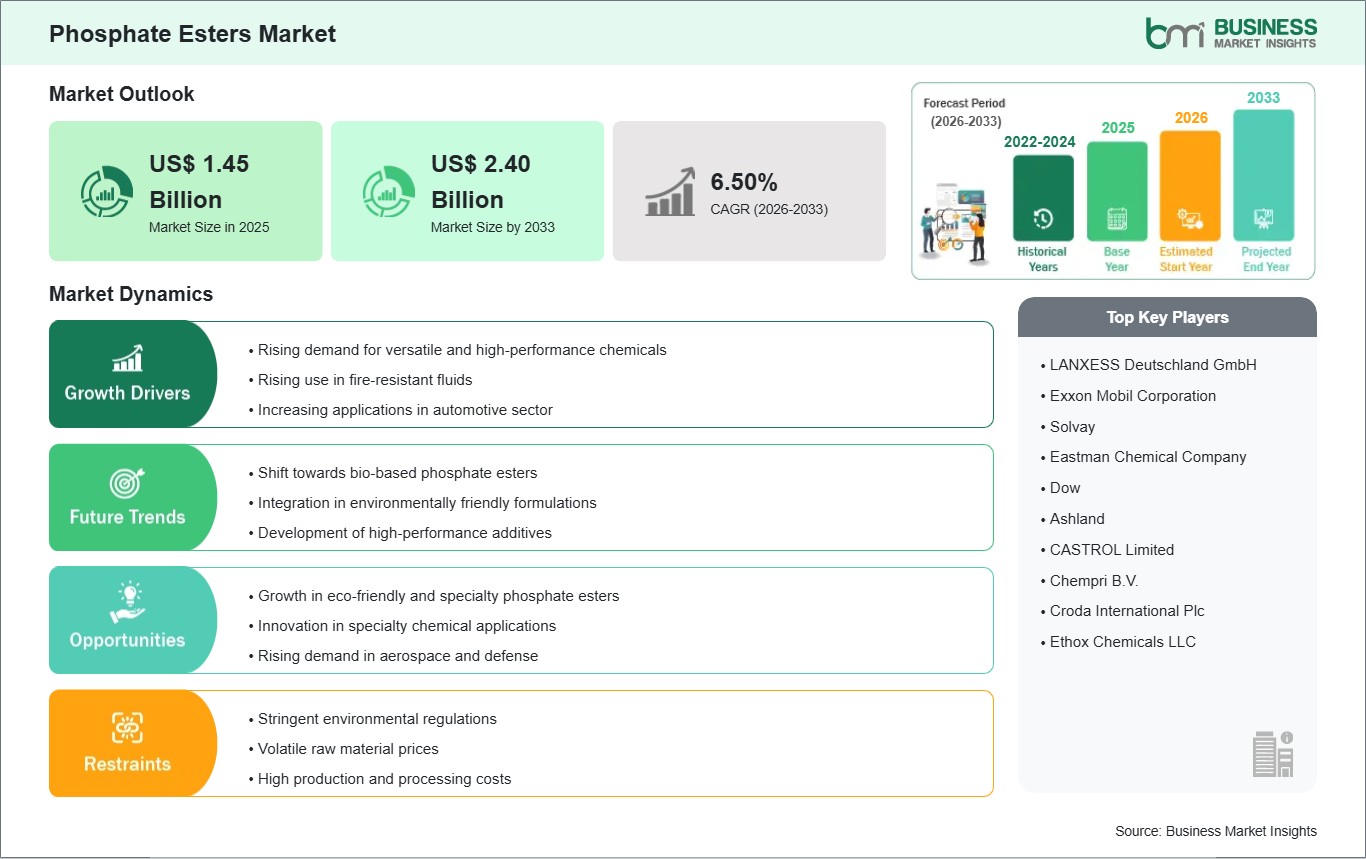
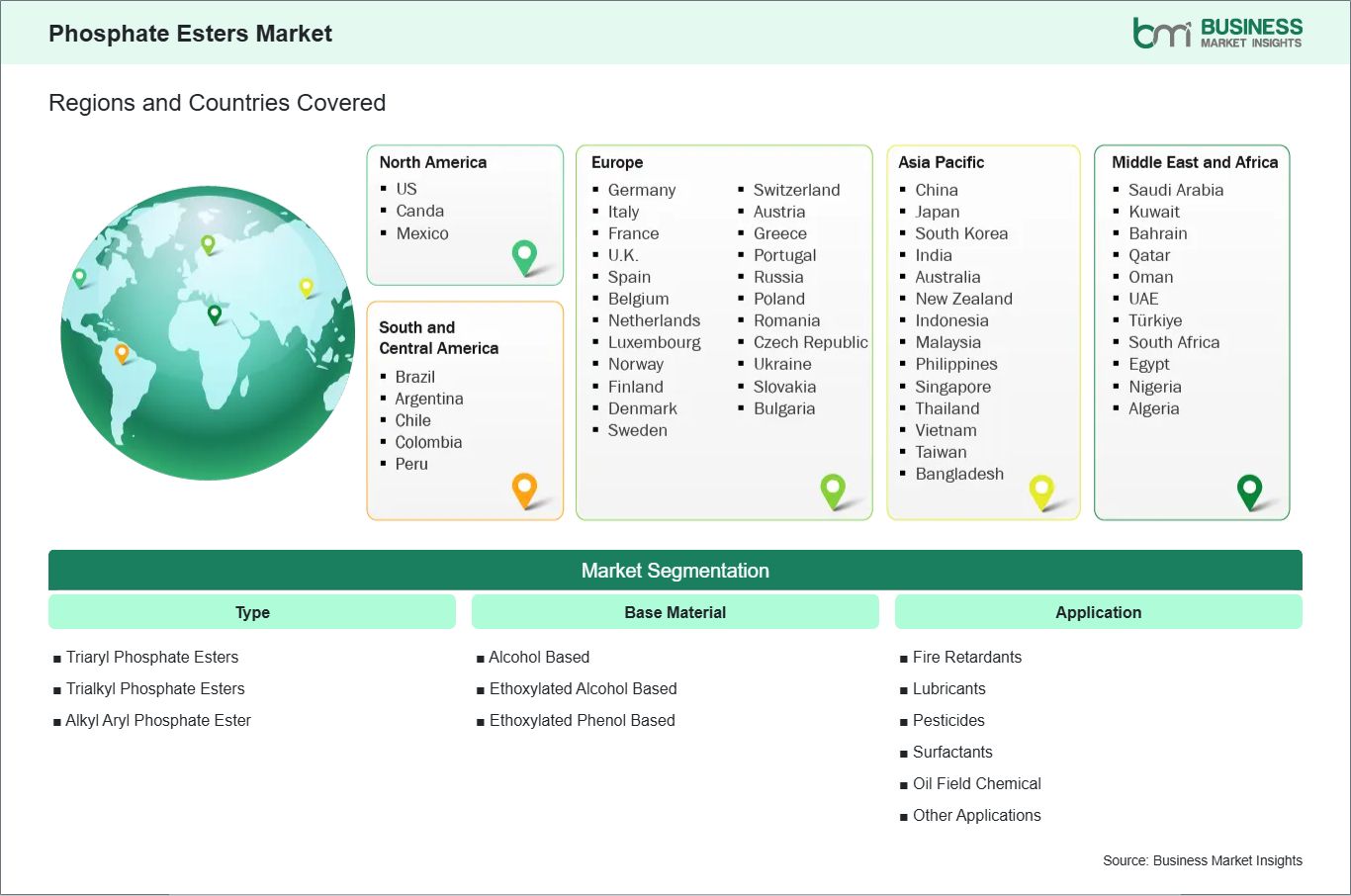
The geographical scope of the Phosphate Esters Market report is divided into North America, Asia Pacific, Europe, Middle East & Africa, and South & Central America. North America held the largest share in 2025.
Regional-level dynamics in the phosphate esters market reveal distinct demand patterns shaped by industrial development, regulatory frameworks, and sector-specific requirements.
North America is the dominant market, driven by a large industrial base, advanced aerospace and automotive sectors, and strict regulatory compliance. The United States and Canada demonstrate significant demand for fire-resistant hydraulic fluids, anti-wear additives, and flame-retardant formulations. Sustainability initiatives and safety regulations further reinforce the use of environmentally compliant phosphate esters.
Europe represents a mature and sustainability-focused market, with Germany, France, and Italy emphasizing low-toxicity, biodegradable, and halogen-free formulations. Stringent REACH regulations and industrial safety standards drive adoption in automotive, aerospace, and electronics applications, while demand for multifunctional esters continues to grow.
Asia Pacific is witnessing rapid growth, led by China, India, and Japan, driven by expanding industrialization, automotive production, and electronics manufacturing. Rising awareness of fire safety, equipment protection, and environmental compliance is encouraging adoption of high-performance and eco-friendly phosphate esters. Local production capabilities and R&D investments support both volume and technical requirements.
Middle East & Africa is an emerging market where growing infrastructure development, oil & gas, and industrial machinery sectors are increasing demand for fire-resistant and lubricity-enhancing esters. Adoption is concentrated in regions with advanced industrial and petrochemical operations.
South & Central America shows steady growth, particularly in Brazil and Argentina, fueled by industrialization, automotive manufacturing, and infrastructure projects. Cost sensitivity influences adoption, but increasing awareness of equipment efficiency, safety, and sustainability is gradually driving demand for high-performance phosphate esters.