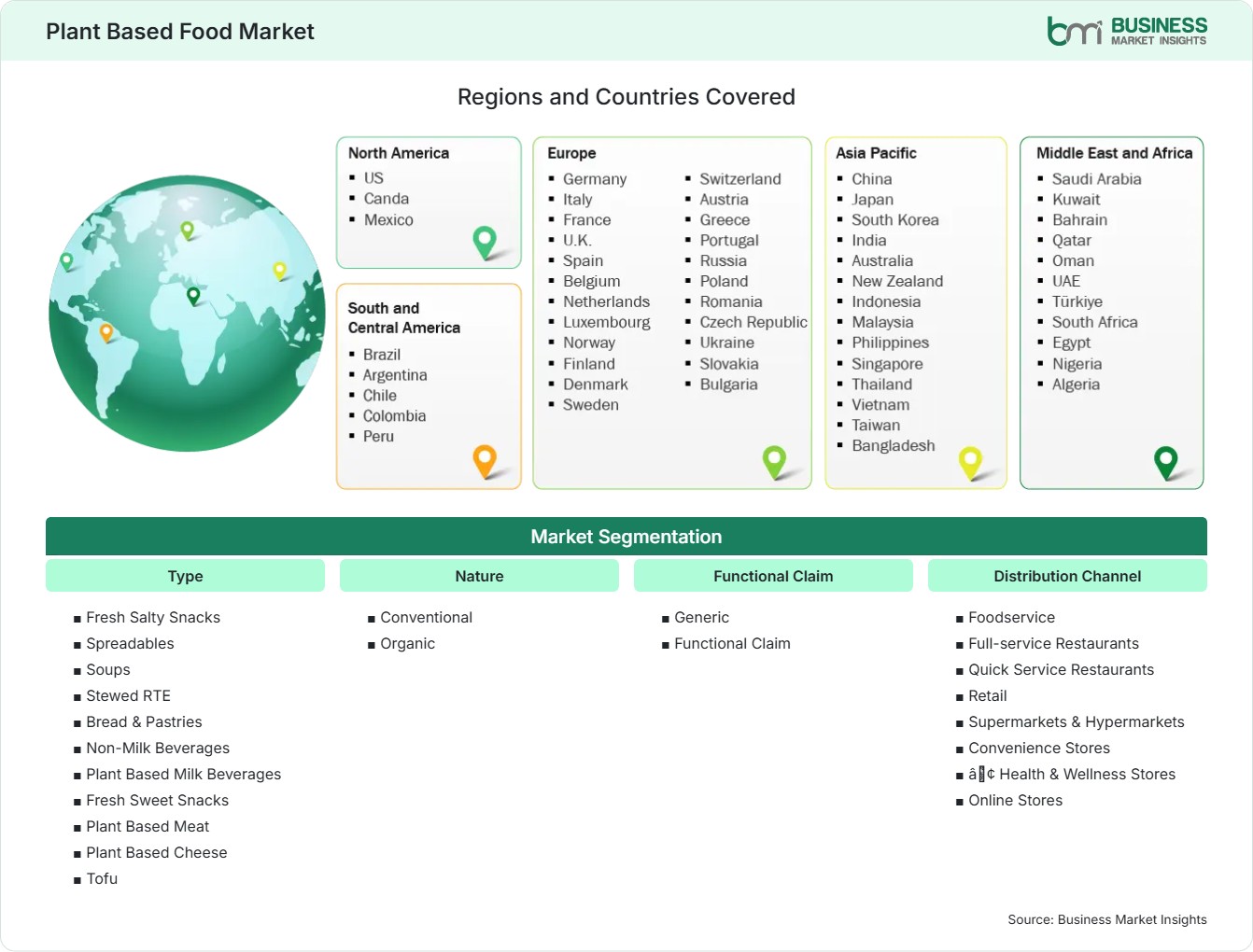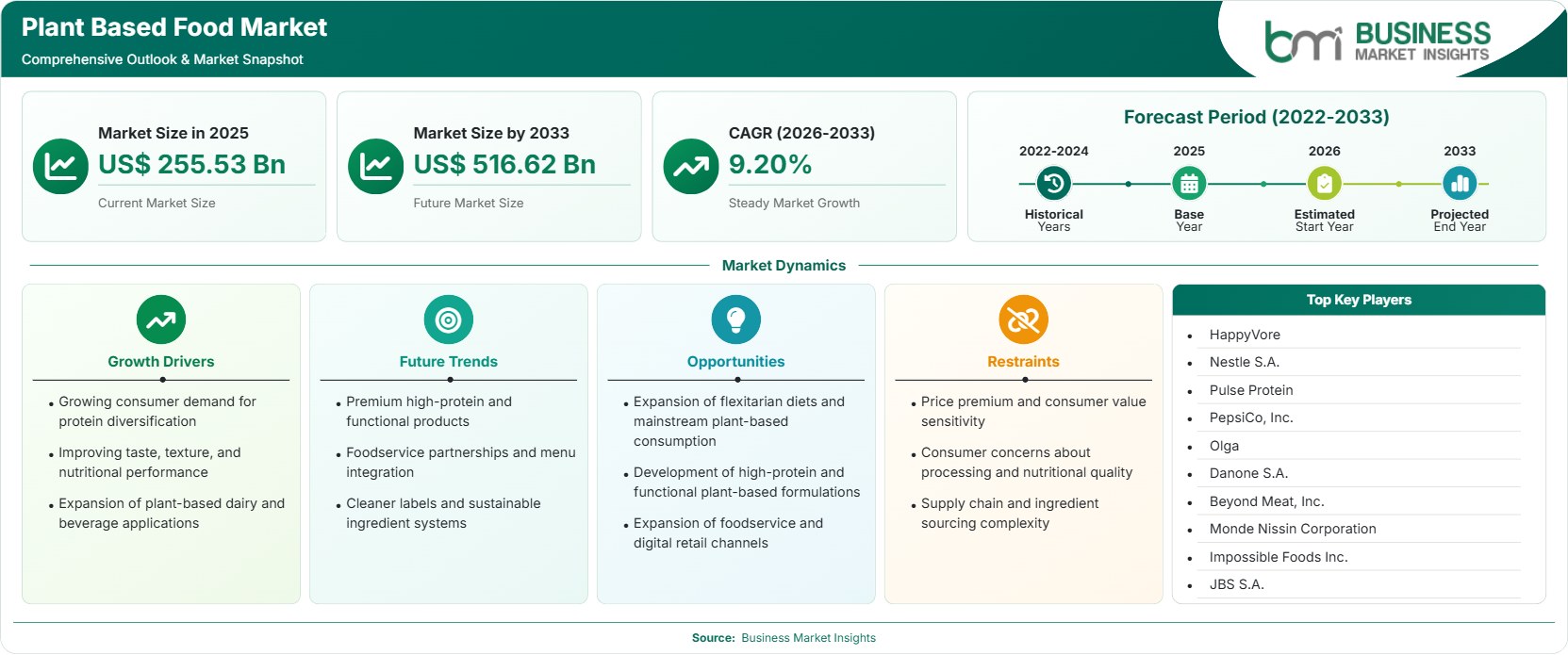
Plant Based Food Market Regional Highlights
North America Plant Based Food Market
North America captured a 32%-36% market share in 2025 and is expected to grow at an 8.0%-8.6% CAGR between 2026-2033. Outside studies project a 32.70% regional share in 2025. North America has mature supermarket retail channels, existing alternative protein brands, non-dairy drinks, convenience foods, and foodservice distribution. Premium products still play a role, yet affordability and nutrition are increasingly factors for repeat purchases in the Plant Based Food Market report.
- Plant-based beverages benefit from extensive supermarket penetration, established refrigerated distribution, coffee applications, and consumer familiarity with oat, almond, soy, coconut, and other dairy alternatives.
- Meat alternatives remain widely available through grocery and foodservice channels, while manufacturers increasingly focus on texture, protein density, ingredient simplicity, and competitive pricing.
- Retailers provide substantial shelf exposure through private labels and dedicated wellness categories, increasing consumer trial and supporting broader product comparison across competing brands.
- Foodservice operators increasingly use plant-based ingredients for menu diversification, dietary flexibility, and sustainability positioning, although taste, price, and operational consistency remain critical.
US Plant Based Food Market
The U.S. represented approximately 88%–90% of North American demand in 2025 and is modeled at a 7.8%–8.4% CAGR of the Plant Based Food Market during 2026–2033. Demand is supported by established alternative-protein brands, non-dairy beverages, health-oriented consumers, convenience retail, and foodservice experimentation. Competitive pressure is increasingly encouraging manufacturers to improve nutrition, ingredient transparency, affordability, and sensory quality rather than relying solely on sustainability messaging.
- Oat, almond, soy, and other non-dairy beverages remain important because they integrate easily into coffee, breakfast, cooking, and everyday household consumption occasions.
- Protein innovation is broadening beyond burgers into drinks, snacks, chicken alternatives, breakfast products, and functional foods, increasing the number of consumption occasions.
- Retailers are emphasizing value and clean-label positioning as consumers compare plant-based products directly with conventional foods on price, ingredients, nutrition, and taste.
Europe Plant Based Food Market
Europe held around 28%-30% of the Plant Based Food market share in 2025 and is forecast to have a CAGR of 8.1%-8.7% during 2026-2033. Europe enjoys an advantage in mature plant-based brands, flexitarian eating habits, food labeling regulations, and high supermarket penetration. Markets like Germany, the U.K., France, and the Netherlands remain important, while France and Germany offer potential for dairy products, prepared foods, bakery products, and meat substitutes.
- Germany has been gaining from vegetarians' and flexitarians' consumption habits, established retail chains, private labeling, and increasing demand for inexpensive plant-based proteins.
- France has chances in plant-based dairy, bakery, ready meals, and premium foods, where local tastes affect product formulation and positioning.
- The U.K. continues to be an important market for plant-based milk, meat analogs, prepared foods, and foodservice items due to existing knowledge about alternative proteins.
- Increasingly, European food makers focus on using organic ingredients, nutrition, ingredient labels, recyclable packaging, and smaller environmental impacts in developing new products.
Asia Pacific Plant Based Food Market
Asia Pacific held approximately a 24%–26% share in 2025 and is modeled at a 10.0%–10.7% CAGR of the Plant Based Food Market during 2026–2033, making it the fastest-growing region. External volume research estimates Asia Pacific at 24.38% in 2025. China, India, Japan, Australia, and Southeast Asia provide diverse demand opportunities because traditional plant proteins intersect with modern convenience foods and Western-style alternatives.
- China provides strong opportunities through established soy consumption, expanding urban foodservice, modern retail, and rising interest in alternative protein formats.
- India combines traditional pulse consumption, expanding organized food retail, vegetarian dietary patterns, and increasing demand for convenient protein-rich packaged foods.
- Japan supports premium plant-based beverages, prepared foods, tofu innovations, and functional products through sophisticated food manufacturing and health-oriented consumer segments.
- Southeast Asia offers expansion potential as modern retail, food delivery, urban lifestyles, and Western-style plant-based products gain wider consumer exposure.
Rest of World Plant Based Food Market
The Rest of World had a 10%-12% share in 2025 and is estimated to have a CAGR of 8.0%-8.7% in 2026-2033. South America benefits from agricultural assets, growth in the food manufacturing industry, and urban consumption, while the Middle East and Africa have potential in modern retail and wellness foods.
Brazil continues to be a significant regional market for Plant-Based Food, while Mexico, Argentina, the UAE, and Saudi Arabia offer market opportunities through food services, packaged food, premium retail, and shifts in dietary preferences.
- Brazil is endowed with abundant agricultural produce, a well-established food processing industry, and consumer awareness of soy, beans, plant proteins, and alternative food ingredients.
- Mexico offers opportunities in modern grocery retail, modern processed foods, and the food service segment, with increasing consumer interest in healthier protein alternatives.
- UAE offers opportunities for high-quality imported food products, wellness products, hospitality services, and international retail formats catering to wealthy and health-aware consumers.
- Saudi Arabia offers opportunities in food service modernization, retail investments, wellness offerings, and national initiatives to develop local food production.