
Pelvic Organ Prolapse Repair Market Outlook: Size, Share, Trends, Growth Analysis, Competitive Landscape & Forecast, 2026-2033

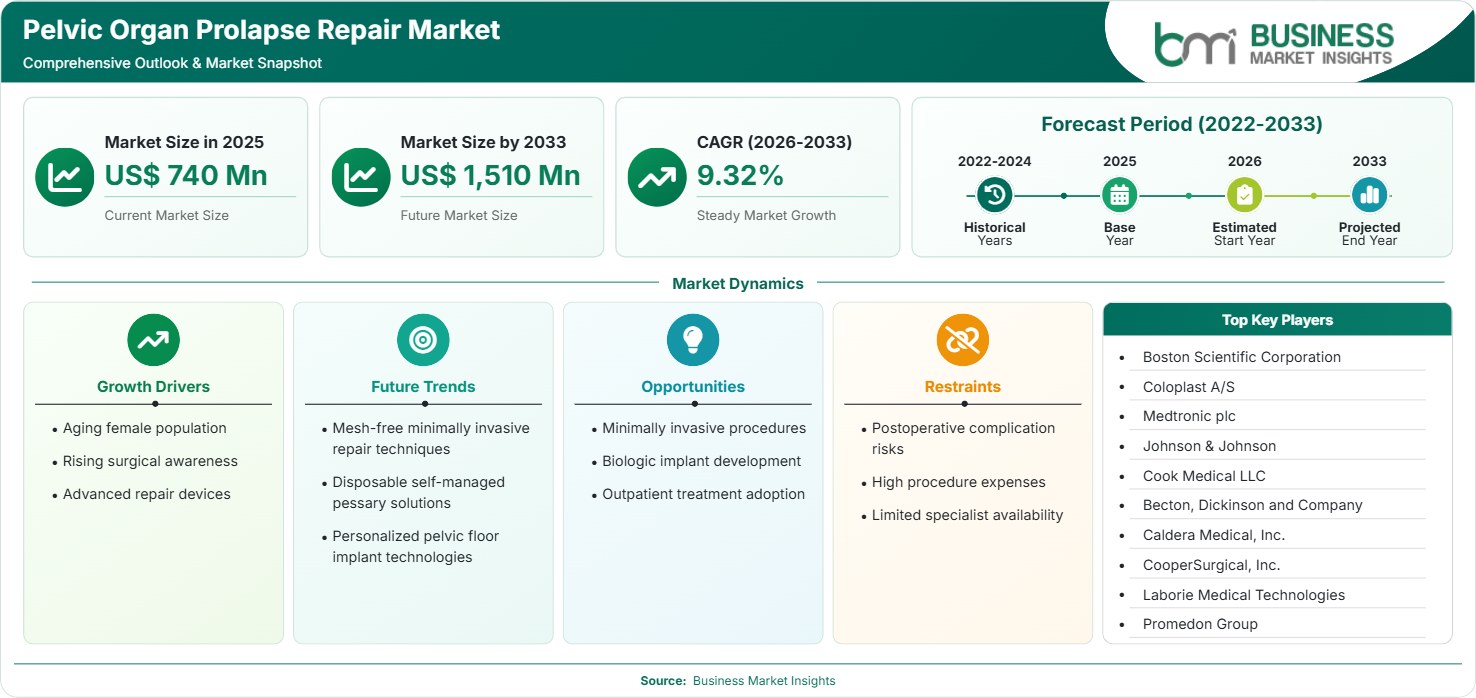
The Pelvic Organ Prolapse Repair Market size was valued at US$ 0.74 billion in 2025 and is projected to reach US$ 1.51 billion by 2033, growing at a CAGR of 9.32% during 2026–2033. Market expansion is driven by rising prevalence of pelvic floor disorders among aging women, increasing awareness of treatment options, technological advancements in repair devices, and growing adoption of minimally invasive procedures.

Report Coverage
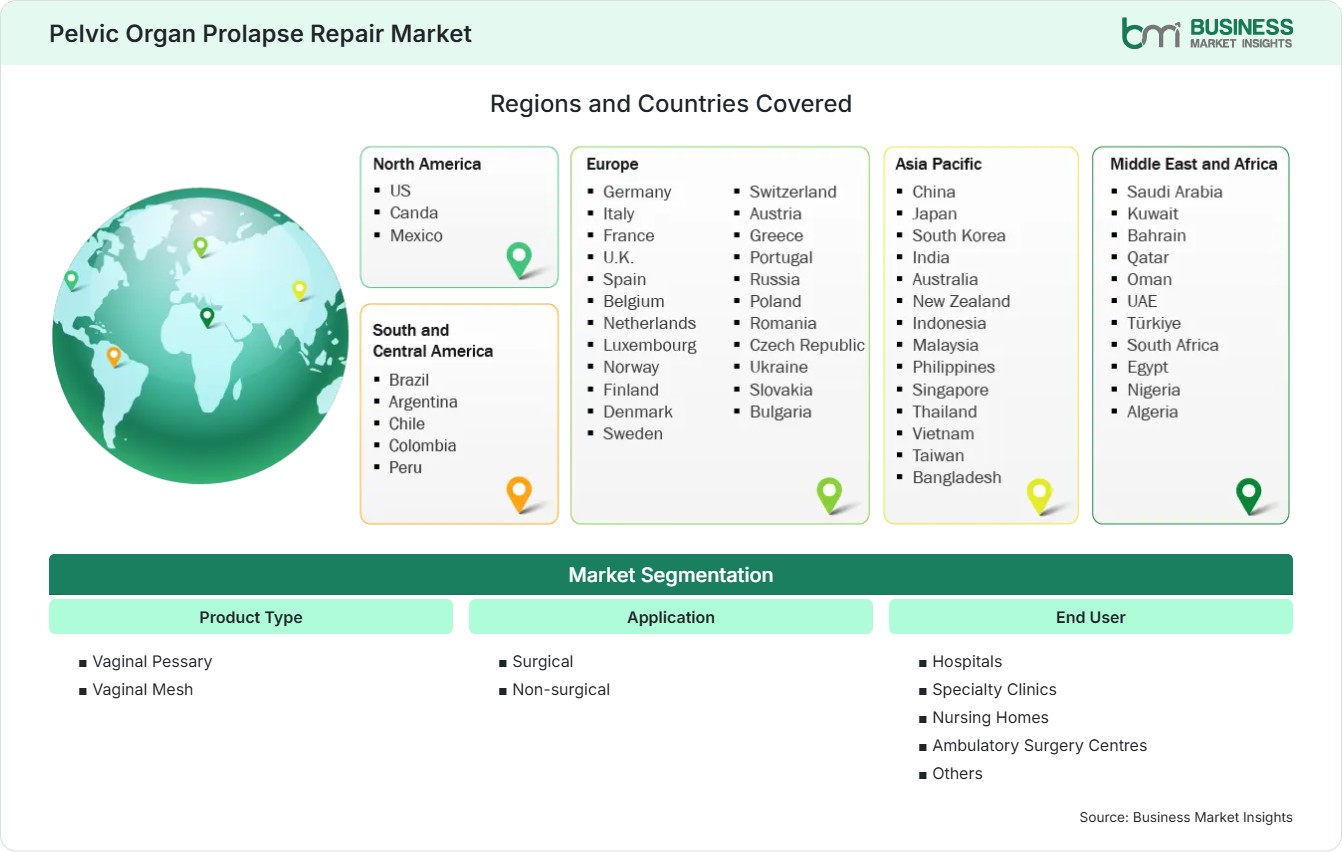
  • Product Type: Vaginal Pessary, Vaginal Mesh
  • Application: Surgical, Non-surgical
  • End User: Hospitals, Specialty Clinics, Nursing Homes, Ambulatory Surgery Centres, Others
US$ 740 Mn Market size in 2025
US$ 1,510 Mn Market Size by 2033
9.32% CAGR, 2026 - 2033
2026-2033 Forecast Period

AI Overview

Pelvic Organ Prolapse Repair Market Summary

  • North America Region: North America holds 38%–41% pelvic organ prolapse repair market share in 2025, expanding at a 9%–11% CAGR during 2026–2033. Growth is supported by advanced healthcare infrastructure, high adoption of urogynecological procedures, favorable reimbursement systems, and increasing demand for innovative pelvic repair technologies. The U.S. market is supported by specialist availability, surgical advancements, and increasing diagnosis rates, with growth projected at 9%–10% CAGR through 2033.
  • Fastest Growing Region: Asia Pacific represents 21%–24% share in 2025 and is expected to grow at a 10%–12% CAGR during 2026–2033. Rising healthcare expenditure, improving gynecological care access, increasing awareness of pelvic disorders, and expanding medical device adoption are strengthening regional opportunities.
  • Leading Segment: Surgical application accounts for 65%–68% share in 2025 and is projected to grow at a 9%–10% CAGR during 2026–2033. Increasing preference for corrective procedures, improved surgical outcomes, and adoption of advanced repair devices support segment dominance.
  • High Growth Segment: Vaginal pessary products are estimated to represent 32%–35% share in 2025 while growing at a 10%–11% CAGR through 2033. Demand is increasing due to non-invasive management preferences, cost advantages, and suitability for elderly patients.
  • Key Market Opportunity: Expansion of minimally invasive repair techniques, development of biologic implants, and increasing outpatient treatment adoption are creating opportunities for manufacturers to improve patient outcomes and broaden access to pelvic organ prolapse therapies.
  • Major Market Players: Boston Scientific Corporation, Coloplast A/S, Medtronic plc, Johnson & Johnson, Cook Medical LLC, Becton, Dickinson and Company, Caldera Medical, Inc., CooperSurgical, Inc., Laborie Medical Technologies, Promedon Group.
Strategic Insights

Pelvic Organ Prolapse Repair Market: Strategic Insights

Pelvic Organ Prolapse Repair Market Strategic Framework
FREE PDF
Request your free sample
Request free sample
Stakeholder View

Key Takeaways

  • The market ecosystem is shifting toward patient-specific treatment strategies, combining surgical repair devices, conservative therapies, and improved diagnostic approaches to address varying severity levels of pelvic organ prolapse.
  • Surgical procedures remain the primary revenue contributor, but non-surgical management options are gaining importance among elderly patients and individuals seeking lower-risk treatment alternatives.
  • Device innovation is increasingly focused on biocompatible materials, improved fixation mechanisms, reduced tissue response, and technologies designed to minimize postoperative complications.
  • Emerging healthcare markets across Asia Pacific and Latin America present growth opportunities due to improving women’s healthcare infrastructure, increasing medical awareness, and expanding specialist networks.
  • Competitive strategies are increasingly centered on product innovation, clinical evidence generation, regulatory approvals, and partnerships with hospitals and specialized healthcare providers.
  • Outpatient care models are becoming strategically important as healthcare systems seek cost-efficient treatment pathways with shorter recovery periods and improved patient convenience.
Geographic Outlook

Pelvic Organ Prolapse Repair Market Regional Highlights

North America Pelvic Organ Prolapse Repair Market

North America accounted for 38%–41% share in 2025 and is projected to grow at a 9%–11% CAGR from 2026–2033. The region maintains leadership due to established urogynecology practices, advanced healthcare infrastructure, and strong adoption of innovative repair devices. Increasing diagnosis rates among aging women and rising awareness regarding pelvic floor disorders continue supporting market expansion across hospitals and specialty care facilities.

  • Advanced healthcare systems support early diagnosis and treatment adoption through specialized urogynecology departments and established clinical pathways.
  • Increasing preference for minimally invasive procedures is encouraging adoption of advanced repair solutions with improved recovery outcomes and reduced hospitalization requirements.
  • Strong reimbursement frameworks and healthcare spending enable broader access to surgical interventions and innovative pelvic repair technologies.
  • Leading medical device manufacturers are investing in clinical research and product improvements to strengthen regional market competitiveness.

US Pelvic Organ Prolapse Repair Market

The U.S. market represented 32%–35% share in 2025 and is expected to expand at a 9%–10% CAGR between 2026–2033. Growth is supported by rising awareness of women’s pelvic health, increasing specialist availability, and continuous improvements in surgical treatment approaches. The country remains a major innovation hub due to strong medical device presence and adoption of advanced healthcare technologies.

  • Growing aging female population is increasing demand for diagnosis, conservative management, and surgical repair procedures.
  • Hospitals and specialty clinics are expanding urogynecology services to address increasing patient volumes and treatment requirements.
  • Medical device companies are strengthening product portfolios through clinical studies focused on safety and long-term effectiveness.

Europe Pelvic Organ Prolapse Repair Market

Europe held 27%–30% share in 2025 and is forecast to expand at a 8%–10% CAGR during 2026–2033. The region benefits from established healthcare systems, increasing focus on women’s health, and growing demand for effective pelvic disorder management. Germany, the United Kingdom, France, and Italy represent major markets, with Germany and the United Kingdom showing strong adoption of advanced repair procedures.

  • Germany benefits from advanced medical infrastructure, specialist availability, and strong adoption of innovative gynecological treatment technologies.
  • The United Kingdom is increasing focus on women’s health services and improving access to pelvic floor disorder management programs.
  • France is supporting market development through healthcare modernization and growing awareness of minimally invasive procedures.
  • Italy is experiencing increased demand due to aging demographics and rising healthcare utilization among older women.

Asia Pacific Pelvic Organ Prolapse Repair Market

Asia Pacific represented 21%–24% share in 2025 and is projected to achieve a 10%–12% CAGR from 2026–2033, making it the fastest-growing regional market. Increasing healthcare expenditure, improving diagnostic access, and rising awareness of pelvic health conditions are driving adoption. China, Japan, India, South Korea, and Australia represent important growth markets.

  • China is expanding healthcare access and increasing adoption of advanced gynecological procedures across urban hospitals and specialty centers.
  • India offers growth opportunities through improving women’s healthcare infrastructure, increasing medical awareness, and expanding specialist networks.
  • Japan’s aging population is creating sustained demand for pelvic floor disorder diagnosis and treatment solutions.
  • South Korea and Australia are adopting advanced surgical technologies supported by modern healthcare facilities and physician expertise.

Rest of World Pelvic Organ Prolapse Repair Market

Rest of World accounted for 8%–10% share in 2025 and is expected to grow at a 8%–10% CAGR during 2026–2033. Latin America, the Middle East, and Africa are gradually expanding during pelvic organ prolapse repair market forecasts, due to improving healthcare access, increasing awareness of women’s health issues, and investments in specialized medical services.

Brazil, Mexico, the UAE, and South Africa represent emerging opportunities as healthcare systems improve.

  • Brazil is witnessing increasing demand for gynecological procedures due to expanding healthcare access and growing awareness of pelvic disorders.
  • Mexico is benefiting from increasing private healthcare investment and improving availability of specialized treatment services.
  • The UAE is strengthening women’s healthcare infrastructure through advanced hospitals and medical technology adoption.
  • South Africa is developing opportunities through improved access to specialized healthcare services and diagnostic capabilities.
  • Emerging markets continue attracting medical device companies seeking long-term growth through healthcare modernization initiatives.
Global Market Geography
FREE PDF
Request your free sample
Request free sample
Segment Analysis

Pelvic Organ Prolapse Repair Market Segmentation

Product Type

The Product Type segment represents a core component of the market, driven by increasing demand for both conservative and implant-based treatment approaches. The segment accounted for approximately 100% share in 2025 and is projected to grow at a 9%–10% CAGR from 2026–2033. Adoption is influenced by patient condition severity, physician preference, clinical outcomes, and advancements in repair material technologies, supporting pelvic organ prolapse repair market growth.

  • Vaginal Pessary: Vaginal pessaries are widely used for non-surgical prolapse management, offering cost-effective treatment, suitability for elderly patients, and improved symptom control without invasive procedures.
  • Vaginal Mesh: Vaginal mesh products support surgical repair procedures by providing structural reinforcement, although adoption is increasingly influenced by safety evaluations and regulatory considerations.

Application

The Application segment plays an important role in shaping treatment pathways within the Pelvic Organ Prolapse Repair Market. The segment accounted for approximately 100% share in 2025 and is expected to expand at a 9%–10% CAGR from 2026–2033. Increasing diagnosis rates, rising treatment awareness, and improvements in repair technologies are supporting both surgical and non-surgical management approaches across healthcare settings.

  • Surgical: Surgical treatment remains the leading application due to increasing demand for corrective procedures, improved surgical techniques, advanced devices, and better long-term management outcomes.
  • Non-surgical: Non-surgical approaches are gaining adoption among patients seeking conservative management through pessaries, pelvic floor therapy, and lower-risk treatment options.

End User

The End User segment reflects increasing utilization of pelvic organ prolapse treatments across diverse healthcare facilities. The segment is supported by growing availability of specialized services, expanding outpatient treatment models, and increasing patient access to women’s healthcare. Hospitals remain the dominant users, while specialty clinics and ambulatory surgery centres are gaining importance due to cost-efficient treatment delivery and improved patient convenience.

  • Hospitals: Hospitals represent major treatment centers due to advanced surgical capabilities, availability of specialists, and access to comprehensive diagnostic and postoperative care services.
  • Speciality Clinics: Speciality clinics are expanding due to focused urogynecology expertise, personalized treatment approaches, and increasing preference for dedicated women’s health services.
  • Nursing Homes: Nursing homes utilize conservative management options, particularly for elderly patients requiring symptom management and non-invasive prolapse treatment solutions.
  • Ambulatory Surgery Centres: Ambulatory surgery centres are gaining traction through shorter procedures, reduced healthcare costs, and increasing adoption of outpatient surgical pathways.
  • Others: Other healthcare facilities contribute through supportive care services, rehabilitation programs, and localized treatment access for patients requiring pelvic health management.
Market Forces

Pelvic Organ Prolapse Repair Market Dynamics

Key Market Drivers

Aging Female Population Increasing Treatment Demand

The aging female population is a key driving factor of the Pelvic Organ Prolapse Repair Market as the incidence rate of pelvic floor disorders increases with increasing age. The increase in life expectancy and better access to healthcare facilities have resulted in more diagnoses among postmenopausal females. As per the statistics provided by the World Health Organization, there will be an increase in the number of aged populations around the globe, which would create more demand for healthcare services related to aging.

Rising Awareness of Surgical Treatment Options

Rising awareness of pelvic organ prolapse among both patients and health practitioners will promote the growth of this market. Increasing knowledge of gynecological facts, women’s health programs, and specific health care services is likely to prompt more patients to consider treatment. Awareness of surgical treatments is rising, as doctors are becoming increasingly aware of modern repair techniques that have improved procedure outcomes and patient-tailored approaches to treatment. Educational programs and awareness campaigns on pelvic health issues are making treatments more timely.

Advancement of Pelvic Repair Device Technologies

Technical improvements in repair device technology will enhance treatment opportunities for pelvic organ prolapse and facilitate the use of such treatments. Companies are working on developing better implant technology, new fixation technology, and devices that are meant to facilitate the process of anatomical restoration. Scientists are trying to develop technology that would improve biocompatibility, reduce complications, and increase the efficiency of treatment. Technological advancements in this area will increase doctors' confidence in advanced treatment methods. It will help to promote further market growth by treating a larger number of cases of pelvic prolapse.

Key Market Opportunities

Expansion of Minimally Invasive Treatment Procedures

The growing trend towards less invasive operations creates considerable market opportunities for companies involved in the development of advanced techniques of pelvic repair. There is an increasing demand on treatment options, which offer patients fast recoveries, fewer procedures, and better comfort. New developments in the field of surgery, imaging, and special equipment make the interventions more accurate. Healthcare institutions are encouraging the use of less invasive operations in order to enhance their efficiency and reduce the cost of hospitalizations.

Development of Advanced Biologic Implant Solutions

The development of biologic implants offers a promising area as developers pay attention to enhancing biocompatibility and minimizing problems related to surgery with synthetic implants. Research into new generation materials is conducted to achieve better integration and results from the repair procedure. There is an increasing interest in individualized treatments that stimulates development in this sphere. Companies that are involved in R&D programs, material science expertise, and clinical validations will be able to capitalize on opportunities that arise from healthcare professionals' demand for safer treatment of pelvic organ prolapse.

Growing Adoption of Outpatient Treatment Models

The transition towards the uptake of outpatient treatment is opening up numerous possibilities for healthcare professionals and medical equipment manufacturers. In fact, ambulatory surgery centers and specialty centers have been gaining significant importance due to their reduced cost of treatment, reduced recovery time, and greater convenience for patients. Modern health care systems are striving to deliver efficient care services, which ensure high-quality treatment without excessive expenditures. Pelvic repair operations, which can be performed in an outpatient setting, might become more popular due to the advancement of treatment protocols.

Market Restraints and Challenges

Postoperative Complication Risks Affecting Adoption

Factor: Postoperative complications, including implant-related concerns, infection risks, tissue reactions, and recurrence issues, remain significant challenges influencing treatment decisions. Regulatory agencies and healthcare providers continue evaluating device safety profiles to improve patient outcomes.

Impact: Concerns regarding complications can affect physician preference, patient confidence, and adoption of certain repair technologies. Manufacturers must invest in clinical research, improved device design, and long-term safety monitoring to address these concerns. Enhanced patient selection criteria and improved surgical training are also important factors in reducing complication risks and supporting continued market development.

High Procedure Expenses Limiting Patient Access

Factor: High costs associated with surgical procedures, advanced devices, hospitalization, and postoperative care create affordability challenges in several healthcare markets. Specialized equipment and skilled healthcare professionals contribute to overall treatment expenses.

Impact: Higher procedure costs may delay intervention, particularly in regions with limited reimbursement coverage or restricted healthcare access. Cost considerations can influence treatment selection between surgical and conservative approaches. Expanding insurance coverage, improving healthcare infrastructure, and developing cost-effective repair solutions will be important strategies for increasing accessibility and supporting broader adoption of pelvic organ prolapse treatments.

Company Analysis

Competitive Landscape

The Pelvic Organ Prolapse Repair Market analysis highlights a competitive environment driven by medical device manufacturers, women’s health specialists, and healthcare technology companies focused on improving treatment outcomes. Key players are investing in advanced implant materials, minimally invasive solutions, clinical research, regulatory approvals, and strategic partnerships with hospitals and specialty care providers. Competitive differentiation is influenced by product safety profiles, physician adoption, technological innovation, and geographic expansion strategies.

Company Name

Overview

Products and Services relevant to this market

Boston Scientific Corporation

Global medical technology company providing solutions across women’s health and minimally invasive procedures.

Pelvic floor repair products, surgical devices, women’s health technologies, and urogynaecology solutions.

Coloplast A/S

Danish healthcare company specializing in intimate healthcare and surgical solutions.

Pelvic organ prolapses repair products, surgical implants, continence solutions, and women’s health devices.

Medtronic plc

Global medical technology leader offering advanced surgical and therapeutic healthcare solutions.

Pelvic repair technologies, surgical instruments, minimally invasive solutions, and gynecological devices.

Johnson & Johnson

Diversified healthcare company with extensive medical device and surgical technology operations.

Surgical products, women’s health solutions, medical technologies, and procedural support systems.

Cook Medical LLC

Medical device manufacturer specializing in minimally invasive healthcare technologies.

Gynecological devices, pelvic repair solutions, surgical instruments, and minimally invasive products.

Becton, Dickinson and Company

Global healthcare technology company focused on medical devices and procedural solutions.

Surgical products, procedural devices, infection prevention solutions, and healthcare technologies.

Caldera Medical, Inc.

Women’s health device company focused on innovative pelvic floor repair solutions.

Pelvic organ prolapses repair devices, surgical mesh technologies, and women’s health products.

CooperSurgical, Inc.

Healthcare company specializing in fertility, diagnostics, and women’s health solutions.

Gynecological products, surgical devices, pelvic health solutions, and clinical support technologies.

Laborie Medical Technologies

Medical technology company focused on diagnostic and therapeutic solutions.

Pelvic floor diagnostics, urogynecology equipment, treatment technologies, and healthcare solutions.

Promedon Group

Medical device company specializing in surgical solutions for women’s health and urology.

Pelvic floor repair implants, surgical mesh products, and reconstructive surgery solutions.

Industry Activity

Recent Developments

February 2026

AMBER Research Centre (Trinity College Dublin) received funding under the Research Ireland Innovating in Health and Wellbeing Challenge for the SMART-Sling project, supporting the development of an innovative solution for treating female pelvic organ prolapse through next-generation medical technology.

January 2026

CooperSurgical received U.S. FDA 510(k) clearance for its Milex Incontinence Dish Pessaries and Milex Cube Pessaries, expanding its portfolio of non-surgical pelvic organ prolapse treatment solutions for conditions including cystocele, rectocele, and Stage III prolapse.

July 2025

FEMSelect launched EnPlace, an FDA-cleared minimally invasive device for same-day pelvic organ prolapse repair that preserves the uterus, requires no hospital stay, and enables patients to resume normal activities within days, providing an advanced treatment option for women with pelvic floor disorders.

June 2025

Escala Medical secured US$4.5 million in funding led by the EIC Fund to expand U.S. commercial operations and support European market entry for its Mendit pelvic organ prolapse repair device, which enables outpatient procedures without tissue incision or dissection.

Trust & Transparency

Research Methodology

The market analysis combines proprietary research with secondary data from government agencies, company disclosures, regulatory filings, industry databases and expert interviews. Market estimates are validated through data triangulation, cross-market benchmarking and analyst review.

View Full Research Methodology

Questions Answered

Frequently Asked Questions

What does the Pelvic Organ Prolapse Repair Market Report include?

The market report includes market sizing, segmentation analysis, regional trends, competitive landscape, growth factors, challenges, opportunities, and future industry outlook through 2033.

How are outpatient healthcare models influencing treatment adoption?

Outpatient treatment models are improving access by enabling efficient procedures, reducing hospitalization requirements, and supporting cost-effective care delivery through ambulatory surgery centres and specialty clinics.

Why are biologic implants considered an emerging opportunity?

Biologic implants are being explored due to their potential for improved tissue compatibility, reduced adverse responses, and enhanced long-term outcomes compared with certain conventional repair materials.

Which treatment approach is gaining attention in pelvic organ prolapse management?

Minimally invasive procedures are gaining attention because they can support shorter recovery periods, reduced procedural burden, and improved patient convenience compared with traditional approaches.

What is driving demand in the Pelvic Organ Prolapse Repair Market?

Demand is increasing due to aging female populations, rising awareness of pelvic floor disorders, improved diagnosis rates, and growing availability of advanced surgical and non-surgical treatment options.

Access the Full Pelvic Organ Prolapse Repair Market Report

Get segment-level forecasts, regional estimates, competitive benchmarking, company profiles and downloadable Excel datasets.

Access the full Pelvic Organ Prolapse Repair Market Report
350 pages PDF & Excel | 2026-07-31
Similar Research

Related Market Reports