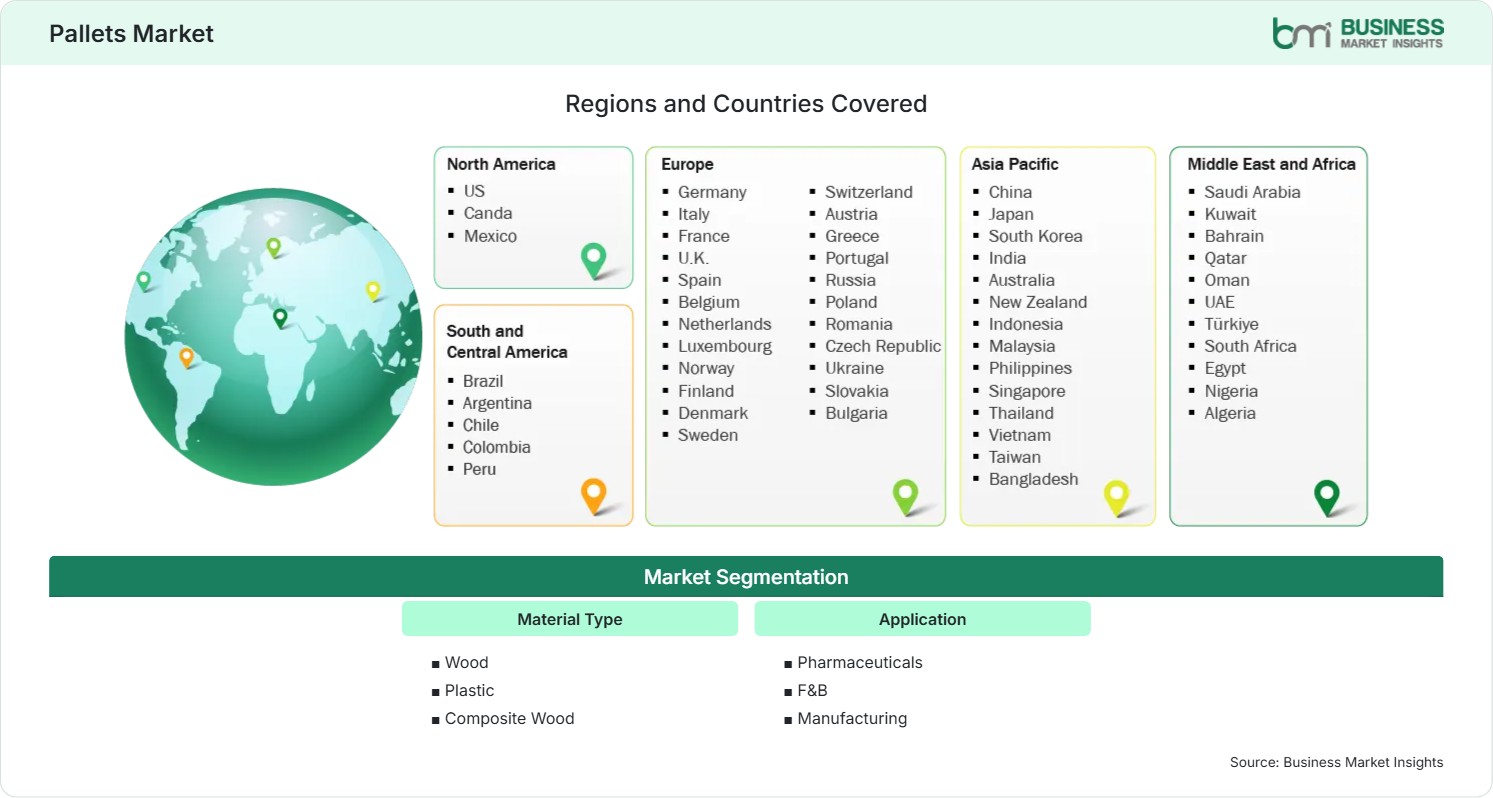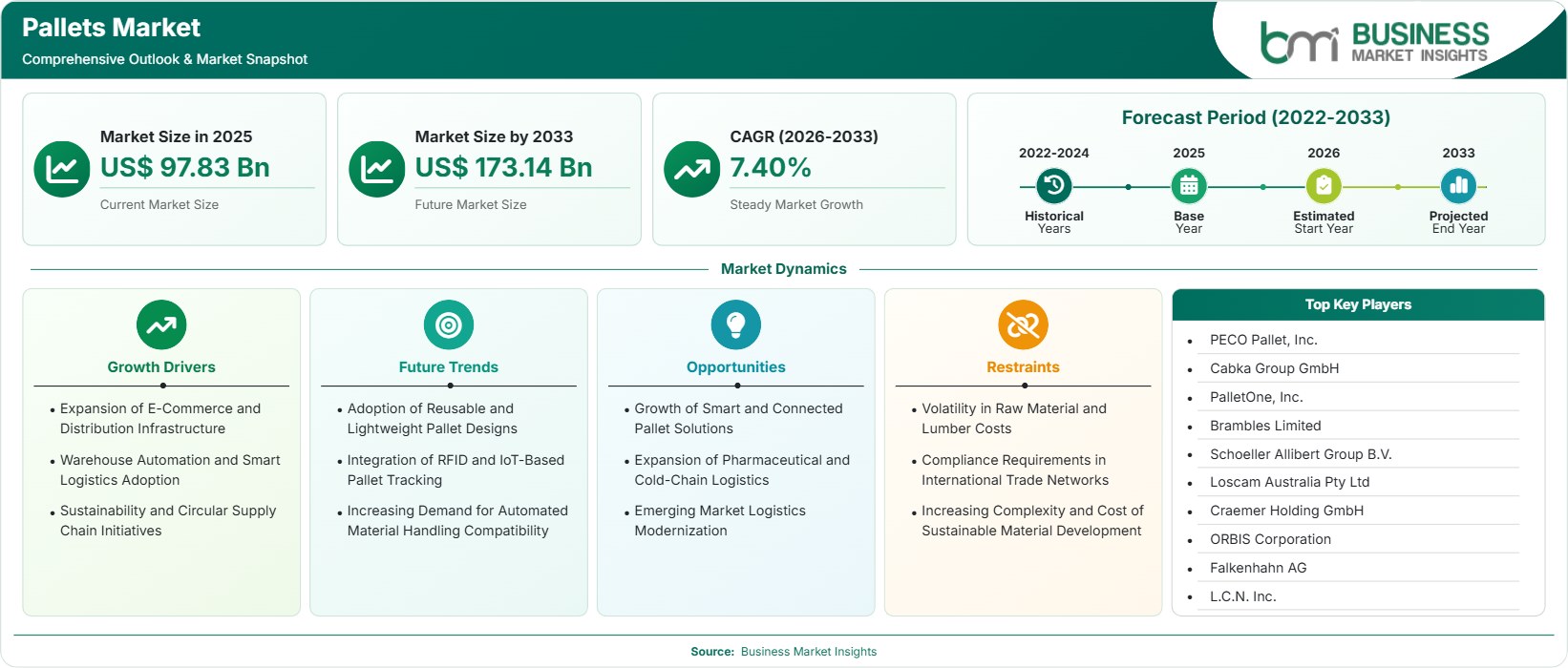
Pallets Market Regional Highlights
North America Pallets Market
North America accounted for approximately 36%–39% of global revenue in 2025 and is projected to register a CAGR of 6.8%–7.4% through 2033. The region benefits from mature logistics infrastructure, high pallet pooling penetration, and advanced warehousing operations. Strong retail distribution networks and increasing automation investments continue supporting demand across multiple end-use sectors. Pallets Market share remains highest in North America due to extensive freight movement, established supply chain ecosystems, and continuous investments in warehouse modernization and transportation efficiency initiatives.
- High adoption of pallet pooling systems improves asset utilization, reduces operational costs, and supports sustainable logistics practices across major industries.
- Warehouse automation projects are increasing demand for standardized, durable pallet solutions compatible with automated storage and retrieval systems.
- Growing e-commerce fulfillment activity continues expanding pallet requirements across regional distribution centers and transportation hubs.
- Sustainability initiatives are encouraging greater adoption of reusable and recyclable pallet materials throughout industrial supply chains.
- Investments in logistics technology and digital tracking systems are improving inventory visibility and operational efficiency.
US Pallets Market
The United States represented approximately 76%–80% of North American revenue in 2025 and is anticipated to grow at a CAGR of 6.9%–7.5% through 2033. The country maintains a highly developed freight transportation system supported by extensive warehousing and distribution infrastructure. Strong industrial production, retail activity, and e-commerce expansion continue supporting pallet demand. The U.S. remains a leading adopter of pooling models, asset tracking technologies, and sustainable logistics practices that improve pallet utilization rates and supply chain performance.
- Retail distribution networks and omnichannel fulfillment strategies continue increasing demand for efficient material handling platforms.
- Investments in cold-chain logistics are supporting pallet consumption across pharmaceutical and food transportation applications.
- Growing adoption of automation technologies is encouraging use of uniform pallet specifications compatible with robotic handling systems.
- Sustainability targets are driving interest in repairable, reusable, and recyclable pallet solutions across major industries.
Europe Pallets Market
Europe Pallets Market held approximately 27%–30% of global revenue in 2025 and is forecast to expand at a CAGR of 6.6%–7.2% during 2026–2033. The region benefits from established manufacturing industries, strong export activity, and widespread adoption of standardized pallet systems. Germany leads regional demand, while Poland and other Central European countries are demonstrating higher growth rates due to expanding manufacturing and logistics sectors. Environmental regulations and circular economy initiatives continue encouraging adoption of reusable pallet solutions and sustainable material handling practices.
- Germany remains the largest regional market supported by advanced manufacturing output and extensive logistics infrastructure.
- France and the United Kingdom continue witnessing stable demand from retail, food, and industrial supply chains.
- Circular economy policies encourage pallet repair, recycling, and reuse, supporting sustainable logistics operations.
- Expansion of cross-border trade within Europe strengthens demand for standardized transportation platforms.
- Central European countries are attracting logistics investments due to strategic geographic positioning and industrial growth.
Asia Pacific Pallets Market
Asia Pacific accounted for approximately 25%–28% of global revenue in 2025 and is projected to achieve a CAGR of 8.4%–9.1% through 2033, making it the fastest-growing regional market. Manufacturing expansion, export growth, and logistics infrastructure development are strengthening demand across the region. China remains the largest contributor, while India and Southeast Asian economies demonstrate strong momentum. Pallets Market growth in Asia Pacific is further supported by increasing warehouse construction, organized retail expansion, and supply chain modernization initiatives.
- China continues leading regional demand due to its large manufacturing base and extensive domestic logistics network.
- India is witnessing rapid adoption supported by industrial expansion, e-commerce growth, and logistics infrastructure investments.
- Rising export-oriented production is increasing requirements for efficient transportation and material handling systems.
- Modern warehousing developments are encouraging adoption of standardized and reusable pallet solutions.
- Growth in organized retail networks is expanding pallet demand throughout distribution and fulfillment operations.
Rest of World Pallets Market
The Rest of World region accounted for approximately 8%–11% of global revenue in 2025 and is expected to grow at a CAGR of 7.1%–7.8% through 2033. South and Central America benefit from expanding industrial activity and agricultural exports. Meanwhile, Middle East and Africa markets are experiencing increased investments in logistics infrastructure and distribution capabilities. Brazil remains the leading market in Latin America, while Gulf Cooperation Council countries demonstrate strong growth potential due to trade diversification and logistics modernization initiatives.
- Brazil continues driving regional demand through industrial production growth and expanding export logistics activities.
- Mexico is benefiting from nearshoring trends and increasing manufacturing investments supporting material handling requirements.
- Gulf Cooperation Council countries are investing heavily in logistics hubs, warehouses, and transportation infrastructure.
- Expanding trade corridors across Africa are creating new opportunities for pallet suppliers and pooling operators.
- Supply chain modernization initiatives are increasing demand for durable and reusable logistics assets across emerging economies.