
Pain Management Devices Market Outlook: Size, Share, Trends, Growth Analysis, Competitive Landscape & Forecast, 2026-2033

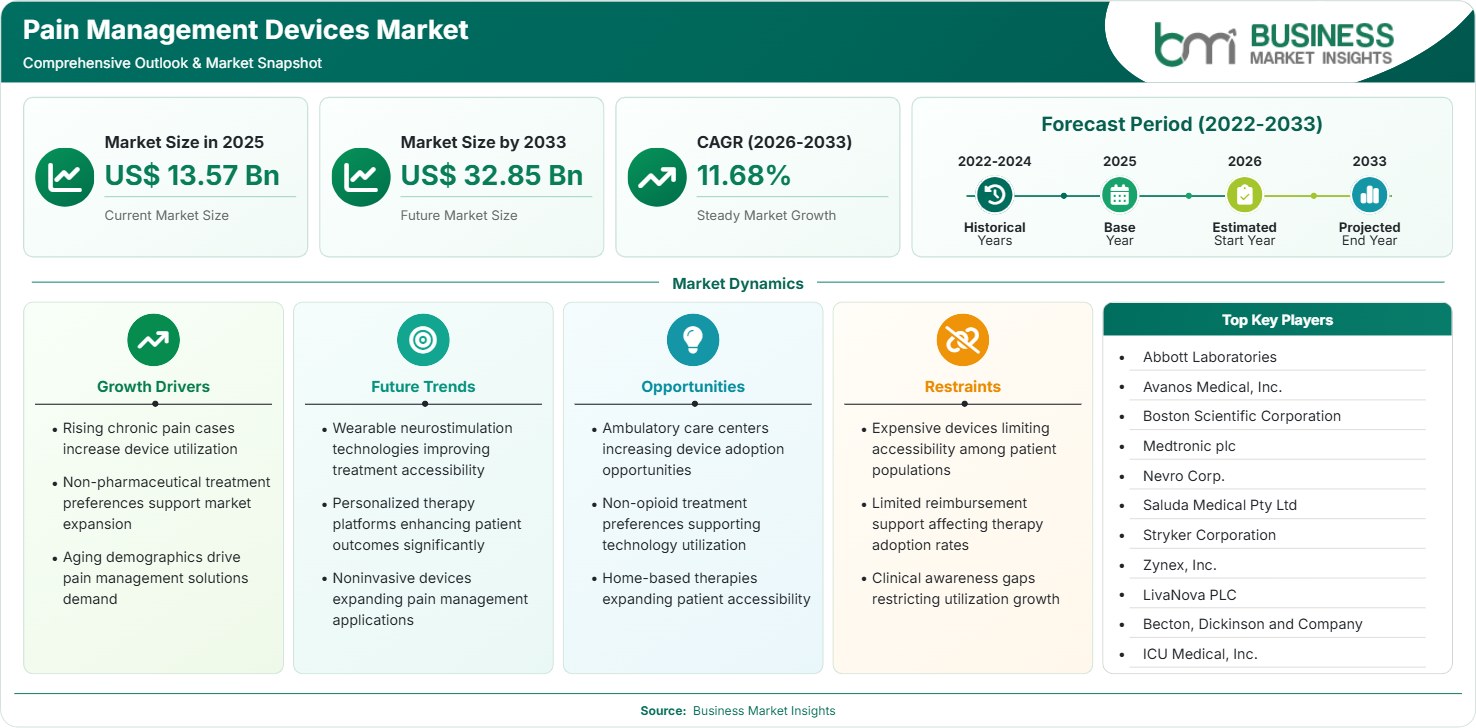
The Pain Management Devices Market size was valued at US$ 13.57 Billion in 2025 and is projected to reach US$ 32.85 Billion by 2033, growing at a CAGR of 11.68% during 2026–2033, driven by chronic pain prevalence, neuromodulation innovation, minimally invasive procedures, and opportunities in personalized therapies and emerging healthcare markets.

Report Coverage
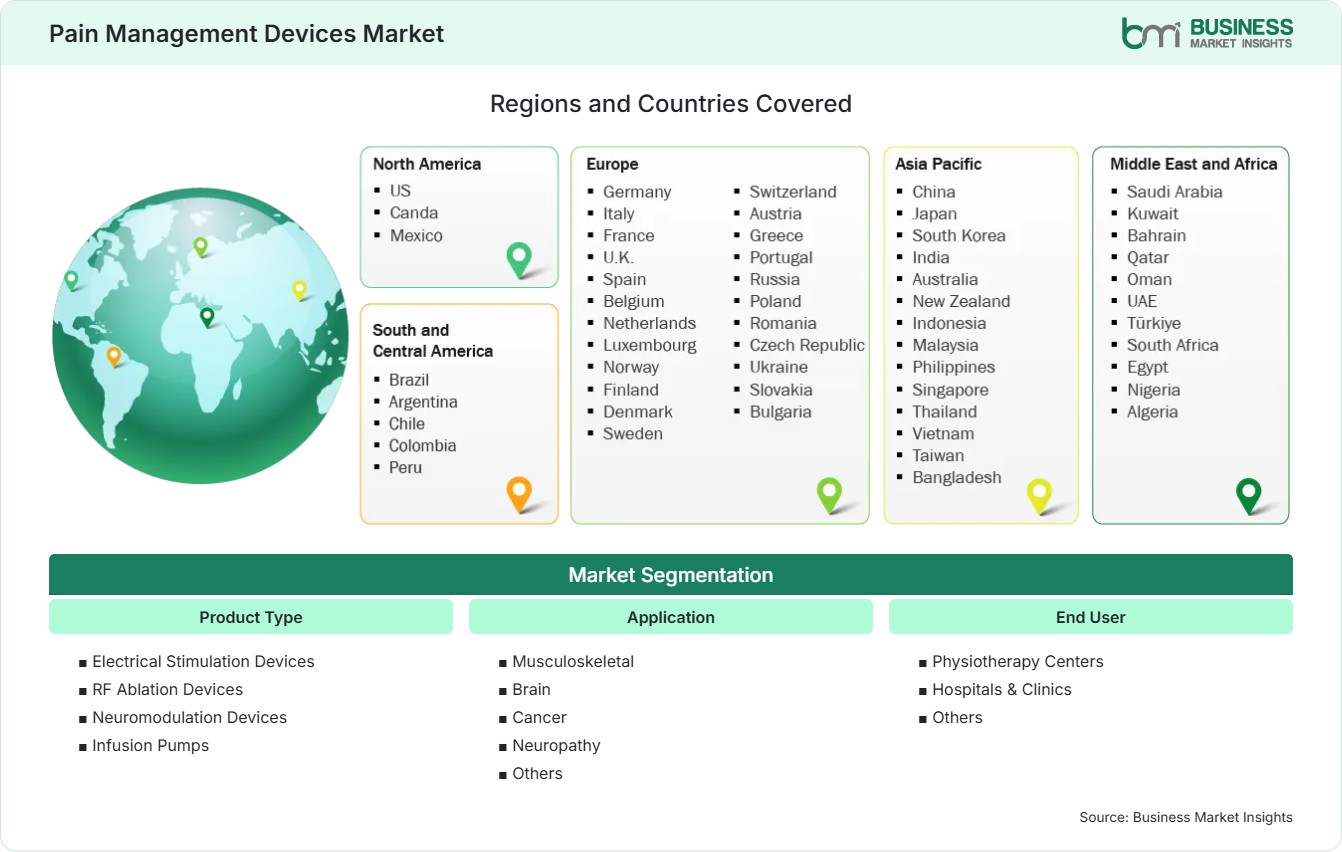
  • Product Type: Electrical Stimulation Devices, RF Ablation Devices, Neuromodulation Devices, Infusion Pumps
  • Application: Musculoskeletal, Brain, Cancer, Neuropathy, Others
  • End User: Physiotherapy Centers, Hospitals & Clinics, Others
US$ 13.57 Bn Market size in 2025
US$ 32.85 Bn Market Size by 2033
11.68% CAGR, 2026 - 2033
2026-2033 Forecast Period

AI Overview

Pain Management Devices Market Summary

  • North America Region: North America holds an estimated 38%–42% of Pain Management Devices Market share in 2025, with a projected CAGR of 10.5%–11.5% during 2026–2033. Advanced hospitals, established reimbursement pathways, and specialist pain clinics support adoption. The United States benefits from mature clinical infrastructure, research capabilities, and device innovation, with a modeled CAGR of 10.5%–11.5%.
  • Fastest Growing Region: Asia Pacific accounts for an estimated 20%–24% share in 2025, with a projected CAGR of 13.0%–14.5%. Hospital expansion, rising specialist capacity, and investment in medical technology create opportunities across China, India, Japan, and Southeast Asia.
  • Leading Segment: Neuromodulation Devices represent an estimated 32%–36% share in 2025, with a projected CAGR of 12.0%–13.0%. Implantable stimulation, personalized programming, and demand for alternatives to long-term medication support segment leadership.
  • High Growth Segment: RF Ablation Devices account for an estimated 15%–19% share in 2025, with a projected CAGR of 12.5%–14.0%. Image-guided procedures, outpatient treatment capacity, and targeted nerve interventions support adoption across selected musculoskeletal and chronic pain conditions.
  • Key Market Opportunity: Investment in targeted stimulation, remote programming, and outpatient pain services can improve treatment access, strengthen follow-up, and expand specialized care across underserved populations and developing healthcare systems.
  • Major Market Players: Abbott Laboratories, Avanos Medical, Inc., Boston Scientific Corporation, Medtronic plc, Nevro Corp., Saluda Medical Pty Ltd, Stryker Corporation, Zynex, Inc., LivaNova PLC, Becton, Dickinson and Company, and ICU Medical, Inc.
Strategic Insights

Pain Management Devices Market: Strategic Insights

Pain Management Devices Market Strategic Framework
FREE PDF
Request your free sample
Request free sample
Stakeholder View

Key Takeaways

  • It is important to be able to obtain implantable electronics, electrodes, leads, catheters, and sterile components. To reduce the risks of disruption, manufacturers should improve their supplier qualification, traceability, inventory planning, and production resilience.
  • The management of musculoskeletal and neuropathic pain offers possibilities in the areas of conservative treatment, ablation, and implantable therapies. Companies must focus on conditions that have clear clinical evidence and established patient selection criteria.
  • Closed-loop stimulation, better electrode placement, and the use of software to aid in programming can be used to distinguish one product from another by means of usability, personalization, and consistent treatment. Research spending should aim to strike a balance between innovation and safety, reliability, and the practical needs of clinical practice.
  • The company has the opportunity to expand via investment in hospitals and by improving access to specialist services. It is necessary to establish local partnerships, set appropriate prices, plan regarding the regulations, and provide clinical training if the venture is to be commercially sustainable.
  • Expanding your portfolio will give you access to different stimulation technologies and intellectual property. Before carrying out any acquisitions, investors should assess the clinical evidence, the regulatory status, the integration requirements, and the commercial scalability.
  • The adoption process can be improved through physician education, financial reimbursement assistance, and regular follow-up. When suppliers assist healthcare providers in assessing candidates and in keeping an eye on outcomes, they are able to strengthen their relationships and promote longer-term use of the product.
Geographic Outlook

Pain Management Devices Market Regional Highlights

North America Pain Management Devices Market

North America holds an estimated 38%–42% Pain Management Devices Market share of global revenue in 2025 and is projected to grow at a CAGR of 10.5%–11.5% through 2033. Advanced hospitals, specialist physicians, established manufacturers, and reimbursement mechanisms support adoption.

  • In terms of clinical infrastructure, specialist hospitals and multidisciplinary pain clinics provide support for implantable treatments. By carrying out a coordinated assessment, clinicians are able to determine which patients are suitable and to decide if advanced interventions are appropriate following conservative treatment.
  • Technology innovation offers opportunities to distinguish products by focusing on usability, personalization, and long-term treatment management, due to programmable stimulation, better lead placement, and patient-facing software.
  • Reimbursement depends on coverage policies and the requirements regarding medical necessity in relation to patient access and the number of procedures performed. Manufacturers must provide evidence to support treatment decisions and show that the treatment offers value to healthcare providers.
  • Certain ablation procedures may be carried out in ambulatory settings that are properly equipped. Their adoption will depend on the patient's suitability, the availability of procedural safeguards, the level of clinician training, and the presence of reliable follow-up arrangements.

US Pain Management Devices Market

The United States Pain Management Devices Market is the principal national market within North America, supported by established neuromodulation manufacturers and specialist physician networks. Its estimated global revenue share is 34%–38% in 2025, with a projected CAGR of 10.5%–11.5% during 2026–2033.

  • For patients who still have pain, spinal cord and peripheral nerve stimulation are available as treatment options. It is still essential to arrive at the correct diagnosis and to select the right patients if satisfactory clinical results are to be achieved.
  • There is clinical evidence showing that long-term outcome studies are useful for clinicians and payers in assessing the effectiveness of a treatment, the complications it may cause, and its suitability with respect to specific patient groups.
  • The ability to provide remote programming and use patient applications could make follow-up easier, but its adoption would need to include effective privacy safeguards, robust cybersecurity measures, and proper clinical supervision.
  • In the commercial sector, companies compete by providing physician education, offering programming support, ensuring product reliability, and presenting evidence regarding their technologies for specific indications.

Europe Pain Management Devices Market

Europe Pain Management Devices Market accounts for an estimated 25%–29% share in 2025 and is projected to expand at a CAGR of 10.0%–11.5% during 2026–2033. Established rehabilitation services, aging populations, and specialist hospitals support demand. European medical device requirements increase the importance of clinical documentation, quality assurance, and post-market monitoring.

  • The country has established specialist care and medical technology capabilities which support the uptake of stimulation and ablation procedures. When making procurement decisions, emphasis is placed on clinical performance, physician experience, reliability, and the long-term treatment value.
  • In the United Kingdom, the way in which public healthcare systems purchase equipment and the procedures for referring patients to specialists have an effect on the adoption of these devices. Companies gain an advantage by showing that certain patient outcomes, service efficiency, and suitability for specific clinical groups are achievable.
  • In France and Italy, hospital pain relief services and rehabilitation networks provide opportunities for targeted therapies, but the reimbursement processes and local purchasing decisions may delay the timing of commercialization.
  • Documentation and the need for surveillance place an advantage on manufacturers who have well-developed regulatory systems, as these companies are required to maintain suitable quality procedures together with evidence relating to the intended use of their devices.
  • For the country outlook, Germany is projected to grow at a CAGR of 10.0% to 11.0%, whereas Spain is expected to reach 11.0% to 12.5%, this difference being due to the varying levels of market maturity and the potential for adoption.

Asia Pacific Pain Management Devices Market

Asia Pacific holds an estimated 20%–24% share in 2025 and is projected to grow at a CAGR of 13.0%–14.5% through 2033. Hospital expansion, specialist training, and investment in medical technology support demand. The Pain Management Devices Market scope varies across countries because of differences in affordability, reimbursement, and clinical capacity. China and India offer expansion opportunities, while Japan provides an established market for advanced therapies. Local distribution, regulatory compliance, and clinician education remain important to sustainable commercialization.

  • The expansion of the market is supported by modernization of hospitals and the development of domestic medical technology. Suppliers have to show that their products have clinical value, comply with regulatory requirements, and set up a reliable system for distribution and after-sales service.
  • There are opportunities due to increasing investment in private hospitals and greater awareness of pain management. However, access to more expensive implantable systems may be limited by affordability, restrictions on reimbursement, and the uneven availability of specialists.
  • The healthcare infrastructure there has been established, and this enables the widespread use of advanced devices. Devices that provide predictable performance, reliable programming, and feasible long-term management are suitable for use in specialist centers.
  • In Southeast Asia, the development of hospitals and the education of doctors can increase access to interventional pain treatments, and local partnerships assist manufacturers in adapting their distribution and training to the various healthcare systems.
  • For the country outlook, China is projected to grow at a CAGR of 13.0% to 14.5%, whereas India is estimated to achieve a growth rate of 14.0% to 15.5%, due to differences in the extent of infrastructure expansion and improvements in access.

Rest of World Pain Management Devices Market

South and Central America Pain Management Devices Market represents a smaller portion of worldwide demand, with Brazil and Mexico serving as important commercial markets. The region is estimated to hold 5%–8% of global revenue in 2025, with a projected CAGR of 11.0%–12.5% through 2033.

  • There is demand for advanced pain treatments due to the presence of private hospitals and well-established specialist centers. The choice of products and decisions regarding purchasing are affected by currency fluctuations and the cost of imports.
  • The private healthcare networks offer opportunities for the introduction of minimally invasive procedures and for the adoption of specialist devices. Links in the regional distribution network can aid supply and the delivery of services.
  • The Gulf countries are investing in healthcare so that they can carry out advanced procedures and provide specialist pain services. Ongoing physician education and reliable technical support are still essential for ensuring adoption.
  • Private hospitals serve as entry points for targeted interventions, with the extent of wider access relying on affordability, the availability of specialists, and reliable servicing of the equipment.
  • For the country outlook, Brazil is projected to grow at a CAGR of 11.0% to 12.5%, and Saudi Arabia at 12.0% to 13.5%, due to healthcare investment and differences in specialist infrastructure.
Global Market Geography
FREE PDF
Request your free sample
Request free sample
Segment Analysis

Pain Management Devices Market Segmentation

Product Type

Product Type covers technologies that modulate pain signals, interrupt nerve conduction, or deliver medication. Neuromodulation Devices hold an estimated 32%–36% Pain Management Devices Market share in 2025, with a projected CAGR of 12.0%–13.0% during 2026–2033. Adoption depends on clinical indications, device costs, implantation requirements, and treatment outcomes.

  • Electrical Stimulation Devices: Non-invasive stimulation supports selected musculoskeletal and neuropathic pain applications. Portability, ease of use, and compatibility with rehabilitation services influence adoption among providers and patients.
  • RF Ablation Devices: Radiofrequency technologies interrupt targeted nerve signaling in selected chronic pain interventions. Electrode design, imaging compatibility, and procedural consistency influence physician preference and clinical utilization.
  • Neuromodulation Devices: Implantable stimulation systems address selected persistent pain conditions. Programming flexibility, lead placement, patient response, and evidence of sustained benefit support product differentiation.
  • Infusion Pumps: Controlled drug-delivery systems support selected patients requiring precise medication administration. Dosing accuracy, safety features, clinical oversight, and treatment suitability shape adoption.

Application

Application segmentation reflects the cause and location of pain, influencing treatment selection and clinical outcomes. Musculoskeletal conditions support demand for stimulation, rehabilitation, and interventional procedures. The Pain Management Devices Market trends emphasize indication-specific evidence, patient selection, and integration with multidisciplinary care.

  • Musculoskeletal: Back, neck, joint, and other musculoskeletal conditions support demand for electrical stimulation, radiofrequency procedures, and selected implantable therapies. Adoption depends on diagnosis and response to conservative treatment.
  • Brain: Selected neurological and pain-related conditions may involve specialized stimulation approaches. Clinical adoption requires careful indication assessment, specialist oversight, and appropriate evidence.
  • Cancer: Controlled infusion and selected stimulation approaches may support symptom management, depending on patient condition. Treatment decisions prioritize safety and integration with broader oncology care.
  • Neuropathy: Spinal cord and peripheral nerve stimulation can address selected neuropathic conditions. Treatment selection depends on symptom distribution, previous therapies, patient suitability, and anticipated functional benefit.

End User

End-user demand depends on specialist availability, procedural capacity, patient volumes, and funding structures. Hospitals and clinics provide diagnosis, implantation, and monitoring, while physiotherapy centers support rehabilitation and non-invasive treatment. Providers evaluate devices alongside training, servicing, consumables, and clinical support.

  • Physiotherapy Centers: Electrical stimulation supports rehabilitation and functional recovery. Adoption depends on device usability, therapist training, patient adherence, and compatibility with existing treatment protocols.
  • Hospitals and Clinics: These facilities support diagnosis, interventional procedures, implantation, and monitoring. Procurement decisions emphasize safety, clinical evidence, procedural capability, service reliability, and total treatment costs.
Market Forces

Pain Management Devices Market Dynamics

Key Market Drivers

Increasing Burden of Persistent Pain Conditions

Musculoskeletal disorders, neuropathic pain, and postoperative pain create demand for technologies that complement medication and rehabilitation. The World Health Organization identifies low back pain as a leading cause of disability worldwide, reinforcing the need for accessible treatment pathways. Device adoption nevertheless depends on diagnosis, previous treatment response, and clinical suitability. A broad population requiring ongoing symptom management supports demand for electrical stimulation, ablation, and selected implantable systems. Pain Management Devices Market Trend therefore depends on evidence-based patient selection, physician training, and demonstrated functional improvement alongside reported pain reduction.

Advances in Neuromodulation and Targeted Intervention

Closed-loop systems can adjust stimulation using measured neural responses, while improved programming interfaces may simplify treatment management. These capabilities can differentiate premium technologies when clinical outcomes justify additional costs. Manufacturers are also expanding peripheral nerve stimulation portfolios and refining implantation procedures. Pain Management Devices Market trends increasingly emphasize personalized treatment, patient convenience, procedural efficiency, and evidence of durable benefit. Commercial success depends on translating technical advances into clinically meaningful outcomes and ensuring that physicians can select suitable candidates and manage treatment effectively over time.

Expansion of Multidisciplinary Pain Services

Hospitals are now working more closely together to arrange specialist assessments, physiotherapy, interventional treatments, and subsequent follow-up for patients with complex pain conditions. Rehabilitation providers can use non-invasive stimulation, while specialist centers assess ablation and implantable systems in the case of appropriately selected patients. There therefore arises a need for technologies that correspond to the various stages of care. Manufacturers can help promote acceptance by providing education for clinicians, introducing structured treatment protocols, and monitoring outcomes. By incorporating devices into reliable care pathways, providers are able to identify suitable candidates, co-ordinate referrals, and judge whether the interventions provide meaningful benefits without treating all pain conditions as if they were clinically the same.

Key Market Opportunities

Remote Programming and Data-Enabled Patient Support

Connected applications and remote programming can improve communication between clinicians and implant users. Pain Management Devices Market: opportunities include secure monitoring interfaces, simplified patient controls, and software that helps clinicians review treatment settings and reported symptoms. These tools may reduce selected follow-up burdens, particularly for patients traveling long distances to specialist centers. Their value depends on interoperability, cybersecurity, privacy safeguards, and appropriate clinical oversight. Manufacturers that integrate digital support with validated devices can differentiate service offerings and help healthcare providers maintain continuity of care beyond implantation.

Access Expansion in Underserved Healthcare Markets

Developing healthcare systems offer opportunities for affordable devices, dependable servicing, and practical clinical workflows. Market entry should prioritize referral hospitals, specialist training, local distribution, and transparent pricing. Non-invasive devices may provide an accessible starting point, while implantable therapies can be introduced where clinical expertise and follow-up capacity are established. Pain Management Devices Market Forecasts should distinguish potential demand from immediately addressable revenue. Partnerships with hospitals and rehabilitation providers can support staged adoption, reduce implementation barriers, and strengthen clinical confidence in appropriate technologies.

Peripheral Nerve Stimulation and Indication Expansion

Peripheral nerve stimulation can be used in certain chronic pain conditions that affect specific nerves, such as pain in the shoulder, the knee, and the lower back. The areas that should receive investment are well-defined indications, efficient implantation, clinical evidence, and systems that make long-term management easier. For patients who are worried about standard implant hardware, smaller implant designs might be attractive. Commercial expansion will rely on regulatory approval, reimbursement, physician confidence, and comparative outcomes. Manufacturers who already have an established presence can make use of their existing relationships with clinicians to launch complementary technologies while still keeping the approved indications and the investigational applications clearly separate.

Market Restraints and Challenges

High Treatment Costs and Uneven Reimbursement

The cost of implantable devices includes expenses for the hardware, the procedure itself, specialist evaluations, programming, and subsequent follow-up. Because of the high total cost, access to such treatments may be limited in situations where reimbursement is inadequate or where healthcare budgets give preference to less expensive interventions. Hospitals might wait to make purchases until the level of usage and the coverage arrangements are sufficiently certain. Additionally, patients may still encounter financial difficulties even if clinicians regard the treatment as appropriate.

Clinical Complexity and Variable Patient Outcomes

The effect is that treatment response depends on the diagnosis, the previous interventions carried out, the presence of other disorders, patient expectations, and the way the device is programmed. This leads to variable results, which can make it more difficult to select patients, lower confidence in certain technologies, and increase the need for training. Since implantable systems also involve procedural risks such as infection and complications related to the lead, manufacturers should support realistic expectations and establish clear criteria for selection. Providers, in turn, need a structured method of assessing outcomes to tell the difference between device limitations and inappropriate indications or poor follow-up.

Company Analysis

Competitive Landscape

Pain Management Devices Market analysis highlights competition across neuromodulation, electrical stimulation, radiofrequency intervention, and controlled infusion. Established manufacturers compete through clinical evidence, reliability, physician relationships, regulatory capabilities, and after-sales support. Specialist companies differentiate through targeted indications and novel stimulation mechanisms. Product portfolios, service capabilities, and clinical relationships influence commercial positioning across hospital, rehabilitation, and specialist pain-management settings.

Company Name

Overview

Products and Services relevant to this market

Abbott Laboratories

Global healthcare company with established neuromodulation capabilities and a broad medical technology portfolio.

Spinal cord stimulation, dorsal root ganglion stimulation, patient programming tools, and chronic pain management technologies.

Avanos Medical, Inc.

Medical technology company focused on products supporting pain management and specialized care.

Radiofrequency ablation systems and technologies for selected interventional pain procedures.

Boston Scientific Corporation

Diversified manufacturer with an established neuromodulation and interventional therapy business.

Spinal cord stimulation, radiofrequency ablation, and peripheral nerve stimulation technologies.

Medtronic plc

Global medical technology company with established implantable therapy operations.

Spinal cord stimulation systems, programming tools, and associated clinical support.

Nevro Corp.

Medical technology company specializing in neuromodulation for chronic pain treatment.

Spinal cord stimulation systems and associated therapies for selected persistent pain conditions.

Saluda Medical Pty Ltd

Specialist developer of closed-loop neuromodulation technology using neural-response sensing.

Evoke spinal cord stimulation systems and sensing-based stimulation technologies.

Stryker Corporation

Diversified medical technology company serving hospital and procedural markets.

Selected procedural technologies and equipment relevant to pain treatment pathways.

Zynex, Inc.

Medical technology company focused on non-invasive electrotherapy and patient care products.

Electrical stimulation and electrotherapy products for pain management and rehabilitation.

LivaNova PLC

Medical technology company operating in neuromodulation and specialized therapeutic categories.

Neuromodulation technologies relevant to selected neurological and related treatment pathways.

Becton, Dickinson and Company

Medical technology company supplying infusion and medication delivery systems.

Infusion pumps, medication delivery equipment, and related consumables.

ICU Medical, Inc.

Medical device company specializing in infusion therapy and vascular access.

Infusion systems, pumps, administration sets, and medication delivery accessories.

Trust & Transparency

Research Methodology

The market analysis combines proprietary research with secondary data from government agencies, company disclosures, regulatory filings, industry databases and expert interviews. Market estimates are validated through data triangulation, cross-market benchmarking and analyst review.

View Full Research Methodology

Questions Answered

Frequently Asked Questions

Why is regulatory compliance important?

As per the Pain Management Devices Market Report, Manufacturers must meet applicable safety, performance, quality, and clinical evidence requirements. Post-market monitoring, complaint handling, and cybersecurity controls support patient safety and continued market access.

How can healthcare providers improve access?

Providers can establish referral criteria, train multidisciplinary teams, standardize assessments, and strengthen follow-up. Reimbursement documentation and patient education can further improve access, while local partnerships support equipment servicing.

Why is long-term clinical evidence important?

Evidence helps clinicians assess treatment durability, complications, patient satisfaction, and further intervention requirements. Payers and hospitals also use outcomes to evaluate clinical value and suitability for defined patient groups.

How do devices differ from conventional pain medications?

Devices may use electrical stimulation, targeted nerve ablation, or controlled medication delivery. Their mechanisms and indications differ, and they do not eliminate the need for comprehensive medical assessment.

What determines suitability for an implantable pain management device?

Suitability depends on diagnosis, pain distribution, previous treatment response, functional limitations, procedural risks, and patient preferences. Specialist assessment determines whether expected benefits justify implantation and follow-up.

Access the Full Pain Management Devices Market Report

Get segment-level forecasts, regional estimates, competitive benchmarking, company profiles and downloadable Excel datasets.

Access the full Pain Management Devices Market Report
350 pages PDF & Excel | 2026-11-03
Similar Research

Related Market Reports