
Opioids Market Outlook: Size, Share, Trends, Growth Analysis, Competitive Landscape & Forecast, 2026-2033

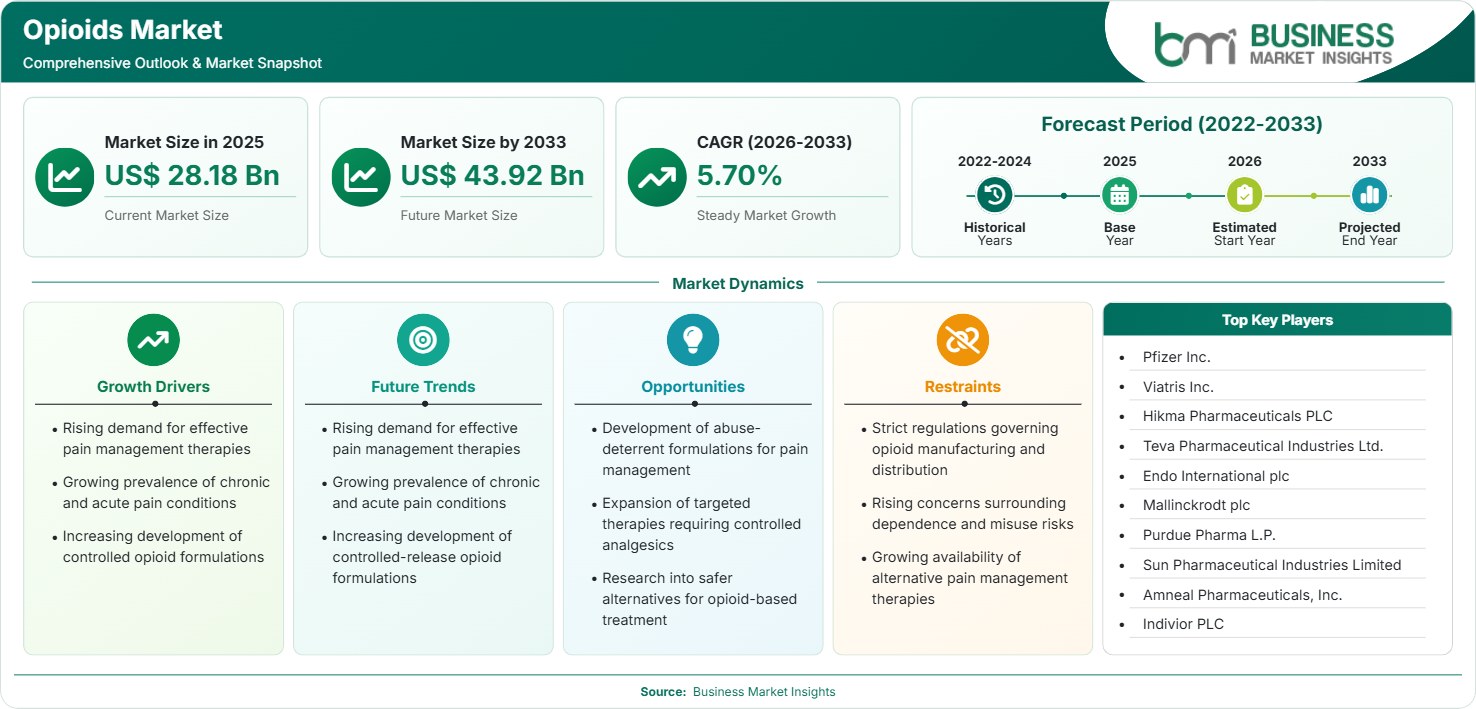
The Opioids Market size was valued at US$ 28.18 Billion in 2025 and is projected to reach US$ 43.92 Billion by 2033, growing at a CAGR of 5.7% during 2026–2033, driven by increasing chronic pain prevalence, expanding cancer care requirements, advanced abuse-deterrent formulations, broader healthcare access, and opportunities in controlled-release therapeutics and digital pain-management integration.

Report Coverage
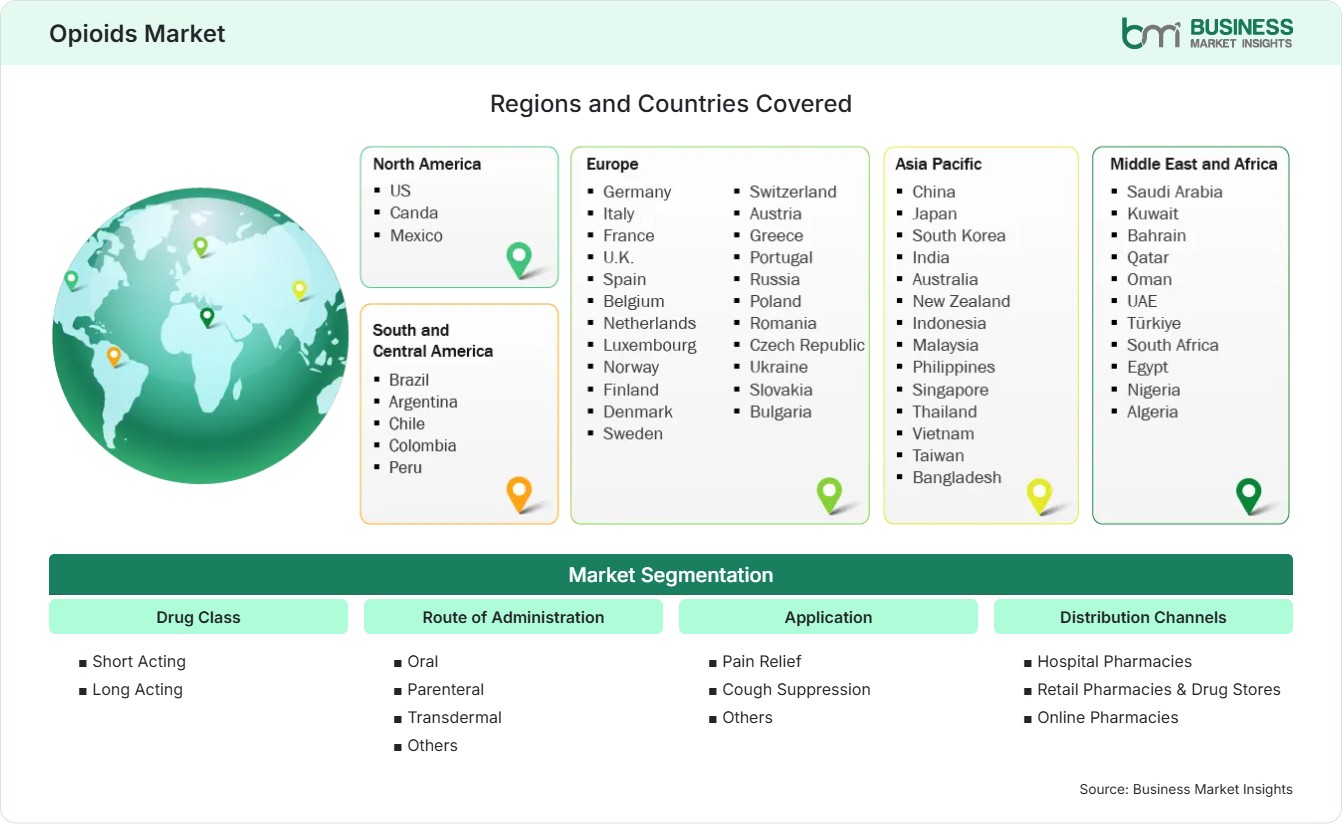
  • Drug Class: Short Acting, Long Acting
  • Route of Administration: Oral, Parenteral, Transdermal, Others
  • Application: Pain Relief, Cough Suppression, Others
  • Distribution Channels: Hospital Pharmacies, Retail Pharmacies & Drug Stores, Online Pharmacies
US$ 28.18 Bn Market size in 2025
US$ 43.92 Bn Market Size by 2033
5.70% CAGR, 2026 - 2033
2026-2033 Forecast Period

AI Overview

Opioids Market Summary

  • North America Region: North America holds a market share of 38%–41% in 2025, growing at a CAGR of 5.0%–5.4% during 2026–2033, supported by chronic pain treatment demand, advanced healthcare systems, cancer pain management, monitoring technologies, reimbursement support, and innovation in abuse-deterrent formulations. The U.S. remains the dominant contributor, supported by specialty pain management networks and controlled prescribing practices, with a CAGR of 5.1%–5.5%.
  • Fastest Growing Region: Asia Pacific holds a 24%–27% share in 2025 and advances at a CAGR of 6.7%–7.2% during 2026–2033, supported by healthcare infrastructure expansion, rising surgical procedures, growing oncology burden, wider medicine access, and increasing investments in regulated pain-management programs.
  • Leading Segment: Pain Relief accounts for 68%–72% share in 2025 and expands at 5.4%–5.9% CAGR, driven by increasing postoperative care demand, cancer treatment requirements, musculoskeletal disorders, palliative care adoption, specialist prescribing frameworks, and ongoing formulation innovation.
  • High Growth Segment: Online Pharmacies represent 11%–14% Opioids Market share in 2025 and grow at 7.0%–7.6% CAGR, supported by digital healthcare adoption, prescription fulfillment convenience, telemedicine integration, remote patient monitoring, wider geographic accessibility, and secure dispensing systems.
  • Key Market Opportunity: Expansion of abuse-deterrent and extended-release therapies creates opportunities for safer pain management, improved compliance, enhanced physician confidence, reduced misuse risks, stronger reimbursement prospects, and differentiated product positioning.
  • Major Market Players: Pfizer Inc., Viatris Inc., Hikma Pharmaceuticals PLC, Teva Pharmaceutical Industries Ltd., Endo International plc, Mallinckrodt plc, Purdue Pharma L.P., Sun Pharmaceutical Industries Limited, Amneal Pharmaceuticals, Inc., Indivior PLC.
Strategic Insights

Opioids Market: Strategic Insights

Opioids Market Strategic Framework
FREE PDF
Request your free sample
Request free sample
Stakeholder View

Key Takeaways

  • The value chain is increasingly shaped by manufacturers, hospital networks, pharmacy providers, regulators, and digital monitoring platforms that collectively balance patient accessibility with controlled dispensing requirements.
  • Oncology pain management, palliative care, and postoperative recovery applications continue presenting the strongest commercial upside due to growing patient volumes and specialized treatment pathways.
  • Product innovation is shifting toward extended-release formulations, abuse-deterrent technologies, combination therapies, and digital adherence solutions that improve clinical outcomes and prescription oversight.
  • Asia Pacific presents a compelling investment case due to expanding healthcare infrastructure, rising surgical procedures, increasing cancer incidence, and improving access to prescription medicines.
  • Industry activity increasingly reflects portfolio optimization, settlement-driven restructuring, licensing agreements, and strategic investments focused on safer pain-management solutions and treatment continuity.
  • Digital prescription verification and remote patient management platforms are becoming critical differentiators as healthcare providers prioritize controlled substance monitoring.
Geographic Outlook

Opioids Market Regional Highlights

North America Opioids Market

North America accounted for approximately 38%–41% of global demand in 2025 and is projected to expand at a CAGR of 5.0%–5.4% through 2033. Strong healthcare expenditure, extensive pain-management infrastructure, and advanced pharmacovigilance programs support regional leadership. The Opioids Market share remains highest in this region due to substantial chronic pain prevalence and oncology treatment volumes. Regulatory scrutiny continues shaping prescribing practices, encouraging abuse-deterrent innovation and improved patient monitoring while maintaining access for clinically validated pain-management applications.

  • Prescription monitoring systems strengthen compliance while supporting access for patients requiring long-term pain management therapies.
  • Growing cancer prevalence increases demand for specialist pain-relief protocols across hospital and palliative care settings.
  • Abuse-deterrent product development remains a major investment priority for pharmaceutical manufacturers.
  • Advanced reimbursement frameworks improve treatment accessibility across approved therapeutic indications.
  • Integrated digital health platforms support prescribing transparency and patient adherence management.

US Opioids Market

The United States accounts for an estimated 82% to 86% of North American revenue and is anticipated to grow at a CAGR of 5.1% to 5.5%. The key drivers of demand include the prevalence of chronic pain, a high number of surgical procedures, and oncology programs. There is increasing adoption of risk management strategies that strive to balance access and safety considerations. Innovation activities focus on extended-release technologies, prescription monitoring, and optimizing patient outcomes.

  • Specialty pain clinics continue adopting evidence-based prescribing strategies aligned with federal and state guidelines.
  • Cancer treatment centers generate substantial demand for advanced analgesic therapies and supportive care medications.
  • Electronic prescribing infrastructure improves monitoring efficiency and controlled substance accountability.
  • Continued investment in abuse-deterrent technologies enhances product differentiation and physician confidence.

Europe Opioids Market

Europe has sustained market shares of 27%-30% in 2025 and is projected to grow at a 5.2%-5.8% CAGR. Demand within the region is driven by demographics, rising prevalence of cancers, and structured pain management procedures. Germany is the leading consumer of analgesics in the region, while some Central and Eastern European nations have a higher growth trajectory. Health systems focus on appropriate prescription and proper monitoring. Manufacturers continue to develop drug formulations with improved adherence, safety profiles, and treatment outcomes across hospital and ambulatory care environments.

  • Germany represents the leading regional market supported by advanced healthcare infrastructure and specialist treatment availability.
  • Poland and selected Eastern European countries exhibit comparatively stronger growth momentum due to improving healthcare access.
  • National prescribing frameworks balance patient access requirements and misuse prevention objectives.
  • Growing postoperative care demand supports utilization across surgical recovery pathways.
  • Expanded palliative care services strengthen long-term therapeutic demand.

Asia Pacific Opioids Market

The Asia Pacific shares 24%–27%, while the regional CAGR is highest at 6.7%–7.2%. The fast-growing investments in the healthcare industry, the growing number of surgeries performed, and the rising cases of cancer have driven their adoption. China continues to be the largest regional market, while India offers the strongest growth opportunities. The Opioids Market growth in this region has been aided by growing hospital facilities, medical insurance, and regulated medications.

  • China leads regional revenue generation through broad healthcare modernization initiatives.
  • India experiences accelerated adoption driven by oncology expansion and healthcare-access improvements.
  • Increasing surgical procedures strengthen demand for acute pain-management therapies.
  • Expanding hospital networks improve availability of prescription analgesics in secondary cities.
  • Regulatory modernization supports balanced pain treatment accessibility and patient safeguards.

Rest of World Opioids Market

The Rest of World segment accounts for an 8%-11% market share and is expected to register a CAGR of 5.8%-6.4% during 2023-2033. There is a favorable healthcare accessibility drive in South and Central America that improves access to treatment options for chronic ailments. The Middle East and Africa segment is driven by growth in hospital capacity and developments in cancer care infrastructure. The largest market in Latin America is Brazil, whereas Saudi Arabia shows high growth potential due to healthcare advancements.

  • Brazil leads regional demand supported by healthcare system expansion and rising surgical treatment volumes.
  • Saudi Arabia records notable growth due to healthcare transformation programs and expanding specialist services.
  • Improving pharmaceutical distribution networks enhance treatment availability across underserved regions.
  • Oncology capacity expansion strengthens adoption in tertiary-care facilities.
  • Government healthcare investment remains a primary growth catalyst across emerging economies.
Global Market Geography
FREE PDF
Request your free sample
Request free sample
Segment Analysis

Opioids Market Segmentation

Drug Class

The short- and long-acting medicines make an integral part of treatment. The segment held a market share of about 31%–35% in 2025 and is estimated to grow at a CAGR of 5.3%–5.8%. The scope of the opioids market in this segment is wide because there is a variety of pain management needs.

  • Short Acting: Widely prescribed for acute pain episodes, postoperative recovery, and breakthrough pain situations where rapid onset and dosing flexibility are essential for achieving effective symptom control.
  • Long Acting: Preferred in chronic pain management and long-term treatment settings, supporting sustained analgesia, improved adherence, and reduced dosing frequency under physician supervision.

Route of Administration

Route selection plays a crucial role in effectiveness, patient compliance, and therapy customization. This segment represented 34%–38% market share in 2025 and will register a CAGR of 5.6%–6.1%, reflecting increasing focus on patient-specific therapeutic strategies.

  • Oral: Remains the most utilized route because of convenience, broad availability, physician familiarity, and suitability across outpatient and long-term care environments.
  • Parenteral: Commonly used in hospitals and emergency settings requiring rapid therapeutic action and closely monitored administration protocols.
  • Transdermal: Gains acceptance through sustained drug delivery, improved compliance, and applicability in chronic pain and palliative care management.

Application

The application-based demand has been driven by pain management applications. In 2025, the segment's share was 68%–72%, and the market was expected to grow at a CAGR of 5.4%–5.9%. Opioids Market trends point to continued demand for use in oncology, post-operative, and chronic disease management programs.

  • Pain Relief: Largest application category driven by cancer care, orthopedic disorders, surgical recovery, trauma management, and palliative treatment requirements globally.
  • Cough Suppression: Certain formulations continue serving specialized clinical needs where severe cough symptoms require physician-directed therapeutic intervention.

Distribution Channels

The distribution model continues to evolve as digital health advances. In 2025, this market had a share of 22%-26% and is anticipated to grow at a 6.1%-6.8% CAGR, supported by improving accessibility and prescription capabilities fulfillment.

  • Hospital Pharmacies: Maintain importance through direct administration, specialist oversight, and support for acute-care treatment pathways.
  • Retail Pharmacies & Drug Stores: Provide broad patient access and remain critical for prescription refills and long-term treatment continuity.
  • Online Pharmacies: Benefit from telehealth integration, improved convenience, secure prescription processing, and expanding digital healthcare ecosystems.
Market Forces

Opioids Market Dynamics

Key Market Drivers

Rising Chronic Pain and Cancer Burden

According to the WHO and global oncological surveys, the prevalence of cancers and diseases associated with aging is steadily growing in major healthcare institutions and continues fueling the need for improved methods of pain management. The number of individuals who need symptom management while receiving cancer treatment, in palliative care, and during recovery after surgery is rising. It is also true that the emphasis is on personalized treatment protocols that balance effectiveness and safety. These factors continue to support clinically justified prescribing activity and the expansion of specialized pain management programs.

Expansion of Surgical Procedures Worldwide

As a result of growing numbers of surgeries performed in orthopedics, cardiology, trauma, and oncology, the demand for acute pain drugs continues to grow. The development of healthcare in developing nations leads to more procedures being performed and greater demand for post-surgery treatment. Evidence-based patient recovery programs that focus on pain management are becoming common practice in hospitals. Improved healthcare infrastructure, expanded insurance coverage, and investment in specialty care further reinforce demand for therapy across inpatient and outpatient settings.

Advancement of Abuse-Deterrent Technologies

There is an ever-growing trend among manufacturers who are putting efforts into developing products with features that will prevent misuse, abuse, manipulation, and diversion of drugs. These developments help make prescribing more responsible while allowing doctors to prescribe drugs to their patients. Regulatory agencies are promoting the development of safer delivery systems to enhance treatment outcomes. Continued research into controlled-release technologies and adherence-enhancing platforms strengthens product differentiation and supports long-term commercial sustainability.

Key Market Opportunities

Expansion of Emerging Market Access

Many healthcare systems remain underdeveloped in pain management solutions. Building infrastructure for oncology care, surgical services, physician training, and medication distribution presents solid opportunities for development. Opioids Market Forecasts focus on regions such as Asia Pacific, Latin America, and several Middle Eastern countries as promising markets for expansion. Enterprises that will build appropriate distribution channels and partnerships could capitalize on expanding patient populations and improving treatment accessibility.

Digital Prescription Monitoring Integration

Prescribing oversight, misuse prevention, and optimal therapy are among the reasons why healthcare organizations are now turning to digital technology. Integration of analytics, telemedicine, and EHR systems enables the safe use of drugs. There are also opportunities for collaboration between pharmaceutical organizations and healthcare professionals to provide outcomes-driven solutions that increase transparency and adherence. These capabilities create opportunities beyond traditional product sales and strengthen stakeholder confidence.

Development of Personalized Pain Management

Precision medicine methods are increasingly affecting how pain is managed. Increasing knowledge of individual variation, disease progression, and response to therapy will enable the creation of personalized treatment paths. The integration of pharmacological and analytical solutions, along with clinical monitoring, may help achieve better treatment outcomes. Companies that create distinctive pain management ecosystems can gain value from this process, enhanced outcomes, and stronger provider engagement.

Market Restraints and Challenges

Regulatory Controls and Restricted Prescribing Flexibility

Strict control of controlled substances is a major operational concern. Regulatory agencies have established many requirements regarding surveillance, reporting, and compliance for the manufacturing, distribution, and clinical use of drugs. The higher cost of compliance, longer approval process, and prescription restrictions can decrease the availability of certain drugs on the market for some patients. Companies should allocate considerable amounts of money in order to stay in business, including pharmacovigilance, risk management, and regulatory engagement, to maintain commercial operations while ensuring adherence to evolving policy frameworks.

Misuse Concerns and Reputational and Market Pressure

Concerns about public health arising from issues such as dependency, misuse, and inappropriate usage still drive market dynamics. It is difficult for healthcare providers to balance accessibility and safety measures in their practices. Factors such as risk of reputational damage, legal problems, and increased regulatory scrutiny may hamper the commercialization process. There is an increasing focus on educational programs and improved formulations among manufacturers.

Company Analysis

Competitive Landscape

Opioids Market analysis indicates competition is centered on formulation innovation, controlled-release technologies, regulatory compliance capabilities, specialty pain-management portfolios, and global pharmaceutical distribution networks.

Company Name

Overview

Products and Services relevant to this market

Pfizer Inc.

Global pharmaceutical company with diversified therapeutic portfolio and strong hospital market presence.

Injectable analgesics, pain-management medicines, hospital pharmaceutical solutions, and specialty therapeutics.

Viatris Inc.

Global healthcare company focused on broad medicine access through branded and generic portfolios.

Generic opioid formulations, pain-management products, distribution capabilities, and specialty pharmaceutical offerings.

Hikma Pharmaceuticals PLC

Leading generic injectable and branded medicine manufacturer with strong hospital exposure.

Injectable analgesics, controlled medicines, hospital-focused pharmaceutical products, and manufacturing services.

Teva Pharmaceutical Industries Ltd.

Major global generic drug producer with extensive therapeutic coverage.

Opioid formulations, pain-management products, generic pharmaceuticals, and specialty medicines.

Endo International plc

Specialty pharmaceutical company with established presence in pain-management categories.

Prescription analgesics, extended-release formulations, and specialty treatment solutions.

Mallinckrodt plc

Pharmaceutical manufacturer focused on branded specialty medicines and hospital products.

Controlled pain therapies, hospital pharmaceuticals, and specialty care solutions.

Purdue Pharma L.P.

Well-known developer of prescription pain-management medicines.

Extended-release opioid products, pain therapies, and related patient support initiatives.

Sun Pharmaceutical Industries Limited

Large multinational pharmaceutical manufacturer with broad global footprint.

Generic pain medicines, specialty therapeutics, and pharmaceutical manufacturing services.

Amneal Pharmaceuticals, Inc.

Diversified pharmaceutical company with branded and generic medicine capabilities.

Pain-management drugs, controlled-substance formulations, and healthcare supply solutions.

Indivior PLC

Specialty pharmaceutical company focused on addiction and dependency treatment.

Opioid-use-disorder therapies, treatment programs, and specialty healthcare services.

Trust & Transparency

Research Methodology

The market analysis combines proprietary research with secondary data from government agencies, company disclosures, regulatory filings, industry databases and expert interviews. Market estimates are validated through data triangulation, cross-market benchmarking and analyst review.

View Full Research Methodology

Questions Answered

Frequently Asked Questions

Why is this Opioids Market Report important for stakeholders?

It provides strategic visibility into competitive positioning, segment priorities, regional opportunities, regulatory developments, technology shifts, and long-term demand patterns shaping industry decisions.

What makes online pharmacies an important channel?

Online platforms improve prescription fulfillment efficiency, support telemedicine integration, increase geographic accessibility, and enhance convenience while operating under controlled dispensing frameworks.

How are regulations affecting industry participants?

Regulations encourage stricter monitoring, safer prescribing practices, enhanced compliance systems, and investment in abuse-deterrent formulations while maintaining patient access for appropriate treatment.

Which region offers the strongest future expansion potential?

Asia Pacific is expected to provide the strongest expansion opportunity due to healthcare investment, rising surgical procedures, expanding oncology services, and improving pharmaceutical access.

What factors are most strongly influencing demand?

Demand is primarily shaped by chronic pain prevalence, cancer treatment needs, aging populations, postoperative recovery requirements, and wider access to specialty healthcare services.

Access the Full Opioids Market Report

Get segment-level forecasts, regional estimates, competitive benchmarking, company profiles and downloadable Excel datasets.

Access the full Opioids Market Report
350 pages PDF & Excel | 2026-09-15
Similar Research

Related Market Reports