Ophthalmoscopes Market Regional Highlights
North America Ophthalmoscopes Market
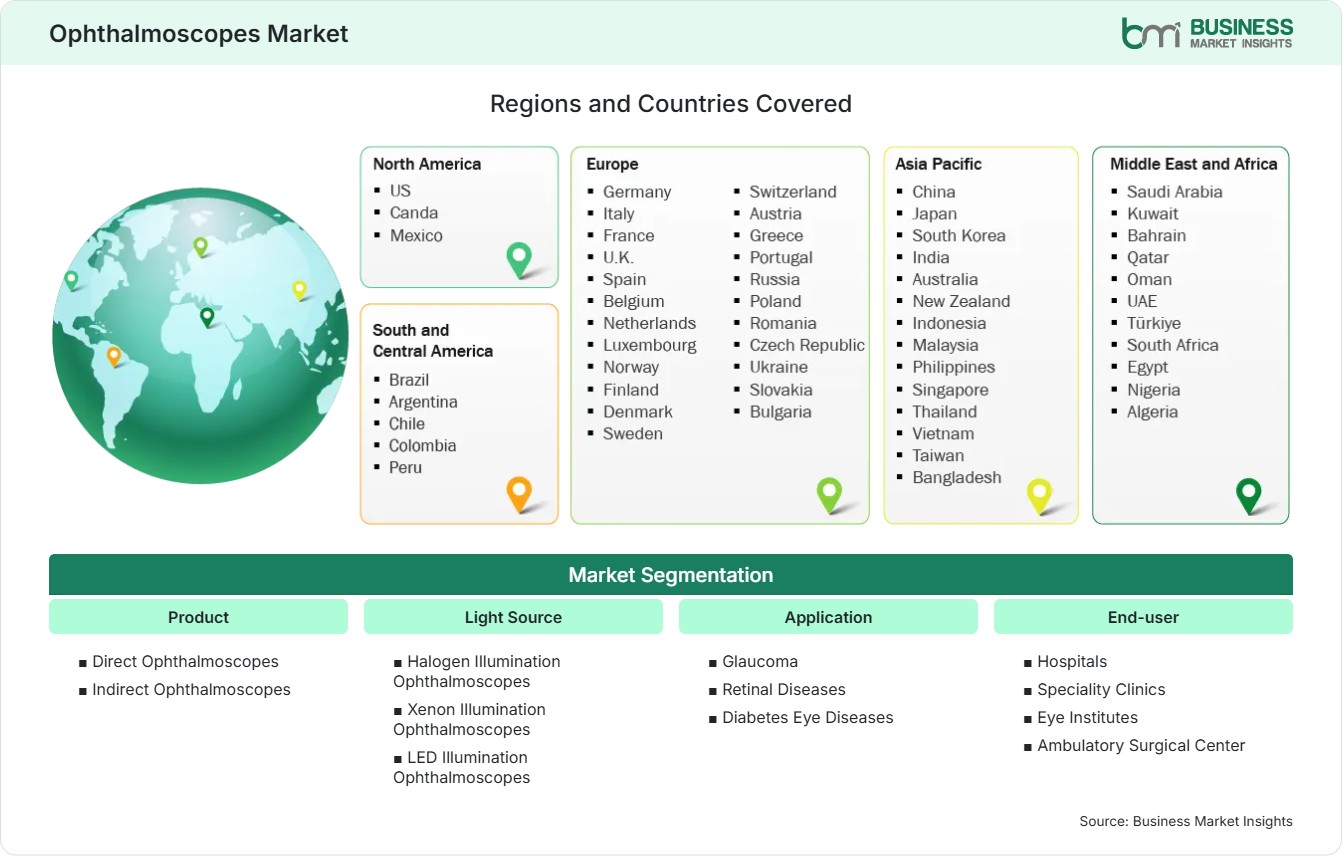
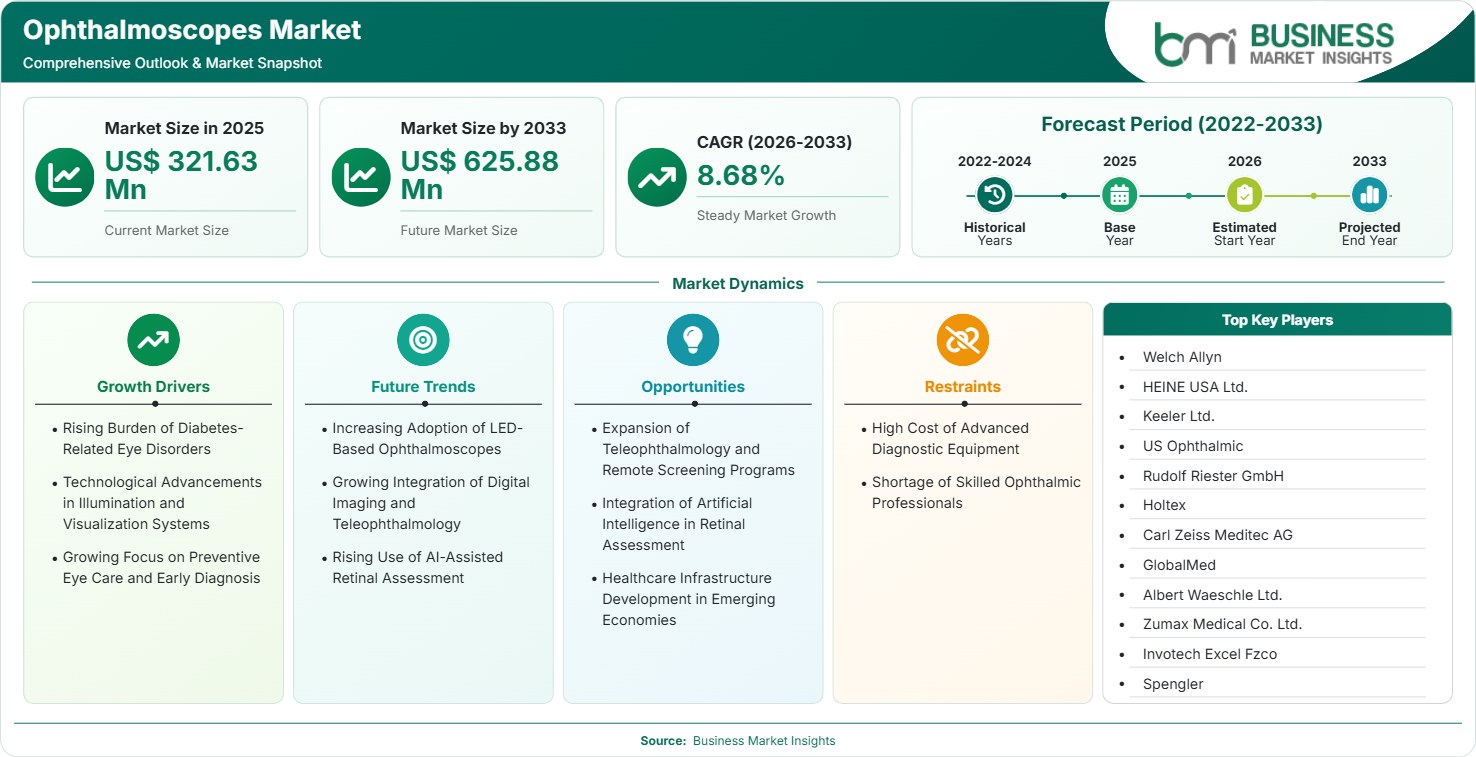
North America accounted for 36%–39% of global revenue in 2025 and is projected to expand at a CAGR of 7.8%–8.4% during 2026–2033. Strong reimbursement frameworks, advanced ophthalmology infrastructure, and extensive diabetic retinopathy screening programs continue supporting demand. The Ophthalmoscopes Market share remains substantial due to the concentration of leading healthcare institutions, ophthalmologists, and device manufacturers actively introducing technologically advanced examination systems.
- Growing prevalence of diabetes and age-related macular degeneration continues increasing routine retinal examinations, encouraging healthcare facilities to invest in advanced visualization and diagnostic technologies.
- Academic medical centers increasingly deploy digital ophthalmic equipment integrated with electronic health records, improving workflow efficiency and supporting longitudinal patient monitoring initiatives.
- Teleophthalmology programs are expanding in underserved regions, creating additional demand for portable and connected examination tools capable of supporting remote consultations.
- Government-supported vision health campaigns and preventive screening programs continue encouraging early diagnosis, strengthening procurement activity among healthcare providers and diagnostic centers.
- Rising adoption of LED-based devices improves examination quality while reducing maintenance requirements, supporting replacement demand across hospitals and specialty clinics.
US Ophthalmoscopes Market
The United States Ophthalmoscopes Market represents 78%–82% of the North American market and is expected to record a CAGR of 8.0%–8.6% through 2033. Major healthcare networks continue expanding screening capacity, particularly for retinal disorders. Continuous innovation and widespread integration of digital healthcare solutions reinforce the country's leadership position in ophthalmic diagnostics.
- Large-scale diabetes screening programs implemented across healthcare systems support sustained equipment replacement cycles and adoption of technologically advanced ophthalmoscopes.
- Ophthalmology practices increasingly utilize connected diagnostic devices that facilitate patient documentation, image storage, and remote specialist consultations.
- Research institutions and academic hospitals contribute to technology validation, accelerating commercialization of enhanced diagnostic visualization systems.
- Growing geriatric demographics increase examination volumes associated with glaucoma, cataracts, and retinal disorders, driving procurement activity.
Europe Ophthalmoscopes Market
Europe held approximately 27%–30% of global Ophthalmoscopes Market revenue in 2025 and is projected to grow at a CAGR of 7.4%–8.0% through 2033. Universal healthcare systems, expanding preventive ophthalmology programs, and aging populations support stable market development. Germany remains the leading national market with a CAGR of 7.6%–8.2%, while Poland demonstrates the fastest regional expansion at 8.9%–9.5%.
- National screening initiatives targeting diabetic retinopathy and glaucoma continue expanding patient access to ophthalmic examinations across several European healthcare systems.
- Germany benefits from advanced medical technology adoption and strong ophthalmology infrastructure, maintaining its position as the largest regional market.
- Central and Eastern European countries are increasing healthcare investments, creating favorable conditions for adoption of portable diagnostic equipment.
- Sustainability initiatives encourage procurement of durable, energy-efficient LED-based devices with extended operating lifecycles and reduced maintenance requirements.
- Public healthcare providers increasingly prioritize early disease detection strategies, supporting procurement of advanced diagnostic technologies.
Asia Pacific Ophthalmoscopes Market
Asia Pacific represented 24%–27% of global revenue in 2025 and is forecast to expand at a CAGR of 10.2%–10.8% during 2026–2033, making it the fastest-growing regional market. Rising diabetes prevalence, improving healthcare accessibility, and expanding ophthalmology infrastructure contribute to strong demand. China remains the largest regional market with a CAGR of 10.0%–10.6%, while India records the fastest growth at 11.2%–11.8%. The Ophthalmoscopes Market growth trajectory benefits from increasing investments in preventive healthcare and diagnostic modernization.
- Government-led blindness prevention programs are increasing awareness and expanding access to routine retinal examinations across urban and rural populations.
- China continues investing in healthcare infrastructure modernization, supporting wider deployment of advanced ophthalmic diagnostic technologies.
- India benefits from expanding specialty eye care networks and rising demand for affordable portable examination equipment.
- Increasing healthcare expenditure across Southeast Asia supports procurement activity among hospitals, clinics, and ambulatory healthcare providers.
- Medical tourism growth contributes to investments in advanced ophthalmology facilities equipped with modern diagnostic systems.
Rest of World Ophthalmoscopes Market
The Rest of World region accounted for 8%–11% of global revenue in 2025 and is anticipated to grow at a CAGR of 8.5%–9.1% through 2033. South & Central America benefit from expanding healthcare access and growing awareness of vision-related disorders. Meanwhile, Middle East & Africa markets are supported by healthcare infrastructure development and increasing specialist care availability. Brazil remains the largest market in South & Central America with a CAGR of 8.4%–9.0%, while Saudi Arabia demonstrates rapid expansion at 9.2%–9.8%.
- Healthcare modernization programs across Gulf countries support procurement of advanced ophthalmology equipment for public and private healthcare facilities.
- Brazil continues expanding ophthalmic care access, encouraging adoption of diagnostic technologies for chronic eye disease management.
- Rising prevalence of diabetes across Middle Eastern countries supports increased screening volumes and demand for retinal examination devices.
- International healthcare partnerships are facilitating technology transfer and training programs that improve diagnostic capabilities.
- Growing investments in specialist clinics and tertiary care hospitals continue enhancing ophthalmic diagnostic infrastructure.