
Nasal Spray Market Outlook: Size, Share, Trends, Growth Analysis, Competitive Landscape & Forecast, 2026-2033

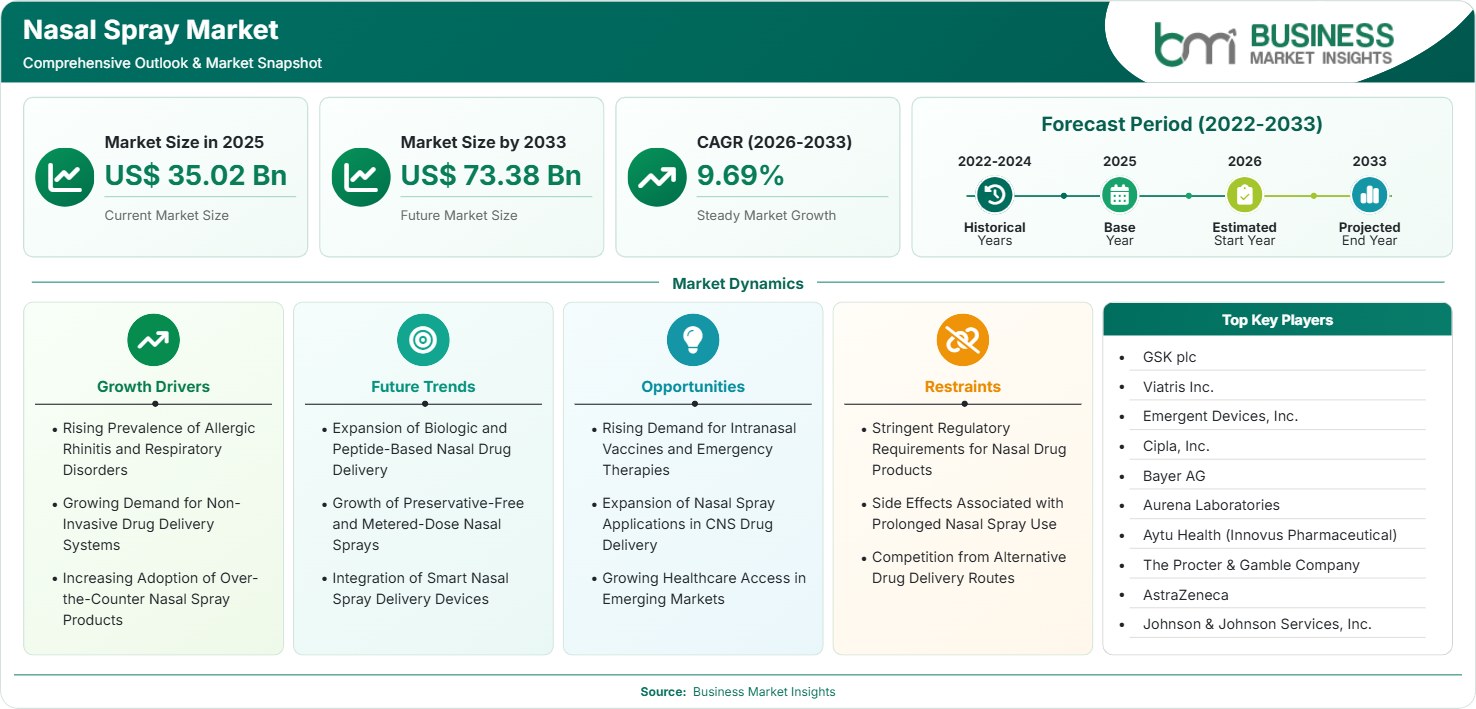
The Nasal Spray Market size was valued at US$ 35.02 Billion in 2025 and is projected to reach US$ 73.38 Billion by 2033, growing at a CAGR of 9.69% during 2026–2033. Rising prevalence of allergic rhinitis and respiratory disorders, increasing preference for non-invasive drug delivery systems, growing availability of over-the-counter nasal products, and expanding adoption of self-administered healthcare solutions are supporting market growth globally.

Report Coverage
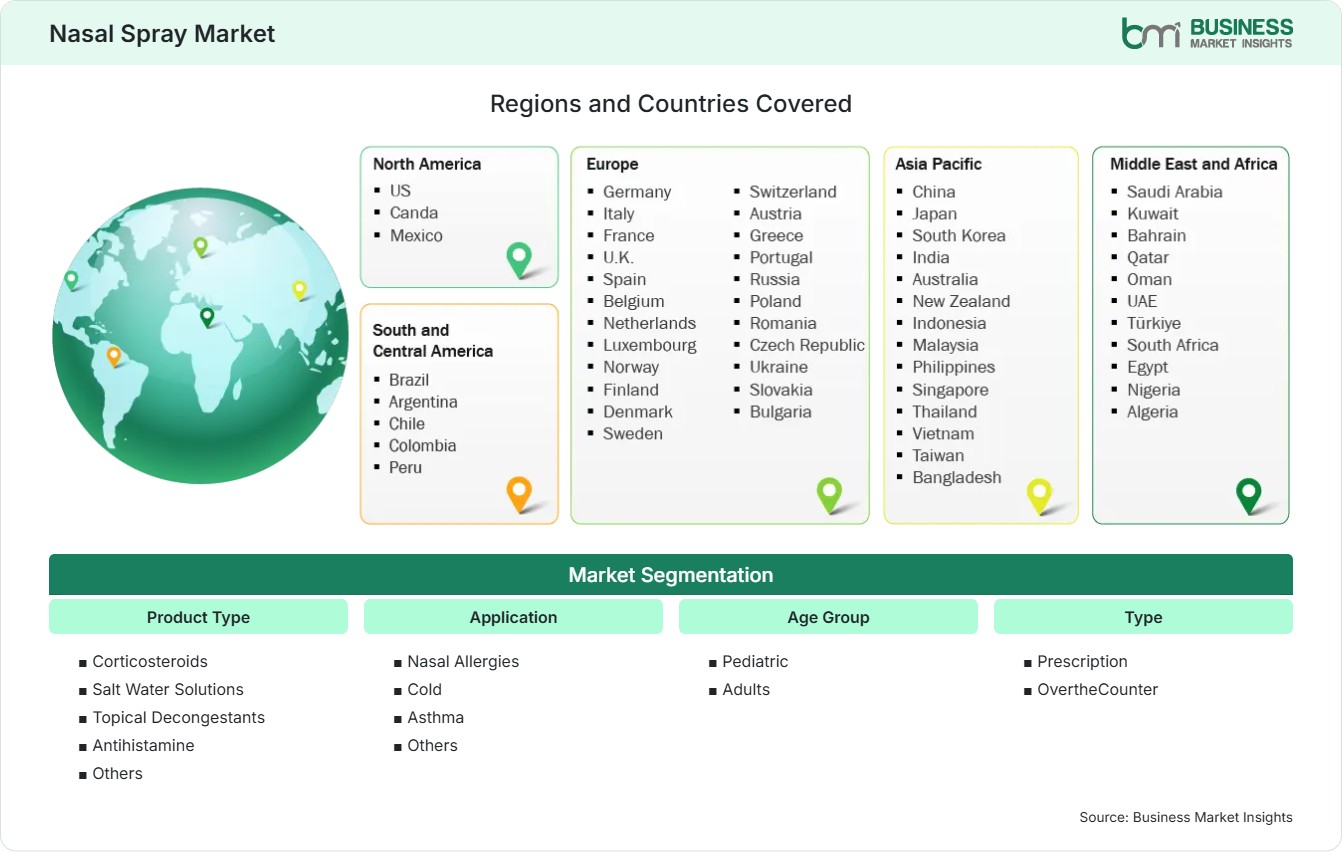
  • Product Type: Corticosteroids, Salt Water Solutions, Topical Decongestants, Antihistamine, Others
  • Application: Nasal Allergies, Cold, Asthma, Others
  • Age Group: Pediatric, Adults
  • Type: Prescription, OvertheCounter
  • Distribution Channel: Drug Stores & Retail Pharmacies, Hospital Pharmacies, Online Pharmacies
US$ 35.02 Bn Market size in 2025
US$ 73.38 Bn Market Size by 2033
9.69% CAGR, 2026 - 2033
2026-2033 Forecast Period

AI Overview

Nasal Spray Market Summary

  • North America Region: North America holds a nasal spray market share of 36%–39% in 2025, growing with a CAGR of 9.2%–9.9% during 2026–2033. High prevalence of allergies, strong healthcare infrastructure, and widespread availability of prescription and OTC nasal sprays continue supporting regional leadership. The U.S. market is expected to register a CAGR of 9.4%–10.1%.
  • Fastest Growing Region: Asia Pacific accounts for 27%–30% share in 2025 and is projected to grow at a CAGR of 10.4%–11.1% through 2033. Rising healthcare awareness, increasing respiratory disease burden, and improving access to pharmaceuticals continue driving regional growth.
  • Leading Segment: Corticosteroids represent 33%–36% share in 2025 and are expected to grow at a CAGR of 9.8%–10.5% through 2033. Strong effectiveness in managing allergic rhinitis and chronic nasal inflammation continues supporting segment dominance.
  • High Growth Segment: Nasal Allergies account for 38%–41% share in 2025 and are forecast to grow at a CAGR of 10.1%–10.8% during 2026–2033. Rising allergy prevalence and increasing diagnosis rates continue accelerating segment growth.
  • Key Market Opportunity: Expansion of biologic drug delivery platforms, advanced nasal formulations, self-care healthcare products, and digital health-supported treatment solutions is creating substantial growth opportunities.
  • Major Market Players: GSK plc, Viatris Inc., Emergent Devices, Inc., Cipla, Inc., Bayer AG, Aurena Laboratories, Aytu Health (Innovus Pharmaceutical), The Procter & Gamble Company, AstraZeneca, and Johnson & Johnson Services, Inc.
Strategic Insights

Nasal Spray Market: Strategic Insights

Nasal Spray Market Strategic Framework
FREE PDF
Request your free sample
Request free sample
Stakeholder View

Key Takeaways

  • Nasal sprays remain among the most widely utilized drug delivery systems for respiratory and allergy-related conditions.
  • Corticosteroid products continue dominating the market due to strong clinical effectiveness.
  • Nasal allergies represent the leading application segment because of increasing allergy prevalence globally.
  • OTC nasal spray products continue gaining popularity among consumers seeking convenient self-care solutions.
  • Pharmaceutical innovation is expanding the range of therapeutic indications supported by nasal delivery technologies.
  • North America remains the leading nasal spray market due to strong healthcare infrastructure and widespread product adoption.
  • Asia Pacific is projected to witness the fastest growth owing to healthcare expansion and rising disease awareness.
  • Advanced drug delivery platforms and biologic therapies are expected to create significant future opportunities.
Geographic Outlook

Nasal Spray Market Regional Highlights

North America Nasal Spray Market

North America accounts for 36%–39% Nasal Spray Market share in 2025 and is projected to grow at a CAGR of 9.2%–9.9% through 2033. The region benefits from high awareness regarding allergy management, extensive availability of prescription and OTC products, advanced healthcare infrastructure, and increasing respiratory disease prevalence. Continuous pharmaceutical innovation continues supporting regional market leadership.

  • Consumers increasingly utilize nasal sprays for allergy management, congestion relief, and respiratory symptom control due to convenience and rapid therapeutic action.
  • Pharmaceutical companies continue introducing advanced formulations that improve delivery efficiency and patient adherence.
  • Growing demand for self-care healthcare products is strengthening OTC product adoption across retail channels.
  • Healthcare providers continue recommending nasal therapies as effective treatment options for various respiratory conditions.
  • Increasing prevalence of seasonal allergies continues supporting market growth.
  • Investments in innovative drug delivery technologies are improving treatment outcomes and expanding application potential.

US Nasal Spray Market

The United States contributes approximately 87%–91% of North American revenue and is expected to register a CAGR of 9.4%–10.1% through 2033. The country remains the largest market due to widespread allergy prevalence, strong consumer healthcare spending, and extensive pharmaceutical product availability.

  • Growing adoption of OTC healthcare products continues driving consumer demand.
  • Healthcare providers are increasingly prescribing advanced corticosteroid and antihistamine nasal therapies.
  • Pharmaceutical innovation is supporting the development of novel drug delivery systems.
  • Digital health integration is improving treatment adherence and patient engagement.
  • Strong retail pharmacy networks continue improving product accessibility.

Europe Nasal Spray Market

Europe represents 23%–26% of global revenue in 2025 and is anticipated to expand at a CAGR of 9.5%–10.2% through 2033. Increasing prevalence of allergic rhinitis, growing healthcare awareness, and strong pharmaceutical manufacturing capabilities continue supporting regional growth. Germany remains the leading nasal spray market while Poland demonstrates stronger growth momentum.

  • Germany continues leading regional demand through advanced healthcare systems and widespread adoption of allergy treatments.
  • Poland is among the fastest-growing markets and is estimated to register a CAGR of 10.4%–11.1% during the forecast period, supported by improving healthcare access and expanding pharmaceutical consumption.
  • Demand for OTC nasal therapies continues increasing across regional markets.
  • Aging populations and growing respiratory disease prevalence are supporting product adoption.
  • Pharmaceutical companies continue expanding product portfolios to address diverse patient needs.
  • Healthcare modernization initiatives are strengthening market development.

Asia Pacific Nasal Spray Market

Asia Pacific accounts for 27%–30% of global revenue in 2025 and is expected to achieve the fastest CAGR of 10.4%–11.1% through 2033. Rising healthcare expenditure, growing awareness regarding respiratory diseases, increasing air pollution levels, and expanding pharmaceutical access continue supporting strong regional growth.

  • China remains the largest regional market due to expanding healthcare infrastructure and large patient populations.
  • India is projected to achieve approximately 11.3%–12.0% CAGR, supported by increasing healthcare access, growing allergy prevalence, and rising pharmaceutical consumption.
  • Increasing awareness of respiratory health is strengthening demand for nasal therapies.
  • Growing availability of OTC healthcare products continues supporting market expansion.
  • Pharmaceutical companies are expanding regional distribution networks and manufacturing capacities.
  • Healthcare digitization initiatives continue contributing to improved patient outcomes.

Rest of World Nasal Spray Market

Rest of World accounts for 8%–11% of global revenue in 2025 and is projected to expand at a CAGR of 8.8%–9.5% through 2033. Improving healthcare infrastructure, rising pharmaceutical access, and increasing awareness regarding respiratory disease management are supporting market growth across Latin America, the Middle East, and Africa.

  • Brazil continues generating demand through expanding healthcare spending and increasing allergy treatment adoption.
  • The UAE is witnessing growing utilization of modern respiratory healthcare solutions.
  • Saudi Arabia is expected to achieve approximately 9.7%–10.4% CAGR through 2033, supported by healthcare modernization and pharmaceutical market expansion.
  • Growing awareness regarding preventive healthcare continues supporting market growth.
  • Retail pharmacy expansion is improving product accessibility.
  • Increasing demand for convenient treatment options continues creating long-term market opportunities.
Global Market Geography
FREE PDF
Request your free sample
Request free sample
Segment Analysis

Nasal Spray Market Segmentation

Product Type

The product type segment represents the major categories of nasal spray formulations utilized for allergy management, congestion relief, respiratory therapy, and other therapeutic applications. This segment accounts for approximately 33%–36% share in 2025 and is projected to grow at a CAGR of 9.8%–10.5% through 2033. The expanding Nasal Spray Market Scope is supported by rising allergy prevalence, increasing respiratory health awareness, and growing preference for self-administered treatment solutions.

  • Corticosteroids: Corticosteroid nasal sprays dominate the market due to their effectiveness in managing allergic rhinitis, chronic inflammation, and nasal congestion. Widespread physician recommendations continue supporting segment growth.
  • Salt Water Solutions: Saline nasal sprays are increasingly utilized for nasal hydration, congestion relief, and daily nasal care. Their non-medicated nature and broad accessibility drive adoption.
  • Topical Decongestants: Topical decongestants provide rapid relief from nasal blockage and congestion, making them widely utilized in short-term respiratory symptom management.
  • Antihistamine: Antihistamine nasal sprays are commonly prescribed for allergic conditions and seasonal allergy symptoms due to their targeted therapeutic benefits.
  • Others: Other products include combination therapies, antiviral sprays, specialty formulations, and emerging intranasal drug delivery products.

Application

The application segment highlights the primary health conditions addressed through nasal spray technologies. This segment accounts for approximately 38%–41% share in 2025 and is expected to register a CAGR of 10.1%–10.8% through 2033. Current Nasal Spray Market Trends indicate increasing demand for allergy management solutions, advanced respiratory therapies, and innovative intranasal drug delivery applications.

  • Nasal Allergies: Nasal allergies remain the leading application segment due to the growing prevalence of allergic rhinitis and seasonal allergy conditions worldwide.
  • Cold: Nasal sprays are widely utilized for symptomatic relief associated with colds, including congestion management and nasal passage hydration.
  • Asthma: Intranasal therapies are increasingly incorporated into broader respiratory care programs to support breathing health and symptom management.
  • Others: Other applications include sinusitis management, migraine therapies, emergency treatments, intranasal vaccines, and specialty drug delivery applications.

Age Group

The age group segment reflects the major patient populations utilizing nasal spray products across healthcare settings. This segment accounts for approximately 72%–75% share in 2025 and is projected to grow at a CAGR of 9.7%–10.4% through 2033.

  • Pediatric: Pediatric nasal sprays are increasingly utilized for allergy relief, respiratory symptom management, and seasonal health concerns among younger populations.
  • Adults: Adults constitute the dominant user base due to higher diagnosis rates of allergic rhinitis, respiratory disorders, chronic sinus conditions, and widespread self-medication practices.

Type

The type segment highlights the prescription status of nasal spray products available across global healthcare markets. This segment accounts for approximately 58%–61% share in 2025 and is forecast to grow at a CAGR of 9.5%–10.2% through 2033.

  • Prescription: Prescription products dominate due to widespread use of corticosteroid sprays, advanced therapeutic formulations, and physician-directed treatment regimens.
  • Over-the-Counter: OTC nasal sprays continue witnessing strong growth due to convenience, accessibility, and increasing consumer preference for self-care healthcare products.

Distribution Channel

The distribution channel segment reflects the primary pathways through which nasal spray products reach end users. This segment accounts for approximately 49%–52% share in 2025 and is projected to grow at a CAGR of 10.0%–10.7% through 2033.

  • Drug Stores & Retail Pharmacies: Retail pharmacies remain the leading distribution channel due to broad product availability, consumer accessibility, and pharmacist support services.
  • Hospital Pharmacies: Hospital pharmacies play a critical role in dispensing prescription therapies and supporting specialized treatment programs.
  • Online Pharmacies: Online pharmacies are experiencing rapid adoption due to convenience, digital healthcare integration, home delivery services, and expanding e-commerce healthcare platforms.
Market Forces

Nasal Spray Market Dynamics

Key Market Drivers

Rising Prevalence of Allergic Rhinitis and Respiratory Disorders

The rising prevalence of allergic rhinitis, sinusitis, asthma, and other respiratory disorders is a key driver of growth in the global market. Environmental pollution, climate change, urbanization, and increased exposure to allergens are further contributing to the increase in the number of people affected by such diseases, resulting in an increased need for effective treatment. Nasal sprays offer better effectiveness and more convenient usage than many other treatments for respiratory ailments.

Growing Demand for Non-Invasive Drug Delivery Systems

The growing preference for non-invasive drug delivery systems is a key factor driving the expansion of the nasal spray market. Patients and healthcare providers increasingly favor treatment options that minimize discomfort, simplify administration, and improve overall treatment adherence. Nasal sprays provide several advantages, including needle-free delivery, rapid drug absorption through the nasal mucosa, ease of self-administration, and reduced need for healthcare professional assistance. These benefits make them particularly suitable for chronic disease management, emergency therapies, and over-the-counter medications. Pharmaceutical companies are continuously investing in innovative intranasal formulations and advanced delivery devices to enhance drug effectiveness, precision, and patient convenience. As healthcare systems place greater emphasis on patient-centered care and accessible treatment options, the adoption of nasal spray technologies is expected to grow steadily across a wide range of therapeutic applications.

Increasing Adoption of Over-the-Counter Nasal Spray Products

Customers are now resorting to OTC healthcare solutions that are easily accessible for the management of mild symptoms arising from respiratory and allergy-related conditions. The use of nasal spray solutions provides easy access to symptom relief without frequent doctor visits, making them a popular choice for managing respiratory diseases. Product accessibility will continue to be enhanced through retail pharmacies and online healthcare platforms.

Key Market Opportunities

Rising Demand for Intranasal Vaccines and Emergency Therapies

The increasing demand for intranasal vaccines and emergency therapies is opening new growth opportunities in the nasal spray market. Intranasal delivery provides a needle-free, non-invasive alternative that enhances patient comfort, reduces anxiety associated with injections, and supports higher vaccination and treatment acceptance. It also enables rapid administration, making it particularly valuable during public health emergencies, disaster response, and pre-hospital care. Pharmaceutical companies are investing heavily in advanced nasal delivery technologies for vaccines, overdose reversal medications, and other emergency treatments that require quick therapeutic action. As healthcare systems prioritize faster, more accessible, and patient-friendly drug delivery methods, intranasal products are expected to play an increasingly important role in improving treatment accessibility and clinical outcomes.

Expansion of Nasal Spray Applications in CNS Drug Delivery

The application of nasal spray technologies in central nervous system (CNS) drug delivery is gaining considerable momentum as researchers seek more effective ways to treat neurological disorders. Intranasal administration offers the potential to deliver therapeutic agents efficiently while enhancing patient convenience and treatment adherence. Pharmaceutical companies are expanding research into nasal formulations for conditions such as migraine, epilepsy, depression, Parkinson’s disease, Alzheimer’s disease, and acute pain management. Continuous advancements in formulation technologies and drug delivery devices are improving the effectiveness of nasal therapies. As clinical development programs expand and demand for innovative CNS treatments grows, nasal spray platforms are expected to become an increasingly important component of future neurological care.

Growing Healthcare Access in Emerging Markets

Improving healthcare infrastructure, rising healthcare expenditure, and growing awareness regarding respiratory disease management are expanding demand for nasal spray products across developing economies. Increased availability of prescription and OTC healthcare products, combined with expanding pharmacy networks, is strengthening market penetration. Pharmaceutical manufacturers are also increasing investments in regional distribution and product accessibility initiatives. Long-term Nasal Spray Market Forecast projections remain favorable as healthcare access continues improving across emerging markets.

Market Restraints and Challenges

Stringent Regulatory Requirements for Nasal Drug Products

Factor: Nasal spray products must comply with strict regulatory standards related to formulation quality, safety, efficacy, manufacturing processes, and device performance. Regulatory approval pathways can be particularly demanding for novel formulations and advanced drug delivery technologies.

Impact: Compliance requirements may increase product development costs, extend approval timelines, and create additional operational challenges for manufacturers seeking market entry and expansion.

Side Effects Associated with Prolonged Nasal Spray Use

Factor: Extended or inappropriate use of certain nasal spray products may result in issues such as nasal irritation, dryness, rebound congestion, or reduced treatment effectiveness over time.

Impact: Concerns regarding long-term usage effects may influence consumer behavior, limit continuous product use, and encourage greater emphasis on patient education and proper treatment guidance by healthcare providers.

Company Analysis

Competitive Landscape

The Nasal Spray Market Analysis is characterized by strong competition among pharmaceutical manufacturers, consumer healthcare companies, respiratory therapy providers, and drug delivery technology developers. Market participants are focusing on advanced nasal formulations, allergy management therapies, OTC healthcare products, intranasal drug delivery technologies, and innovative respiratory care solutions to strengthen their market positions. Rising prevalence of allergic rhinitis, increasing demand for self-administered treatments, and growing adoption of non-invasive drug delivery systems continue driving innovation across the market. Companies are investing in novel formulations, biologic delivery platforms, intranasal vaccines, and patient-friendly healthcare solutions to expand therapeutic applications and improve treatment outcomes.

Company Name

Overview

Products and Services relevant to this market

GSK plc

Global pharmaceutical and consumer healthcare company serving respiratory and allergy treatment markets.

Nasal spray therapies, allergy management products, respiratory treatments, and OTC healthcare solutions.

Viatris Inc.

Healthcare company focused on branded and generic pharmaceutical products.

Prescription nasal sprays, allergy treatments, respiratory care products, and specialty formulations.

Emergent Devices, Inc.

Drug delivery technology company specializing in intranasal administration platforms.

Nasal drug delivery devices, intranasal therapeutic systems, and advanced administration technologies.

Cipla, Inc.

Pharmaceutical company with a strong presence in respiratory and allergy care products.

Nasal sprays, respiratory therapies, allergy medications, and prescription healthcare solutions.

Bayer AG

Life sciences company serving consumer health and pharmaceutical markets.

OTC nasal sprays, allergy relief products, congestion management solutions, and self-care healthcare products.

Aurena Laboratories

Specialized pharmaceutical manufacturer focused on nasal and aerosol products.

Nasal spray formulations, prescription therapies, OTC nasal products, and drug delivery solutions.

Aytu Health (Innovus Pharmaceutical)

Healthcare company focused on consumer and specialty healthcare products.

Nasal sprays, allergy management products, sinus care solutions, and respiratory treatment products.

The Procter & Gamble Company

Consumer healthcare company offering wellness and self-care solutions.

Nasal care products, congestion relief solutions, allergy management products, and OTC healthcare offerings.

AstraZeneca

Global biopharmaceutical company focused on respiratory and specialty healthcare.

Respiratory therapies, allergy treatment products, nasal formulations, and specialty pharmaceutical solutions.

Johnson & Johnson Services, Inc.

Healthcare company serving consumer health and pharmaceutical markets.

Nasal care products, allergy treatments, OTC healthcare products, and respiratory wellness solutions.

Trust & Transparency

Research Methodology

The market analysis combines proprietary research with secondary data from government agencies, company disclosures, regulatory filings, industry databases and expert interviews. Market estimates are validated through data triangulation, cross-market benchmarking and analyst review.

View Full Research Methodology

Questions Answered

Frequently Asked Questions

How are intranasal drug delivery technologies influencing the market?

Intranasal drug delivery technologies are expanding treatment possibilities by enabling rapid absorption, improved patient convenience, non-invasive administration, and broader therapeutic applications including vaccines, emergency therapies, and CNS-targeted treatments.

What does this Nasal Spray Market Report cover?

The report covers product type analysis, application assessment, age group evaluation, prescription type analysis, distribution channel assessment, regional trends, competitive landscape analysis, market drivers, opportunities, restraints, challenges, and future growth prospects through 2033.

Why are Nasal Allergies the leading application segment?

Nasal allergies lead the market because allergic rhinitis affects a large global patient population and often requires ongoing treatment using antihistamine, corticosteroid, and saline nasal spray products.

Which product type segment dominates the market?

Corticosteroids dominate the market due to their strong effectiveness in treating allergic rhinitis, chronic nasal inflammation, and other respiratory conditions requiring long-term symptom control.

What is driving growth in the market?

Rising prevalence of allergic rhinitis and respiratory disorders, growing demand for non-invasive drug delivery systems, increasing adoption of over-the-counter nasal spray products, and expanding self-care healthcare trends are major factors driving market growth.

Access the Full Nasal Spray Market Report

Get segment-level forecasts, regional estimates, competitive benchmarking, company profiles and downloadable Excel datasets.

Access the full Nasal Spray Market Report
350 pages PDF & Excel | 2026-08-21
Similar Research

Related Market Reports