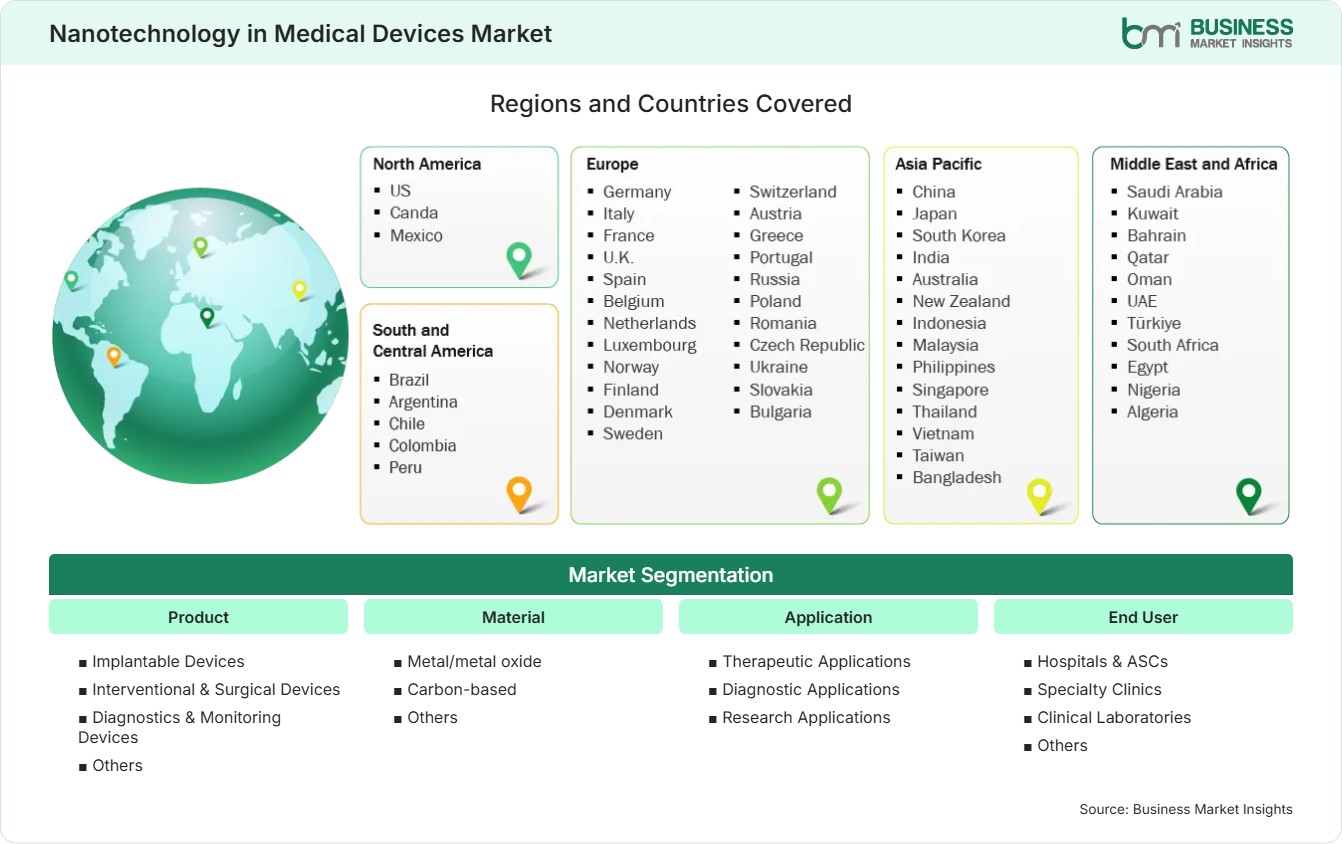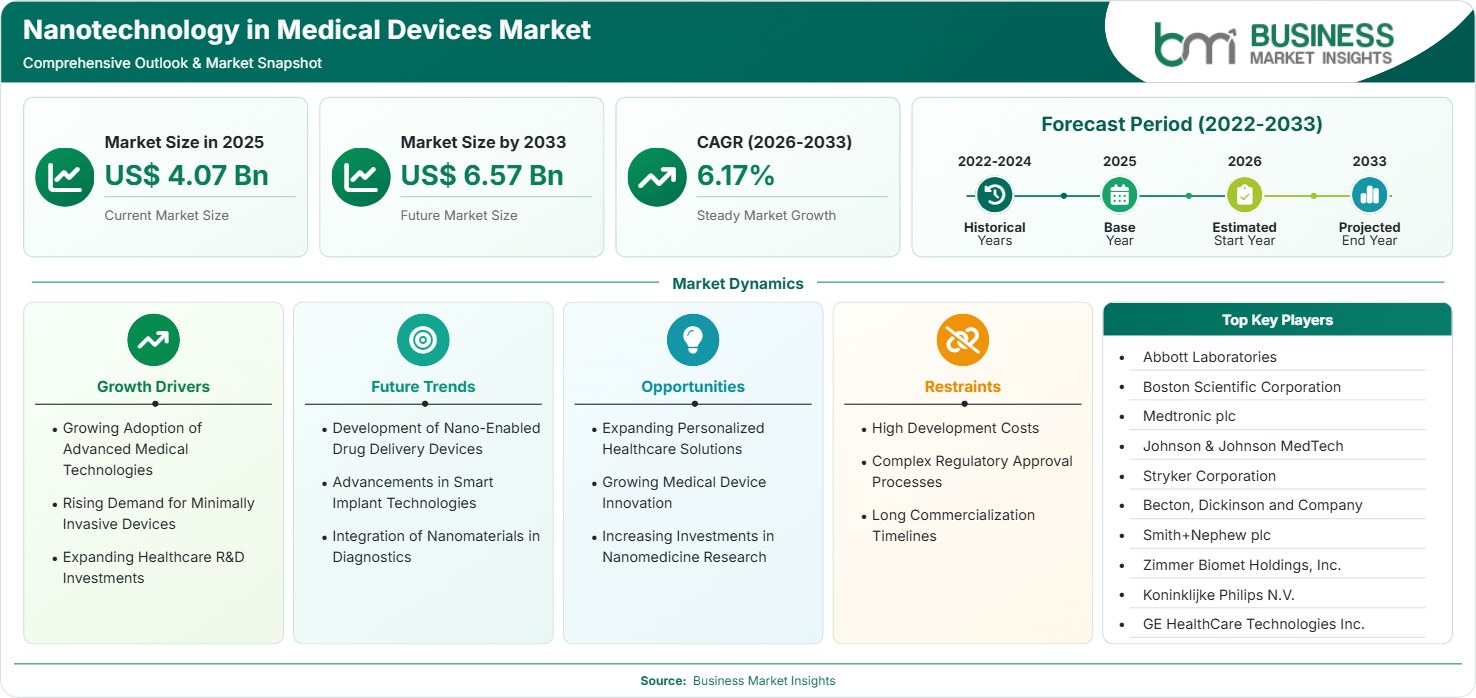
Nanotechnology in Medical Devices Market Regional Highlights
North America Nanotechnology in Medical Devices Market
North America accounted for approximately 38%–41% of global revenue in 2025 and is projected to expand at a 5.8%–6.2% CAGR through 2033. The region benefits from advanced healthcare infrastructure, strong medical device manufacturing capabilities, substantial biomedical research funding, and rapid commercialization of innovative technologies. Continuous investment in precision medicine, nanomedicine, and minimally invasive procedures supports sustained industry expansion. The Nanotechnology in Medical Devices Market share remains highest in this region due to favorable reimbursement systems, regulatory support, and high healthcare expenditure.
- The United States leads regional adoption through substantial NIH research funding, advanced hospital networks, and strong collaboration between medical device manufacturers and academic research institutions.
- Canada continues strengthening commercialization through investments in biomedical innovation, nanotechnology research centers, and supportive government funding programs for healthcare technologies.
- Increasing prevalence of cardiovascular diseases, orthopedic disorders, neurological conditions, and cancer continues expanding demand for advanced implantable and diagnostic medical devices.
- Regulatory pathways established by the U.S. FDA encourage continuous product innovation while maintaining high standards for clinical safety, manufacturing quality, and device effectiveness.
- Growing adoption of AI-assisted diagnostics, wearable monitoring technologies, and nano-enabled biosensors further strengthens long-term regional competitiveness.
US Nanotechnology in Medical Devices Market
The United States Nanotechnology in Medical Devices Market represented approximately 81%–84% of North American revenue in 2025 and is expected to register a 5.9%–6.3% CAGR through 2033. High healthcare expenditure, advanced research capabilities, strong venture capital investment, and early adoption of innovative medical technologies continue supporting commercialization of nano-enabled diagnostic, monitoring, and therapeutic devices across multiple clinical specialties.
- Large-scale investment by public agencies and private organizations supports continuous development of intelligent implants, biosensors, and advanced imaging systems.
- Academic institutions collaborate extensively with medical device manufacturers to accelerate commercialization of nanotechnology innovations.
- Rising demand for personalized healthcare solutions continues driving adoption of precision diagnostics and targeted therapeutic devices.
- Strong intellectual property protection and mature regulatory systems encourage sustained investment in advanced medical device development.
Europe Nanotechnology in Medical Devices Market
Europe accounted for nearly 27%–30% of global revenue in 2025 and is forecast to grow at a 5.9%–6.3% CAGR through 2033. Strong emphasis on medical research, advanced manufacturing capabilities, and supportive healthcare systems continues driving technology adoption. Germany remains the leading national market, while France and the United Kingdom maintain significant innovation activity. Spain and Italy continue expanding healthcare investments, whereas Central and Eastern European countries demonstrate faster adoption supported by modernization initiatives.
- Germany leads regional manufacturing through advanced engineering capabilities and strong investment in medical technology innovation.
- The United Kingdom strengthens research collaborations linking universities, hospitals, and medical device companies for commercialization of nano-enabled healthcare technologies.
- France continues expanding precision medicine initiatives supported by increasing public healthcare investments and advanced clinical research.
- European Union regulatory harmonization improves cross-border commercialization and strengthens confidence in innovative medical technologies.
Asia Pacific Nanotechnology in Medical Devices Market
Asia Pacific Nanotechnology in Medical Devices Market represented approximately 24%–27% of global revenue in 2025 and is expected to record the fastest expansion at a 7.0%–7.4% CAGR through 2033. China dominates regional production, while India demonstrates the fastest growth due to healthcare infrastructure expansion, rising medical tourism, and increasing investment in advanced medical technologies.
- China continues strengthening domestic production of advanced medical devices through supportive industrial policies and expanding biotechnology investments.
- India records rapid expansion driven by healthcare digitization, increasing hospital capacity, and rising government support for medical technology innovation.
- Japan remains a global leader in precision manufacturing, advanced imaging systems, and nano-enabled implant technologies.
- South Korea strengthens commercialization through strong semiconductor expertise, biomedical research investment, and growing collaboration with international healthcare companies.
- Rising chronic disease prevalence across Asia Pacific supports sustained demand for advanced diagnostic and therapeutic technologies.
Rest of World Nanotechnology in Medical Devices Market
The Rest of World region accounted for approximately 8%–11% of global revenue in 2025 and is projected to expand at a 6.2%–6.6% CAGR through 2033. Healthcare modernization, improving diagnostic capabilities, and expanding public investment continue supporting gradual market development.
- Brazil continues investing in advanced diagnostic infrastructure and specialized healthcare facilities supporting adoption of innovative medical devices.
- Saudi Arabia strengthens healthcare transformation through Vision 2030 initiatives focused on advanced medical technologies and domestic healthcare capabilities.
- The United Arab Emirates attracts international medical technology investment through innovation-focused healthcare infrastructure and research partnerships.
- South Africa continues improving clinical research capabilities while expanding access to advanced diagnostic technologies across major healthcare institutions.
- Government-led healthcare modernization programs across emerging economies continue supporting long-term demand for nano-enabled medical devices.