Nanofabrics Market Regional Highlights
North America Nanofabrics Market
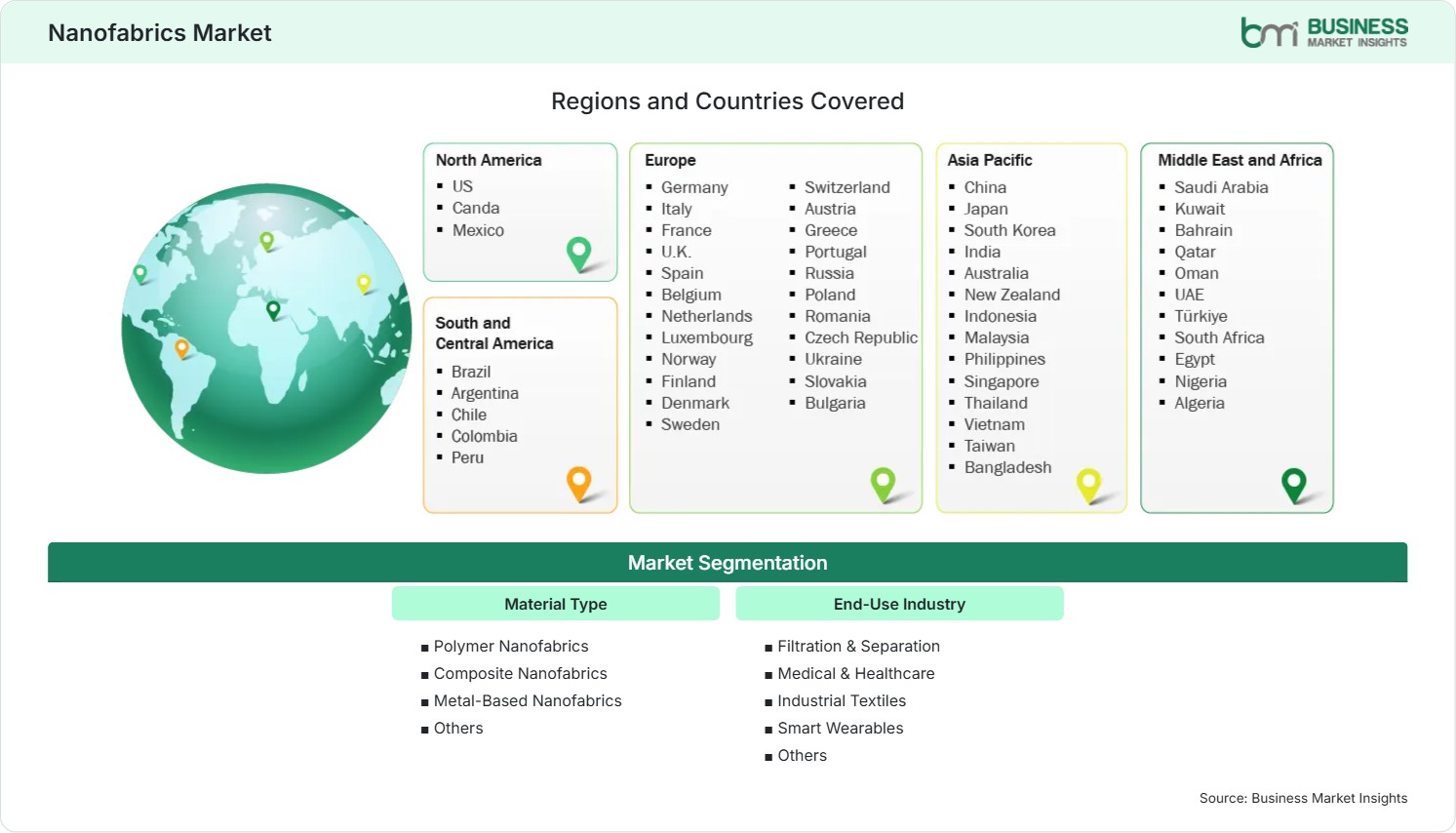
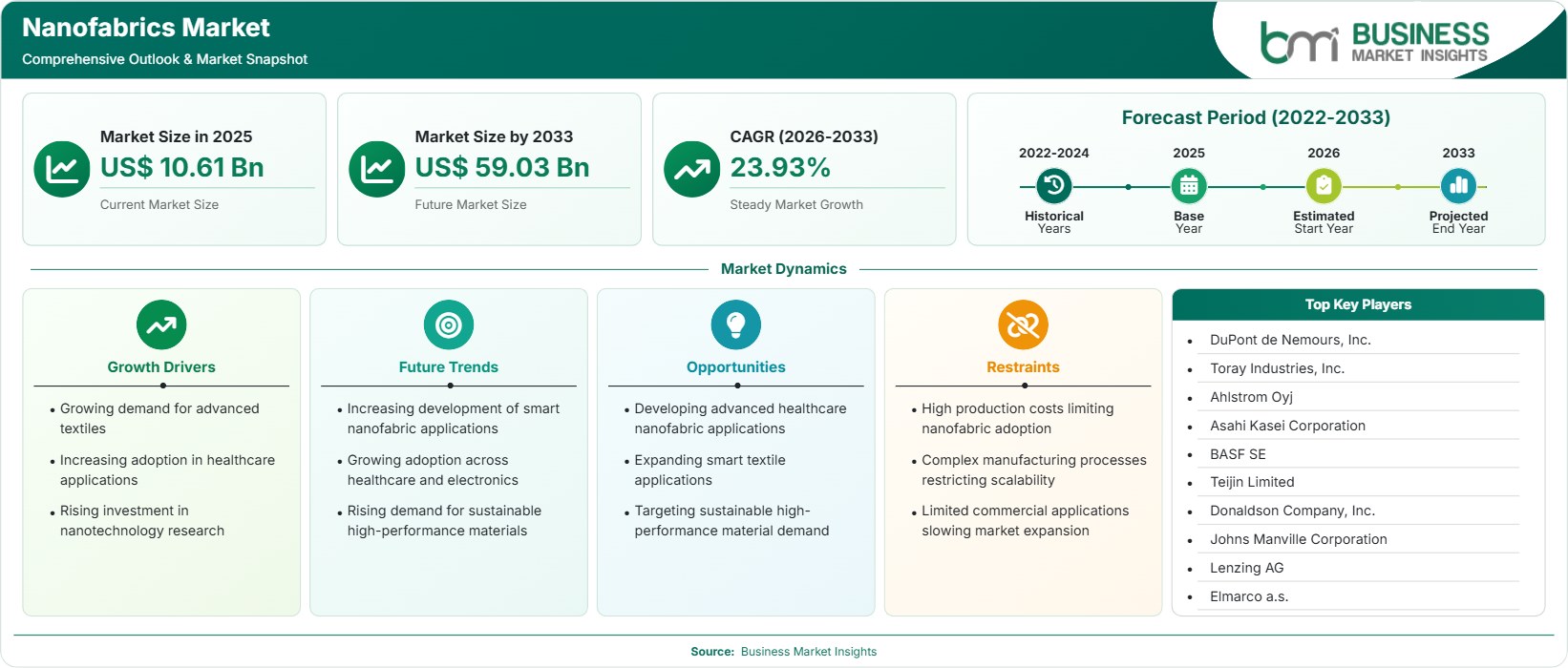
North America accounted for 33%–36% Nanofabrics Market share in 2025 and is projected to expand at a 22.1%–23.0% CAGR during 2026–2033. The region benefits from a well-established nanotechnology research ecosystem, substantial private and public investment, and strong adoption across healthcare, filtration, and advanced textile applications. Increased commercialization of nanomaterials and growing investment in performance fabrics continue strengthening regional demand. The presence of major manufacturers and research institutions further supports innovation and product development across multiple end-use sectors.
- Healthcare organizations continue increasing utilization of nanofiber-based wound care products, tissue engineering materials, and antimicrobial textile solutions to improve patient outcomes.
- Growing investment in advanced filtration technologies is supporting demand across industrial processing, water treatment, and air purification applications.
- Strong collaboration between universities, research institutions, and manufacturers is accelerating product commercialization and manufacturing innovation.
- Rising interest in smart textiles and wearable technologies is creating new opportunities for conductive and multifunctional nanofabric materials.
- Sustainability initiatives are encouraging development of environmentally responsible nanomaterials for industrial and consumer applications.
US Nanofabrics Market
The US represented 76%–80% share within North America in 2025 and is anticipated to register a 22.5%–23.4% CAGR during 2026–2033. Strong government funding for nanotechnology research, expanding medical applications, and advanced manufacturing capabilities support market leadership. The country remains one of the most active centers for innovation involving nanofibers, engineered materials, and performance textiles. Increasing commercialization activity continues creating growth opportunities across healthcare, industrial, and consumer applications in Nanofabrics Market.
- Medical device manufacturers continue adopting nanofabric materials to improve functionality and performance of healthcare products.
- Growing demand for advanced air filtration systems is supporting industrial and commercial market expansion.
- Research investment remains focused on scalable nanofiber production technologies and next-generation material development.
- Increasing adoption of smart textile technologies is creating demand for conductive and sensor-enabled nanofabric solutions.
Europe Nanofabrics Market
Europe held 27%–30% share in 2025 and is expected to grow at a 23.4%–24.3% CAGR during 2026–2033. Regional demand is supported by strong environmental regulations, advanced textile manufacturing capabilities, and increasing healthcare research activity. The market benefits from growing adoption of sustainable materials, filtration technologies, and high-performance industrial textiles. Innovation across medical and environmental applications continues creating opportunities for manufacturers and technology developers operating throughout the region.
- Germany remains a leading regional market supported by advanced manufacturing and industrial innovation programs.
- France and the United Kingdom continue investing in healthcare nanotechnology and next-generation textile research.
- Growing emphasis on sustainable production is increasing adoption of environmentally responsible nanofabric solutions.
- Industrial filtration applications continue expanding due to stricter environmental and workplace safety standards.
- Smart wearable innovation and performance textile development remain key growth drivers across European markets.
Asia Pacific Nanofabrics Market
Asia Pacific accounted for 26%–29% share in 2025 and is projected to expand at a 25.8%–26.7% CAGR during 2026–2033, making it the fastest-growing regional market. The region benefits from strong textile manufacturing capabilities, expanding healthcare infrastructure, growing nanotechnology investments, and increasing industrialization. Countries across the region are investing in advanced materials research and commercialization initiatives. Rising demand for filtration products, performance textiles, and smart wearable technologies continues accelerating adoption of nanofabric-based solutions across a wide range of Nanofabrics Market.
- China remains a leading market due to large-scale advanced materials manufacturing and significant nanotechnology research investments.
- India continues witnessing rising demand driven by healthcare modernization, industrial expansion, and increasing adoption of performance textiles.
- Japan and South Korea maintain strong positions through innovation in nanomaterials, smart textiles, and high-value healthcare applications.
- Expanding production of wearable electronics is creating opportunities for conductive nanofabric and multifunctional textile development.
- Growing environmental awareness is increasing adoption of advanced nanofiber filtration technologies across industrial and municipal applications.
Rest of World Nanofabrics Market
Rest of World accounted for 7%–10% share in 2025 and is expected to register a 22.8%–23.7% CAGR during 2026–2033. Adoption is increasing across the Middle East, Latin America, and selected African markets as awareness regarding advanced textile materials continues expanding. Investments in healthcare infrastructure, industrial filtration systems, and environmental protection initiatives are supporting market development.
- Gulf countries are increasingly investing in advanced filtration technologies to support industrial and environmental applications.
- Brazil remains an important Latin American market due to growing industrial textile and healthcare sector demand.
- Mining, energy, and manufacturing industries are utilizing high-performance filtration materials to improve operational efficiency.
- Environmental sustainability initiatives are encouraging adoption of advanced nanofiber-based water and air purification technologies.
- Healthcare providers are gradually increasing use of advanced textile materials in wound management and patient care applications.