
Multiple Myeloma Market Outlook: Size, Share, Trends, Growth Analysis, Competitive Landscape & Forecast, 2026-2033

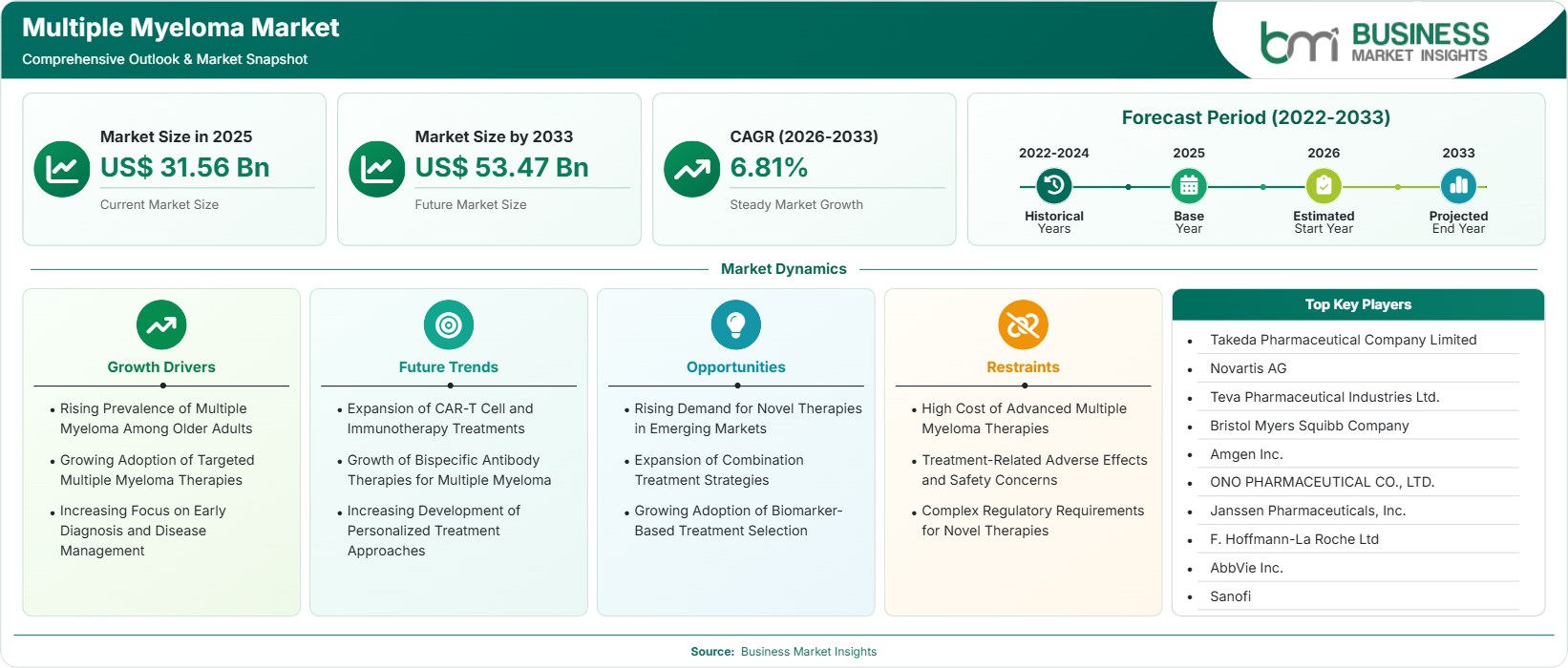
The Multiple Myeloma Market size was valued at US$ 31.56 Billion in 2025 and is projected to reach US$ 53.47 Billion by 2033, growing at a CAGR of 6.81% during 2026–2033. Rising prevalence of hematological malignancies, increasing adoption of targeted therapies, growing utilization of immunotherapies, advancements in diagnostic technologies, and expanding access to innovative treatment options are driving market growth globally.

Report Coverage
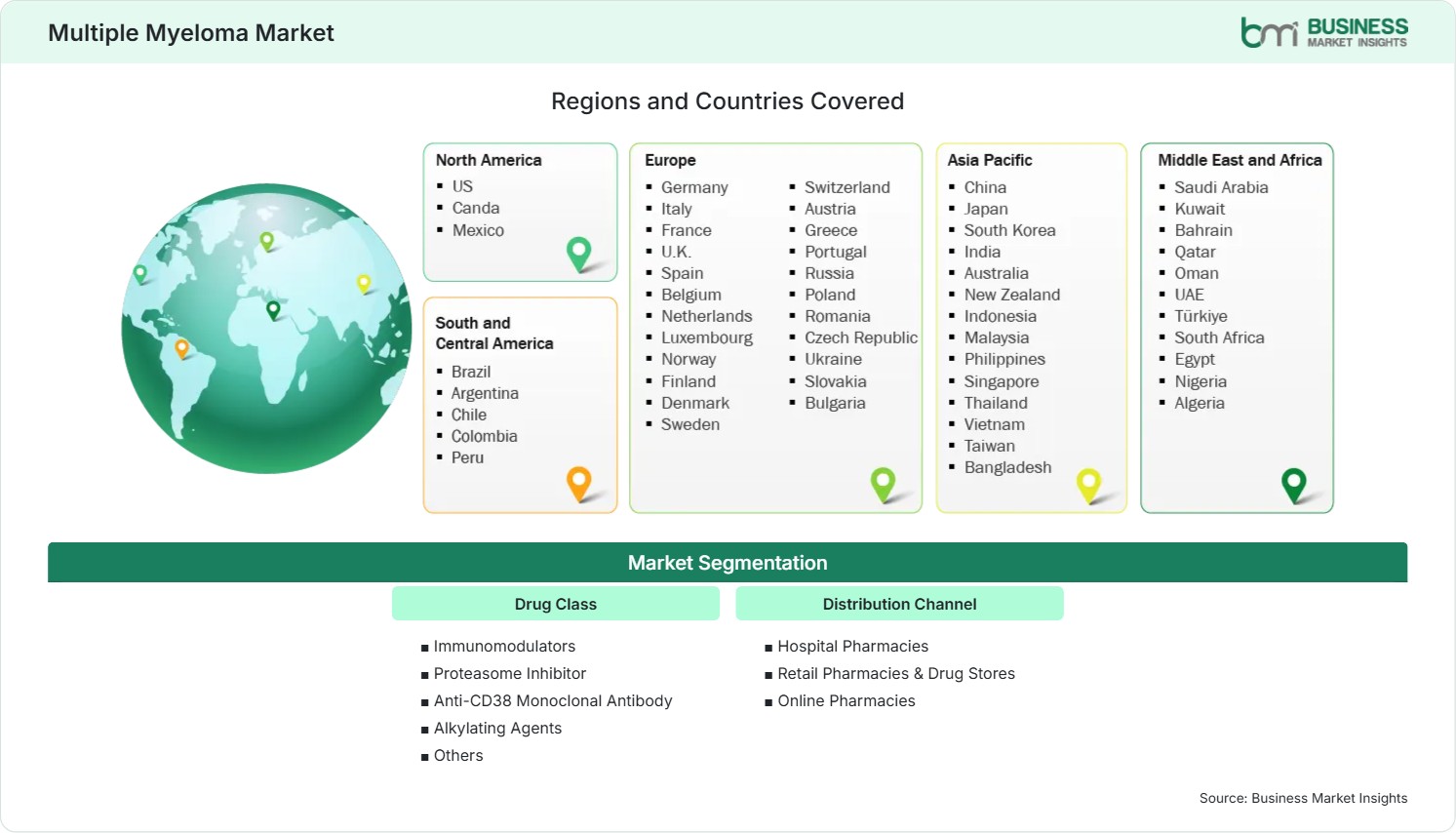
  • Drug Class: Immunomodulators, Proteasome Inhibitor, Anti-CD38 Monoclonal Antibody, Alkylating Agents, Others
  • Distribution Channel: Hospital Pharmacies, Retail Pharmacies & Drug Stores, Online Pharmacies
US$ 31.56 Bn Market size in 2025
US$ 53.47 Bn Market Size by 2033
6.81% CAGR, 2026 - 2033
2026-2033 Forecast Period

AI Overview

Multiple Myeloma Market Summary

  • North America Region: North America holds a multiple myeloma market share of 40%–44% in 2025 and is projected to grow at a CAGR of 6.1%–6.7% during 2026–2033. Growth is supported by high disease awareness, strong biologic and immunotherapy adoption, robust reimbursement systems, advanced healthcare infrastructure, increasing use of combination therapies, growing clinical trial activity, rising healthcare expenditure, and continuous pharmaceutical innovation. The U.S. remains the dominant market due to significant treatment accessibility and strong oncology research investments, advancing at a CAGR of 6.2%–6.8%.
  • Fastest Growing Region: Asia Pacific accounts for 22%–26% share in 2025 and is expected to register a CAGR of 8.0%–8.6% through 2033. Growth is fueled by increasing cancer awareness, expanding healthcare infrastructure, improving diagnosis rates, growing access to advanced therapies, rising healthcare spending, favorable government initiatives, expanding oncology treatment centers, and increasing adoption of biologics and targeted medicines.
  • Leading Segment: Immunomodulators represent 30%–34% share in 2025 and are anticipated to grow at a CAGR of 6.8%–7.4% through 2033. Demand is supported by broad clinical utilization, effectiveness in combination therapies, long-term disease management applications, established treatment guidelines, strong physician adoption, and ongoing product innovation.
  • High Growth Segment: Anti-CD38 Monoclonal Antibody captures 20%–24% share in 2025 and is forecast to expand at a CAGR of 8.5%–9.1% during 2026–2033. Expansion is driven by superior treatment outcomes, increasing use in frontline therapy regimens, growing clinical evidence, broader regulatory approvals, and increasing physician preference for targeted treatment approaches.
  • Key Market Opportunity: Expanding development of next-generation immunotherapies, CAR-T cell therapies, bispecific antibodies, and personalized treatment approaches is creating significant opportunities for improving patient outcomes and extending survival rates.
  • Major Market Players: Takeda Pharmaceutical Company Limited, Novartis AG, Teva Pharmaceutical Industries Ltd., Bristol Myers Squibb Company, Amgen Inc., ONO PHARMACEUTICAL CO., LTD., Janssen Pharmaceuticals, Inc., F. Hoffmann-La Roche Ltd, AbbVie Inc., and Sanofi.
Strategic Insights

Multiple Myeloma Market: Strategic Insights

Multiple Myeloma Market Strategic Framework
FREE PDF
Request your free sample
Request free sample
Stakeholder View

Key Takeaways

  • The multiple myeloma treatment landscape is rapidly evolving with the increasing adoption of immunotherapies, monoclonal antibodies, and targeted treatment regimens designed to improve patient survival and disease management outcomes.
  • Anti-CD38 Monoclonal Antibodies represent the most attractive growth opportunity due to expanding frontline use, strong clinical efficacy, increasing regulatory approvals, and broader physician acceptance.
  • Pharmaceutical companies are heavily investing in CAR-T cell therapies, bispecific antibodies, and personalized medicine approaches to address unmet clinical needs and improve therapeutic outcomes.
  • Asia Pacific presents substantial growth opportunities owing to improving oncology infrastructure, rising diagnosis rates, increasing healthcare investments, and greater access to advanced cancer treatments.
  • Strategic collaborations among pharmaceutical companies, research institutions, and healthcare providers continue accelerating drug development and commercialization activities.
  • Growing emphasis on early diagnosis, precision medicine, and combination treatment regimens is reshaping long-term disease management strategies across global healthcare systems.
Geographic Outlook

Multiple Myeloma Market Regional Highlights

North America Multiple Myeloma Market

North America accounted for 40%–44% of global revenue in 2025 and is expected to grow at a CAGR of 6.1%–6.7% through 2033. The region benefits from advanced oncology infrastructure, widespread access to innovative therapies, strong reimbursement support, and significant pharmaceutical research investments. The Multiple Myeloma Market share remains the largest globally due to early adoption of novel therapeutics and high healthcare expenditure.

  • Strong healthcare spending supports broad access to biologics, immunotherapies, and advanced targeted treatments, helping improve patient outcomes and treatment continuity across the region.
  • Extensive clinical research activity accelerates the development and adoption of innovative therapies, including monoclonal antibodies, CAR-T therapies, and combination treatment regimens.
  • Favorable reimbursement frameworks encourage greater utilization of premium oncology treatments and support long-term disease management strategies.
  • Increasing awareness among healthcare professionals and patients contributes to earlier diagnosis, timely intervention, and improved survival outcomes.
  • Established cancer treatment centers and specialized hematology clinics strengthen the availability of comprehensive and personalized treatment approaches.

US Multiple Myeloma Market

The United States represents 84%–88% of North American demand and is projected to grow at a CAGR of 6.2%–6.8% through 2033. Growth is supported by strong oncology research, rapid adoption of innovative therapies, and increasing utilization of personalized treatment approaches. Continued investments in hematological cancer management further strengthen multiple myeloma market expansion.

  • Healthcare providers increasingly prescribe targeted therapies and immunotherapies that deliver improved efficacy and enhanced disease control for multiple myeloma patients.
  • Significant investments in oncology research continue supporting the development of next-generation treatment options and innovative therapeutic platforms.
  • Growing adoption of personalized medicine approaches enables more effective patient stratification and tailored treatment planning.
  • Expanding use of advanced diagnostics and disease monitoring technologies supports earlier detection and long-term treatment optimization.

Europe Multiple Myeloma Market

Europe held 26%–30% of global revenue in 2025 and is expected to register a CAGR of 6.4%–7.0% through 2033. Growing utilization of biologics, favorable healthcare coverage, and increasing adoption of innovative therapies continue supporting market growth. Germany remains the leading market, while Italy represents a strong growth market with a CAGR of 7.0%–7.6%. Expanding access to targeted treatments is enhancing patient outcomes across the region.

  • Government-backed healthcare systems facilitate wider access to advanced cancer therapies and specialized hematology treatment services.
  • Growing adoption of innovative biologics and monoclonal antibodies is improving treatment effectiveness and supporting market expansion.
  • Clinical research programs continue advancing therapy development and promoting access to novel treatment options.
  • Increasing physician awareness regarding personalized treatment approaches is driving greater utilization of targeted therapies.
  • Strong healthcare infrastructure supports effective disease monitoring, patient follow-up, and long-term therapeutic management.

Asia Pacific Multiple Myeloma Market

Asia Pacific accounted for 22%–26% of global revenue in 2025 and is expected to record the fastest CAGR of 8.0%–8.6% through 2033. Rising cancer awareness, improving healthcare infrastructure, and expanding access to advanced therapeutics are driving regional growth. China and Japan remain key markets, while India is projected to register a CAGR of 8.7%–9.3%. Increasing investments in oncology care continue creating significant opportunities across the region.

  • Increasing healthcare expenditure is supporting broader patient access to advanced multiple myeloma treatments and specialized oncology services.
  • Growing awareness and improved diagnostic capabilities contribute to earlier disease detection and more effective treatment interventions.
  • Expansion of cancer treatment centers and hospital infrastructure is strengthening long-term market growth and treatment accessibility.
  • Rising adoption of biologics, targeted therapies, and immunotherapies is improving clinical outcomes for patients with complex treatment needs.
  • Government healthcare initiatives and oncology programs are supporting broader treatment access and strengthening cancer care delivery systems.

Rest of World Multiple Myeloma Market

Rest of World accounted for 8%–12% of global revenue in 2025 and is forecast to grow at a CAGR of 6.3%–6.9% through 2033. Market growth is supported by healthcare infrastructure improvements, expanding oncology services, and increasing awareness of hematological cancers. Brazil and Saudi Arabia are among the major markets benefiting from healthcare modernization efforts.

  • Healthcare investments continue improving access to specialty oncology treatments, advanced diagnostics, and comprehensive cancer management services.
  • Awareness initiatives are encouraging earlier disease identification, improving diagnosis rates and supporting timely treatment intervention.
  • Pharmaceutical companies are expanding regional operations and strengthening access to innovative cancer therapies through strategic partnerships.
  • Increasing availability of oncology specialists is enhancing disease management, treatment monitoring, and patient care outcomes.
  • Expanding healthcare coverage and infrastructure development are improving long-term accessibility to modern multiple myeloma treatment options.
Global Market Geography
FREE PDF
Request your free sample
Request free sample
Segment Analysis

Multiple Myeloma Market Segmentation

Drug Class

Immunomodulators account for 30%–34% share in 2025 and are expected to grow at a CAGR of 6.8%–7.4% through 2033. The segment maintains its leading position due to extensive use in frontline and maintenance therapies, established clinical efficacy, and widespread incorporation into combination treatment regimens. The Multiple Myeloma Market scope continues to expand as physicians increasingly utilize immunomodulatory agents to improve disease control and prolong progression-free survival.

  • Immunomodulators: Widely prescribed for newly diagnosed and relapsed patients due to their effectiveness in immune system modulation and compatibility with combination therapies.
  • Proteasome Inhibitor: Plays a critical role in standard treatment regimens by targeting cancer cell protein degradation pathways and improving treatment outcomes.
  • Anti-CD38 Monoclonal Antibody: Emerging as a high-growth category due to increasing frontline adoption, strong efficacy data, and expanding treatment indications.
  • Alkylating Agents: Continue to be utilized in selected treatment settings and combination regimens, particularly for specific patient populations.
  • Others: Include corticosteroids, CAR-T therapies, bispecific antibodies, and emerging targeted therapies under active clinical development.

Distribution Channel

Hospital Pharmacies hold 64%–68% share in 2025 and are projected to grow at a CAGR of 7.0%–7.6% through 2033. Growth is supported by the administration requirements of biologics, monoclonal antibodies, and specialized oncology treatments delivered under medical supervision. Current Multiple Myeloma Market trends indicate strong demand for hospital-based cancer care and integrated treatment services.

  • Hospital Pharmacies: Benefit from specialist oversight, access to advanced oncology therapies, infusion services, and comprehensive patient management programs.
  • Retail Pharmacies & Drug Stores: Support long-term medication access, prescription fulfillment, and convenience for patients receiving maintenance therapies.
  • Online Pharmacies: Experiencing growing adoption due to digital healthcare expansion, convenience, improved medication access, and home delivery services.
Market Forces

Multiple Myeloma Market Dynamics

Key Market Drivers

Rising Prevalence of Multiple Myeloma Among Older Adults

The incidence of multiple myeloma continues to increase globally, particularly among aging populations. Older adults represent the largest patient group due to the disease's strong association with advancing age. Improvements in diagnostic practices and greater disease awareness are contributing to earlier detection and increased identification of cases. As life expectancy rises across many countries, healthcare systems are witnessing a larger patient population requiring long-term disease management and treatment. This trend continues to strengthen demand for effective therapies and supportive care services across the oncology landscape.

Growing Adoption of Targeted Multiple Myeloma Therapies

Targeted therapies are transforming multiple myeloma treatment by offering improved efficacy and more precise disease management compared to conventional approaches. Healthcare providers increasingly utilize monoclonal antibodies, proteasome inhibitors, and immunomodulatory agents to achieve deeper responses and extended remission periods. Pharmaceutical companies continue investing in innovative therapies designed to address unmet clinical needs and improve patient outcomes. Expanding clinical evidence and growing physician confidence are driving broader adoption of advanced targeted treatments worldwide.

Increasing Focus on Early Diagnosis and Disease Management

Healthcare providers are placing greater emphasis on early diagnosis and proactive disease management to improve patient outcomes and reduce complications. Advances in diagnostic technologies, laboratory testing, and disease monitoring tools allow physicians to identify multiple myeloma earlier and develop personalized treatment plans. Early intervention can improve response rates, delay disease progression, and enhance quality of life. Increasing awareness programs and improved access to specialist care are further supporting effective disease management strategies.

Key Market Opportunities

Rising Demand for Novel Therapies in Emerging Markets

Emerging healthcare markets are creating significant opportunities for pharmaceutical companies developing innovative multiple myeloma therapies. Improvements in healthcare infrastructure, growing healthcare expenditure, and rising cancer awareness are increasing demand for advanced treatment solutions. Multiple Myeloma Market Forecasts indicate that developing economies will contribute an expanding share of future growth as access to specialty oncology care improves. Companies expanding their presence in these regions are well-positioned to benefit from increasing treatment adoption and an expanding patient pool.

Expansion of Combination Treatment Strategies

Combination therapies have become a cornerstone of multiple myeloma management due to their ability to improve response rates and extend survival outcomes. Physicians increasingly combine immunomodulators, monoclonal antibodies, proteasome inhibitors, and corticosteroids to optimize treatment effectiveness. Ongoing clinical trials continue evaluating new combinations that may provide superior outcomes across different patient populations. This trend creates opportunities for pharmaceutical manufacturers to expand product utilization and strengthen treatment portfolios.

Growing Adoption of Biomarker-Based Treatment Selection

Advances in precision medicine are enabling more personalized approaches to multiple myeloma management. Biomarker-based treatment selection helps clinicians identify therapies most likely to benefit individual patients while minimizing ineffective interventions. As diagnostic capabilities continue improving, physicians are increasingly incorporating genetic and molecular insights into treatment planning. This shift toward personalized oncology care supports demand for innovative therapeutics and advanced diagnostic technologies, creating new opportunities throughout the treatment ecosystem.

Market Restraints and Challenges

High Cost of Advanced Multiple Myeloma Therapies

Factor: Modern multiple myeloma treatments, including biologics, monoclonal antibodies, CAR-T therapies, and targeted medicines, often involve substantial development, manufacturing, and administration costs.

Impact: High treatment expenses can limit patient access, strain healthcare budgets, and create reimbursement challenges across healthcare systems. Cost pressures may delay therapy adoption in certain regions and affect treatment continuity for patients. Despite strong clinical benefits, affordability remains a significant challenge influencing market growth.

Treatment-Related Adverse Effects and Safety Concerns

Factor: Multiple myeloma therapies may be associated with adverse effects including immune-related complications, infections, hematologic toxicities, infusion reactions, and long-term safety concerns.

Impact: Safety considerations can influence prescribing decisions, patient adherence, and overall treatment strategies. Healthcare providers must carefully balance efficacy with tolerability while maintaining continuous monitoring throughout therapy. These challenges emphasize the importance of ongoing research aimed at developing safer and more targeted treatment approaches.

Company Analysis

Competitive Landscape

The Multiple Myeloma Market analysis highlights a competitive environment characterized by extensive investments in immunotherapy, targeted oncology therapies, monoclonal antibodies, and cellular therapies aimed at improving survival outcomes and disease management.

Company Name

Overview

Products and Services Relevant to this Market

Takeda Pharmaceutical Company Limited

Global biopharmaceutical company with a strong focus on oncology and rare diseases.

Multiple myeloma therapies, targeted treatments, oncology research, and specialty pharmaceutical solutions.

Novartis AG

International healthcare company engaged in innovative cancer therapy development.

Oncology drugs, cellular therapies, targeted medicines, and hematology treatment solutions.

Teva Pharmaceutical Industries Ltd.

Global pharmaceutical company with a broad generic and specialty medicine portfolio.

Oncology products, supportive care therapies, and specialty pharmaceutical solutions.

Bristol Myers Squibb Company

Leading oncology innovator with significant hematology and immunotherapy capabilities.

Immunotherapies, cell therapies, targeted oncology drugs, and hematologic cancer treatments.

Amgen Inc.

Biotechnology company focused on advanced therapies for oncology and hematology indications.

Targeted therapies, biologics, supportive cancer care solutions, and oncology research programs.

ONO PHARMACEUTICAL CO., LTD.

Pharmaceutical company active in oncology and innovative treatment development.

Oncology therapeutics, immunology products, and specialty treatment solutions.

Janssen Pharmaceuticals, Inc.

Healthcare company with a strong presence in hematological cancer therapies.

Anti-CD38 monoclonal antibodies, targeted oncology therapies, and innovative treatment platforms.

F. Hoffmann-La Roche Ltd

Global healthcare leader focused on precision medicine and oncology innovation.

Targeted cancer therapies, biologics, diagnostics, and personalized treatment solutions.

AbbVie Inc.

Biopharmaceutical company advancing research in oncology and immunology.

Cancer therapies, targeted medicines, hematology treatments, and innovative biologic solutions.

Sanofi

Global pharmaceutical company with expanding investments in oncology innovation.

Oncology therapeutics, biologic medicines, specialty pharmaceuticals, and research-driven treatment solutions.

Trust & Transparency

Research Methodology

The market analysis combines proprietary research with secondary data from government agencies, company disclosures, regulatory filings, industry databases and expert interviews. Market estimates are validated through data triangulation, cross-market benchmarking and analyst review.

View Full Research Methodology

Questions Answered

Frequently Asked Questions

What does this Multiple Myeloma Market Report evaluate?

The market report evaluates market dynamics, treatment trends, competitive developments, regional opportunities, therapy adoption patterns, growth drivers, and industry challenges through 2033.

How are targeted therapies transforming multiple myeloma treatment?

Targeted therapies improve treatment precision, enhance clinical outcomes, support personalized medicine approaches, and help achieve longer remission periods with improved disease control.

Why is Asia Pacific the fastest-growing regional market?

Asia Pacific benefits from improving healthcare infrastructure, increasing cancer awareness, rising diagnosis rates, expanding oncology treatment access, and growing healthcare investments.

Which drug class dominates the market?

Immunomodulators lead the market due to widespread clinical use, strong efficacy in combination therapies, established treatment guidelines, and long-term disease management applications.

What is driving growth in the multiple myeloma market?

Growth is driven by increasing disease prevalence among aging populations, expanding adoption of targeted therapies, advancements in diagnostics, and growing availability of innovative treatment options.

Access the Full Multiple Myeloma Market Report

Get segment-level forecasts, regional estimates, competitive benchmarking, company profiles and downloadable Excel datasets.

Access the full Multiple Myeloma Market Report
350 pages PDF & Excel | 2026-08-24
Similar Research

Related Market Reports