
Microrna Market Outlook: Size, Share, Trends, Growth Analysis, Competitive Landscape & Forecast, 2026–2033

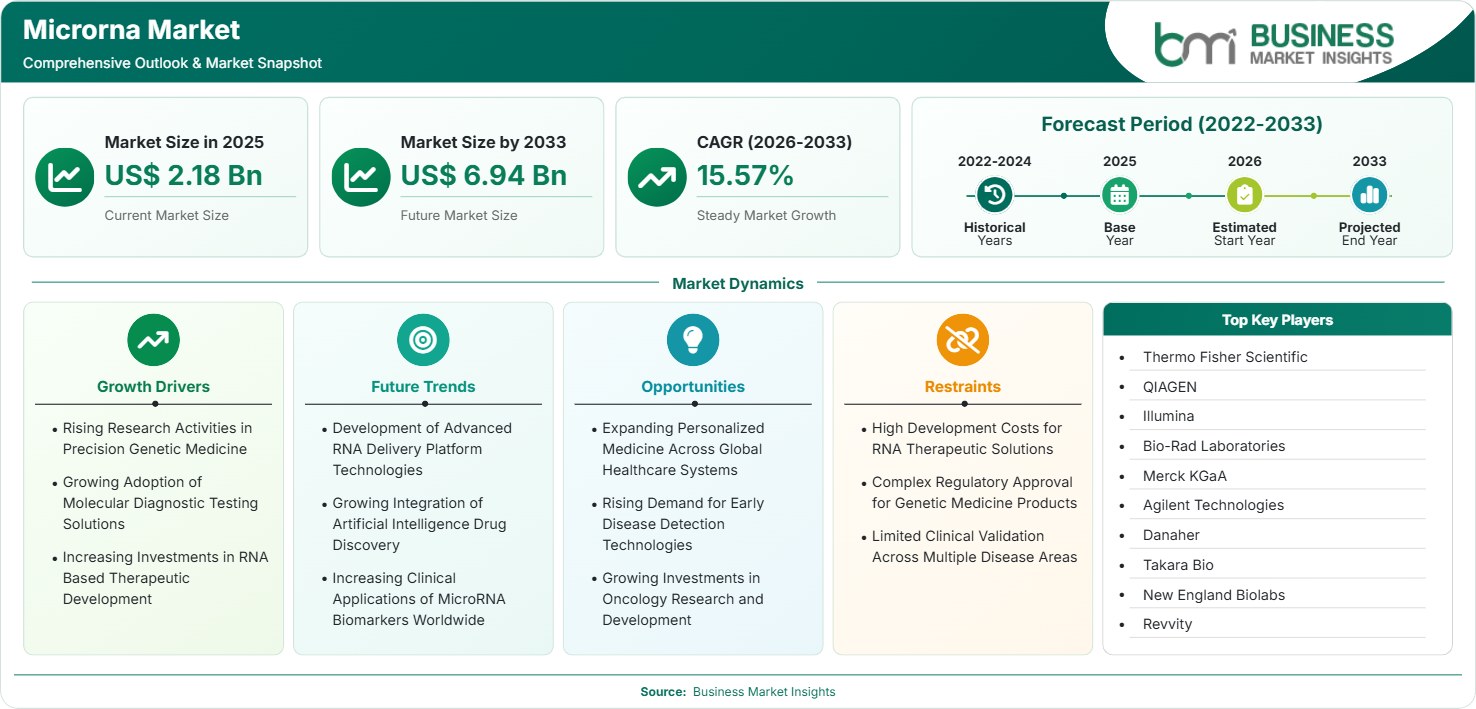
The MicroRNA Market size was valued at US$ 2.18 billion in 2025 and is projected to reach US$ 6.94 billion by 2033, growing at a CAGR of 15.57% during 2026–2033, driven by precision medicine advancements, molecular diagnostics adoption, RNA-based therapeutic research, oncology innovation, and expanding applications in disease detection.

Report Coverage
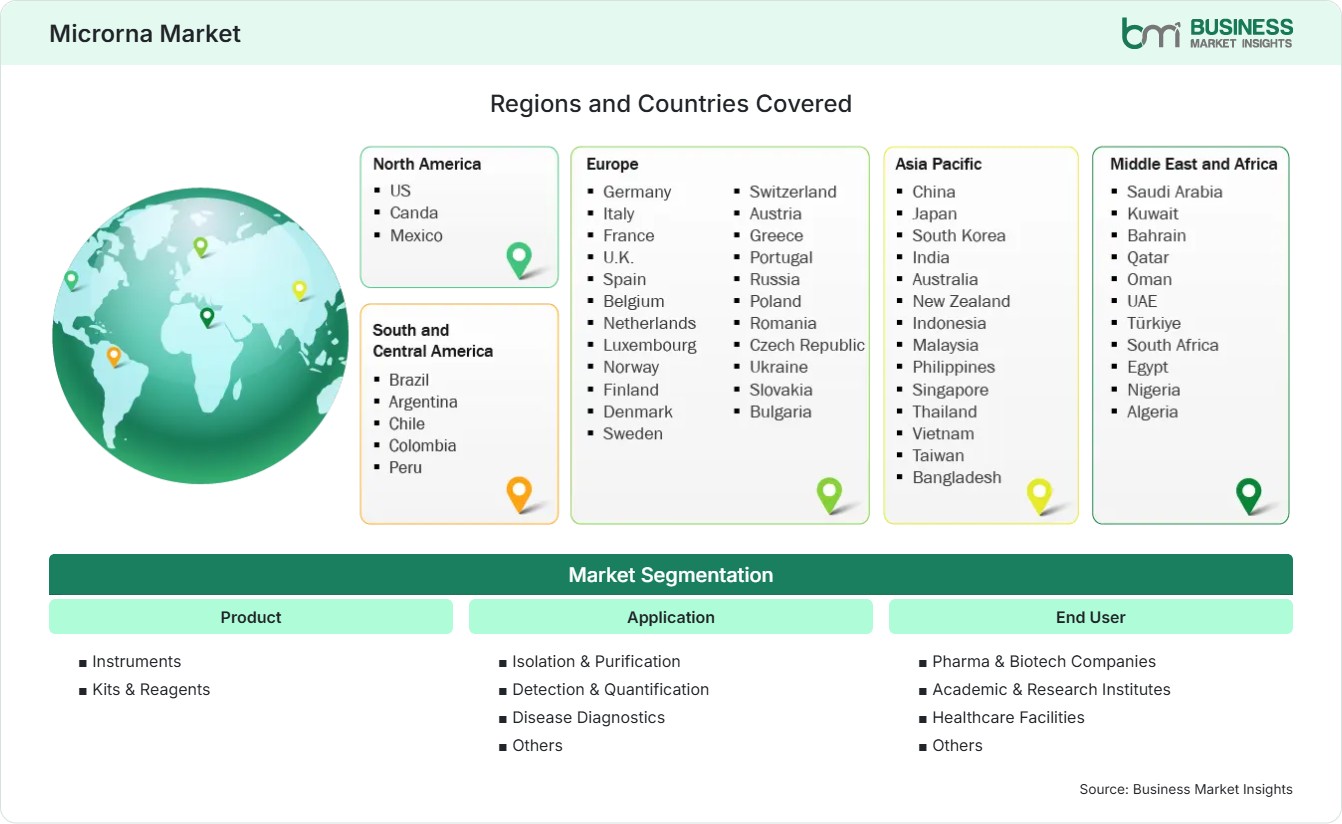
  • Product: Instruments, Kits & Reagents
  • Application: Isolation & Purification, Detection & Quantification, Disease Diagnostics, Others
  • End User: Pharma & Biotech Companies, Academic & Research Institutes, Healthcare Facilities, Others
US$ 2.18 Bn Market size in 2025
US$ 6.94 Bn Market Size by 2033
15.57% CAGR, 2026 - 2033
2026-2033 Forecast Period

AI Overview

Microrna Market Summary

  • North America Region: North America holds a 38%–42% share in 2025 and is projected to grow at a 14.8%–15.8% CAGR during 2026–2033. Growth is supported by biotechnology research, genomic medicine investments, advanced diagnostic infrastructure, and increasing RNA-based therapeutic development. The U.S. market benefits from strong life science research capabilities, healthcare innovation, and growing adoption of molecular testing solutions.
  • Fastest Growing Region: Asia Pacific represents a 24%–28% share in 2025 and is expected to expand at a 16.5%–17.5% CAGR during 2026–2033. Growth is driven by expanding healthcare infrastructure, rising biotechnology investments, increasing research activities, and growing adoption of advanced diagnostic technologies.
  • Leading Segment: Kits & Reagents account for a 55%–59% share in 2025 and are projected to grow at a 15.2%–16.2% CAGR during 2026–2033. Growth is supported by increasing molecular research activities, diagnostic testing requirements, and demand for reliable RNA analysis solutions.
  • High Growth Segment: Disease Diagnostics represents a 27%–31% share in 2025 and is expected to grow at a 17.0%–18.0% CAGR during 2026–2033. Adoption is supported by early disease detection requirements, oncology research, and expanding personalized healthcare approaches.
  • Key Market Opportunity: Increasing adoption of personalized medicine, oncology-focused RNA research, advanced molecular diagnostics, and early disease detection technologies creates opportunities for companies developing innovative MicroRNA solutions.
  • Major Market Players: Thermo Fisher Scientific Inc., QIAGEN N.V., Illumina, Inc., Bio-Rad Laboratories, Inc., Merck KGaA, Agilent Technologies, Inc., Danaher Corporation, Takara Bio Inc., New England Biolabs, and Revvity, Inc.
Strategic Insights

Microrna Market: Strategic Insights

Microrna Market Strategic Framework
FREE PDF
Request your free sample
Request free sample
Stakeholder View

Key Takeaways

  • The MicroRNA Market ecosystem includes diagnostic companies, biotechnology firms, research institutions, healthcare providers, and technology developers working across RNA analysis and therapeutic applications.
  • Oncology diagnostics, personalized medicine, biomarker discovery, and RNA-based drug development represent important opportunity areas for companies expanding MicroRNA capabilities.
  • Innovation is centered on improved detection platforms, advanced sequencing technologies, automated workflows, and enhanced RNA analysis methods for clinical and research applications.
  • North America remains a strategic investment region due to strong biotechnology infrastructure, research capabilities, and healthcare technology adoption.
  • Partnerships between pharmaceutical companies, diagnostic providers, and research organizations are increasing to accelerate commercialization of MicroRNA-based solutions.
  • Companies developing scalable testing platforms and strengthening regulatory expertise are expected to improve competitive positioning in emerging RNA healthcare applications.
Geographic Outlook

Microrna Market Regional Highlights

North America MicroRNA Market

North America maintains leadership due to advanced biotechnology research, strong healthcare infrastructure, and significant adoption of molecular diagnostic technologies. The region accounted for a 38%–42% share in 2025 and is expected to grow at a 14.8%–15.8% CAGR through 2033. The U.S. remains the primary contributor due to pharmaceutical innovation, genomic research investments, and increasing clinical applications of RNA-based technologies. Growing collaborations between research institutions and biotechnology companies continue supporting regional expansion.

  • Biotechnology companies are expanding RNA research programs to support therapeutic and diagnostic development.
  • Healthcare providers are increasing adoption of molecular testing for improved disease identification.
  • Pharmaceutical investments in precision medicine are accelerating demand for advanced RNA technologies.
  • Research institutions are strengthening genomic studies through improved analytical platforms and tools.

US MicroRNA Market

The United States represents the leading North American country market due to extensive biotechnology capabilities, pharmaceutical research activities, and advanced healthcare systems. The country contributes 78%–82% of regional demand and is projected to grow at a 15.0%–16.0% CAGR during 2026–2033. Growth is supported by oncology research, precision medicine programs, and increasing utilization of molecular diagnostics. Strong industry-academic collaborations continue improving innovation and commercialization opportunities.

  • Pharmaceutical companies are increasing investment in RNA-based therapeutic research pipelines.
  • Diagnostic providers are developing advanced MicroRNA testing platforms for clinical applications.
  • Research funding is supporting biomarker discovery and disease monitoring studies.
  • Healthcare organizations are adopting molecular technologies for personalized treatment approaches.

Europe MicroRNA Market

Europe demonstrates steady growth due to expanding molecular research, healthcare modernization, and increasing adoption of precision medicine approaches. The region represented a 26%–30% share in 2025 and is expected to grow at a 14.2%–15.2% CAGR through 2033. Germany, the United Kingdom, France, and Switzerland are important contributors due to biotechnology expertise and healthcare innovation. Growing investments in genomic research and diagnostic capabilities are supporting market development across the region.

  • Research organizations are expanding molecular biology studies and genomic medicine initiatives.
  • Healthcare systems are adopting advanced diagnostic technologies for disease management.
  • Biotechnology companies are developing innovative RNA-based solutions for clinical applications.
  • Regulatory improvements are supporting commercialization of advanced healthcare technologies.

Asia Pacific MicroRNA Market

Asia Pacific represents the fastest-growing region due to expanding healthcare infrastructure, biotechnology investments, and increasing research activities. The region accounted for a 24%–28% share in 2025 and is projected to grow at a 16.5%–17.5% CAGR through 2033. China, Japan, India, and South Korea are major contributors due to rising healthcare expenditure, research expansion, and increasing adoption of molecular diagnostics. The region offers strong growth potential through improving healthcare accessibility.

  • Biotechnology research activities are expanding across emerging healthcare markets.
  • Diagnostic companies are increasing investments in molecular testing infrastructure.
  • Pharmaceutical firms are developing RNA-based therapeutic pipelines.
  • Healthcare modernization programs are supporting advanced diagnostic adoption.
  • Academic institutions are increasing genomic research collaborations.

Rest of World MicroRNA Market

Latin America, the Middle East, and Africa represent emerging markets supported by improving healthcare systems, increasing disease awareness, and gradual adoption of molecular technologies. The region accounts for a 6%–9% share in 2025 and is projected to grow at a 13.5%–14.5% CAGR through 2033. Healthcare investments and biotechnology development initiatives are creating opportunities for diagnostic and research applications. Adoption remains influenced by infrastructure development, funding availability, and technology accessibility.

  • Healthcare modernization programs are improving access to advanced diagnostic technologies.
  • Research organizations are increasing focus on disease biomarker studies.
  • Biotechnology collaborations are supporting technology transfer and innovation.
  • Growing healthcare awareness is encouraging adoption of molecular testing solutions.
  • Emerging economies are creating opportunities for diagnostic technology expansion.
Global Market Geography
FREE PDF
Request your free sample
Request free sample
Segment Analysis

Microrna Market Segmentation

Product

Product segmentation is driven by increasing demand for reliable MicroRNA analysis solutions across research, diagnostics, and therapeutic development. Instruments and kits support efficient RNA detection, quantification, and workflow optimization. The MicroRNA Market scope continues expanding as laboratories and healthcare organizations adopt advanced molecular analysis technologies for precision healthcare applications.

  • Instruments: Supports automated MicroRNA analysis workflows with improved accuracy, efficiency, and research capabilities.
  • Kits & Reagents: Enables reliable sample processing, detection, and quantification for research and clinical applications.

Application

Application segmentation is influenced by growing utilization of MicroRNA technologies in disease research, diagnostics, and molecular analysis. Healthcare providers and researchers are adopting these solutions to identify biomarkers, improve disease understanding, and support targeted treatment strategies. The MicroRNA Market trend reflects increasing integration of RNA-based approaches across healthcare and biotechnology sectors.

  • Isolation & Purification: Provides essential preparation methods for extracting MicroRNA samples from biological materials.
  • Detection & Quantification: Supports accurate measurement and analysis of MicroRNA expression patterns.
  • Disease Diagnostics: Enables biomarker identification and early detection applications across multiple disease areas.
  • Others: Includes additional research and specialized applications using MicroRNA technologies.

End User

End user segmentation highlights increasing adoption among pharmaceutical companies, research organizations, and healthcare providers. Growing investments in biotechnology, molecular diagnostics, and personalized medicine are encouraging broader utilization of MicroRNA platforms. The MicroRNA Market share is influenced by expanding research activities and increasing clinical interest in RNA-based solutions.

  • Pharma & Biotech Companies: Utilize MicroRNA technologies for drug discovery, therapeutic research, and development programs.
  • Academic & Research Institutes: Apply MicroRNA tools for genomic studies and scientific investigations.
  • Healthcare Facilities: Adopt molecular testing solutions for improved disease diagnosis and patient management.
  • Others: Covers additional users involved in specialized MicroRNA applications.
Market Forces

Microrna Market Dynamics

Key Market Drivers

Rising Research Activities in Precision Genetic Medicine

More precise genetic medicine is driving greater demand for miRNA technology, as research advances in molecular biomarkers and therapeutic targeting. MiRNA analysis allows one to understand the mechanisms of gene regulation and helps discover disease pathways. More pharmaceutical and research companies are now conducting research on personalized therapy, oncology, and genetic diseases. More innovations are occurring due to the use of the sequencing and molecular analysis platform. There are increasing numbers of partnerships between biotech companies and academic organizations focused on RNA-based innovations. The MicroRNA Market growth is driven by a focus on an individualized approach to healthcare and a better understanding of the molecular mechanisms of disease.

Growing Adoption of Molecular Diagnostic Testing Solutions

The use of molecular diagnostic technologies is becoming increasingly prominent due to the growing need for accurate disease detection and improved patient care. The use of MicroRNAs in testing could benefit biomarker identification, early disease diagnosis, and treatment efficacy evaluation. The use of sophisticated diagnostic methods by healthcare professionals aims to enhance clinical decision-making and provide personalized treatments for patients. The development of a sensitive detection system is facilitating the use of MicroRNA technologies in oncology, infectious diseases, and other chronic diseases. Diagnostic companies are developing new workflows to improve testing efficiency. The growing attention to precision diagnostics in the healthcare field encourages the use of molecular technologies.

Increasing Investments in RNA Based Therapeutic Development

The increasing awareness of therapeutic methods has led pharmaceutical and biotechnology firms to invest heavily in research on RNA medicines. Different types of MicroRNA technologies are being tested for gene regulation, as therapeutic targets, and the creation of advanced disease management solutions. Research activities have been launched for conditions such as oncology, metabolic, and genetic disorders. Increased understanding of RNA biology is aiding the development of novel therapeutic applications and approaches. Through partnerships and the acquisition of technologies and laboratory infrastructure, the firms' research portfolios are being expanded. The MicroRNA Market forecast highlights opportunities emerging from the research of RNA medicines.

Key Market Opportunities

Expanding Personalized Medicine Across Global Healthcare Systems

The increasing use of personalized medicine is creating opportunities for MicroRNA technologies due to the growing need for personalized diagnosis and treatment. Healthcare systems pay more attention to delivering better treatment outcomes by using molecular approaches and biomarkers. The MicroRNA technologies could be used in order to define the features of diseases and deliver treatment in a targeted way. Pharmaceutical companies are also exploring the use of these technologies to improve the efficiency of treatment and drug development processes. The expansion of digitization in healthcare and genomics research provides more opportunities for adoption. New markets are slowly building their molecular healthcare infrastructure, creating more opportunities for technology vendors.

Rising Demand for Early Disease Detection Technologies

Disease detection is gaining prominence in healthcare systems, as there is a quest for greater diagnostic accuracy and earlier intervention. The MicroRNA biomarkers provide an avenue for detecting any changes in molecular composition associated with any disease. The increase in research efforts in oncology and chronic disease control is fueling demand for better detection methods. Diagnostic companies are developing better ways to perform molecular tests, with greater accuracy, speed, and reliability. The increased focus on preventive health care is driving greater investment in biomarker discovery and diagnostics.

Growing Investments in Oncology Research and Development

The field of oncology research presents an important opportunity because of the role MicroRNAs play in cancer research. As investments in cancer research increase, molecular analysis technologies used in biomarker discovery and drug development become very promising. MicroRNA technologies are being explored for use in tumor detection, diagnostics, and personal treatment. As pharmaceutical companies explore oncology pipelines and work with research institutes to develop solutions, it is becoming necessary to have technologies that provide better insights into cancer treatment. As companies enhance their capabilities in oncology and MicroRNAs, more research opportunities are emerging.

Market Restraints and Challenges

High Development Costs for RNA Therapeutic Solutions

Factor: Research into RNA therapy involves considerable expenditure on research, laboratory infrastructure, specialized expertise, and validation. Impact: High research costs can affect the timelines and finances of companies operating in the MicroRNA therapies market. A great deal of money needs to be spent on discovery, testing, and clinical trials of these new drugs. This is due to the subject's complexity and the need for advanced tools and knowledgeable personnel. These problems are being tackled by the companies through partnerships and better research platforms. Financial issues still influence investments in RNA therapies.

Complex Regulatory Approval for Genetic Medicine Products

Factor: Genetic medicine products require detailed regulatory evaluation due to complex biological mechanisms, safety considerations, and clinical validation requirements. Impact: Regulatory complexity can extend approval timelines and increase development uncertainty for MicroRNA-based healthcare solutions. Companies must establish strong compliance frameworks, conduct extensive studies, and demonstrate product safety before commercialization. Regulatory agencies continue developing guidelines for emerging RNA technologies, influencing product development strategies. Organizations with regulatory expertise and strong clinical evidence are better positioned to navigate approval processes. The evolving regulatory environment remains a critical consideration for companies investing in genetic medicine innovation. Efficient regulatory planning will be important for supporting future commercialization of MicroRNA-based products.

Company Analysis

Competitive Landscape

The MicroRNA Market analysis highlights competition among biotechnology companies, diagnostic solution providers, research technology developers, and life science organizations developing advanced RNA analysis platforms. Leading players are focusing on molecular diagnostic innovation, next-generation sequencing capabilities, reagent development, research collaborations, and personalized medicine applications to strengthen their positions across healthcare, pharmaceutical research, and biotechnology sectors.

Company Name

Overview

Products and Services relevant to this market

Thermo Fisher Scientific Inc.

Global life sciences company providing analytical instruments, reagents, and research solutions.

Offers RNA analysis instruments, molecular biology reagents, sequencing solutions, and MicroRNA research products.

QIAGEN N.V.

Molecular diagnostics company specializing in sample preparation and molecular testing technologies.

Provides RNA isolation kits, detection solutions, and molecular diagnostic platforms for MicroRNA analysis.

Illumina, Inc.

Genomics technology company focused on sequencing platforms and genetic analysis solutions.

Develops sequencing systems and genomic tools supporting RNA profiling and biomarker research.

Bio-Rad Laboratories, Inc.

Life science company providing research instruments and diagnostic technologies.

Supplies digital PCR systems, reagents, and molecular analysis solutions for RNA research.

Merck KGaA

Science and technology company serving healthcare and life science industries.

Provides molecular biology reagents, research chemicals, and laboratory solutions supporting RNA studies.

Agilent Technologies, Inc.

Analytical and life science technology company offering laboratory solutions.

Develops genomics instruments, microarray technologies, and RNA analysis solutions for research applications.

Danaher Corporation

Global science and technology company operating through healthcare and life science businesses.

Provides molecular diagnostics, biotechnology tools, and research platforms supporting RNA applications.

Takara Bio Inc.

Biotechnology company specializing in molecular biology and genetic research solutions.

Offers RNA research reagents, cloning technologies, and molecular analysis products.

New England Biolabs

Biotechnology company developing enzymes and molecular biology products.

Provides molecular biology reagents, RNA research tools, and laboratory solutions.

Revvity, Inc.

Life science company focused on diagnostics, research, and technology solutions.

Provides molecular screening platforms, detection technologies, and research tools for healthcare applications.

Trust & Transparency

Research Methodology

The market analysis combines proprietary research with secondary data from government agencies, company disclosures, regulatory filings, industry databases and expert interviews. Market estimates are validated through data triangulation, cross-market benchmarking and analyst review.

View Full Research Methodology

Questions Answered

Frequently Asked Questions

What does the MicroRNA Market report indicate about future competition?

The report indicates that competition will focus on diagnostic innovation, RNA analysis capabilities, therapeutic research partnerships, and advanced molecular platforms. Companies developing accurate, scalable, and clinically applicable solutions are expected to strengthen their competitive positioning.

Why are personalized medicine approaches creating new opportunities for MicroRNA technologies?

Personalized medicine approaches are creating opportunities because healthcare providers increasingly require molecular insights to support targeted treatment decisions. MicroRNA analysis helps identify biological markers associated with diseases and supports development of individualized healthcare strategies.

How are advanced molecular technologies influencing MicroRNA adoption?

Advanced molecular technologies are increasing adoption by improving RNA detection accuracy, sequencing capabilities, automation, and analytical efficiency. These developments enable researchers and healthcare providers to study gene regulation mechanisms and develop more precise diagnostic and therapeutic solutions.

Which applications present the strongest opportunity in the market?

Disease diagnostics, oncology research, personalized medicine, and RNA-based therapeutic development represent strong opportunities. These applications require advanced molecular analysis solutions that enable early disease detection, biomarker identification, and improved understanding of genetic mechanisms.

What factors are improving MicroRNA Market return on investment?

Increasing investments in precision medicine, molecular diagnostics, oncology research, and RNA-based therapeutics are improving return on investment. MicroRNA technologies support biomarker discovery, disease detection, and personalized treatment approaches, helping pharmaceutical companies, research institutions, and healthcare providers improve research efficiency and clinical outcomes.

Access the Full Microrna Market Report

Get segment-level forecasts, regional estimates, competitive benchmarking, company profiles and downloadable Excel datasets.

Access the full Microrna Market Report
350 pages PDF & Excel | 2026-08-25
Similar Research

Related Market Reports