Masterbatch Market Regional Highlights
North America Masterbatch Market
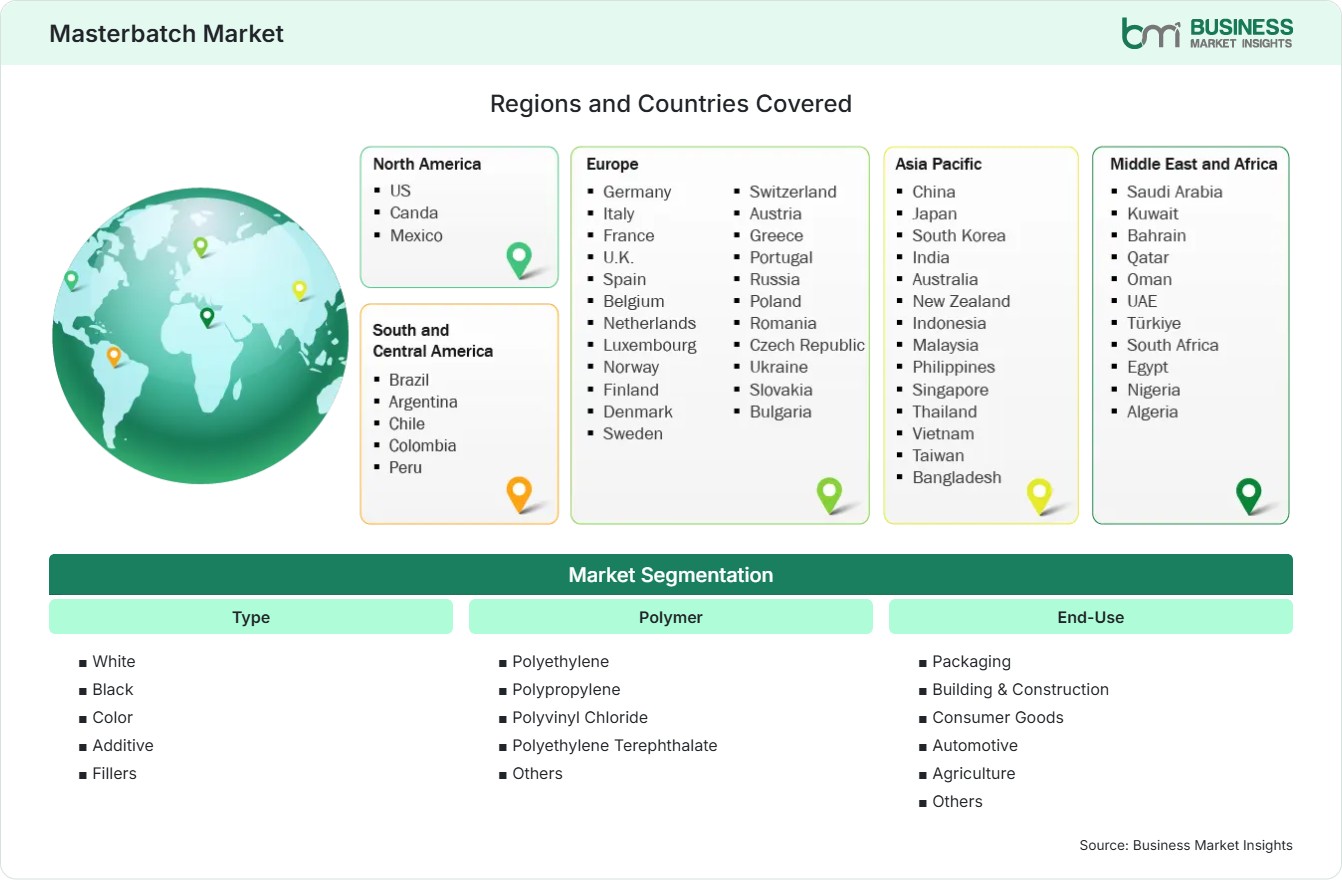
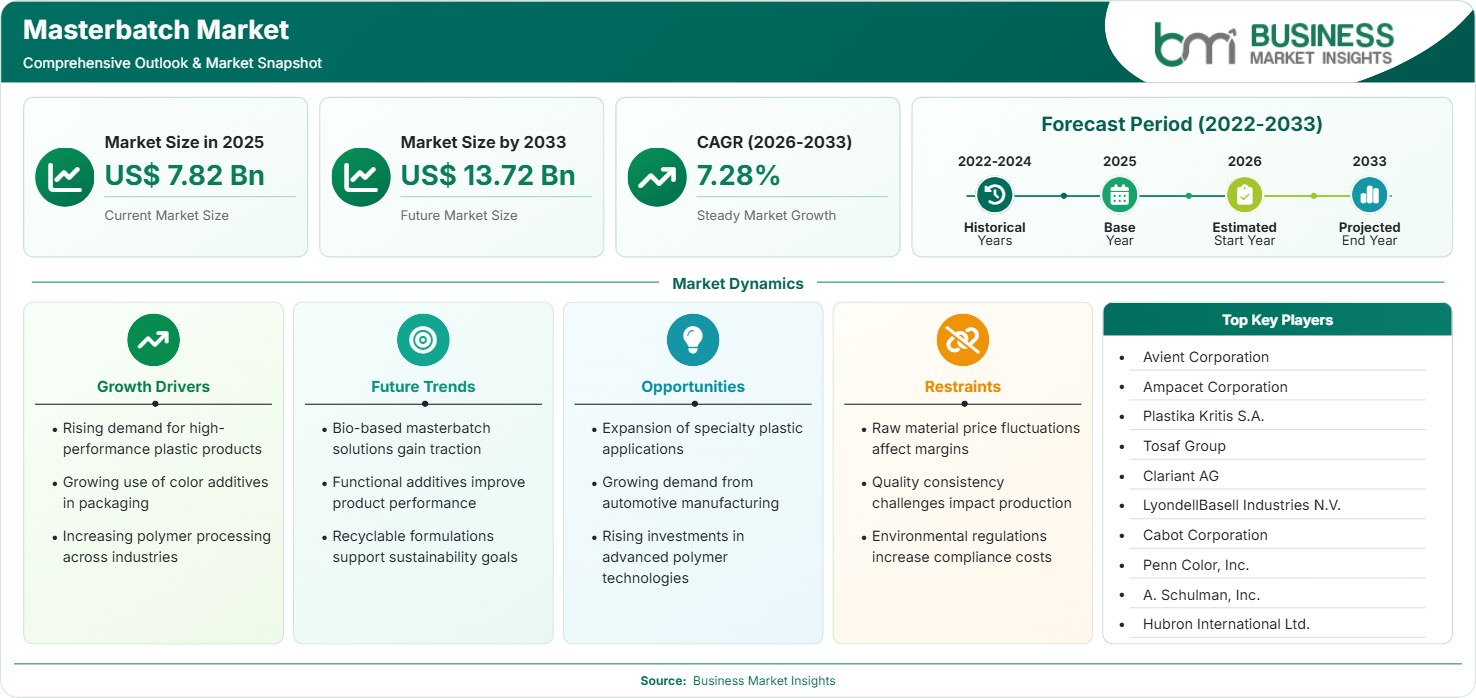
North America represents 30%–33% Masterbatch Market share in 2025 and is projected to register a CAGR of 6.8%–7.3% during 2026–2033. Strong packaging demand, advanced polymer processing, and growing use of specialty plastics across automotive, healthcare, and consumer products continue to support regional expansion. Manufacturers are also investing in sustainable formulations and recycled polymer applications to meet changing customer requirements.
- Packaging companies continue adopting high-performance color and additive masterbatch products to improve product differentiation and comply with sustainability objectives.
- Automotive manufacturers are increasing the use of lightweight polymer components that require advanced color stability and functional additive technologies.
- Demand for recycled plastic compounds is encouraging investment in compatible masterbatch formulations with improved processing performance.
- Product innovation remains focused on specialty additives supporting UV protection, antimicrobial properties, flame resistance, and enhanced processing efficiency.
US Masterbatch Market
The United States accounts for 79%–82% of North American revenue and is expected to grow at a CAGR of 6.9%–7.4% through 2026–2033. Strong plastics manufacturing, technological innovation, and growing investment in sustainable packaging continue supporting long-term market development across diverse industrial sectors.
- Consumer packaging companies continue expanding the use of customized color solutions for product differentiation.
- Automotive suppliers increasingly utilize engineered polymers with advanced additive technologies.
- Investments in recycled plastics create demand for specialized masterbatch compatible with circular manufacturing.
- Innovation in polymer processing improves product quality while reducing production waste.
Europe Masterbatch Market
Europe accounts for 24%–27% market share in 2025 and is forecast to expand at a CAGR of 6.9%–7.5% during the forecast period. Sustainability regulations, circular economy initiatives, and growing use of recycled plastics continue driving demand. Germany leads regional consumption, while Poland records the fastest growth due to expanding plastics manufacturing and packaging production.
- Sustainability regulations accelerate development of recyclable masterbatch formulations.
- Construction and automotive sectors continue adopting functional additive technologies.
- Manufacturers invest in low-carbon production and recycled polymer compatibility.
- Packaging innovation remains a key contributor to regional demand.
Asia Pacific Masterbatch Market
Asia Pacific holds 41%–44% market share in 2025 and records the fastest 8.1%–8.7% CAGR during 2026–2033. Expanding plastics manufacturing, infrastructure investment, urbanization, and consumer goods production continue driving regional demand. China remains the largest market, while India records the fastest expansion through growing polymer processing capacity.
- Packaging production continues expanding alongside food, beverage, and e-commerce industries.
- Automotive manufacturing supports higher demand for engineered polymer compounds.
- Infrastructure development increases consumption of construction plastics and specialty additives.
- Regional manufacturers continue expanding production capacity to meet domestic and export demand.
Rest of World Masterbatch Market
The Rest of World region represents 6%–9% masterbatch market share in 2025 and is projected to register a CAGR of 7.1%–7.8% through 2026–2033. Demand is supported by expanding plastics processing, packaging production, and industrial manufacturing across Latin America, the Middle East, and Africa.
- Brazil leads Latin American demand through packaging and consumer goods manufacturing.
- GCC countries continue investing in downstream petrochemical and polymer industries.
- Industrial diversification increases demand for specialty plastic compounds across emerging economies.
- Growth in food packaging and construction applications supports long-term regional expansion.