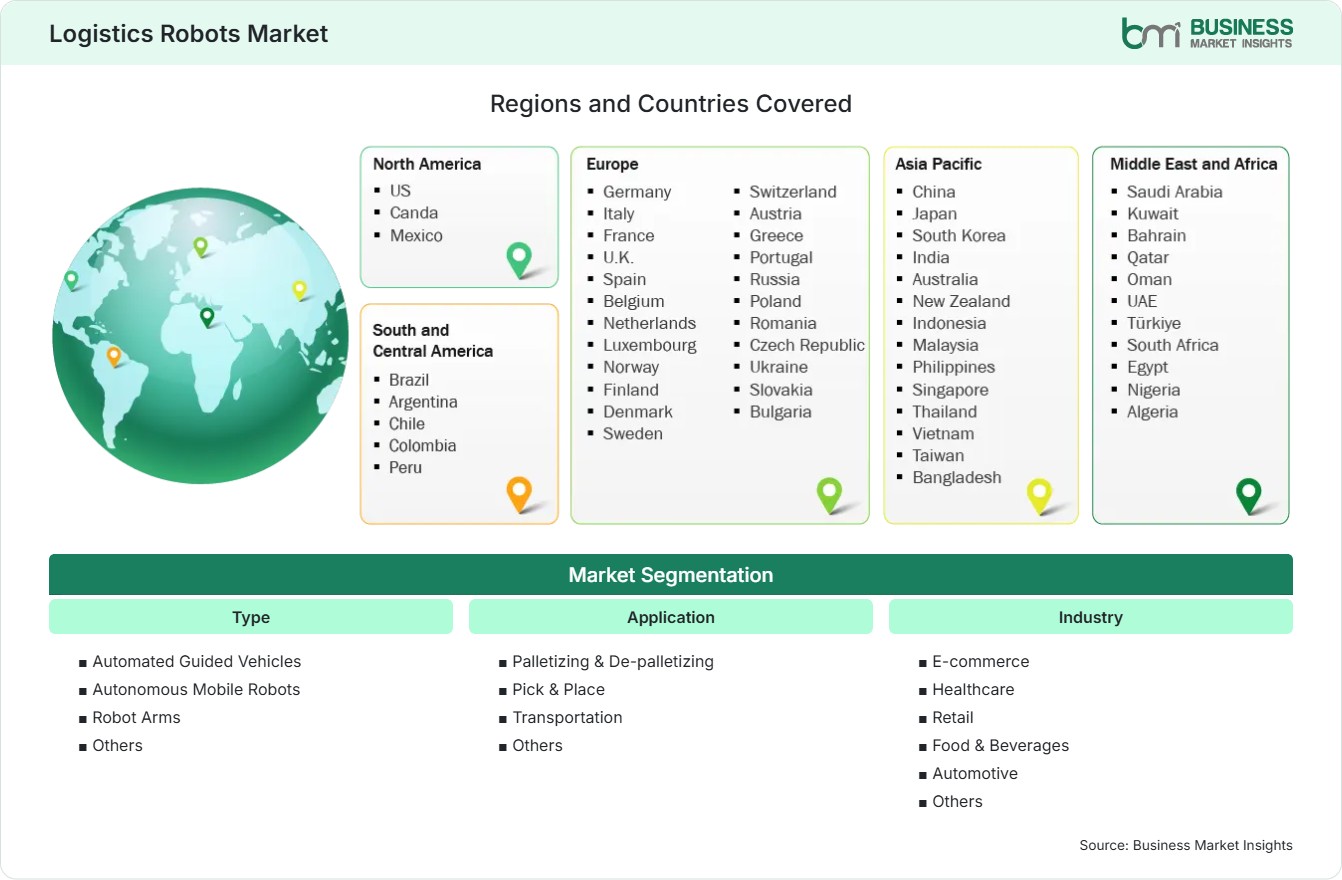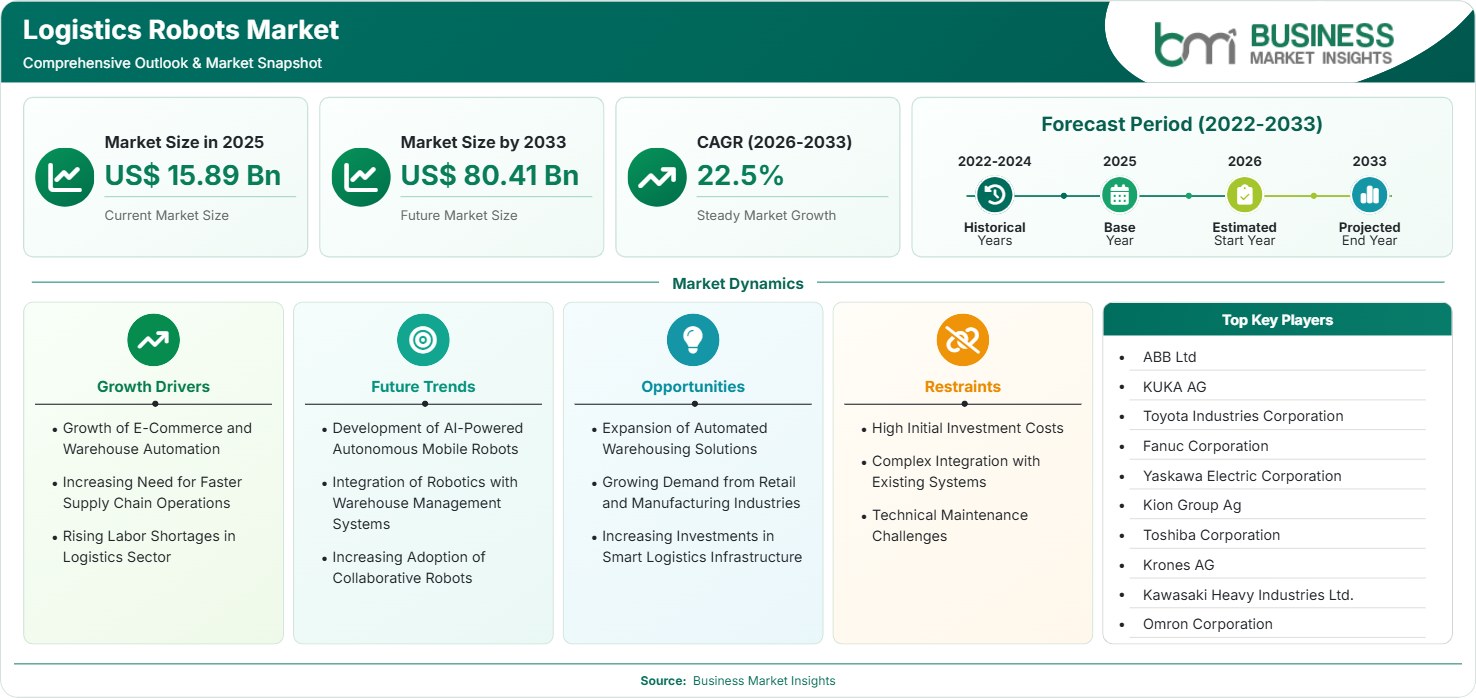
Logistics Robots Market Regional Highlights
North America Logistics Robots Market
North America represents a mature automation market with a 30%–33% share in 2025 and a CAGR of 20%–23% during 2026–2033. The region benefits from advanced distribution infrastructure, strong technology adoption, and high warehouse automation demand. Logistics Robots Market share remains supported by e-commerce fulfillment expansion, manufacturing digitization, and investments from major logistics operators across the United States and Canada.
- The United States drives regional adoption through large-scale fulfillment networks, automated warehouses, and investments in artificial intelligence-based robotic systems for faster order processing and inventory management.
- Canada supports demand through expanding logistics infrastructure, retail automation initiatives, and adoption of robotic solutions that improve warehouse productivity while addressing workforce availability challenges.
- Technology providers are developing advanced navigation systems, machine vision capabilities, and integrated software platforms to enhance robotic performance across complex logistics environments.
- Industrial automation investments continue increasing as companies prioritize operational efficiency, workplace safety improvements, and supply chain resilience through intelligent robotic deployments.
US Logistics Robots Market
The US market accounts for a 27%–30% share in 2025 and expands at a CAGR of 21%–24% through 2026–2033. Strong e-commerce activity, manufacturing automation, and logistics infrastructure investments support adoption. Logistics Robots Market growth is concentrated in fulfillment centers, warehouses, and industrial facilities requiring scalable automation solutions.
- Major retailers and logistics companies are deploying autonomous systems to improve warehouse throughput, reduce manual handling requirements, and optimize inventory movement processes.
- Manufacturing industries are adopting robotic solutions for material transportation, assembly support, and repetitive handling tasks requiring consistent operational performance.
- Software-driven robotics platforms are gaining traction by enabling real-time monitoring, fleet coordination, and adaptive decision-making within automated facilities.
Europe Logistics Robots Market
Europe holds a 22%–25% share in 2025 with a CAGR of 18%–21% during 2026–2033. Germany, France, the United Kingdom, and the Netherlands contribute significantly due to industrial automation expertise and advanced logistics networks. Logistics Robots Market share is influenced by smart factory initiatives, labor optimization requirements, and sustainability-focused operational improvements across European industries.
- Germany leads adoption through automotive automation, industrial robotics expertise, and investments in advanced warehouse technologies supporting manufacturing efficiency.
- The United Kingdom demonstrates growth through expanding e-commerce infrastructure, automated fulfillment centers, and technology investments within retail logistics networks.
- France and the Netherlands are increasing adoption through logistics modernization programs, distribution hub automation, and digital supply chain transformation initiatives.
- European manufacturers are integrating robotics with energy-efficient operations and data-driven management systems to improve productivity while reducing operational waste.
Asia Pacific Logistics Robots Market
Asia Pacific represents the largest regional market with a 38%–42% share in 2025 and records a CAGR of 24%–27% during 2026–2033. The region benefits from manufacturing expansion, e-commerce growth, and automation investments. Logistics Robots Market share is strengthened by China, Japan, South Korea, and India as companies modernize warehouses and production facilities.
- China maintains regional leadership through extensive manufacturing capacity, large e-commerce networks, and government-supported industrial automation programs.
- Japan supports adoption through robotics expertise, advanced manufacturing systems, and demand for precision automation technologies across logistics operations.
- South Korea demonstrates strong growth through smart factory development, electronics manufacturing automation, and investments in intelligent warehouse solutions.
- India presents emerging opportunities due to expanding digital commerce, logistics infrastructure development, and increasing enterprise automation initiatives.
Rest of World Logistics Robots Market
The Rest of World market accounts for a 7%–10% share in 2025 and grows at a CAGR of 18%–21% during 2026–2033. South America, the Middle East, and Africa are developing markets supported by logistics modernization, industrial expansion, and increasing automation awareness. Logistics Robots adoption is emerging as companies improve distribution efficiency and strengthen supply chain capabilities.
- Brazil is advancing automation adoption through expanding logistics networks, retail distribution investments, and modernization of warehouse operations.
- Mexico supports regional demand through manufacturing growth, nearshoring activities, and increasing automation requirements across industrial facilities.
- Middle Eastern countries are investing in smart logistics infrastructure, automated warehouses, and technology-driven supply chain systems.
- Saudi Arabia and the UAE are developing advanced logistics ecosystems through digital transformation initiatives and industrial diversification programs.
- African markets offer long-term potential through improving logistics infrastructure, e-commerce expansion, and increasing investment in efficient distribution technologies.