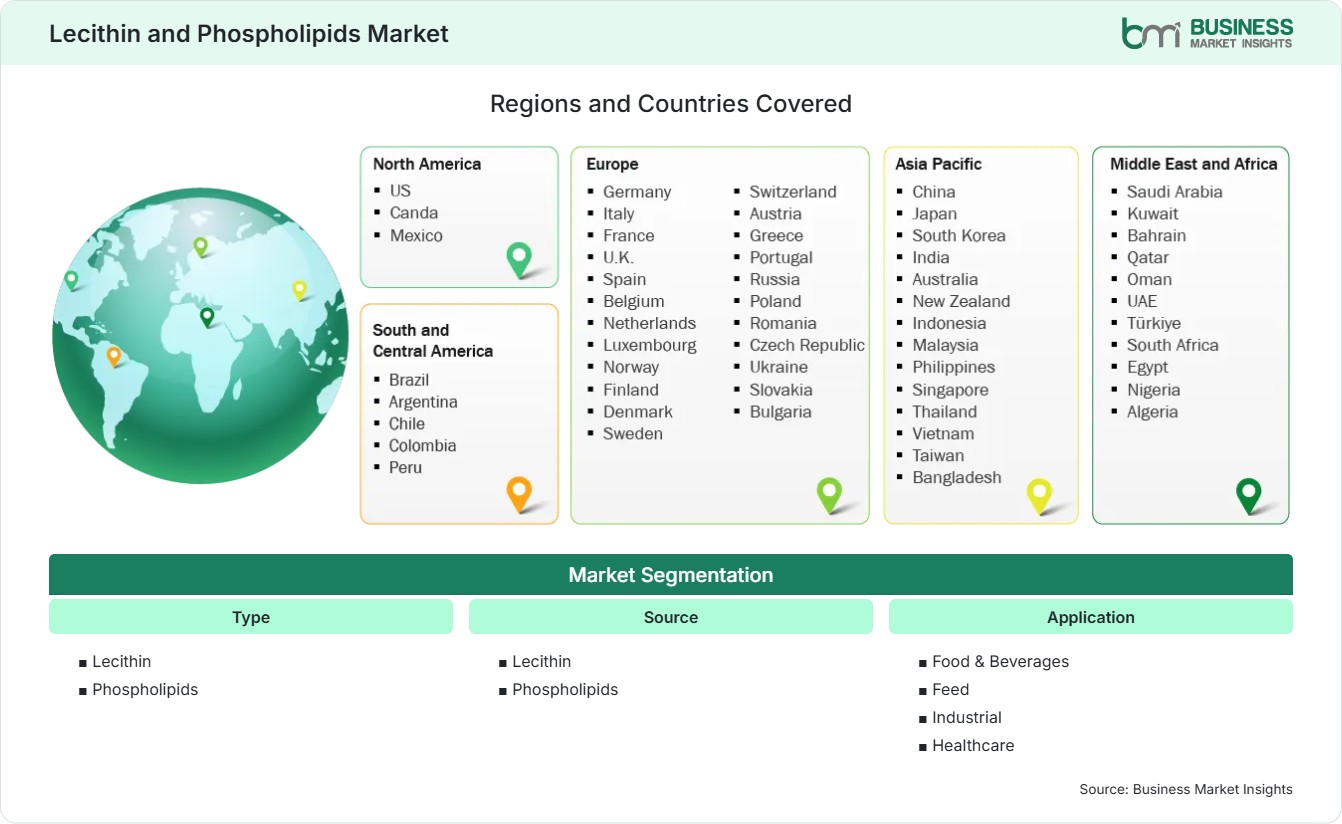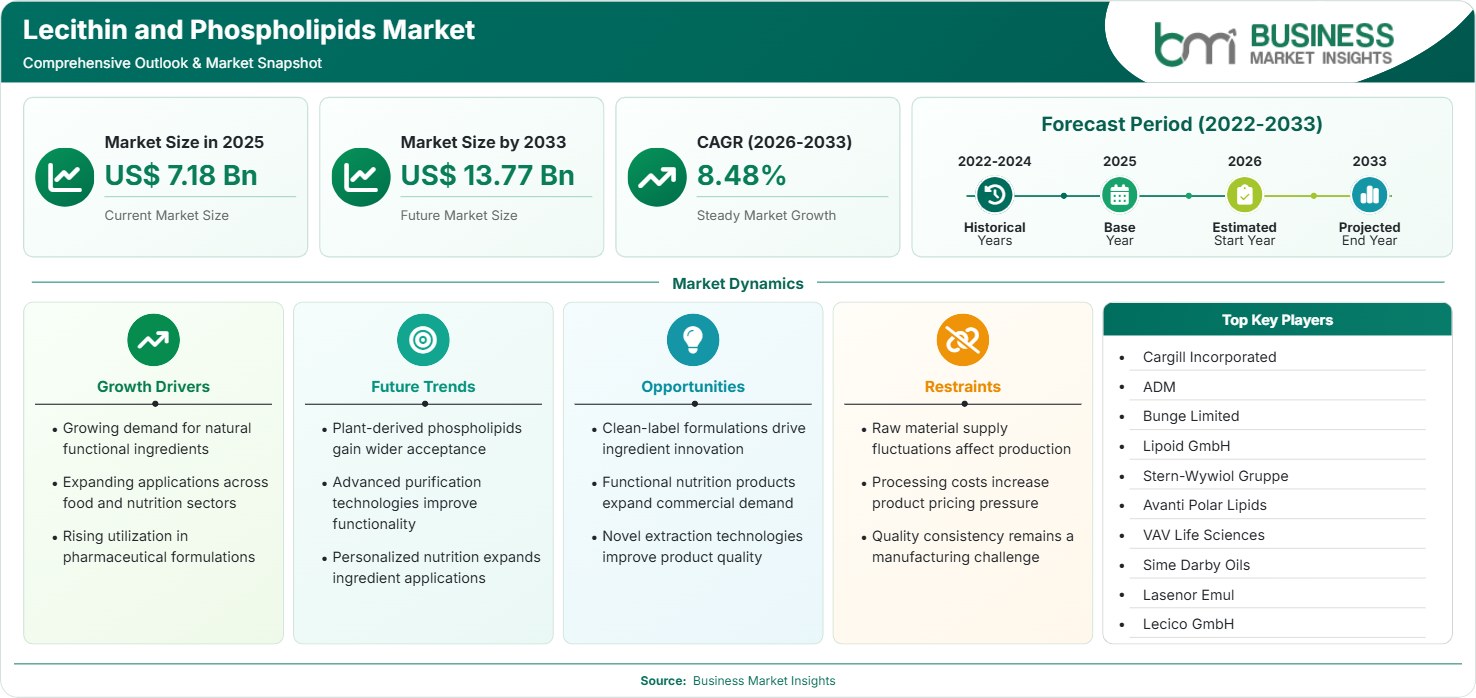
Lecithin and Phospholipids Market Regional Highlights
North America Lecithin And Phospholipids Market
North America accounted for 31%–34% Lecithin And Phospholipids Market share in 2025 and is expected to expand at a CAGR of 8.0%–8.5% during 2026–2033. Strong consumer demand for functional foods, dietary supplements, pharmaceutical ingredients, and clean-label products continues supporting regional expansion. Manufacturers are increasing investments in specialty lecithin production while strengthening partnerships with food processors and healthcare companies to address evolving formulation requirements.
- Functional food manufacturers continue increasing utilization of naturally sourced emulsifiers across premium nutrition products.
- Pharmaceutical companies expand phospholipid applications in advanced drug delivery and liposomal formulations.
- Rising clean-label demand encourages greater adoption of sunflower and non-GMO lecithin products.
- Investments in ingredient processing technologies improve production efficiency and product consistency.
US Lecithin And Phospholipids Market
The United States contributes 80%–83% of North American revenue and is projected to register a CAGR of 8.1%–8.6% during the forecast period. Strong innovation in nutraceutical ingredients, food processing technologies, and pharmaceutical formulations continues supporting sustained market expansion.
- Food manufacturers increasingly introduce clean-label formulations containing naturally derived emulsifiers.
- Pharmaceutical companies expand research involving phospholipid-based drug delivery technologies.
- Growing dietary supplement consumption strengthens demand for premium lecithin ingredients.
- Investment in advanced ingredient processing improves product quality and commercial scalability.
Europe Lecithin And Phospholipids Market
Europe represented 25%–28% market share in 2025 and is projected to expand at a CAGR of 7.9%–8.4% through 2026–2033. Consumer preference for natural food ingredients, stringent quality standards, and increasing nutraceutical production continue supporting regional demand. Germany remains the leading regional market, while Poland records the fastest growth owing to expanding food processing and ingredient manufacturing investments.
- Clean-label regulations continue encouraging greater utilization of naturally derived emulsifiers.
- Bakery and confectionery manufacturers increase demand for premium lecithin formulations.
- Healthcare and nutraceutical industries support rising phospholipid ingredient consumption.
- Manufacturers continue investing in sustainable oilseed sourcing and specialty ingredient development.
Asia Pacific Lecithin And Phospholipids Market
Asia Pacific accounted for 30%–33% market share in 2025 and is forecast to register the fastest CAGR of 9.1%–9.7% during the forecast period. Expanding food processing capacity, rising pharmaceutical production, increasing health awareness, and growing disposable income continue driving demand across regional markets. China remains the largest market, while India records the fastest growth supported by rapid expansion of nutraceutical manufacturing.
- Growing packaged food production increases demand for natural emulsifiers and stabilizing ingredients.
- Pharmaceutical manufacturing investments accelerate adoption of phospholipid-based formulations.
- Rising health-conscious consumers support expanding functional nutrition product sales.
- Manufacturers strengthen domestic production capabilities to meet increasing regional demand.
Rest of World Lecithin And Phospholipids Market
The Rest of World region represented 10%–13% market share in 2025 and is expected to register a CAGR of 8.2%–8.7% during 2026–2033. Rising food processing activities, expanding pharmaceutical manufacturing, and improving healthcare infrastructure continue supporting steady market development across Latin America, the Middle East, and Africa.
- Brazil leads regional demand through expanding food ingredient manufacturing and edible oil processing.
- GCC countries continue investing in pharmaceutical and specialty food production facilities.
- Increasing nutritional awareness strengthens consumption of functional food ingredients.
- Growing industrial diversification supports broader adoption of specialty phospholipids across multiple applications.