IoT In Smart Cities Market Regional Highlights
North America IoT in Smart Cities Market
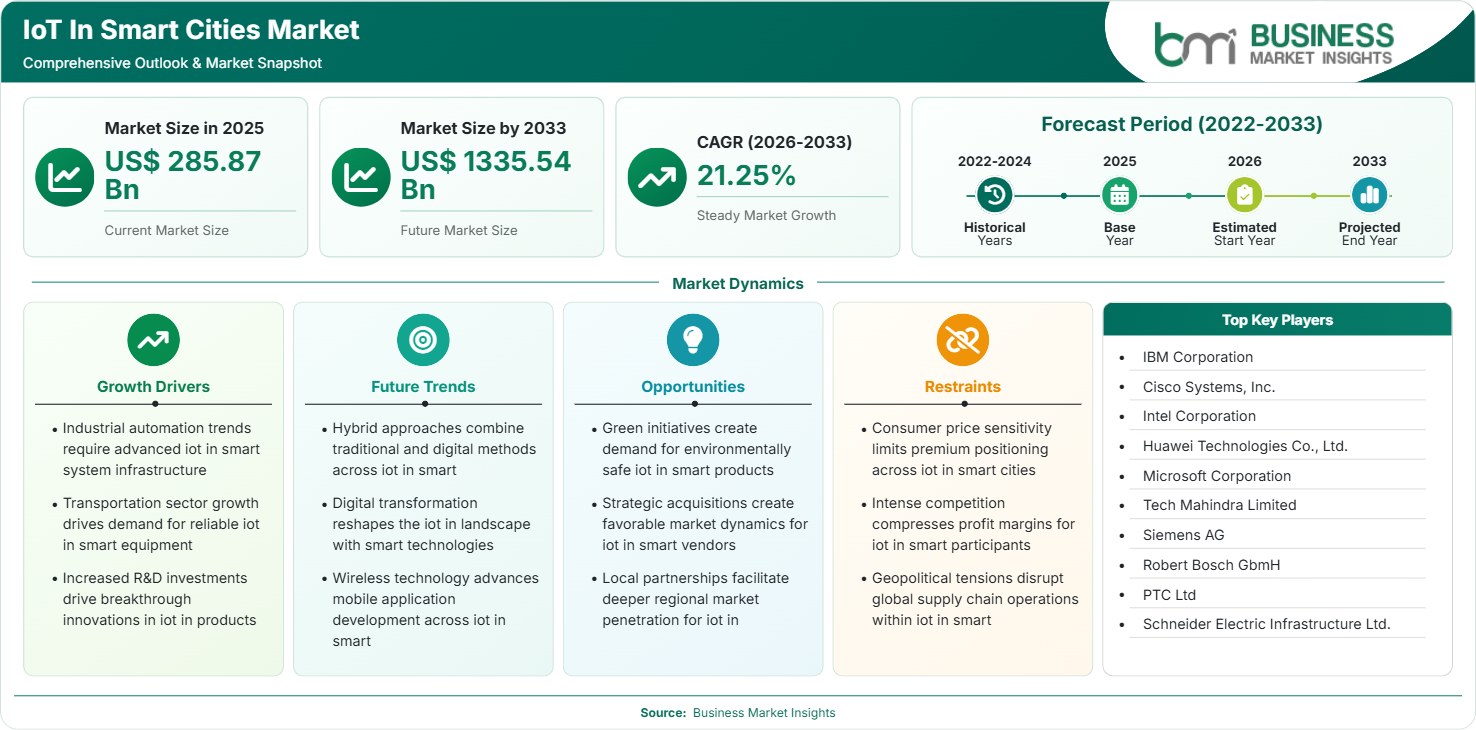
North America accounted for a 32%–35% share in 2025 and is projected to grow at a CAGR of 19%–21% during 2026–2033. The region benefits from mature digital infrastructure, strong technology ecosystems, and government support for connected urban development. The IoT in Smart Cities Market share is supported by investments in smart transportation, energy optimization, and public safety platforms across major metropolitan areas.
- The US remains the dominant contributor, with cities deploying advanced IoT platforms for traffic management, connected buildings, and efficient public services through public-private technology partnerships.
- Canada is expanding smart infrastructure adoption through sustainable urban planning initiatives, focusing on connected utilities, intelligent transportation networks, and energy-efficient municipal operations.
- Cloud computing integration, artificial intelligence, and edge processing technologies are improving real-time decision-making capabilities for urban authorities across North American cities.
- Strong cybersecurity frameworks and data governance standards are encouraging municipalities to implement secure IoT solutions for critical infrastructure monitoring and citizen services.
US IoT in Smart Cities Market
The US represented a 27%–30% share in 2025 and is expected to register a CAGR of 19.5%–21.5% from 2026–2033. The country maintains leadership due to advanced technology infrastructure, large-scale municipal digitization projects, and strong participation from global technology providers. The IoT in Smart Cities Market growth is supported by smart mobility programs, connected energy systems, and increasing adoption of cloud-based urban management solutions.
- Major metropolitan areas are deploying intelligent transportation systems to reduce congestion, improve public mobility, and enhance operational efficiency through connected infrastructure.
- Federal and local initiatives supporting digital transformation are accelerating adoption of smart grids, environmental monitoring systems, and automated public services.
- Technology companies are collaborating with municipalities to develop scalable IoT platforms integrating sensors, analytics, and artificial intelligence for urban applications.
- Increasing focus on sustainable development is encouraging smart building adoption through energy monitoring, automation, and resource optimization technologies.
Europe IoT in Smart Cities Market
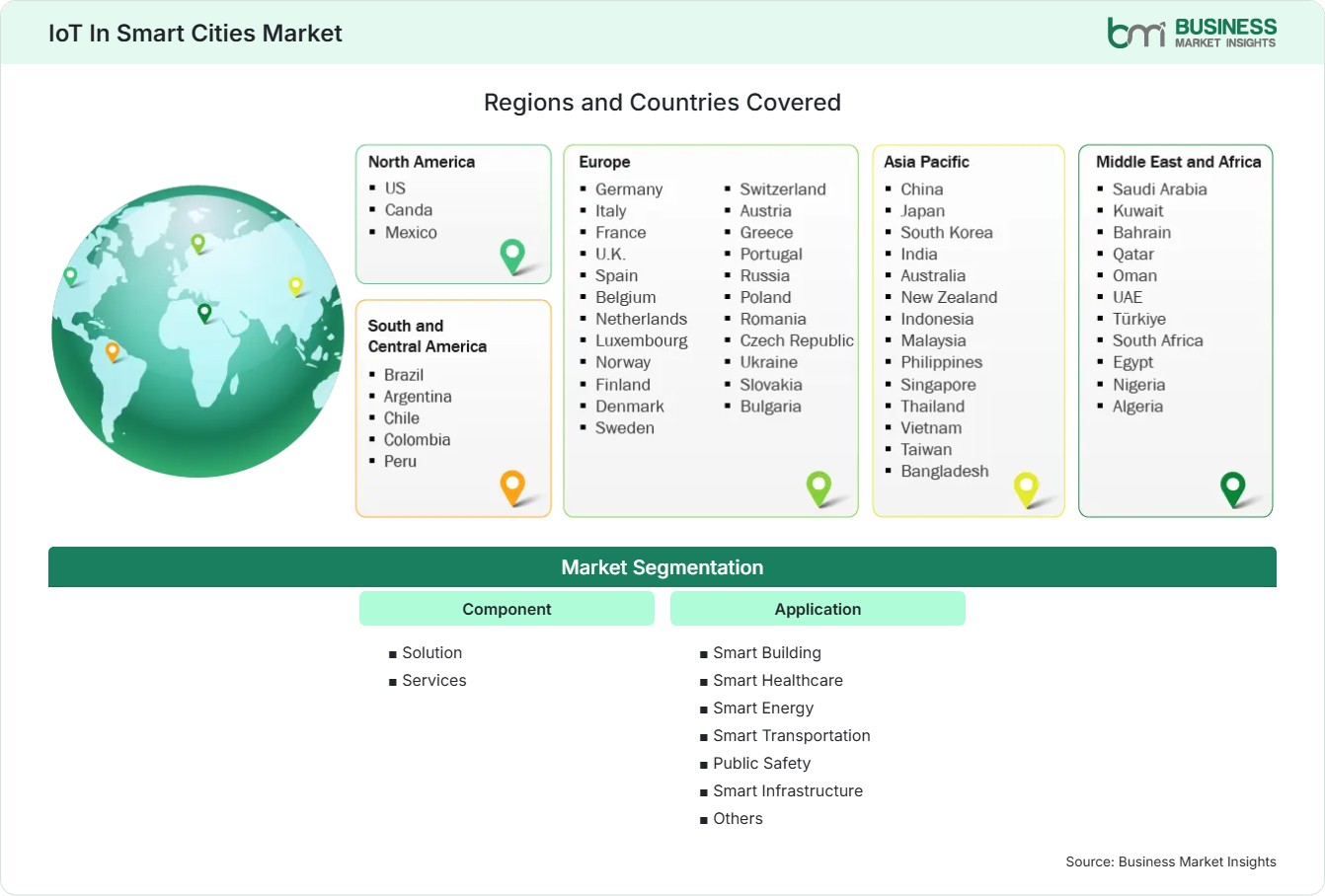
Europe accounted for a 24%–27% share in 2025 and is anticipated to expand at a CAGR of 18%–20% during 2026–2033. This region benefits from environmental policies, sustainability goals, and advanced urban planning. The key markets include Germany, the U.K., France, and the Netherlands, while the Southern European countries are increasingly embracing connected infrastructure systems. There is growth in demand because of digital transformation.
- Germany is advancing smart manufacturing-linked urban ecosystems through connected energy management, intelligent mobility systems, and industrial IoT integration.
- The U.K. is investing in smart transportation networks, digital public services, and connected infrastructure to improve urban efficiency and sustainability outcomes.
- France is promoting smart city initiatives focused on energy optimization, environmental monitoring, and digital governance solutions across municipalities.
- European sustainability regulations are encouraging deployment of IoT-enabled solutions supporting carbon reduction, efficient resource utilization, and renewable energy integration.
- The Netherlands is developing connected urban environments through advanced mobility systems, smart lighting networks, and data-driven city management platforms.
Asia Pacific IoT in Smart Cities Market
Asia Pacific captured a 27%–30% share in 2025 and is expected to grow at a CAGR of 23%–25% during 2026–2033, making it the fastest-growing regional IoT in Smart Cities Market. Rapid urbanization, government-backed smart city initiatives, and expanding digital infrastructure investments are driving adoption. China, India, Japan, and South Korea are leading contributors, with increasing deployment of connected transportation, energy, and public safety applications.
- China is accelerating smart city development through large-scale IoT deployment, 5G connectivity expansion, and intelligent infrastructure modernization programs.
- India is increasing adoption through government-supported digital city initiatives, smart mobility projects, connected utilities, and technology-enabled public service platforms.
- Japan is focusing on aging population solutions, robotics integration, smart healthcare applications, and efficient urban resource management systems.
- South Korea is advancing connected urban ecosystems through smart buildings, autonomous mobility infrastructure, and advanced communication networks.
- Southeast Asian countries are adopting IoT solutions to improve urban planning, transportation efficiency, and sustainable infrastructure development.
Rest of World IoT in Smart Cities Market
Latin America, Middle East, and Africa collectively represented a 10%–13% share in 2025 and are projected to grow at a CAGR of 21%–23% during 2026–2033. These regions are adopting IoT technologies to address urban challenges, improve infrastructure efficiency, and support sustainable development. Countries including Brazil, UAE, Saudi Arabia, and South Africa are emerging as important players in the IoT in Smart Cities Market due to digital transformation initiatives.
Latin American cities are implementing connected solutions for transportation, public safety, and utility management, while Middle Eastern economies are investing in advanced smart city projects linked with sustainability goals and economic diversification programs.
- Brazil is expanding urban IoT adoption through smart mobility systems, digital governance platforms, and connected infrastructure initiatives.
- The UAE is developing technology-driven cities with investments in intelligent transportation, smart buildings, and automated municipal services.
- Saudi Arabia is supporting smart city transformation through large-scale urban projects and digital infrastructure development programs.
- South Africa is adopting IoT solutions for energy monitoring, public services optimization, and infrastructure management improvements.
- Regional investments in 5G connectivity and cloud technologies are enabling broader deployment of smart city applications across emerging economies.