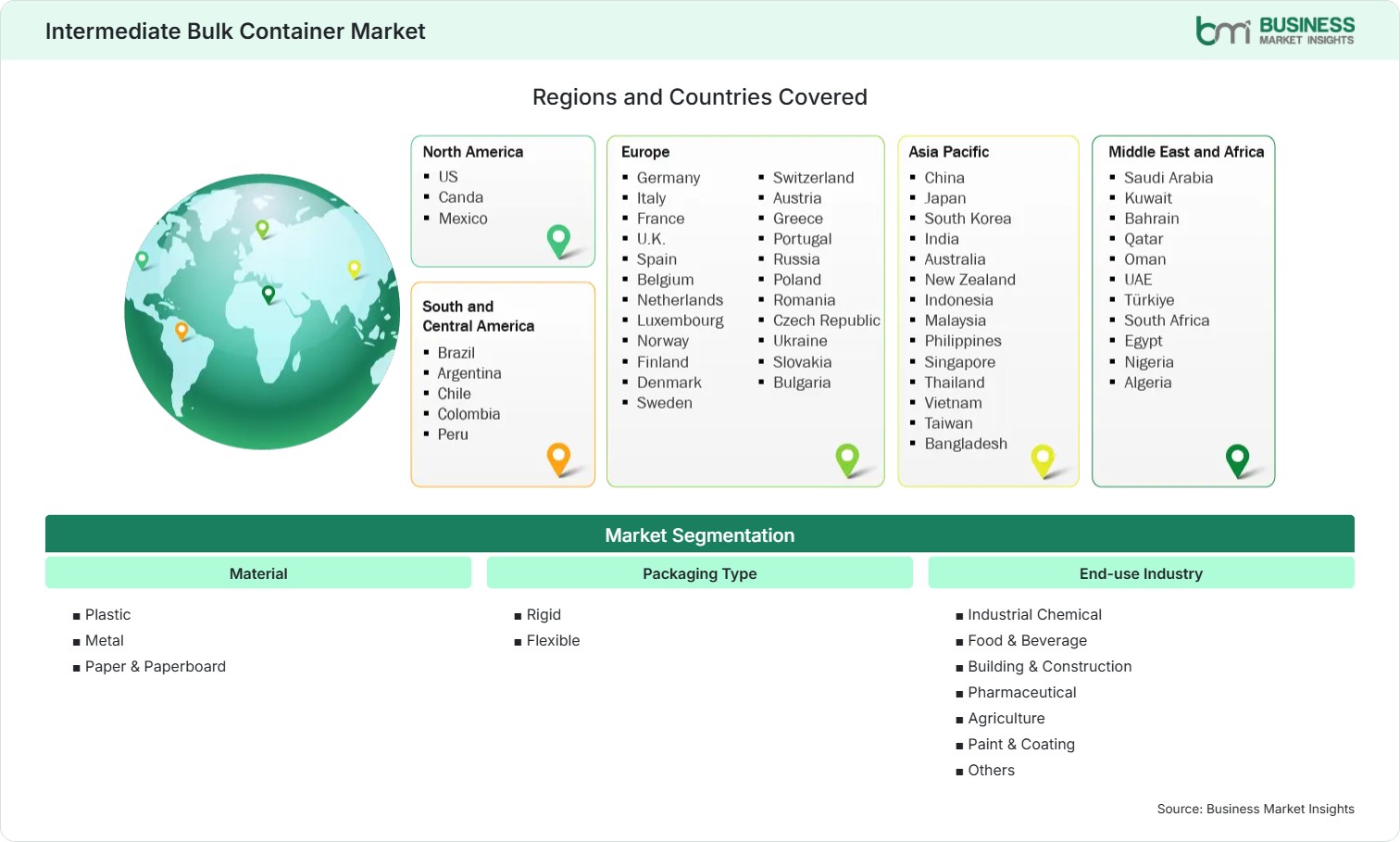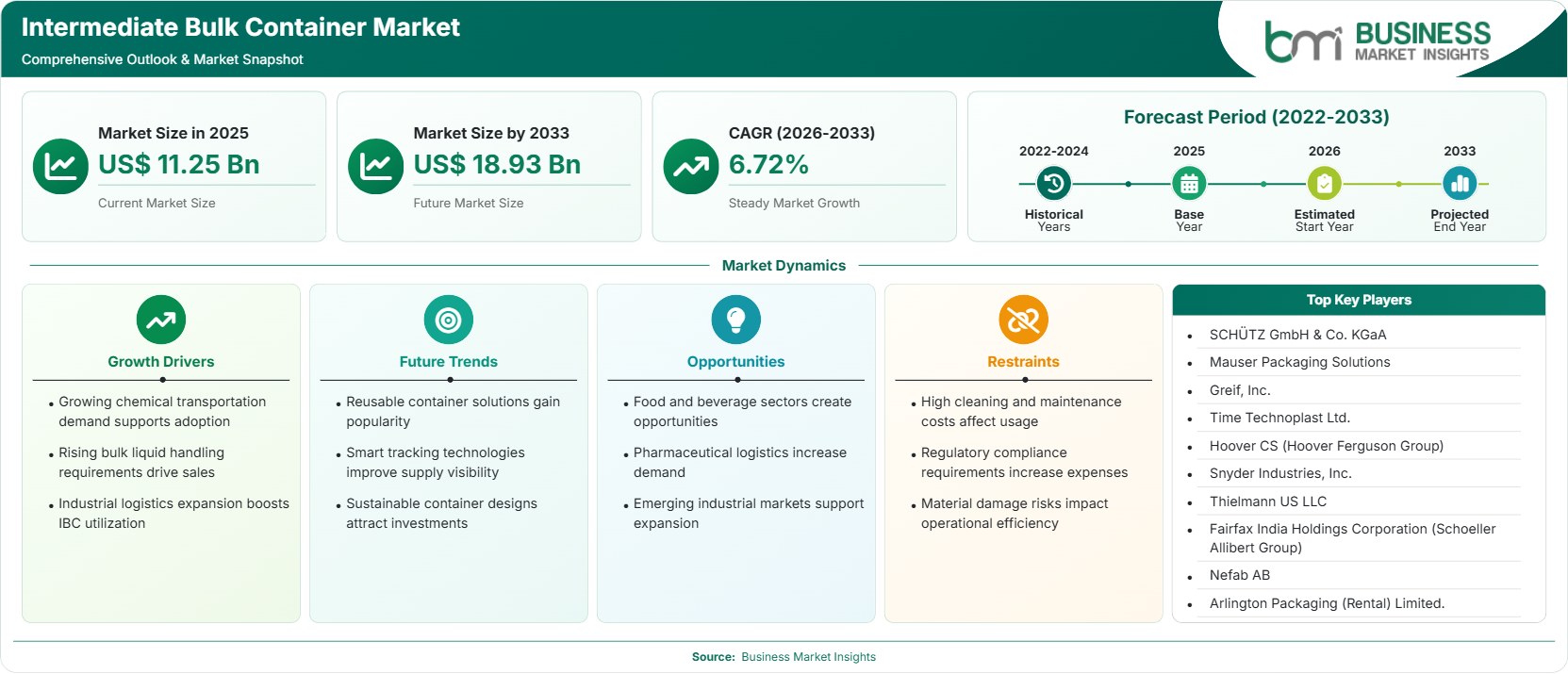
Intermediate Bulk Container Market Regional Highlights
North America Intermediate Bulk Container Market
North America accounted for around 34% to 37% of the Intermediate Bulk Container Market share in 2025 and is expected to grow at a CAGR of 5.8% to 6.3% until 2033. Factors aiding the market include the presence of the chemicals industry, effective logistics, and the use of reusable packaging solutions. Recycling of the container makes the life cycle more cost-effective. The circular packaging trend is encouraged by environmental management policies; however, there is constant demand for the transportation of food ingredients and industrial fluids. Leadership is maintained through integration of technology and regulatory compliance standards.
- U.S. Gulf Coast chemical production continues creating substantial demand for reusable liquid transportation solutions and standardized packaging platforms across domestic and export supply chains.
- Reconditioning infrastructure expansion supports sustainability goals while reducing packaging waste and total operational costs for industrial users handling recurring bulk shipments.
- Food ingredient manufacturers increasingly deploy reusable packaging systems to optimize warehouse efficiency, improve traceability, and reduce container replacement frequency.
- Growing implementation of RFID-enabled logistics solutions enhances asset visibility, utilization rates, and compliance reporting across industrial transportation networks.
US Intermediate Bulk Container Market
The United States accounts for 73%-77% of the Intermediate Bulk Container Market share in North America and is projected to grow at a CAGR of 5.9%-6.4% in the coming years. Demand in the region will be driven by strong exports of chemicals and industrial automation, and a well-developed transportation network. Regulations governing the handling of dangerous goods will further stimulate demand for standardized intermediate containers. Rising use of bulk containers for specialty chemicals, oils, coatings, and agricultural products will drive demand for replacements.
- Specialty chemicals production growth continues stimulating consumption of certified transportation containers capable of handling hazardous and sensitive formulations.
- Renewable fuel, lubricant, and industrial additive supply chains increasingly prefer reusable packaging systems to minimize transportation inefficiencies and packaging waste.
- Expanded use of automation-compatible packaging supports warehouse productivity gains across manufacturing and distribution operations.
- Sustainability commitments encourage deployment of refurbished containers, supporting circular economy objectives while reducing procurement expenditures.
Europe Intermediate Bulk Container Market
Europe accounted for 25%–28% of the Intermediate Bulk Container Market in 2025 and is expected to see a CAGR of 5.7%–6.2% through 2033. Stringent environmental policies, efficient recycling infrastructure, and industrial manufacturing drive the use of IBCs in the region. The country with the largest market in Europe is Germany. Poland exhibits the highest growth rate, at around 6.7%–7.2%, due to manufacturing expansion. The chemical, pharmaceutical, and food industries continue to be major applications of IBCs in the region.
- Germany leads regional demand due to its extensive chemical manufacturing base and sophisticated industrial logistics infrastructure.
- Poland emerges as a high-growth market supported by foreign manufacturing investment and expanding export-oriented industrial production.
- Circular economy regulations encourage increased utilization of reusable and reconditioned industrial packaging assets across sectors.
- Pharmaceutical production growth strengthens demand for validated storage and transportation systems aligned with stringent quality requirements.
- Carbon reduction targets continue shaping procurement strategies among industrial packaging buyers throughout European markets.
Asia Pacific Intermediate Bulk Container Market
The Asia Pacific accounted for 27%-30% in 2025 and will witness the fastest regional CAGR of 7.8%-8.4%. China leads the region, whereas India shows the fastest growth rate, at about 8.7%-9.2% CAGR, owing to rapid growth in the chemicals, pharmaceuticals, and agriculture industries. Industrialization, investments in export manufacturing, and infrastructure development will help boost usage. Growing environmental consciousness and the adoption of reusable industrial packaging solutions will drive demand. Growth in production across various industries makes the region a leading driver of future Intermediate Bulk Container Market growth.
- China remains the largest contributor through extensive chemical output, manufacturing scale, and export-oriented industrial operations.
- India records accelerated adoption driven by specialty chemical investments, pharmaceutical exports, and agricultural supply chain modernization.
- Southeast Asian economies increasingly invest in industrial parks and logistics facilities, enhancing bulk packaging requirements.
- Growing food processing industries create demand for hygienic, reusable transportation and storage solutions across regional markets.
- Government manufacturing initiatives support industrial output growth and associated packaging consumption patterns.
Rest of World Intermediate Bulk Container Market
The Rest of World segment holds a market share of 10% to 13% in 2025 and is forecast to grow at a 6.5% to 7.0% CAGR through 2033. South and Central America are favored due to agricultural export and chemical distribution operations. In contrast, the markets in the Middle East and Africa are boosted by petrochemical projects and industrial diversification strategies. Brazil is a leading country in the region, whereas Saudi Arabia shows higher growth rates because of industrial projects.
- Brazil supports significant demand through agriculture, food processing, and expanding industrial chemical transportation activities.
- Saudi Arabia benefits from petrochemical capacity additions and industrial diversification strategies supporting packaging infrastructure investments.
- Mining and resource sectors create specialized opportunities for industrial bulk liquid transportation systems.
- Regional supply chain modernization encourages greater utilization of reusable packaging solutions across manufacturing sectors.
- Increasing industrial safety standards support replacement of conventional packaging with certified bulk container systems.