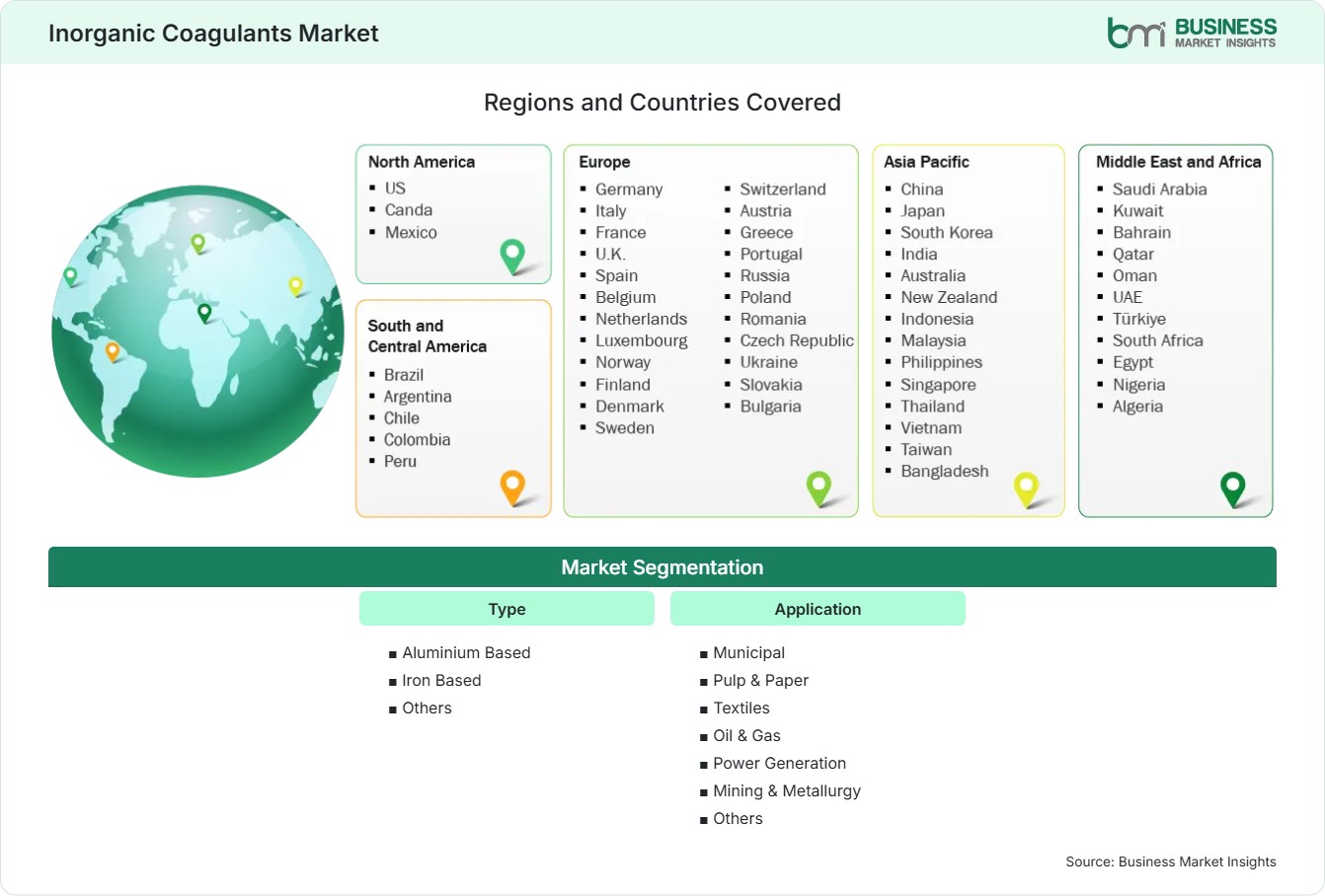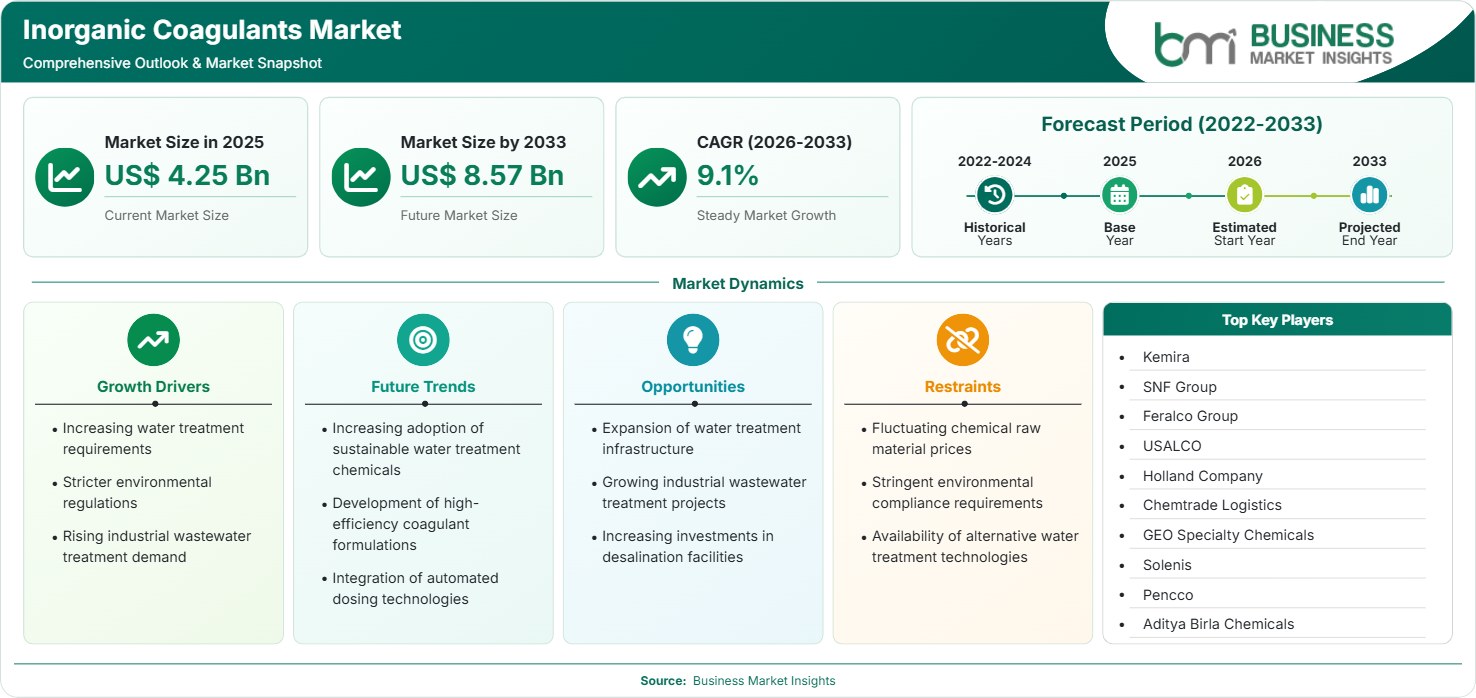
Inorganic Coagulants Market Regional Highlights
North America Inorganic Coagulants Market
The North America region contributed 28% to 31% to the global market in 2025 and is expected to grow at a CAGR of 8.6% to 9.0% from 2026 to 2033. Infrastructure renovation in municipalities, the need for wastewater treatment in industries, and stringent government regulations have been driving the market. There has been a growing trend for investments in high-performing coagulants that improve treatment efficiency while ensuring compliance with evolving regulatory frameworks.
- Municipal water authorities continue upgrading treatment plants to improve drinking water quality and wastewater processing efficiency across the region.
- Industrial wastewater treatment remains a significant demand driver across manufacturing, mining, power generation, and food processing industries.
- Water recycling initiatives continue encouraging adoption of advanced coagulation chemicals supporting sustainable water resource management.
- Manufacturers continue investing in regional production capacity to strengthen supply chain resilience and meet growing customer demand.
US Inorganic Coagulants Market
The United States accounted for 22%–25% of the global market in 2025 and is expected to grow at a CAGR of 8.8%–9.2% during the forecast period. Ongoing modernization of municipal treatment infrastructure, industrial wastewater regulations, and increased investments in water reuse continue driving domestic demand for inorganic coagulants.
- Federal and state infrastructure investments continue supporting modernization of drinking water and wastewater treatment facilities.
- Industrial operators increasingly adopt efficient coagulants to improve compliance with wastewater discharge regulations.
- Growing emphasis on sustainable water reuse continues expanding demand across municipal and industrial treatment applications.
Europe Inorganic Coagulants Market
Europe accounted for 24% to 27% of the global market in 2025 and is expected to grow at a CAGR of 8.7% to 9.1% during 2026 to 2033. Environmental policies, along with existing treatment infrastructure in municipalities and industries, have been driving regional demand. Germany, France, and the UK have been prominent countries in the region, whereas Poland is an emerging country in the region as a high-growth market due to increasing industrial investments and wastewater infrastructure development.
- European utilities continue improving treatment efficiency through advanced coagulation technologies and process optimization.
- Germany remains a leading consumer owing to its extensive municipal and industrial water treatment infrastructure.
- France continues investing in sustainable water management and wastewater recycling initiatives.
- The United Kingdom supports demand through modernization of aging water infrastructure and environmental compliance programs.
- Poland continues witnessing increasing investment in industrial wastewater treatment and municipal water infrastructure.
Asia Pacific Inorganic Coagulants Market
Asia Pacific accounted for 36%–39% of the global market in 2025 and is projected to expand at a CAGR of 9.7%–10.2% from 2026–2033, making it the fastest-growing regional market. Rapid industrialization, increasing urban populations, growing investments in municipal water infrastructure, and rising industrial wastewater treatment requirements continue supporting regional demand. China, India, Japan, and Southeast Asian countries remain major consumers owing to expanding manufacturing activities and increasing government investments in water management.
- China continues investing in municipal wastewater treatment plants and industrial water recycling projects to improve water quality and environmental sustainability.
- India is expanding drinking water infrastructure and industrial wastewater treatment capacity through government-supported water management initiatives.
- Japan and South Korea continue emphasizing advanced water treatment technologies to improve resource efficiency and environmental compliance.
- Southeast Asian countries are increasing investments in municipal treatment facilities and industrial wastewater management to support urban development.
- Regional chemical manufacturers continue expanding production capacity to meet growing demand from municipal and industrial treatment sectors.
Rest of World Inorganic Coagulants Market
The Rest of World region accounted for 8%–11% of the global market in 2025 and is expected to register a CAGR of 8.9%–9.4% during 2026–2033. South America continues expanding investments in municipal water treatment infrastructure, while the Middle East and Africa are increasing desalination capacity and wastewater treatment projects. Rising industrial development and water scarcity concerns continue supporting regional market growth.
- Brazil continues expanding municipal wastewater treatment infrastructure to improve sanitation coverage and environmental protection.
- Gulf countries are investing in desalination facilities and advanced water treatment technologies to strengthen long-term water security.
- South Africa continues increasing industrial wastewater treatment investments supporting mining and manufacturing operations.
- Water reuse and wastewater recycling projects continue creating demand for efficient inorganic coagulant solutions.
- Growing public infrastructure investments are supporting long-term adoption across municipal and industrial treatment facilities.