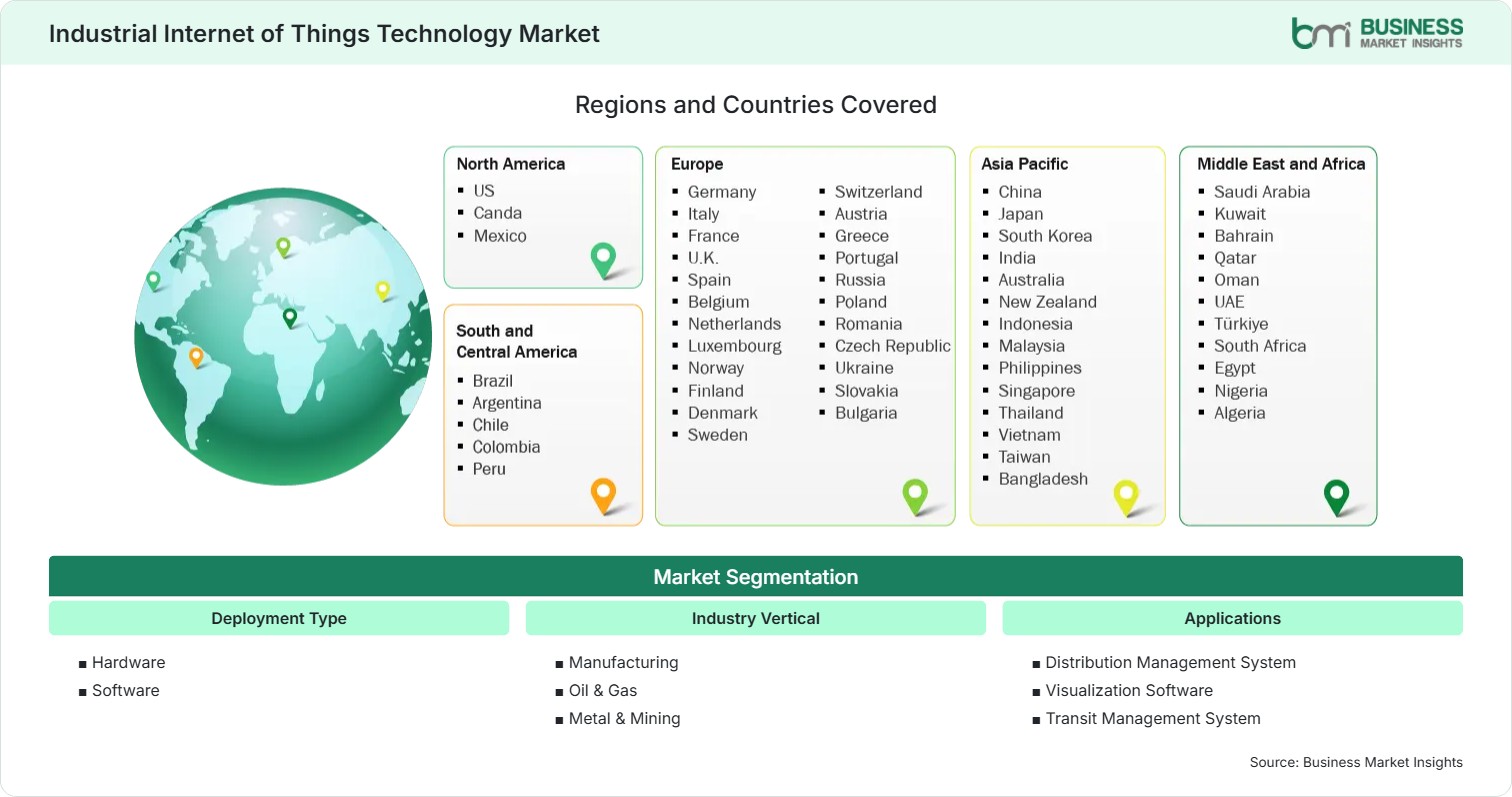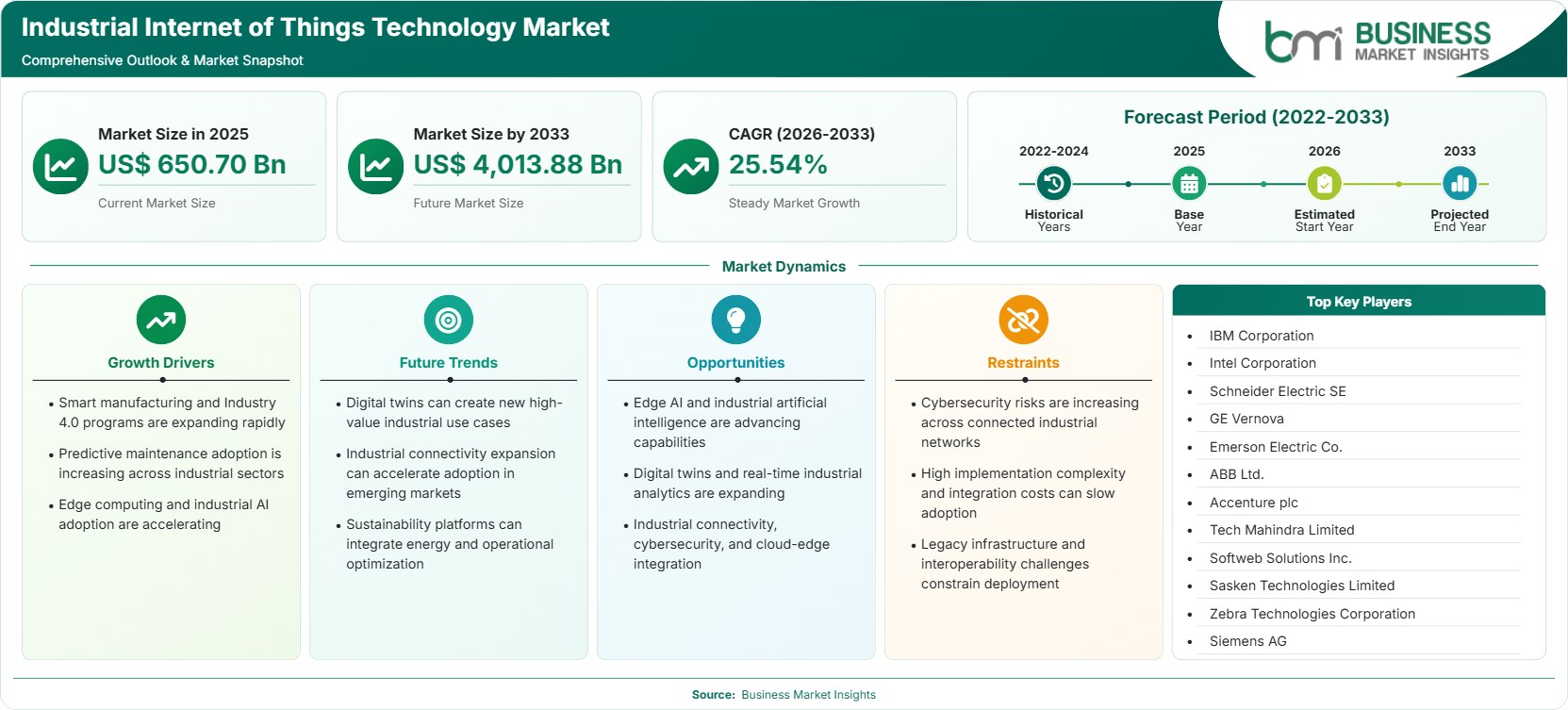
Industrial Internet of Things Technology Market Regional Highlights
North America Industrial Internet of Things Technology Market
North America's global revenue is estimated at 34%–37% in 2025 and is expected to grow at a CAGR of 24%–27% through 2033. This growth is enabled by the extensive use of smart manufacturing, high investments in industrial automation, well-developed cloud infrastructure, and digital transformation. The Industrial Internet of Things Technology Market share in North America is sustained by the presence of powerful technology providers, developed industrial ecosystems, and the adoption of asset intelligence systems across manufacturing, energy, transportation, and utility sectors.
- Manufacturing enterprises continue integrating AI-enabled monitoring systems to improve production efficiency, asset reliability, and operational visibility while reducing unplanned downtime across large-scale industrial facilities.
- Energy and utility operators increasingly adopt connected asset management platforms that support infrastructure monitoring, remote diagnostics, and predictive maintenance across geographically distributed operations.
- Industrial cybersecurity spending is rising as enterprises seek stronger protection for connected operational technology environments and critical industrial infrastructure.
- Edge computing deployments are expanding rapidly, enabling low-latency analytics and real-time decision-making capabilities in highly automated industrial environments.
- Technology partnerships among automation providers, cloud vendors, and industrial software companies continue accelerating digital transformation projects throughout the region.
US Industrial Internet of Things Technology Market
The U.S. accounts for 72%-76% of revenue in North America and is anticipated to experience a 24%-27% CAGR through 2033. Projects for industrial modernization, advanced manufacturing investments, and Industry 4.0 initiatives contribute to continuous deployment across industry segments. The country is a frontrunner in innovations in industrial software, cloud computing, automation, and intelligent analytics.
- Large manufacturers increasingly deploy predictive maintenance platforms to reduce operational disruptions and improve equipment lifecycle management.
- Industrial AI adoption is accelerating within production environments to enhance process optimization and quality assurance functions.
- Connected logistics and warehouse automation systems continue improving supply chain efficiency and operational visibility.
- Strong venture capital and corporate investment activity supports innovation across industrial software and automation technologies.
Europe Industrial Internet of Things Technology Market
Europe accounts for 25% to 28% of the world’s revenue in 2025 and is projected to maintain a CAGR of 23% to 26% through 2033. The initiatives, such as sustainability goals for industries, manufacturing ecosystems, and digital transformation, have boosted adoption in the region. Germany is the market leader, while manufacturing centers in Eastern Europe are growing rapidly, supported by investments in automation and industrial modernization programs.
- Manufacturers are deploying connected production systems to improve energy efficiency and regulatory compliance.
- Digital twin adoption is expanding across automotive, machinery, and process manufacturing industries.
- Industrial data platforms support greater operational transparency and process optimization initiatives.
- Germany leads regional deployment volumes, while Poland and the Czech Republic display strong investment momentum.
- Sustainability objectives encourage implementation of real-time monitoring and resource optimization technologies.
Asia Pacific Industrial Internet of Things Technology Market
Asia Pacific represents 27%–30% of global revenue in 2025 and is projected to register the highest CAGR of 27%–30% through 2033. The region benefits from rapid industrialization, smart manufacturing investments, expanding electronics production, and government-backed digital transformation initiatives. China leads regional demand, while India and Southeast Asian countries emerge as high-growth markets due to increasing automation adoption and industrial infrastructure development. The region contributes significantly to overall market expansion.
- Large-scale factory modernization programs continue driving adoption across manufacturing-intensive economies.
- Semiconductor and electronics production facilities increasingly implement advanced connectivity and monitoring solutions.
- Industrial automation spending rises as companies pursue productivity improvements and operational efficiency.
- China remains the largest regional market, while India demonstrates some of the fastest growth opportunities.
- Smart industrial zones and digital manufacturing initiatives support long-term technology deployment across multiple sectors.
Rest of World Industrial Internet of Things Technology Market
Rest of World accounts for 10%–13% of global revenue in 2025 and is anticipated to expand at a CAGR of 22%–25% through 2033. South & Central America are increasingly adopting connected industrial solutions within mining, utilities, and manufacturing sectors. Meanwhile, Middle East and African economies continue investing in smart industrial infrastructure, energy optimization technologies, and digital transformation programs supporting long-term industrial competitiveness.
Resource-intensive industries remain primary adopters, particularly within energy, mining, and transportation applications. Regional governments increasingly support industrial modernization through infrastructure development and technology investment initiatives.
- Mining operators deploy connected monitoring systems to improve operational efficiency and equipment reliability.
- Energy sector investments support intelligent asset management and infrastructure optimization programs.
- Brazil leads adoption across South & Central America, supported by manufacturing and industrial automation investments.
- Saudi Arabia and the United Arab Emirates demonstrate strong growth potential through industrial diversification strategies.
- Industrial digitalization programs continue attracting technology investments across key infrastructure and production sectors.