
Immunomodulators Market Outlook: Size, Share, Trends, Growth Analysis, Competitive Landscape & Forecast, 2026-2033

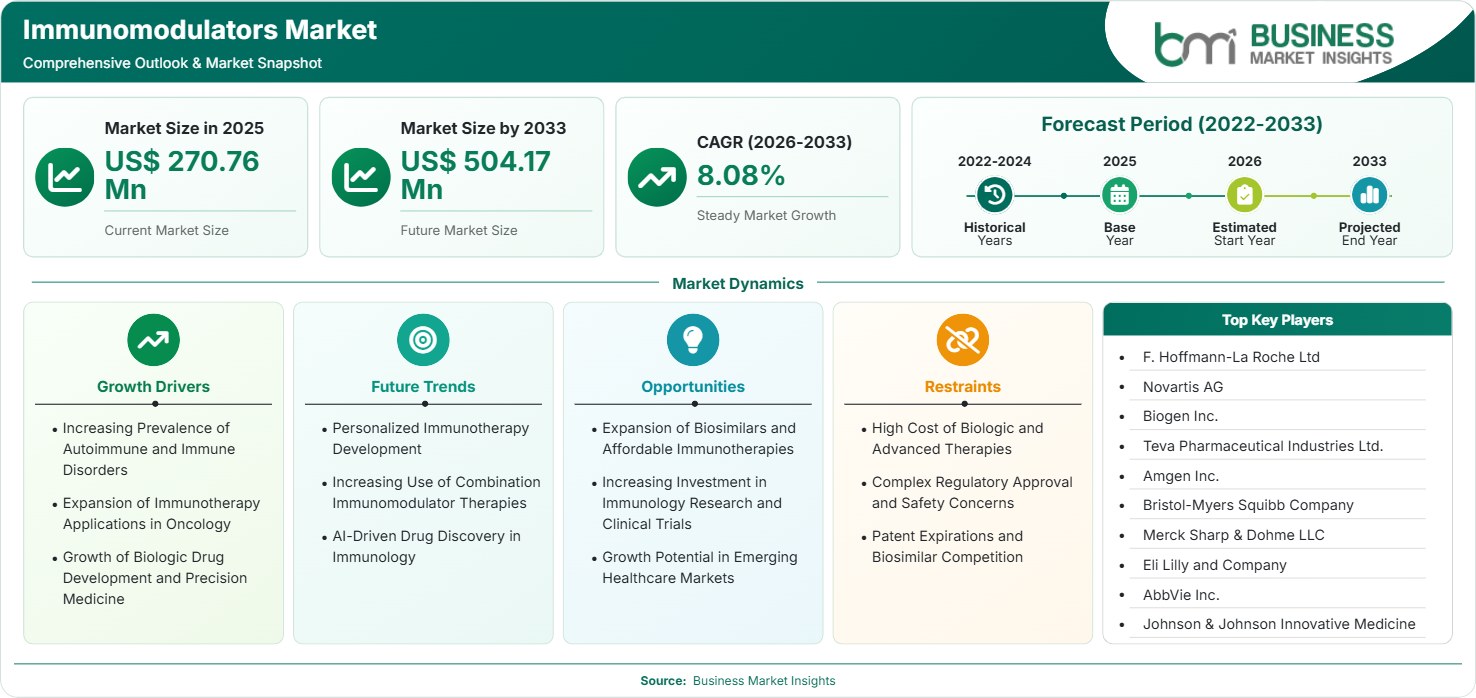
The Immunomodulators Market size was valued at US$ 270.76 Million in 2025 and is projected to reach US$ 504.17 Million by 2033, growing at a CAGR of 8.08% during 2026–2033. Increasing autoimmune disease prevalence, rising oncology applications, biotechnology advancements, and expanding biologic therapies are creating strong growth opportunities across healthcare markets.

Report Coverage
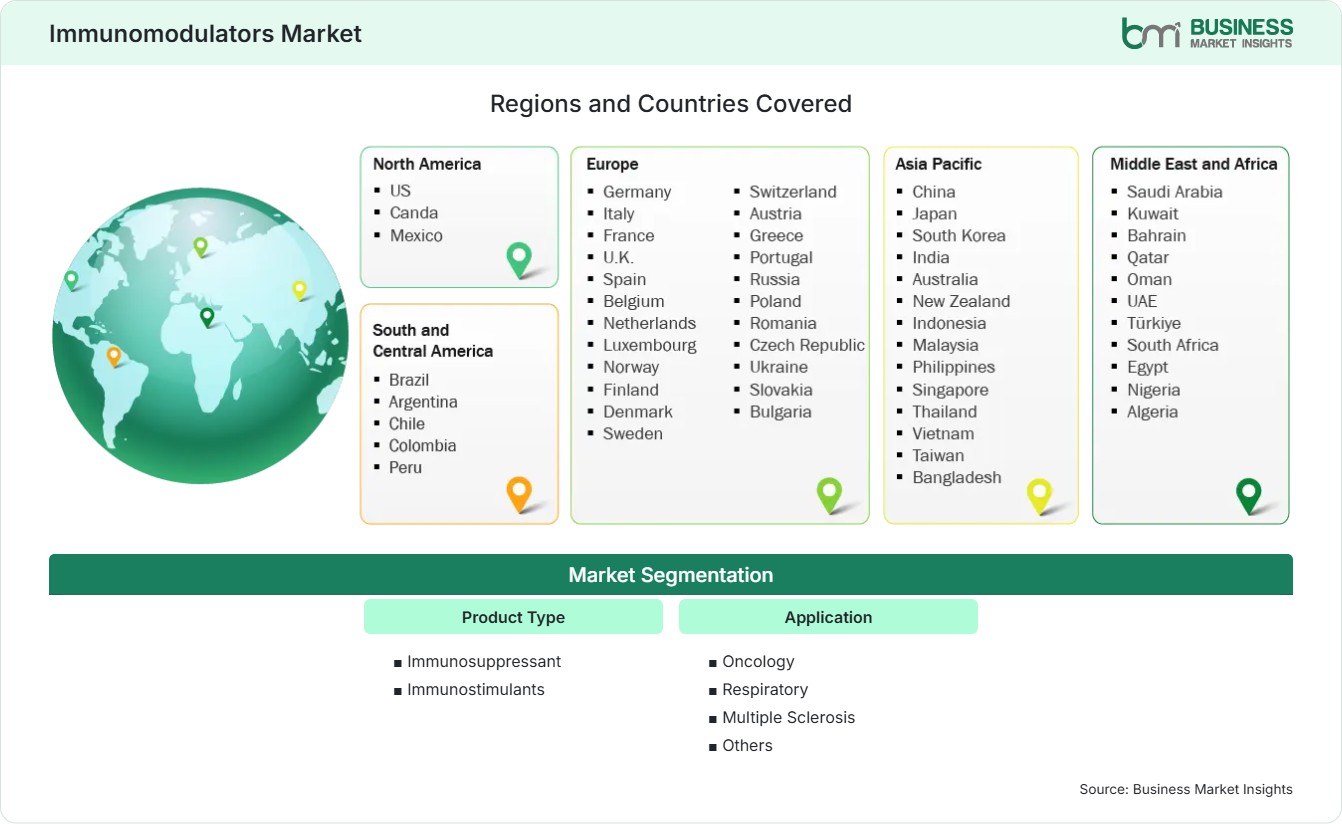
  • Product Type: Immunosuppressant, Immunostimulants
  • Application: Oncology, Respiratory, Multiple Sclerosis, Others
US$ 270.76 Mn Market size in 2025
US$ 504.17 Mn Market Size by 2033
8.08% CAGR, 2026 - 2033
2026-2033 Forecast Period

AI Overview

Immunomodulators Market Summary

  • North America Region: North America holds 38%–41% market share in 2025 and is projected to grow at a CAGR of 7.6%–8.0% during 2026–2033. The region benefits from advanced healthcare infrastructure, strong biologics adoption, high research investment, and increasing autoimmune disorder diagnosis. The U.S. market is supported by extensive clinical research, pharmaceutical innovation, and reimbursement availability, contributing to a 7.7%–8.1% CAGR through 2033.
  • Fastest Growing Region: Asia Pacific accounts for 24%–27% market share in 2025 and is expanding at a CAGR of 9.1%–9.6%. Growth is driven by rising healthcare expenditure, increasing autoimmune disease awareness, expanding oncology treatment access, growing biotechnology capabilities, and improving availability of advanced immunotherapy solutions.
  • Leading Segment: Immunosuppressant represents 58%–62% market share in 2025 and is expected to grow at a CAGR of 7.8%–8.2%. Strong demand is supported by autoimmune disease management, organ transplantation procedures, inflammatory disorder treatment, and increasing adoption of targeted immune-modulating therapies.
  • High Growth Segment: Oncology accounts for 34%–38% market share in 2025 and is projected to register a CAGR of 9.0%–9.5%. Expansion is supported by increasing cancer incidence, immunotherapy research, checkpoint inhibitor development, and rising demand for advanced immune-based cancer treatments.
  • Key Market Opportunity: Increasing development of precision medicine, personalized immunotherapies, combination treatment approaches, and next-generation biologics provides pharmaceutical companies opportunities to expand therapeutic applications and improve patient outcomes.
  • Major Market Players: F. Hoffmann-La Roche Ltd, Novartis AG, Biogen Inc., Teva Pharmaceutical Industries Ltd., Amgen Inc., Bristol-Myers Squibb Company, Merck Sharp & Dohme LLC, Eli Lilly and Company, AbbVie Inc., Johnson & Johnson Innovative Medicine.
Strategic Insights

Immunomodulators Market: Strategic Insights

Immunomodulators Market Strategic Framework
FREE PDF
Request your free sample
Request free sample
Stakeholder View

Key Takeaways

  • The industry comprises pharmaceutical companies, biotech firms, research institutes, health care facilities, and regulatory bodies that cooperate to produce and market immune-modulating products.
  • Cancers and autoimmune diseases have substantial growth prospects owing to the rise in adoption of targeted treatment, biological treatments, and individualized medicine.
  • The focus of innovation is moving towards precision immunology, mAbs, cell therapies, marker-based treatment choice, and combination therapy.
  • The Asia Pacific region is a highly valuable target for investment because of growing healthcare expenditures, enhanced diagnostics, increased clinical research, and better access of patients to modern medications.
  • Business cooperation and licensing deals facilitate the advancement of the drug pipeline and increase the competitiveness of leading pharmaceutical companies.
  • The introduction of biosimilars and new generations of immune drugs will facilitate greater treatment accessibility but increase competitive environment of the pharmaceutical industry worldwide.
Geographic Outlook

Immunomodulators Market Regional Highlights

North America Immunomodulators Market

North America accounts for 38%–41% of the Immunomodulators Market share in 2025 and is projected to grow at a CAGR of 7.6%–8.0% through 2033. The region maintains leadership due to advanced healthcare infrastructure, high adoption of biologics, strong pharmaceutical research capabilities, and favorable reimbursement systems. Increasing autoimmune disease diagnosis, oncology treatment expansion, and biotechnology investments continue supporting regional market development.

  • The United States remains the largest contributor due to strong pharmaceutical innovation, extensive clinical trials, and widespread availability of advanced immune-based therapies.
  • Rising prevalence of autoimmune disorders such as rheumatoid arthritis, inflammatory bowel disease, and multiple sclerosis increases demand for immune-modulating treatments.
  • Pharmaceutical companies continue expanding biologics research pipelines through partnerships, acquisitions, and precision medicine initiatives.
  • Advanced healthcare reimbursement systems improve patient access to expensive biologic and targeted therapies.

US Immunomodulators Market

The United States represents 82%–86% of the North American market and is expected to expand at a CAGR of 7.7%–8.1% during the forecast period. Strong biotechnology infrastructure, increasing clinical research activities, and high adoption of innovative therapies support market growth. The country remains a global hub for immunology research, pharmaceutical development, and commercialization of advanced immune-modulating drugs.

  • Increasing investment in oncology immunotherapy research strengthens demand for innovative immune-based treatment solutions.
  • Large pharmaceutical companies continue developing monoclonal antibodies and targeted immune therapies for complex diseases.
  • Rising healthcare expenditure supports broader access to advanced treatment options for autoimmune and inflammatory conditions.
  • Strong regulatory pathways encourage faster development and commercialization of novel immunomodulatory therapies.

Europe Immunomodulators Market

Europe holds 27%–30% market share in 2025 and is forecast to register a CAGR of 7.9%–8.3% through 2033. The region benefits from established healthcare systems, strong pharmaceutical research capabilities, and increasing adoption of biologic therapies. Germany leads regional demand, while the United Kingdom and France demonstrate strong growth due to expanding clinical research and healthcare investments.

  • Germany maintains regional leadership through advanced healthcare infrastructure and strong pharmaceutical manufacturing capabilities.
  • The United Kingdom continues expanding immunology research through biotechnology innovation and clinical trial activities.
  • France supports market growth through government healthcare initiatives and increasing adoption of advanced therapies.
  • European pharmaceutical companies focus on biosimilars development to improve affordability and treatment accessibility.
  • Increasing regulatory support for innovative medicines encourages continued investment in immune-based therapies.

Asia Pacific Immunomodulators Market

Asia Pacific captures 24%–27% market share in 2025 and is anticipated to grow at a CAGR of 9.1%–9.6%, making it the fastest-growing regional market. Increasing healthcare expenditure, rising autoimmune disease awareness, expanding oncology treatment access, and growing biotechnology capabilities are accelerating adoption. China leads regional demand, while India records significant growth due to healthcare modernization.

  • China benefits from expanding pharmaceutical manufacturing, increasing clinical research activity, and government support for biotechnology development.
  • India experiences strong growth through improving healthcare access, rising diagnosis rates, and increasing adoption of advanced medicines.
  • Japan continues investing in precision medicine, oncology research, and innovative therapeutic development.
  • South Korea strengthens its position through biotechnology investments and growing domestic pharmaceutical capabilities.
  • Southeast Asian markets expand through improved healthcare infrastructure and increasing availability of specialized treatments.

Rest of World Immunomodulators Market

The Rest of World region accounts for 8%–10% market share in 2025 and is expected to grow at a CAGR of 8.4%–8.8% through 2033. South & Central America and the Middle East & Africa are witnessing gradual adoption due to improving healthcare systems, increasing disease awareness, and expanding access to advanced pharmaceutical treatments.

  • Brazil leads South & Central America through expanding healthcare infrastructure and increasing adoption of specialty medicines.
  • Mexico demonstrates growth potential due to rising healthcare investment and improving access to advanced therapies.
  • Saudi Arabia and the UAE expand adoption through healthcare modernization programs and specialty treatment investments.
  • South Africa improves access to immune-based therapies through strengthening healthcare facilities and diagnostic capabilities.
  • International pharmaceutical companies enhance regional presence through partnerships, distribution networks, and localized healthcare initiatives.
Global Market Geography
FREE PDF
Request your free sample
Request free sample
Segment Analysis

Immunomodulators Market Segmentation

Product Type

The Product Type segment accounted for 58%–62% market share in 2025 and is projected to expand at a CAGR of 7.8%–8.2% through 2033. The Immunomodulators Market scope continues expanding as healthcare providers increasingly adopt immune-regulating therapies for autoimmune disorders, transplantation, oncology, and inflammatory conditions requiring targeted treatment approaches.

  • Immunosuppressant: Represents the leading product category due to widespread application in autoimmune disease management, organ transplantation, inflammatory disorders, and prevention of immune-related complications.
  • Immunostimulants: Growing adoption is supported by oncology applications, immune enhancement therapies, vaccine response improvement, and increasing research into immune activation mechanisms.

Application

The Application segment represented 34%–38% market share in 2025 and is expected to register a CAGR of 9.0%–9.5% during the forecast period. Increasing disease burden, improved diagnostics, and expanding clinical applications are driving demand across oncology, respiratory diseases, and neurological immune disorders.

  • Oncology: The fastest-growing application due to increasing cancer incidence, immunotherapy advancements, checkpoint inhibitor development, and growing adoption of immune-based cancer treatment strategies.
  • Respiratory: Demand is supported by increasing research into immune-mediated respiratory disorders, chronic inflammatory conditions, and development of targeted therapies.
  • Multiple Sclerosis: Growth is driven by rising diagnosis rates, expanding treatment options, and increasing adoption of disease-modifying immune therapies.
  • Others: Includes inflammatory and immune-related disorders requiring specialized therapeutic approaches and continued clinical research advancements.
Market Forces

Immunomodulators Market Dynamics

Key Market Drivers

Increasing Prevalence of Autoimmune and Immune Disorders

The rising global burden of autoimmune diseases is a major factor accelerating demand for immune-regulating therapies. Conditions including rheumatoid arthritis, multiple sclerosis, inflammatory bowel disease, and psoriasis are increasing the need for targeted treatment approaches. According to global health organizations, autoimmune disorders affect millions of people worldwide, creating sustained demand for advanced therapies. Immunomodulators Market growth is supported by improved diagnostic capabilities, increasing disease awareness, and wider adoption of biologic and targeted therapies. Pharmaceutical companies are investing in novel immune pathway research to develop treatments with improved efficacy and reduced adverse effects. Growing healthcare access across emerging economies further supports diagnosis and treatment adoption.

Expansion of Immunotherapy Applications in Oncology

The increasing adoption of immunotherapy in cancer treatment is significantly contributing to market expansion. Advances in checkpoint inhibitors, monoclonal antibodies, and immune-based combination therapies are transforming oncology treatment strategies. Growing cancer incidence worldwide is encouraging pharmaceutical companies to accelerate clinical research and develop innovative immune-modulating solutions. Immunomodulators Market trends indicate increasing focus on personalized oncology approaches that use biomarkers and patient-specific immune profiles to optimize treatment outcomes. Healthcare providers are increasingly incorporating immunotherapies into treatment protocols, supported by regulatory approvals and expanding clinical evidence. Continued investment in cancer immunology research is expected to create sustained demand for advanced immunomodulatory products.

Growth of Biologic Drug Development and Precision Medicine

Innovations in biotechnology are making it possible to create highly specific immunomodulatory drugs. Monoclonal antibodies, recombinant proteins, and other advanced biological agents are being created for immune-related conditions. Precision medicine makes it possible to use biomarkers of patients for choosing the most appropriate therapy for them. There is an increase in research by pharmaceutical firms in the discovery of immune pathways and personalized treatment options. A combination of advanced diagnostic tools with immunomodulatory treatment makes possible the development of efficient disease treatment methods.

Key Market Opportunities

Expansion of Biosimilars and Affordable Immunotherapies

The increasing availability of biosimilars creates significant opportunities by improving access to high-cost immunomodulatory therapies. As patents for several biologic medicines expire, pharmaceutical companies are developing lower-cost alternatives to expand patient access and increase treatment adoption. Immunomodulators Market Forecasts indicate that biosimilar adoption will continue influencing competitive dynamics by encouraging price optimization and broader healthcare accessibility. Emerging markets represent significant opportunities where affordability remains a major barrier to advanced therapies. Companies developing regulatory-compliant biosimilars and establishing efficient manufacturing capabilities can strengthen their market position while supporting wider availability of immune-based treatments.

Increasing Investment in Immunology Research and Clinical Trials

Increased investment in immunology research by pharmaceutical companies is creating avenues for innovation in treatments. There are ongoing efforts to explore novel immune pathways, drug combinations, and individualized treatments for autoimmune, oncological, and inflammatory diseases. Increased clinical trials allow for the discovery of new uses of drugs and enhance knowledge of immune mechanisms. Through biotechnology partnerships, collaborations with universities and research institutions, and government-funded research, discoveries are being made at a faster pace. Organizations that have the ability to create unique and clinically successful products will be able to tap into the new opportunities.

Growth Potential in Emerging Healthcare Markets

Developing regions offer substantial opportunities due to improving healthcare infrastructure, rising disease diagnosis rates, and increasing access to specialty medicines. Countries across Asia Pacific, Latin America, and the Middle East are investing in healthcare modernization and expanding pharmaceutical distribution networks. Growing awareness of autoimmune disorders and cancer treatment options is encouraging demand for advanced therapies. Companies entering these markets through local partnerships, manufacturing collaborations, and patient assistance programs can improve accessibility and strengthen market penetration. Increasing government support for biotechnology development further enhances opportunities for long-term expansion.

Market Restraints and Challenges

High Cost of Biologic and Advanced Therapies

Factor: Immunomodulatory biologics and targeted therapies require complex research, advanced manufacturing processes, and extensive clinical validation, resulting in high development and treatment costs. Impact: Expensive therapies can limit patient accessibility, increase healthcare expenditure, and create reimbursement challenges, particularly in developing healthcare systems. Insurance limitations and budget constraints may delay adoption of advanced treatments. Manufacturers must focus on cost-efficient production, biosimilar development, and value-based healthcare models to improve affordability while maintaining innovation and therapeutic quality.

Complex Regulatory Approval and Safety Concerns

Factor: Immune modulation drugs demand thorough review by regulatory authorities due to the complex nature of the therapy, possible adverse effects related to the immune system, and safety concerns that are raised in this regard.

Impact: Time-consuming regulatory process, need for many clinical trials, and post-marketing surveillance requirements could delay the drug development and make it costlier. Safety issues in terms of immune suppression, infection risk, or other complications could affect physicians’ willingness to use the new drug and patients' trust in it.

Company Analysis

Competitive Landscape

The market is highly competitive, with leading pharmaceutical and biotechnology companies focusing on biologics development, precision medicine, clinical innovation, and strategic collaborations. Immunomodulators Market analysis indicates that companies are strengthening their portfolios through research partnerships, pipeline expansion, biosimilar development, and targeted immune therapies addressing oncology, autoimmune disorders, and inflammatory diseases.

Company Name

Overview (20–30 words)

Products and Services Relevant to this Market (20–30 words)

F. Hoffmann-La Roche Ltd

Global healthcare company specializing in pharmaceuticals, biotechnology, and diagnostics with strong expertise in oncology and immune-mediated disease treatments.

Immunomodulatory biologics, oncology immunotherapies, targeted treatments, monoclonal antibodies, autoimmune disease therapies, and clinical development solutions.

Novartis AG

Switzerland-based pharmaceutical company focused on innovative medicines, immunology, oncology, and advanced therapeutic solutions worldwide.

Immunosuppressants, biologic therapies, multiple sclerosis treatments, immune-based medicines, specialty pharmaceuticals, and research-driven healthcare solutions.

Biogen Inc.

Biotechnology company specializing in neurological diseases, immunology research, and development of advanced therapeutic medicines.

Multiple sclerosis therapies, immune-modulating treatments, biologics, neurological medicines, clinical research programs, and specialty pharmaceutical solutions.

Teva Pharmaceutical Industries Ltd.

Global pharmaceutical company providing generic and specialty medicines with extensive experience in affordable healthcare solutions.

Immunomodulatory medicines, biosimilars, specialty pharmaceuticals, autoimmune treatments, generic therapies, and global pharmaceutical manufacturing.

Amgen Inc.

Biotechnology leader developing innovative medicines across oncology, inflammation, autoimmune disorders, and complex disease areas.

Immunomodulating biologics, inflammatory disease treatments, oncology therapies, monoclonal antibodies, biosimilars, and biotechnology solutions.

Bristol-Myers Squibb Company

Global biopharmaceutical company focused on oncology, immunology, cardiovascular, and specialty therapeutic areas.

Cancer immunotherapies, immune checkpoint inhibitors, biologics, immunology medicines, clinical research, and targeted treatment solutions.

Merck Sharp & Dohme LLC

Pharmaceutical company developing innovative medicines with major capabilities in oncology, vaccines, and immune-based therapies.

Immunotherapies, checkpoint inhibitors, oncology medicines, immune-modulating treatments, clinical trials, and healthcare solutions.

Eli Lilly and Company

Global pharmaceutical company delivering innovative medicines across immunology, oncology, diabetes, and chronic disease management.

Immune-based therapies, autoimmune treatments, biologics, specialty medicines, clinical research, and pharmaceutical development solutions.

AbbVie Inc.

Research-driven biopharmaceutical company focused on immunology, oncology, neuroscience, and specialty care markets.

Immunosuppressants, autoimmune disease therapies, biologics, targeted treatments, specialty medicines, and patient support programs.

Johnson & Johnson Innovative Medicine

Global healthcare organization developing pharmaceutical products across immunology, oncology, and advanced therapeutic categories.

Immunology medicines, oncology therapies, biologics, immune-modulating treatments, clinical development, and healthcare innovation solutions.

Trust & Transparency

Research Methodology

The market analysis combines proprietary research with secondary data from government agencies, company disclosures, regulatory filings, industry databases and expert interviews. Market estimates are validated through data triangulation, cross-market benchmarking and analyst review.

View Full Research Methodology

Questions Answered

Frequently Asked Questions

How does this Immunomodulators Market Report help stakeholders?

The report provides strategic insights into market trends, competitive positioning, regional opportunities, technology advancements, segmentation analysis, and investment areas to support business planning and decision-making.

Which region offers the strongest growth opportunity?

Asia Pacific provides significant growth potential due to improving healthcare infrastructure, rising disease awareness, expanding pharmaceutical capabilities, and increasing access to advanced therapeutic solutions.

Why is oncology becoming a high-growth application area?

Increasing cancer prevalence, advancements in immune checkpoint inhibitors, personalized oncology approaches, and expanding clinical research are accelerating adoption of immunomodulatory therapies in cancer treatment.

Which product type dominates the market?

Immunosuppressants represent the leading product type due to their extensive use in autoimmune disease treatment, transplantation procedures, and inflammatory disorder management.

What are the major factors driving the immunomodulators market?

Increasing autoimmune disease prevalence, rising cancer incidence, expanding immunotherapy adoption, biotechnology advancements, and growing investment in precision medicine are key factors supporting market expansion.

Access the Full Immunomodulators Market Report

Get segment-level forecasts, regional estimates, competitive benchmarking, company profiles and downloadable Excel datasets.

Access the full Immunomodulators Market Report
350 pages PDF & Excel | 2026-08-21
Similar Research

Related Market Reports