
Immunology Market Outlook: Size, Share, Trends, Growth Analysis, Competitive Landscape & Forecast, 2026-2033

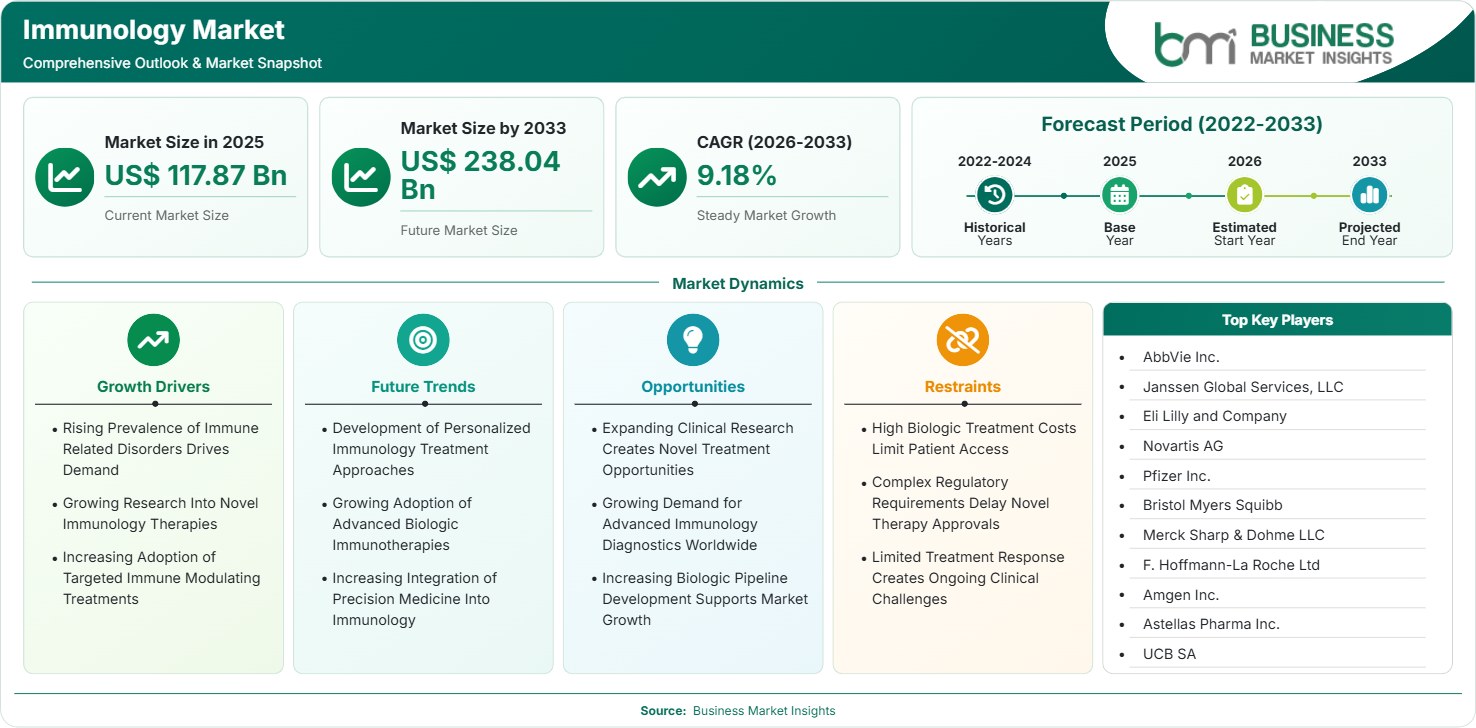
The Immunology Market size was valued at US$ 117.87 Billion in 2025 and is projected to reach US$ 238.04 Billion by 2033, growing at a CAGR of 9.18% during 2026–2033. Rising biologics adoption, expanding autoimmune disease prevalence, precision medicine advancements, favorable reimbursement frameworks, and increasing investment in next-generation immunotherapies are creating long-term opportunities across established and emerging healthcare markets.

Report Coverage
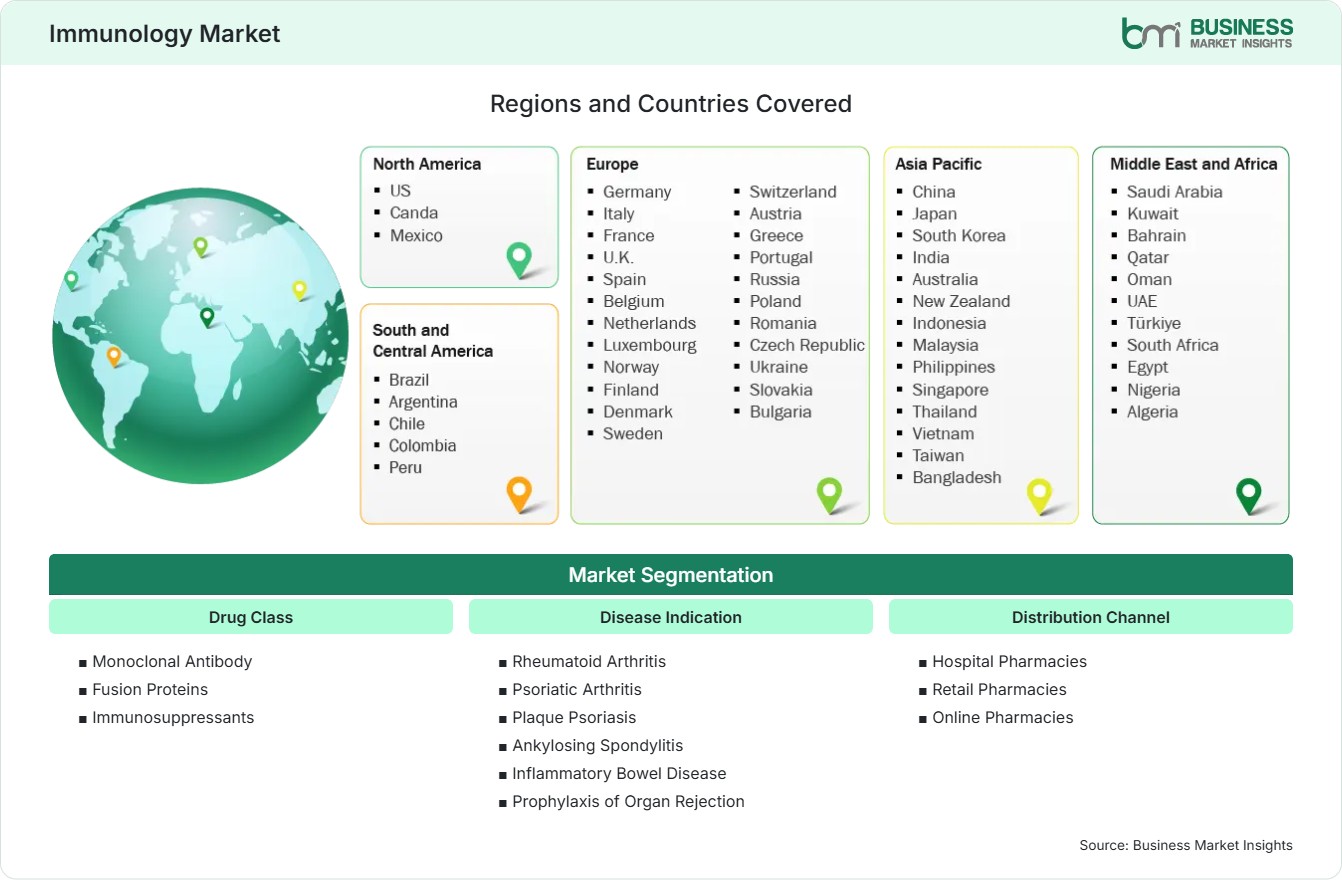
  • Drug Class: Monoclonal Antibody , Fusion Proteins, Immunosuppressants
  • Disease Indication: Rheumatoid Arthritis, Psoriatic Arthritis, Plaque Psoriasis, Ankylosing Spondylitis, Inflammatory Bowel Disease, Prophylaxis of Organ Rejection
  • Distribution Channel: Hospital Pharmacies, Retail Pharmacies, Online Pharmacies
US$ 117.87 Bn Market size in 2025
US$ 238.04 Bn Market Size by 2033
9.18% CAGR, 2026 - 2033
2026-2033 Forecast Period

01 AI Overview

Immunology Market Summary

  • North America Region: North America holds 39%–42% market share in 2025, growing with a CAGR of 8.5%–9.2% during 2026–2033, supported by biologics innovation, strong reimbursement, advanced diagnostics, and expanding autoimmune disease management. Continuous clinical research and biosimilar development further strengthen commercialization opportunities across healthcare systems.
    U.S. Market: The United States dominates regional demand through extensive biologics adoption, advanced specialty care infrastructure, favorable reimbursement, and continuous pharmaceutical innovation, expanding at a CAGR of 8.6%–9.3%.
  • Fastest Growing Region: Asia Pacific accounts for 23%–26% market share in 2025 and is expected to register a CAGR of 10.8%–11.6% during 2026–2033. Rising healthcare investments, expanding biologics manufacturing, improving diagnosis rates, increasing insurance coverage, and strong government support accelerate long-term therapeutic adoption throughout developing economies.
  • Leading Segment: Drug Class – Monoclonal Antibody (mAb) commands 48%–52% market share in 2025 and advances at a CAGR of 9.4%–10.0% during 2026–2033. Continuous antibody engineering, expanding autoimmune indications, superior clinical efficacy, favorable physician preference, and increasing biosimilar penetration strengthen sustained commercial performance worldwide.
  • High Growth Segment: Distribution Channel – Online Pharmacies represents 11%–14% market share in 2025 while expanding at a CAGR of 12.2%–13.0% during 2026–2033. Digital prescription fulfillment, home delivery services, specialty drug accessibility, telehealth integration, and patient convenience collectively accelerate channel expansion across multiple healthcare ecosystems.
  • Key Market Opportunity: Precision immunology, biomarker-guided treatment selection, biosimilar commercialization, digital patient monitoring, and combination biologic therapies are creating significant investment opportunities while improving clinical outcomes, treatment accessibility, healthcare efficiency, and long-term disease management worldwide.
  • Major Market Players: AbbVie Inc., Janssen Global Services, LLC, Eli Lilly and Company, Novartis AG, Pfizer Inc., Bristol Myers Squibb, Merck Sharp & Dohme LLC, F. Hoffmann-La Roche Ltd, Amgen Inc., Astellas Pharma Inc., and UCB SA.
02 Strategic Insights

Immunology Market: Strategic Insights

Immunology Market Strategic Framework
FREE PDF
Request your free sample
Request free sample
03 Stakeholder View

Key Takeaways

  • The value chain is becoming increasingly integrated as biologics manufacturers, contract development organizations, specialty distributors, diagnostic companies, and healthcare providers collaborate to improve production efficiency, patient access, and treatment continuity across global healthcare systems.
  • The strongest commercial opportunities are emerging in biologic therapies addressing rheumatoid arthritis, inflammatory bowel disease, and plaque psoriasis, supported by expanding diagnosis rates, broader reimbursement coverage, and increasing patient preference for targeted immune therapies.
  • Innovation continues shifting toward precision immunology, biomarker-driven treatment selection, engineered monoclonal antibodies, bispecific biologics, and artificial intelligence-enabled drug discovery platforms that improve therapeutic effectiveness while optimizing clinical development productivity.
  • Asia Pacific offers one of the most compelling long-term investment environments because expanding healthcare expenditure, domestic biologics manufacturing, regulatory modernization, and broader specialty care access continue accelerating adoption across major economies including China, India, and South Korea.
  • Strategic acquisitions, licensing agreements, biosimilar partnerships, and collaborative research initiatives remain central investment themes as pharmaceutical companies strengthen immunology portfolios, diversify product pipelines, and expand geographic commercialization capabilities amid increasing competitive intensity.
  • Growing integration of digital health monitoring, remote patient management, real-world evidence generation, and personalized therapeutic pathways is improving long-term treatment adherence while supporting value-based healthcare delivery and optimized clinical decision-making.
04 Geographic Outlook

Immunology Market Regional Highlights

North America Immunology Market

North America accounted for 39%–42% of the Immunology Market share in 2025 and is projected to expand at a CAGR of 8.5%–9.2% during 2026–2033. Strong biologics adoption, high healthcare expenditure, favorable reimbursement policies, and continuous investment in autoimmune disease research support regional leadership.

  • Robust biologics manufacturing infrastructure and extensive pharmaceutical R&D investments continue accelerating commercialization of innovative monoclonal antibodies, immune modulators, and precision therapies for autoimmune diseases, supported by advanced regulatory pathways and strong intellectual property protection.
  • Specialty hospitals and integrated healthcare networks increasingly adopt biomarker-driven treatment strategies, enabling personalized therapy selection, improved clinical outcomes, and optimized long-term disease management while supporting higher utilization of advanced immunology therapeutics.
  • Growing biosimilar approvals enhance treatment accessibility by lowering therapy costs without compromising clinical effectiveness, encouraging broader physician acceptance and improving patient affordability across multiple chronic inflammatory disorders.

US Immunology Market

The United States represented approximately 82%–85% of the North American market in 2025 and is forecast to register a CAGR of 8.6%–9.3% during 2026–2033. Strong biologics innovation, high autoimmune disease prevalence, extensive reimbursement coverage, and significant pharmaceutical R&D expenditure sustain market leadership.

  • Large investments in precision medicine and biomarker research accelerate personalized therapeutic development, improving treatment effectiveness across rheumatoid arthritis, inflammatory bowel disease, and dermatological autoimmune conditions.
  • FDA support for biosimilar approvals encourages market competition, enhances affordability, and expands healthcare access while maintaining rigorous standards for safety, efficacy, and manufacturing quality.
  • Increasing partnerships among pharmaceutical companies, biotechnology firms, and academic institutions strengthen innovation pipelines, enabling faster development of advanced immunomodulatory therapies and novel biologic platforms.

Europe Immunology Market

Europe held 27%–30% market share in 2025 and is expected to grow at a CAGR of 8.7%–9.4% during 2026–2033. Germany remains the leading country through advanced pharmaceutical manufacturing and research capabilities, while Spain demonstrates one of the fastest growth trajectories due to expanding biologics accessibility and healthcare modernization initiatives.

  • Government reimbursement programs continue improving patient access to advanced biologics while encouraging adoption of innovative therapies across autoimmune and inflammatory diseases.
  • Germany leads regional revenue generation through extensive pharmaceutical manufacturing, clinical research excellence, and strong collaboration between academic institutions and biotechnology companies.
  • Spain records one of the highest projected growth rates as healthcare infrastructure investments, improved diagnosis rates, and wider biologics availability support increasing therapeutic adoption.

Asia Pacific Immunology Market

Asia Pacific accounted for 23%–26% of the market in 2025 and is anticipated to record the fastest Immunology Market growth, with a CAGR of 10.8%–11.6% through 2026–2033. China remains the largest regional market, while India exhibits the fastest growth owing to expanding biologics production capacity, healthcare reforms, and rising specialty treatment accessibility.

  • China continues leading regional demand through significant pharmaceutical manufacturing investments, expanding clinical research capabilities, and increasing biologics approvals supporting advanced autoimmune disease treatment.
  • India demonstrates the fastest expansion driven by growing biosimilar production, improved healthcare infrastructure, favorable government initiatives, and rising diagnosis of chronic inflammatory diseases.
  • Japan maintains strong demand through advanced specialty healthcare systems, high biologics utilization, and continuous innovation in targeted immune therapies supported by established pharmaceutical companies.

Rest of World Immunology Market

The Rest of World region represented 8%–10% market share in 2025 and is projected to grow at a CAGR of 9.3%–10.0% during 2026–2033. South and Central America continue benefiting from expanding specialty healthcare services and improving biologics availability, particularly in Brazil.

Meanwhile, the Middle East and Africa experience steady expansion through healthcare infrastructure investments, increasing government support for advanced therapeutics, and broader access to specialty care.

  • Brazil continues strengthening regional leadership through improved biologics reimbursement policies, expanding hospital infrastructure, and increasing investment in specialty pharmaceutical procurement programs.
  • Saudi Arabia accelerates healthcare transformation initiatives supporting advanced biologic adoption, local pharmaceutical partnerships, and modernization of tertiary healthcare facilities.
  • South Africa records notable growth as diagnostic capabilities improve, specialty healthcare access expands, and public-private healthcare collaborations encourage wider treatment availability.
  • International pharmaceutical companies increasingly expand commercial operations through regional partnerships, improving supply chain resilience and strengthening access to innovative immune therapies.
Global Market Geography
FREE PDF
Request your free sample
Request free sample
05 Segment Analysis

Immunology Market Segmentation

Drug Class

The Drug Class segment accounted for approximately 48%–52% market share in 2025 and is anticipated to register a CAGR of 9.4%–10.0% during 2026–2033. The Immunology Market scope continues expanding as biologics, targeted immune therapies, and precision treatment approaches improve long-term disease management.

  • Monoclonal Antibody (mAb): Dominates therapeutic adoption through high clinical efficacy, targeted immune modulation, expanding regulatory approvals, continuous antibody engineering advancements, and broad application across multiple autoimmune and inflammatory disorders.
  • Fusion Proteins: Increasing physician confidence, favorable clinical outcomes, improved pharmacokinetic performance, and expanded indication approvals continue supporting greater utilization for chronic immune-mediated inflammatory disease management.
  • Immunosuppressants: Remain essential for long-term disease control and organ transplantation support through established clinical experience, combination therapy utilization, and continuous optimization of treatment protocols.

Disease Indication

Disease Indication represented nearly 44%–47% of overall market revenue in 2025 and is expected to expand at a CAGR of 9.5%–10.2% during 2026–2033. Growing clinical evidence encourages broader use of advanced immune therapies for chronic inflammatory conditions.

  • Rheumatoid Arthritis: Represents the largest clinical application because of high disease prevalence, strong biologics utilization, continuous guideline updates, and sustained demand for targeted immune therapies improving long-term patient outcomes.
  • Psoriatic Arthritis: Expanding diagnosis, increasing physician awareness, and broader availability of targeted biologics strengthen therapeutic adoption while improving disease control and quality of life.
  • Plaque Psoriasis: Rising biologics utilization, improved dermatology care access, and greater acceptance of targeted immune therapies continue driving treatment optimization across moderate and severe disease populations.
  • Ankylosing Spondylitis: Advances in biologic therapies, earlier diagnosis, and enhanced clinical management strategies improve patient mobility, disease progression control, and long-term therapeutic adherence.
  • Inflammatory Bowel Disease: Increasing prevalence, expanding biologics pipeline, precision diagnostics, and multidisciplinary disease management approaches continue strengthening long-term treatment demand worldwide.
  • Prophylaxis of Organ Rejection: Continued transplantation advancements and optimized immunosuppressive treatment protocols maintain consistent demand for specialized immune-modulating therapeutic solutions.

Distribution Channel

Distribution Channel contributed approximately 30%–33% market share in 2025 and is projected to record a CAGR of 9.7%–10.4% during 2026–2033. Immunology Market trends increasingly favor omnichannel pharmaceutical distribution that enhances patient convenience while supporting continuity of long-term biologic treatment across hospital and outpatient settings.

  • Hospital Pharmacies: Continue leading specialty biologic dispensing through integrated patient monitoring, multidisciplinary care coordination, cold-chain management, and administration of complex injectable immune therapies.
  • Retail Pharmacies: Strengthen patient accessibility by expanding specialty medicine availability, improving pharmacist-led counseling services, and supporting prescription continuity for chronic autoimmune disease management.
  • Online Pharmacies: Rapidly gain adoption through digital prescription processing, home delivery, telehealth integration, medication adherence tools, and convenient access to specialty biologic therapies for eligible patients.
06 Market Forces

Immunology Market Dynamics

Key Market Drivers

Rising Prevalence of Autoimmune and Chronic Inflammatory Disorders

The rising global prevalence of autoimmune and inflammatory diseases continues to be one of the greatest drivers behind the rising need for novel immunology solutions. As per the data from various health organizations, there are several hundred million people across the globe suffering from different types of autoimmune diseases, and diseases like rheumatoid arthritis, inflammatory bowel disease, and psoriasis are still becoming more prevalent. The Immunology Market growth is driven by an increase in the patient base, prolonged therapy, and the development of novel biological drugs. Health-care facilities are now making investments in specific rheumatology, dermatology, and gastroenterology services, which help improve patient outcomes.

Continuous Innovation in Biologics and Precision Immunotherapy

Innovations in biopharmaceuticals are revolutionizing the treatment of immune-mediated diseases by developing highly specific drugs that not only enhance the effectiveness of the drug but also minimize the side effects. Biotechnology firms are making heavy investments in monoclonal antibodies, cytokine inhibitors, recombinant proteins, and precise immunotherapies based on biomarker-driven drug selection. The collaboration of research and development among biotechnology companies, academic organizations, and pharmaceutical producers will speed up the commercialization of products for various disease states. The Immunology Market is benefiting from advances in manufacturing, increased production of biologics, and the development of biosimilars to reduce costs and increase sustainability.

Supportive Reimbursement and Expanding Biosimilar Adoption

Positive reimbursement trends in major healthcare markets continue to drive the uptake of cutting-edge biologic medicines for chronic autoimmune conditions. On the other hand, the availability of biosimilar products is helping to increase accessibility by decreasing the cost of healthcare without sacrificing efficacy and safety. Competitive biologics markets are being encouraged by governments to ensure more patients have better access to these products and that healthcare becomes sustainable. Health care practitioners are also benefiting from the revision of treatment protocols to integrate biosimilar products into the management of these conditions. Insurance coverage, expanded specialty pharmacy offerings, and confidence in the physician community all work to ensure ongoing drug usage.

Key Market Opportunities

Expansion of Precision Medicine and Biomarker-Based Therapeutics

Precision medicine is one of the most promising investments to make in the long run for pharmaceutical firms and healthcare providers. The application of biomarkers for choosing drugs ensures that patients are prescribed the drugs with the greatest chance of success and a reduced number of treatment alterations and potential side effects. Progress made in genomics, proteomics, and molecular diagnostics helps to enhance the stratification of patients in relation to autoimmune diseases. The Immunology Market Forecasts are becoming more indicative of increased investments in companion diagnostics, personalized biologics, and clinical decision-making systems powered by artificial intelligence. Biotech companies are entering into strategic partnerships with diagnostics firms in order to speed up the launch of combined treatment options.

Rapid Healthcare Expansion Across Emerging Economies

There is an ongoing trend that the emerging markets keep on offering promising business prospects since health care infrastructure, insurance penetration, and pharmaceutical manufacturing facilities are improving at the same time. Healthcare spending in Asian Pacific, Latin American, and Middle Eastern nations is growing, and their governments are stimulating local biologics manufacturing using various industrial policies. In-house manufacturing is less dependent on logistics and lowers the cost of specialty drugs. There is an increase in the number of collaborations among pharmaceutical firms to improve their distribution channels and speed up drug approval processes. Physicians’ increasing education levels, patients becoming more aware, and better diagnostics keep widening the scope of addressable patients.

Digital Health Integration and Home-Based Specialty Care

Healthcare technologies have introduced business opportunities through enhanced treatment adherence, patient monitoring, and disease management. Telemedicine, e-prescription, remote monitoring devices, and digital therapeutics make it possible for healthcare professionals to manage patients with chronic autoimmune diseases outside the hospital environment. Specialty pharmacy online portals help ease accessibility of biologics and medication management. Digital patient support initiatives have now been included as part of pharmaceutical firms' commercialization processes in order to ensure better compliance and clinical outcomes. Increased use of at-home specialty care has led to less strain on hospital systems while promoting convenience for patients.

Market Restraints and Challenges

High Treatment Costs and Healthcare Budget Constraints

Factor: Development of advanced biological and specialty immunology treatments involves complicated research, manufacturing, transportation, and regulation issues, which contribute to higher costs than traditional drug treatments. Impact: Higher therapy expenses result in financial difficulties for the healthcare system, insurance companies, and the patient. The lack of sufficient insurance coverage can lead to either the postponement of therapy or a lack of access to high-quality biologics due to their proven clinical efficacy. The budgetary constraints will also affect purchasing decisions of public health care systems, which will favor purchasing cheaper biosimilars. In this case, pharmaceutical manufacturers will have to confront pricing pressures along with investing in innovation and making specific marketing strategies.

Regulatory Complexity and Manufacturing Challenges

Factor: There is the challenge of development and commercialization of biologics that includes clinical validation, complex production process, strict quality control guidelines, and ever-changing international regulatory expectations. Impact: Long approval processes and large financial investments create risks and delay the launch of new products. Manufacturing consistency is essential since even small changes in production could influence biological activity. Disruption of the supply chain for either raw materials or the manufacturing facility itself can affect the supply of the product. Investments in more advanced production techniques, quality control systems, regulatory knowledge, and compliance with international rules add up to operating costs and increase competitive pressure on existing pharmaceutical companies.

07 Company Analysis

Competitive Landscape

The competitive environment is characterized by sustained investment in biologics, biosimilars, precision medicine, and next-generation immune therapeutics. The Immunology Market analysis demonstrates that leading pharmaceutical companies continue strengthening product portfolios through strategic acquisitions, licensing agreements, research collaborations, manufacturing expansion, and clinical pipeline diversification to maintain competitive advantages across autoimmune and inflammatory disease therapies.

Company Name

Overview

Products and Services Relevant to this Market

AbbVie Inc.

Global biopharmaceutical company with a strong presence in immunology, focusing on innovative therapies for autoimmune and inflammatory diseases through continuous clinical research and product development.

Monoclonal antibodies, immunology biologics, autoimmune disease therapies, specialty pharmaceuticals, clinical development programs, and patient support solutions.

Janssen Global Services, LLC

Johnson & Johnson's pharmaceutical business providing innovative therapeutic solutions across immune-mediated diseases through global research, development, and commercialization capabilities.

Biologic immunotherapies, immune pathway inhibitors, clinical research services, specialty pharmaceuticals, and precision treatment solutions.

Eli Lilly and Company

International pharmaceutical manufacturer investing extensively in immunology innovation, biologics, and targeted therapies supported by advanced research and global commercialization infrastructure.

Autoimmune disease biologics, monoclonal antibodies, immune modulation therapies, research collaborations, and specialty care products.

Novartis AG

Diversified global healthcare company emphasizing biologics, advanced immunology therapies, precision medicine, and innovative pharmaceutical manufacturing technologies.

Immunomodulators, biologic therapies, biosimilars, specialty pharmaceuticals, precision medicine solutions, and research partnerships.

Pfizer Inc.

Leading multinational pharmaceutical company developing innovative medicines supported by strong biologics manufacturing, clinical research, and global healthcare partnerships.

Autoimmune therapies, immunosuppressants, biologics, specialty pharmaceuticals, clinical development, and patient access programs.

Bristol Myers Squibb

Research-driven pharmaceutical company focused on immune-mediated disorders, advanced biologics, and innovative therapeutic platforms supported by global clinical expertise.

Immunology medicines, biologic therapies, targeted immune treatments, specialty pharmaceutical products, and research services.

Merck Sharp & Dohme LLC

Global healthcare company investing in innovative pharmaceuticals and immune-focused therapeutic research while expanding worldwide commercialization capabilities.

Immune therapeutics, biologics research, specialty medicines, clinical development programs, and pharmaceutical innovation platforms.

F. Hoffmann-La Roche Ltd

International biotechnology and diagnostics leader integrating precision medicine with biologic innovation for chronic immune-mediated diseases.

Biologic therapies, companion diagnostics, monoclonal antibodies, personalized healthcare solutions, and advanced pharmaceutical research.

Amgen Inc.

Biotechnology company specializing in biologics, biosimilars, and advanced therapeutic platforms supported by extensive manufacturing and research capabilities.

Biologics, biosimilars, inflammation therapies, immune-targeted medicines, specialty pharmaceuticals, and biotechnology innovation.

Astellas Pharma Inc.

Global pharmaceutical organization advancing innovative medicines through research in immunology, specialty healthcare, and precision therapeutic technologies.

Immunology therapeutics, biologic research, specialty pharmaceuticals, targeted immune treatments, and healthcare innovation programs.

UCB SA

Belgium-based biopharmaceutical company specializing in severe autoimmune and inflammatory diseases through patient-focused research and innovative biologic development.

Autoimmune disease therapies, biologics, specialty medicines, immunology research, patient support programs, and clinical development initiatives.

10 Trust & Transparency

Research Methodology

The market analysis combines proprietary research with secondary data from government agencies, company disclosures, regulatory filings, industry databases and expert interviews. Market estimates are validated through data triangulation, cross-market benchmarking and analyst review.

View Full Research Methodology

11 Questions Answered

Frequently Asked Questions

What does an Immunology Market Report typically include for business decision-makers?

The report generally covers market sizing, competitive benchmarking, segmentation analysis, regional outlook, emerging technologies, regulatory developments, investment opportunities, company profiles, and strategic recommendations to support commercial planning and long-term investment decisions.

How is digital healthcare influencing immunology treatment delivery?

Digital health platforms, telemedicine, remote patient monitoring, electronic prescriptions, and online specialty pharmacies are improving treatment adherence, facilitating long-term disease management, enhancing patient engagement, and supporting more efficient biologic therapy delivery.

Which therapeutic segment currently dominates the market?

Monoclonal antibodies remain the leading therapeutic class owing to their proven clinical efficacy, broad regulatory approvals, expanding disease indications, targeted mechanisms of action, and continuous innovation in biologic engineering for autoimmune disorders.

Which region is expected to offer the strongest investment opportunities?

Asia Pacific is expected to provide the strongest long-term investment potential because of expanding healthcare expenditure, growing biologics manufacturing capacity, increasing patient awareness, supportive government initiatives, and rapid improvements in specialty healthcare infrastructure.

What are the major factors driving demand in the Immunology Market?

The primary growth drivers include increasing prevalence of autoimmune diseases, expanding biologics adoption, continuous advances in monoclonal antibody therapies, favorable reimbursement policies, precision medicine development, and rising investment in immunology-focused pharmaceutical research and clinical innovation.

Access the Full Immunology Market Report

Get segment-level forecasts, regional estimates, competitive benchmarking, company profiles and downloadable Excel datasets.

Access the full Immunology Market Report
350 pages PDF & Excel | 2026-08-26