
Hydrogel Market Outlook: Size, Share, Trends, Growth Analysis, Competitive Landscape & Forecast, 2026-2033

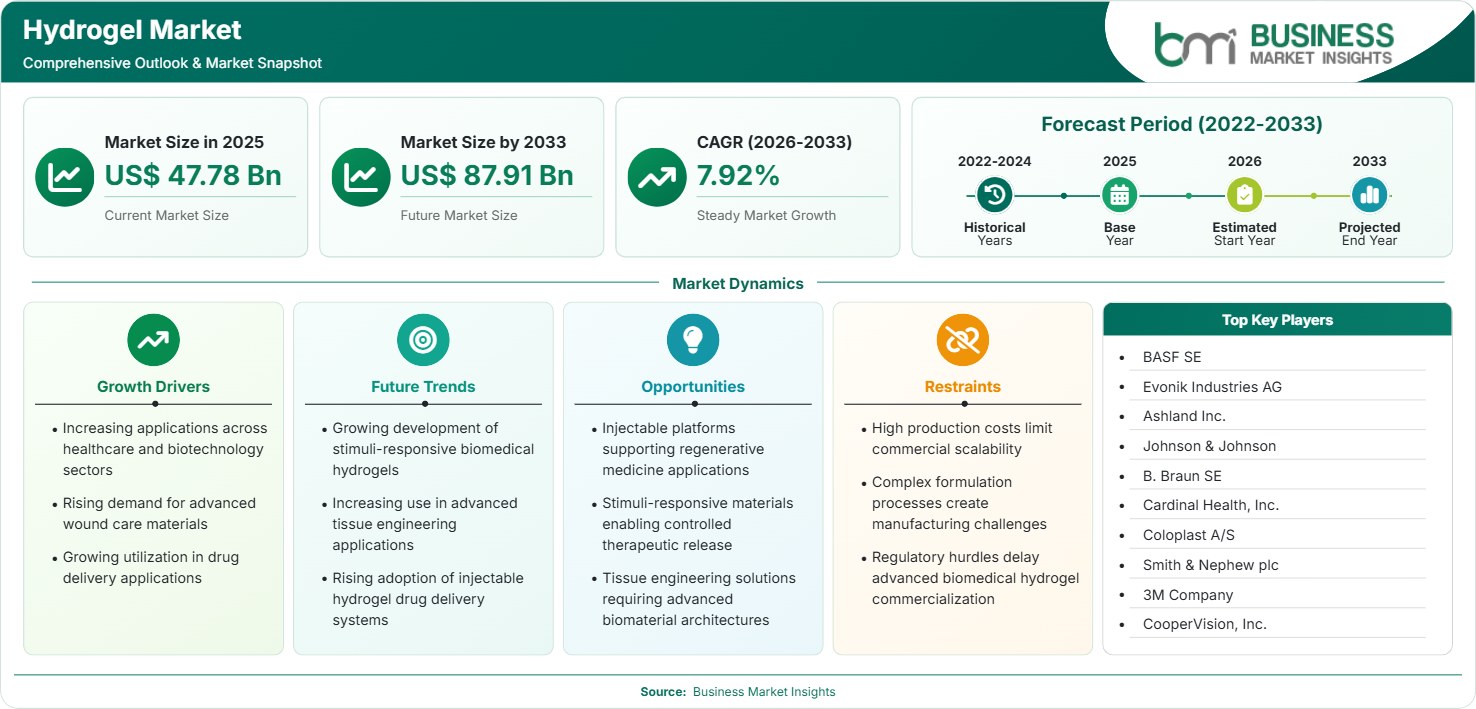
The Hydrogel Market size was valued at US$ 47.78 Billion in 2025 and is projected to reach US$ 87.91 Billion by 2033, growing at a CAGR of 7.92% during 2026–2033. Rising demand for advanced wound management, drug delivery technologies, sustainable agriculture inputs, personal care applications, and biomaterial innovation is creating substantial revenue-generation opportunities across global markets.

Report Coverage
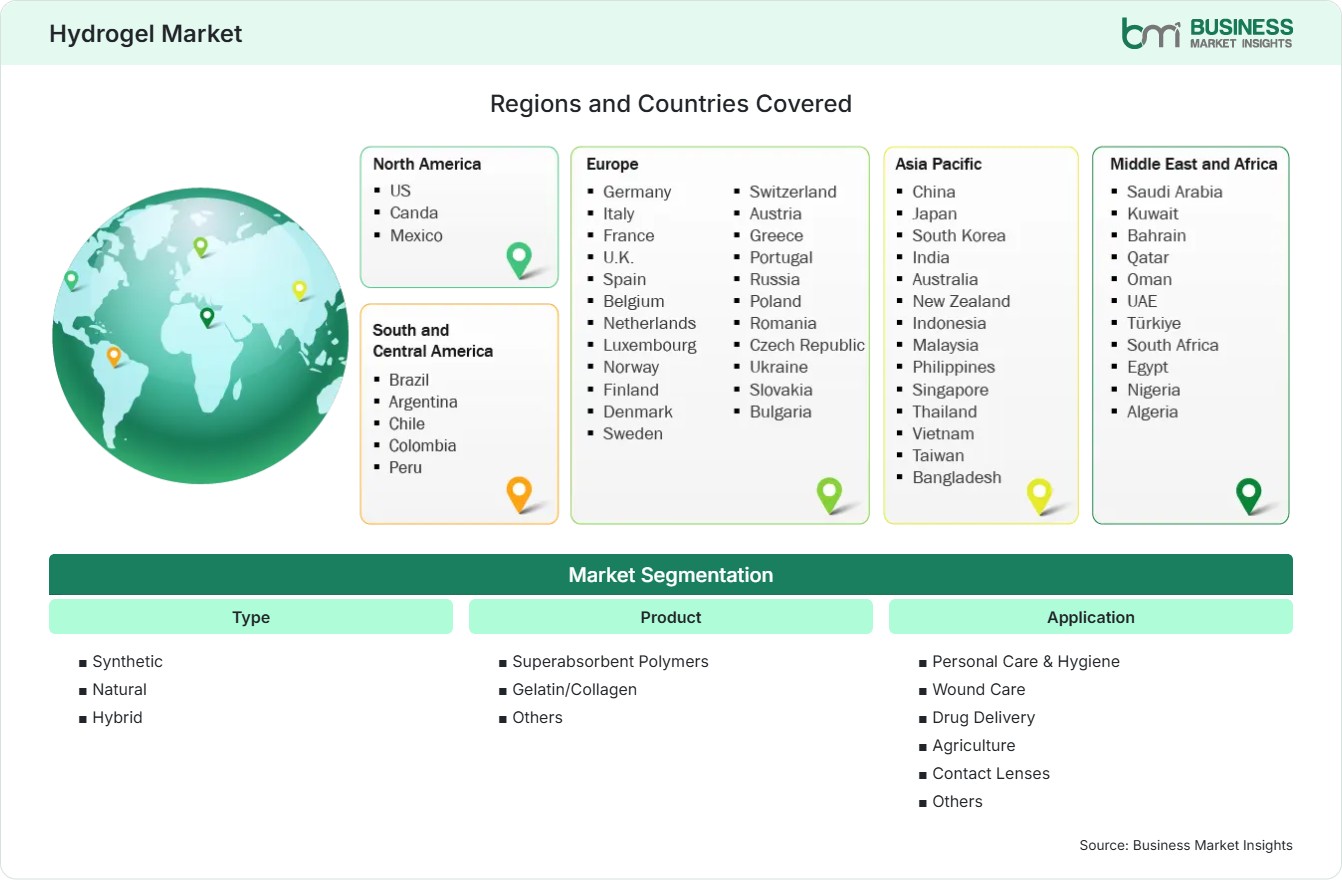
  • Type: Synthetic, Natural, Hybrid
  • Product: Superabsorbent Polymers, Gelatin/Collagen, Others
  • Application: Personal Care & Hygiene, Wound Care, Drug Delivery, Agriculture, Contact Lenses, Others
US$ 47.78 Bn Market size in 2025
US$ 87.91 Bn Market Size by 2033
7.92% CAGR, 2026 - 2033
2026-2033 Forecast Period

AI Overview

Hydrogel Market Summary

  • North America Region: North America holds a market share of 35%–38% in 2025, advancing at a CAGR of 7.0%–7.6% during 2026–2033. Demand is supported by advanced wound care adoption, strong healthcare spending, medical biomaterials innovation, and increasing chronic disease prevalence. The U.S. market benefits from robust R&D investment, healthcare infrastructure, and medical technology commercialization, expanding at an estimated CAGR of 7.1%–7.7%.
  • Fastest Growing Region: Asia Pacific accounts for 26%–29% share in 2025 and is expected to record a CAGR of 9.0%–9.8% through 2033. Expanding healthcare access, agricultural modernization, growing contact lens penetration, manufacturing investments, and favorable industrial production economics continue accelerating regional development.
  • Leading Segment: Personal Care & Hygiene represents 30%–34% share in 2025 and progresses at a CAGR of 7.3%–7.9% through 2033. Strong consumption of absorbent hygiene products, infant care solutions, adult incontinence products, and premium personal care formulations reinforces segment leadership.
  • High Growth Segment: Drug Delivery captures 14%–17% share in 2025 while expanding at a CAGR of 9.5%–10.3% during 2026–2033. Increasing development of controlled-release therapeutics, regenerative medicine platforms, injectable formulations, and precision medicine technologies strengthens commercial opportunities globally.
  • Key Market Opportunity: Expanding use of smart biomaterials in regenerative medicine, tissue engineering, targeted therapeutics, and advanced wound healing creates attractive opportunities for manufacturers pursuing premium healthcare applications and differentiated product portfolios.
  • Major Market Players: BASF SE, Evonik Industries AG, Ashland Inc., Johnson & Johnson, B. Braun SE, Cardinal Health, Inc., Coloplast A/S, Smith & Nephew plc, 3M Company, CooperVision, Inc.
Strategic Insights

Hydrogel Market: Strategic Insights

Hydrogel Market Strategic Framework
FREE PDF
Request your free sample
Request free sample
Stakeholder View

Key Takeaways

  • The value chain is now bringing together specialists in polymers, developers of biomaterials, makers of medical devices, pharmaceutical companies, and healthcare providers, thus opening up possibilities for collaborative innovation and for achieving greater product differentiation through higher value.
  • Wound care, drug delivery, and advanced personal hygiene products represent attractive growth areas due to expanding healthcare expenditures, aging populations, and growing demand for higher-performance absorbent materials.
  • Research is now being directed towards smart materials that respond to stimuli, exhibit improved biocompatibility, possess antimicrobial properties, and release substances in a controlled manner, thus enabling their use in high-end healthcare and regenerative medicine.
  • The Asia Pacific region offers a highly attractive opportunity for expansion since investment in healthcare infrastructure, together with industrial production capabilities and agricultural modernization programs, leads to rapid uptake in a number of end-use industries.
  • The speed of innovation is being enhanced and commercial access to high-margin markets is being strengthened through strategic acquisitions, licensing agreements, and partnerships with specialists in biomaterials and providers of healthcare technology.
  • Sustainability considerations are encouraging the development of environmentally responsible polymers and resource-efficient formulations, particularly in agriculture and medical applications requiring improved water management performance.
Geographic Outlook

Hydrogel Market Regional Highlights

North America Hydrogel Market

North America accounts for approximately 35%–38% of global revenue in 2025 and is projected to grow at a CAGR of 7.0%–7.6% through 2033. The region benefits from extensive healthcare expenditure, strong commercialization of biomedical materials, and widespread adoption of advanced wound management technologies. The Hydrogel Market share remains highest in this region because hospitals and healthcare providers increasingly prefer high-performance dressings, drug delivery systems, and specialty hygiene products. Sustained innovation activity and regulatory pathways supporting medical devices continue strengthening regional competitiveness.

  • Advanced wound care protocols across hospitals encourage sustained adoption of absorbent and antimicrobial biomaterials, improving clinical outcomes and supporting demand for premium products across healthcare systems.
  • Strong pharmaceutical innovation ecosystems support development of controlled-release formulations, enabling specialty therapeutic applications and expanding commercialization opportunities for advanced biomaterial platforms.
  • Growing prevalence of chronic wounds, diabetes-related complications, and aging populations increases healthcare utilization, promoting continuous investment in next-generation treatment solutions.
  • Active collaboration among material science companies, healthcare institutions, and device manufacturers accelerates new product launches and market penetration across high-value medical segments.

US Hydrogel Market

The United States contributes approximately 78%–82% of North American revenue and advances at a CAGR of 7.1%–7.7% during 2026–2033. Strong reimbursement models, use of specialized wound care, and extensive biomedical research keep leadership positions strong. Increasing use of sophisticated dressings and delivery of medicines in healthcare organizations is evident. Innovation and local manufacturing add strength to competitive positions. The high demand for contact lenses, surgical products, and pharmaceuticals creates stable business prospects and drives expansion by leading firms.

  • Significant biomedical research funding promotes the development of regenerative medicine applications, supporting commercialization pathways for advanced polymer technologies and specialty healthcare solutions.
  • Pharmaceutical companies increasingly utilize sophisticated delivery platforms to improve patient adherence, creating sustained demand across high-value therapeutic categories.
  • Robust medical device ecosystems foster rapid translation of laboratory innovations into commercial products, increasing market penetration and application diversity.
  • Strong healthcare infrastructure and aging demographics continue supporting demand for premium wound management and absorbent healthcare products.

Europe Hydrogel Market

Europe represents approximately 24%–27% of global Hydrogel Market revenue in 2025 and is forecast to expand at a CAGR of 6.8%–7.4% through 2033. The existing healthcare system, growing usage of modern wound care products, and rise in biomaterials used in the pharmaceutical industry are contributing to regional demand. The German market is considered to be a dominant one with a CAGR between 6.9%-7.5%. Eastern Europe shows more growth potential. Sustainable materials and strict product quality standards continue to influence competitive dynamics and drive premium products’ adoption.

  • Germany maintains regional leadership through strong medical device manufacturing capabilities, extensive healthcare expenditure, and significant investments in advanced treatment technologies supporting commercial adoption.
  • The United Kingdom benefits from expanding wound management programs and increasing clinical acceptance of advanced biomaterials for chronic and acute care applications.
  • France and Italy continue witnessing demand growth from personal care producers seeking enhanced performance characteristics in absorbent hygiene products and specialty formulations.
  • Poland and other Eastern European markets record faster expansion due to manufacturing investments, healthcare modernization initiatives, and increasing penetration of advanced medical products.
  • Sustainability regulations encourage development of environmentally responsible materials, creating opportunities for innovators focused on biodegradable and resource-efficient product technologies.

Asia Pacific Hydrogel Market

Asia Pacific accounts for approximately 26%–29% of global Hydrogel Market revenue in 2025 and is expected to register the highest CAGR of 9.0%–9.8% through 2033. The region will benefit from improved healthcare infrastructure, increased drug production, higher personal care expenditure, and agricultural modernization. China is the biggest consumer in the area with an estimated CAGR of 9.1%-9.9%, while India shows the highest growth trend. The rapid pace of industrialization, the availability of healthcare facilities, and favorable economics will aid the rapid commercialization process.

  • China benefits from extensive manufacturing capacity, expanding healthcare expenditures, and increasing innovation activity focused on advanced biomaterials and specialty polymers.
  • India demonstrates strong demand potential due to healthcare infrastructure development, a growing pharmaceutical sector, and increasing adoption of advanced medical products.
  • Japan remains a significant innovation hub with high-value applications in regenerative medicine, contact lenses, and specialized healthcare technologies.
  • Southeast Asian countries are attracting investment in personal care manufacturing and healthcare production capabilities, strengthening regional supply chains.
  • Agricultural modernization initiatives encourage adoption of water-retention technologies, supporting new commercial opportunities across resource-constrained farming environments.

Rest of World Hydrogel Market

Rest of World contributes approximately 10%–13% of global Hydrogel Market revenue in 2025 and is projected to expand at a CAGR of 7.8%–8.5% through 2033. South & Central America benefit from agricultural modernization initiatives and rising healthcare spending, with Brazil remaining the largest regional market and advancing at approximately 7.9%–8.6% CAGR.

The Middle East & Africa region is supported by healthcare infrastructure investments, increasing medical tourism activity, and broader access to advanced treatment products. Gulf countries continue leading demand due to healthcare modernization programs and increasing procurement of specialty medical technologies.

  • Brazil benefits from expanding healthcare investments and increasing utilization of advanced wound care solutions across public and private healthcare systems.
  • Mexico continues attracting manufacturing activity and medical product distribution investments, strengthening market accessibility throughout the region.
  • Saudi Arabia and the UAE are increasing healthcare expenditures aimed at improving specialist treatment availability and adoption of innovative medical technologies.
  • Agricultural applications are gaining traction across water-stressed regions as resource optimization becomes a strategic priority for farming operations.
  • Growing awareness of advanced clinical treatment methods supports demand for biomaterial-based healthcare products across emerging economies.
Global Market Geography
FREE PDF
Request your free sample
Request free sample
Segment Analysis

Hydrogel Market Segmentation

Type

The Type segment represents a critical classification framework for product development and end-use performance. Synthetic materials account for approximately 48%–52% market share in 2025 and grow at a CAGR of 7.5%–8.1%, supported by customization capabilities and scalability. The Hydrogel Market scope continues expanding as end users seek specialized materials offering improved functionality, durability, and application-specific performance across healthcare, agriculture, and consumer sectors.

  • Synthetic: Widely adopted due to controllable chemical structure, scalable manufacturing processes, consistent product quality, and strong suitability for wound care, drug delivery, and contact lens applications.
  • Natural: Preferred in regenerative medicine and biocompatible healthcare applications because of favorable biological interactions, biodegradability characteristics, and increasing emphasis on sustainable material solutions.
  • Hybrid: Combining synthetic and natural components enables improved mechanical properties, enhanced biological performance, and broader commercial applicability across advanced healthcare technologies.

Product

The Product segment reflects diverse commercial applications and performance requirements. Superabsorbent polymers hold approximately 40%–44% Hydrogel Market share in 2025 and are projected to grow at a CAGR of 7.4%–8.0% through 2033. Demand remains closely linked to personal hygiene products, healthcare absorbents, and resource-management applications. Continuous material enhancement is improving absorption efficiency, durability, and end-user performance across multiple industries.

  • Superabsorbent Polymers: Dominant product category benefiting from widespread use in hygiene products, incontinence solutions, agricultural water management systems, and absorbent healthcare applications.
  • Gelatin/Collagen: Strong demand in biomedical and regenerative medicine fields due to high biocompatibility, tissue interaction capabilities, and suitability for specialized healthcare formulations.

Application

Application diversity remains a key industry strength. Personal Care & Hygiene commands approximately 30%–34% market share in 2025 and advances at a CAGR of 7.3%–7.9%, supported by increasing consumption of absorbent hygiene products worldwide. The Hydrogel Market trends increasingly reflect healthcare-driven innovation, while pharmaceutical and agricultural uses continue expanding. Manufacturers are targeting differentiated solutions that address clinical effectiveness, sustainability objectives, and consumer convenience requirements.

  • Personal Care & Hygiene: Continues leading demand due to extensive use in diapers, feminine hygiene products, adult incontinence solutions, and premium absorbent consumer products.
  • Wound Care: Benefits from increasing prevalence of chronic wounds, advanced treatment protocols, and clinical preference for moisture-balanced healing environments.
  • Drug Delivery: Expands rapidly as pharmaceutical developers adopt controlled-release systems and precision therapeutic technologies across multiple treatment categories.
  • Agriculture: Gains momentum through water-retention applications that enhance crop productivity and resource efficiency in environmentally challenging conditions.
  • Contact Lenses: Supported by growing vision correction requirements, technological innovation, and consumer preference for comfortable long-wear products.
Market Forces

Hydrogel Market Dynamics

Key Market Drivers

Increasing Adoption of Advanced Wound Care Technologies

Advanced wound care remains one of the most influential growth catalysts across healthcare applications. Rising incidences of diabetes, obesity, vascular disorders, and age-related chronic wounds are increasing the demand for products capable of maintaining moist healing environments and reducing infection risks. Hospitals and outpatient facilities are increasingly transitioning from traditional dressings toward technologically enhanced solutions with improved absorption and biocompatibility. The Hydrogel Market growth will also be facilitated by rising spending on healthcare services in both developed and developing countries. The growing demand for less invasive treatment approaches and better outcomes is enhancing procurement activities. The provision of coverage for such treatments in many important healthcare markets also supports the adoption of advanced wound management systems.

Expansion of Personal Care and Hygiene Product Consumption

The personal care and hygiene industry continues to generate substantial demand for absorbent polymer technologies. Increasing urbanization, improved household financial conditions, and increased awareness of baby care and adult incontinence care are driving product utilization worldwide. The industry players are focusing on high-performance absorbent material technology which helps in providing comfort, better fluid handling and efficient product performance. Aging population trends in North America, Europe, Japan, and some parts of China are driving the demand for adult incontinence products. The premiumization of personal care categories drives the use of advanced materials in products to enhance the user experience. These factors combined will drive long-term product application and create opportunities for the material suppliers.

Growing Investment in Drug Delivery and Biomaterials Research

Pharmaceutical and biotechnology companies are increasingly focusing on controlled-release therapeutic technologies to improve drug efficacy and patient compliance. Activities in regenerative medicine, tissue engineering, implants, and localized treatment devices are creating opportunities for new applications. Materials scientists keep developing formulations that enhance the efficacy of the therapeutic process. Research funding from government bodies, academic institutions, and biotech firms is accelerating the commercialization process. Increased use of biomaterials in precision medicine will lead to continued investment. Healthcare providers have also begun evaluating advanced therapeutic systems to increase therapy efficiency while reducing process complexity.

Key Market Opportunities

Smart Hydrogels for Regenerative Medicine Applications

Regenerative medicine is a field that holds tremendous promise for growth. Materials that can sense changes in temperature, pH, biological activity, or mechanical stimulation have gained considerable interest both scientifically and commercially. These materials are useful for tissue regeneration, cell scaffold formation, organ repair, and targeted drug delivery. Hydrogel Market Forecasts indicate growing commercialization opportunities as healthcare systems seek solutions that improve healing outcomes and reduce long-term treatment costs. Manufacturers that successfully develop next-generation biomaterials with enhanced biological compatibility and performance characteristics are likely to establish competitive advantages within rapidly evolving healthcare segments.

Water Conservation Solutions for Modern Agriculture

Agriculture is emerging as a strategically important application area due to increasing concerns regarding water scarcity and climate variability. Water-retention materials increase the availability of moisture near plant roots, thus minimizing irrigation needs. The government and agriculture-related bodies are encouraging the adoption of technology that improves resource efficiency and helps achieve their goal of food security. Areas facing drought problems are considering adopting the latest water management techniques. Adoption is especially appealing in high-valued crops due to the profitability of productivity increases. Continued growth of sustainable agriculture programs opens the door for manufacturers to generate income from different sources.

Emergence of High-Performance Contact Lens Technologies

Contact lens manufacturers continue investing in materials that provide enhanced oxygen permeability, hydration retention, and wearer comfort. The rising need for vision correction products, especially among aging consumers and digital consumers, will drive the demand. Product innovations are centered on comfortable wear, minimal irritation, and therapeutic features. Innovations in terms of drug-eluting lenses and intelligent vision correction products have opened up more avenues for commercialization. Higher disposable incomes in developing countries will further fuel the adoption rate. Suppliers that can provide specialized formulations meeting specific performance criteria can enjoy growing business opportunities with eye-device and health-technology firms.

Market Restraints and Challenges

High Development and Commercialization Costs

Factor: Advanced material development requires significant investment in research, biocompatibility testing, regulatory approval, manufacturing validation, and clinical evaluation. Impact: High development costs can limit participation by smaller companies and delay commercialization timelines. Healthcare-focused products frequently require extensive testing and certification procedures before market entry. Manufacturers must also maintain stringent quality-control processes and specialized production environments. These requirements increase operating expenses and create barriers for innovation commercialization. Cost pressures may reduce adoption in price-sensitive markets, particularly where reimbursement mechanisms remain limited. As competition intensifies, companies face challenges balancing innovation investment with profitability objectives across multiple application segments.

Performance Limitations in Certain End-Use Conditions

Factor: Material stability, mechanical strength, dehydration risk, and shelf-life constraints can affect performance under demanding operational conditions. Impact: End users may prefer alternative materials where environmental exposure or long-term durability requirements exceed product capabilities. Certain healthcare and industrial applications require highly specialized formulations capable of maintaining structural integrity over extended periods. Variability in performance characteristics may necessitate customization, increasing manufacturing complexity and costs. Regulatory scrutiny regarding product reliability further amplifies development challenges. Addressing these technical limitations remains essential for broader adoption and expansion into emerging high-performance applications where reliability requirements are particularly stringent.

Company Analysis

Competitive Landscape

The competitive environment is characterized by substantial investments in biomaterials innovation, medical technologies, absorbent products, and specialty polymer development. Current Hydrogel Market analysis indicates that leading companies focus on healthcare applications, personal care technologies, wound management solutions, and next-generation material science advancements.

Company Name

Overview

Products and Services relevant to this market

BASF SE

Global chemical company with extensive specialty material capabilities serving healthcare, agriculture, and consumer product industries.

Superabsorbent polymers, specialty materials, water-management solutions, and material technologies supporting absorbent and moisture-retention applications.

Evonik Industries AG

Specialty chemicals manufacturer with strong expertise in healthcare materials and advanced polymer technologies.

Biomaterials, pharmaceutical excipients, specialty polymers, and medical-grade material solutions for healthcare applications.

Ashland Inc.

Focuses on specialty additives and performance materials for healthcare and consumer markets worldwide.

Pharmaceutical ingredients, wound-care formulations, specialty polymers, and biofunctional material technologies.

Johnson & Johnson

Global healthcare company with extensive medical technology and wound care capabilities.

Advanced wound management products, healthcare solutions, surgical care products, and biomedical technologies.

B. Braun SE

International medical technology company serving hospitals and healthcare providers globally.

Wound management systems, surgical products, infusion technologies, and healthcare materials.

Cardinal Health, Inc.

Healthcare services and product distribution company with significant clinical care presence.

Medical products, wound care solutions, clinical supplies, and healthcare support technologies.

Coloplast A/S

Specialist medical device company focused on chronic care and wound management.

Advanced wound dressings, skin care products, and clinical treatment technologies.

Smith & Nephew plc

Medical technology company recognized for advanced wound management innovations.

Wound treatment systems, surgical technologies, and specialized healing solutions.

3M Company

Diversified technology company providing healthcare and specialty material solutions.

Medical tapes, wound care products, specialty materials, and healthcare technology platforms.

CooperVision, Inc.

Major contact lens manufacturer serving vision-care markets globally.

Contact lenses, vision correction technologies, and advanced lens material innovations.

Trust & Transparency

Research Methodology

The market analysis combines proprietary research with secondary data from government agencies, company disclosures, regulatory filings, industry databases and expert interviews. Market estimates are validated through data triangulation, cross-market benchmarking and analyst review.

View Full Research Methodology

Questions Answered

Frequently Asked Questions

Why is the Hydrogel Market Report important for strategic planning?

The report helps stakeholders assess competitive positioning, growth opportunities, technology developments, regional demand patterns, investment priorities, and emerging application areas shaping future industry performance.

How are manufacturers differentiating their product portfolios?

Companies are focusing on smart materials, enhanced absorption performance, antimicrobial functionality, biodegradable formulations, and application-specific solutions to create premium offerings.

Which region offers the strongest long-term investment potential?

Asia Pacific presents the most attractive growth outlook due to healthcare infrastructure development, pharmaceutical manufacturing expansion, rising consumer spending, and increasing agricultural modernization initiatives.

How does agriculture contribute to industry expansion?

Water-retention technologies help improve irrigation efficiency, support crop resilience, and reduce resource consumption, making them increasingly attractive in drought-prone agricultural regions.

What factors are accelerating adoption in healthcare applications?

Growing demand for advanced wound treatment, regenerative medicine, controlled drug delivery systems, and biocompatible materials is increasing utilization across hospitals, clinics, and pharmaceutical development programs worldwide.

Access the Full Hydrogel Market Report

Get segment-level forecasts, regional estimates, competitive benchmarking, company profiles and downloadable Excel datasets.

Access the full Hydrogel Market Report
350 pages PDF & Excel | 2026-09-10
Similar Research

Related Market Reports