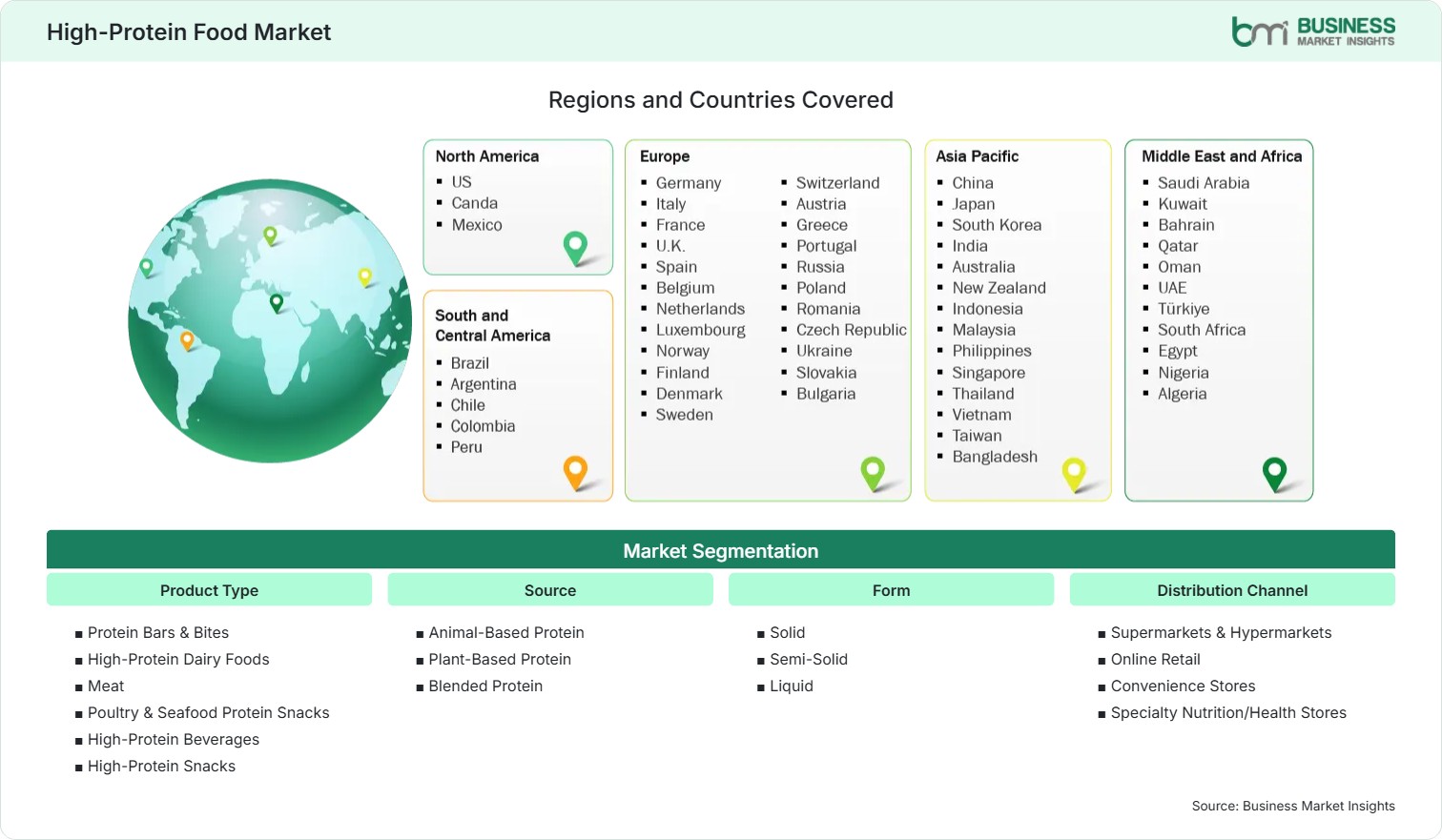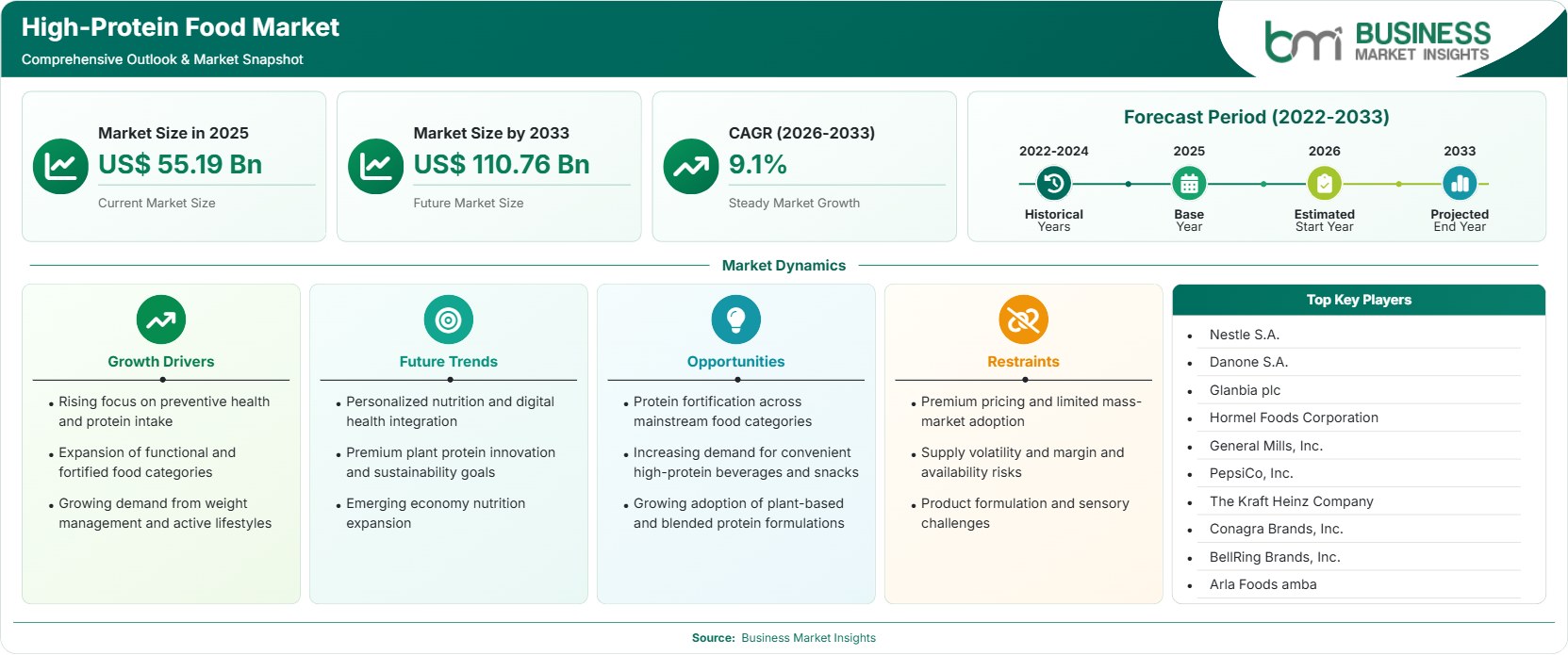
High-Protein Food Market Regional Highlights
North America High-Protein Food Market
North America accounted for approximately 36%–39% High-Protein Food Market share in 2025 and is projected to record a CAGR of 8.2%–8.8% through 2033. Strong consumer awareness regarding muscle health, weight management, and healthy aging supports widespread adoption. Premium dairy products, protein beverages, and functional snacks remain core demand generators. Mature retail infrastructure, product innovation capabilities, and high spending on sports nutrition maintain regional leadership. Growth is supported by expanding demand from wellness-focused consumers and increasing interest in protein-enriched everyday foods.
- Sports nutrition products are expanding beyond athletes toward mainstream consumers seeking satiety, recovery support, and metabolic health benefits through convenient daily consumption.
- Dairy-based protein innovation remains robust, with manufacturers investing in ultra-filtered milk technologies, high-protein yogurts, and fortified beverages.
- Retailers continue increasing shelf allocation for functional foods, enhancing visibility and consumer accessibility across multiple protein-focused product categories.
- Aging demographics support sustained demand for muscle-maintenance nutrition solutions, creating opportunities for targeted formulations and premium product positioning.
US High-Protein Food Market
The United States represents approximately 78%–82% of North American High-Protein Food Market share and is expected to expand at 8.4%–9.0% CAGR. Consumer interest in fitness, weight control, and preventive healthcare continues strengthening protein consumption. Product diversity remains extensive across beverages, dairy, meat snacks, and nutrition bars. Major food manufacturers actively launch fortified offerings targeting wellness and convenience-oriented shoppers, supporting sustained category expansion and innovation leadership over the forecast period.
- Protein-rich ready-to-drink beverages experience significant demand from consumers seeking convenience and meal supplementation solutions.
- Functional food purchases are increasingly influenced by digital health platforms, wearable technologies, and personalized nutrition recommendations.
- Retail chains broaden premium protein assortments across mass-market and specialty nutrition segments.
Europe High-Protein Food Market
Europe held 27%–30% High-Protein Food Market share in 2025 and is forecast to grow at 8.5%–9.3% CAGR. Consumers increasingly prioritize nutritional quality, clean-label formulations, and sustainable sourcing. Germany, the United Kingdom, and France remain major revenue contributors, while Eastern European markets generate faster expansion opportunities. Regulatory emphasis on transparency and food quality encourages innovation in dairy proteins, plant proteins, and blended formulations. Growing awareness of active lifestyles and healthy aging contributes to demand acceleration across multiple product categories.
- Germany leads regional demand through strong functional food adoption and advanced retail distribution networks.
- The United Kingdom demonstrates rapid expansion driven by premium snacking, sports nutrition demand, and plant-protein consumption.
- Sustainability objectives encourage development of alternative proteins and environmentally efficient ingredient sourcing strategies.
- High-protein dairy formats continue outperforming several traditional food categories due to strong consumer trust.
Asia Pacific High-Protein Food Market
Asia Pacific accounted for 25%–28% share in 2025 and is anticipated to advance at 10.8%–11.6% CAGR, making it the fastest-growing region. Rising urban populations, increasing disposable incomes, and nutrition awareness are transforming food consumption patterns. China, Japan, India, and Australia represent key markets. International brands and domestic producers actively expand premium nutrition portfolios. Growing acceptance of protein-enriched foods among younger consumers and working professionals underpins long-term demand expansion across diverse product categories.
- China remains the largest regional market due to scale, dietary upgrading trends, and expanding health-conscious consumer segments.
- India records among the strongest growth rates, supported by protein deficiency awareness and growing organized retail presence.
- E-commerce platforms accelerate market penetration by improving access to premium nutrition products in secondary cities.
- Plant-based formulations gain traction among environmentally conscious consumers and younger demographic groups.
Rest of World High-Protein Food Market
The Rest of World region accounts for approximately 8%–10% share in 2025 and is projected to grow at 9.0%–9.8% CAGR through the forecast period. South and Central America benefit from increasing fitness participation and premium food adoption. Brazil leads demand development, supported by strong sports nutrition culture.
Across the Middle East and Africa, rising urbanization and modern retail expansion support category penetration. Gulf countries demonstrate notable growth potential due to increasing health awareness and premium food spending patterns among consumers.
- Brazil leads regional development through growing demand for protein beverages, fortified snacks, and sports nutrition products.
- Mexico demonstrates increasing consumer acceptance of functional foods supported by retail modernization.
- Saudi Arabia and the UAE represent high-growth markets as health-focused lifestyle trends accelerate.
- International manufacturers continue investing in distribution partnerships to strengthen market access and regional visibility.