Golf Cart Market Regional Highlights
North America Golf Cart Market
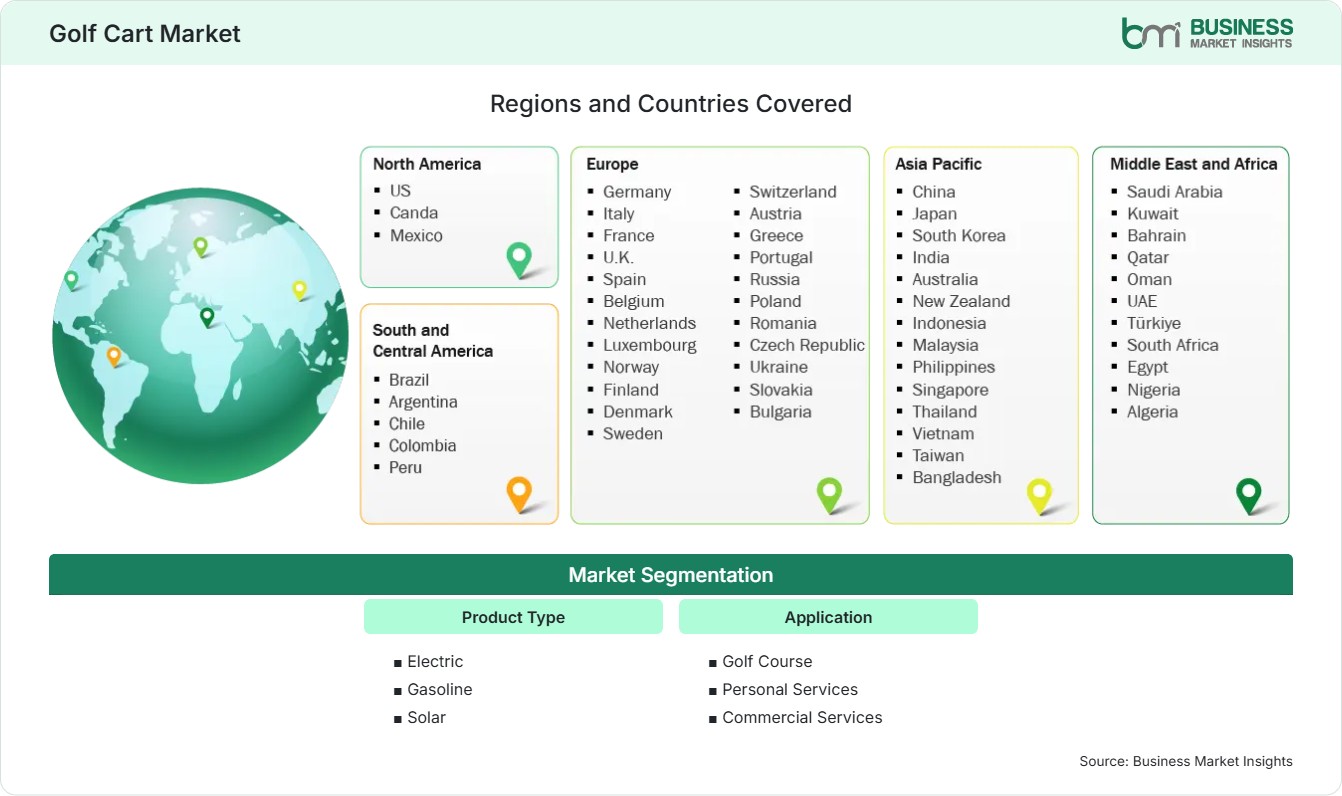
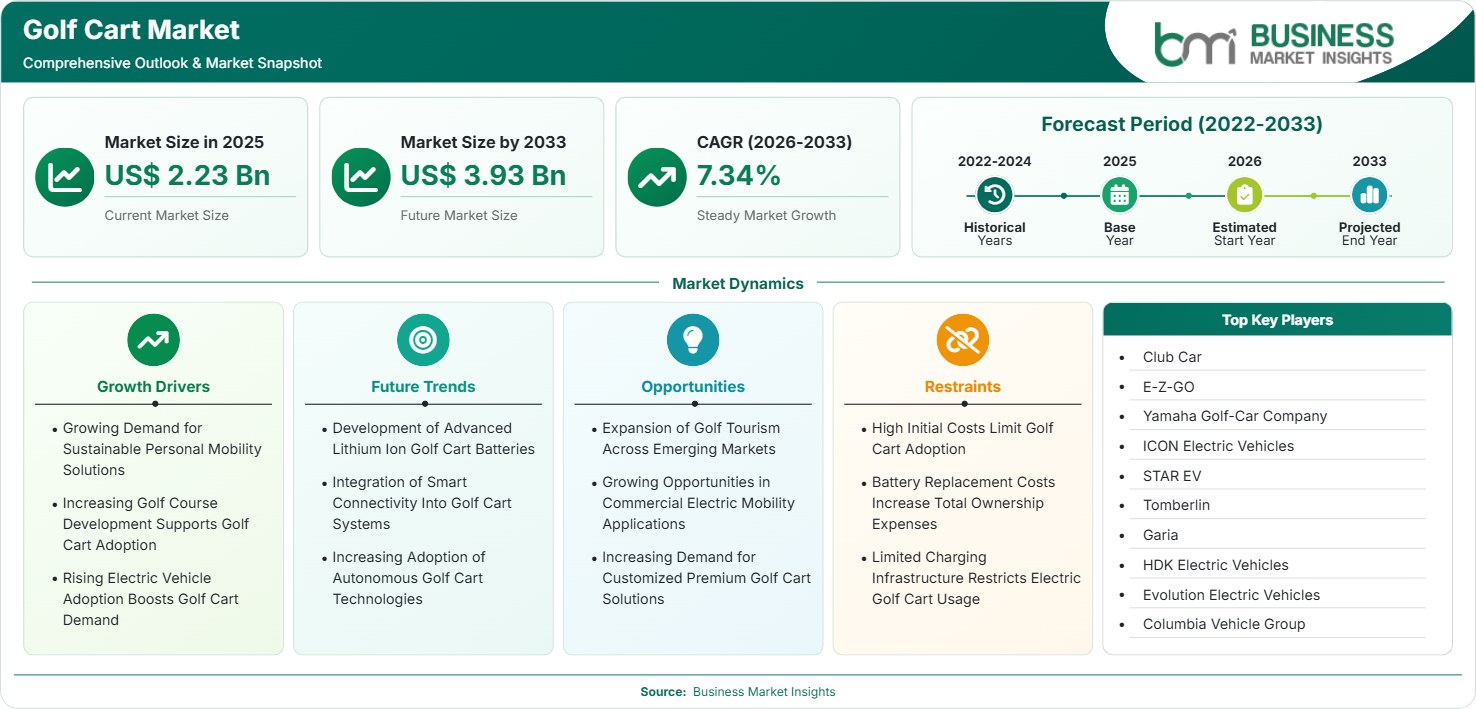
North America maintains a leading position due to strong golf culture, established recreational infrastructure, and increasing adoption of electric mobility solutions. The region holds 42%–46% Golf Cart Market share in 2025 and is projected to grow at a 6%–8% CAGR during 2026–2033. The United States represents the major contributor, supported by extensive golf course networks, residential applications, and commercial mobility demand.
- The US market continues to drive adoption through golf courses, resorts, and community transportation applications.
- Electric models are gaining preference due to sustainability objectives and reduced operating requirements.
- Commercial facilities are increasing usage for internal transportation and visitor mobility.
- Manufacturers are expanding customized solutions to meet diverse customer requirements.
- Established distribution networks support product availability across regional markets.
US Golf Cart Market
The US market is supported by extensive golf infrastructure, recreational activities, and growing demand for compact electric transportation solutions. The country represents 38%–42% share within North America in 2025 and is expected to grow at a 6%–8% CAGR during 2026–2033. The Golf Cart Market growth is influenced by increasing personal mobility demand, resort development, and commercial applications.
- Golf courses remain a major application area due to widespread recreational activities.
- Residential communities are adopting golf carts for convenient short-distance transportation.
- Commercial operators are using customized models for facility management and customer services.
- Manufacturers are introducing advanced features to improve comfort and user experience.
Europe Golf Cart Market
Europe demonstrates steady development due to increasing tourism activities, resort expansion, and growing interest in sustainable transportation solutions. The region accounts for 20%–24% market share in 2025 and is projected to grow at a 6%–8% CAGR during 2026–2033. Countries including Germany, France, Spain, and the UK contribute through tourism, hospitality, and commercial applications.
- European resorts are increasing adoption of golf carts for guest transportation services.
- Sustainability initiatives are encouraging electric mobility solutions.
- Hospitality businesses are utilizing compact vehicles for operational efficiency.
- Manufacturers are developing models suited for urban and recreational applications.
- Growing environmental awareness is supporting demand for low-emission transportation.
Asia Pacific Golf Cart Market
Asia Pacific represents the fastest-growing regional market due to expanding tourism, golf course development, and increasing adoption of electric mobility solutions. The region accounts for 22%–26% market share in 2025 and is expected to grow at a 9%–11% CAGR during 2026–2033. China, Japan, India, South Korea, and Southeast Asian countries are key contributors.
- China is expanding golf-related infrastructure and commercial mobility applications.
- India is witnessing increasing demand through tourism development and premium recreational facilities.
- Japan and South Korea are adopting compact electric vehicles for specialized transportation needs.
- Southeast Asian markets are benefiting from hospitality and tourism expansion.
- Regional manufacturers are improving product availability and customization capabilities.
Rest of World Golf Cart Market
Latin America, the Middle East, and Africa represent emerging opportunities due to tourism development, commercial infrastructure growth, and increasing interest in sustainable mobility. The region holds 8%–12% market share in 2025 and is projected to grow at a 7%–9% CAGR during 2026–2033. Growing hospitality investments and recreational developments are supporting gradual adoption.
- Middle Eastern countries are increasing golf resort and luxury tourism developments.
- Latin American markets are adopting golf carts across recreational and commercial facilities.
- African tourism projects are creating opportunities for compact mobility solutions.
- International manufacturers are expanding distribution partnerships in emerging regions.
- Demand is increasing for customized vehicles suited to local applications.