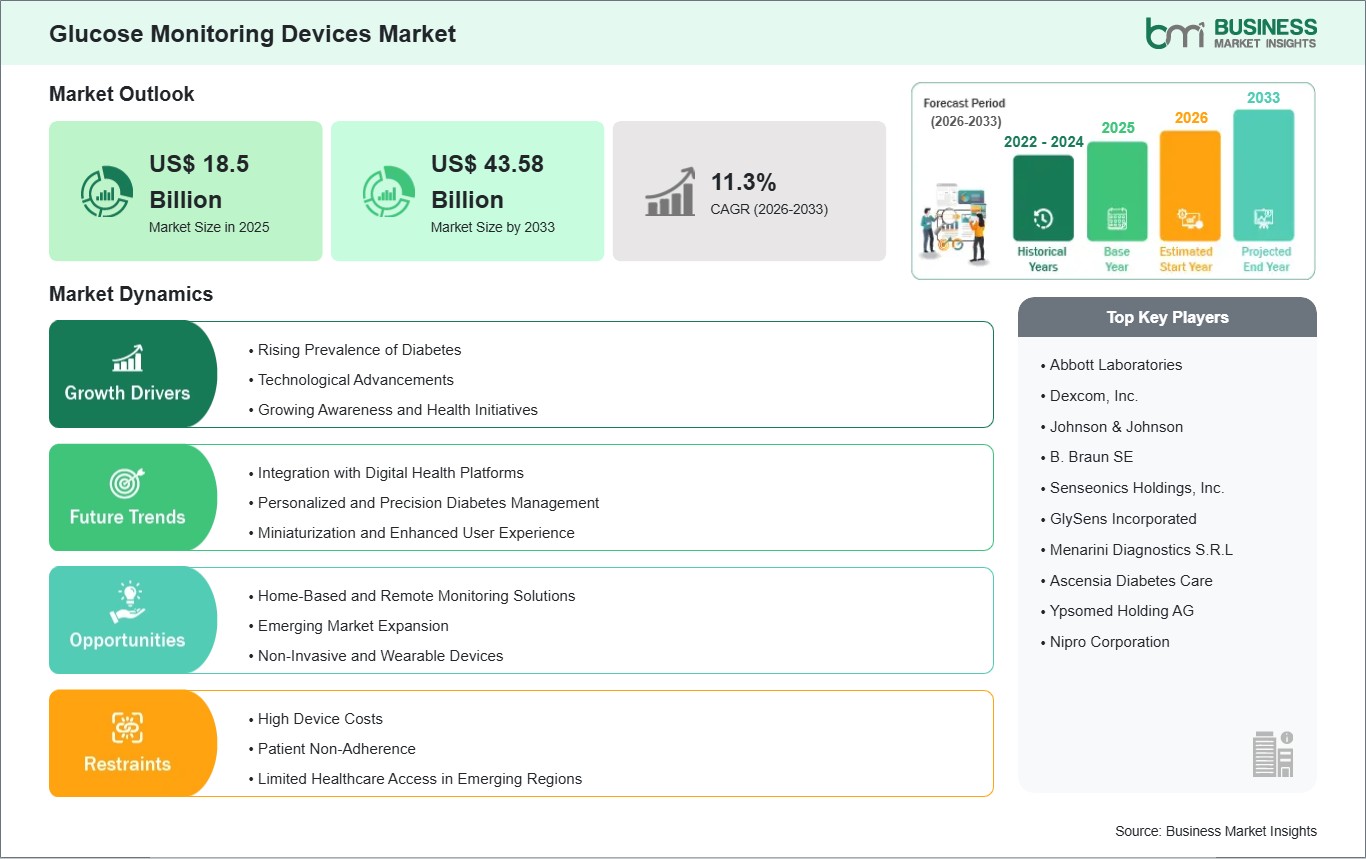
Market Summary
Executive Summary and Global Market Analysis
The global market for glucose monitoring devices is expanding substantially. This is primarily a result of the increasing number of diabetes cases and the growing awareness of the necessity to maintain glycemic control. Blood glucose monitoring on a regular basis is a must for diabetes management if the occurrence of complications such as cardiovascular diseases, neuropathy, and kidney damage is to be avoided. The market is made up of traditional self, monitoring blood glucose (SMBG) devices and sophisticated continuous glucose monitoring (CGM) systems that offer real, time data and insights that can be acted upon by patients and healthcare providers. Improvements in technology, such as wearable sensors, smartphone integration, Bluetooth connectivity, and AI, enabled analytics, are making the devices more accurate, more convenient, and more users, consistent.
These innovations also facilitate remote patient monitoring and telemedicine, thus making disease management more effective in areas that have limited access to healthcare. North America and Europe are the leaders in the market because of their well, established healthcare infrastructure, high level of awareness, and reimbursement, friendly policies, whereas Asia, Pacific is positioning itself as a region with a high rate of market expansion due to healthcare spending going up, increasing number of diabetes cases, and patient awareness rising. Manufacturer of the products are putting their efforts into product development to be able to offer a product that is cheaper, more portable, and user, friendly, thus have as their goal to increase market penetration in the two types of economies, namely the developed and the emerging ones. Overall, the glucose monitoring devices market is set to grow consistently, with demographic trends, technological advancements, and the worldwide focus on proactive diabetes management and preventive healthcare all contributing to this growth.
Segment Analysis
Glucose Monitoring Devices Market Segmentation
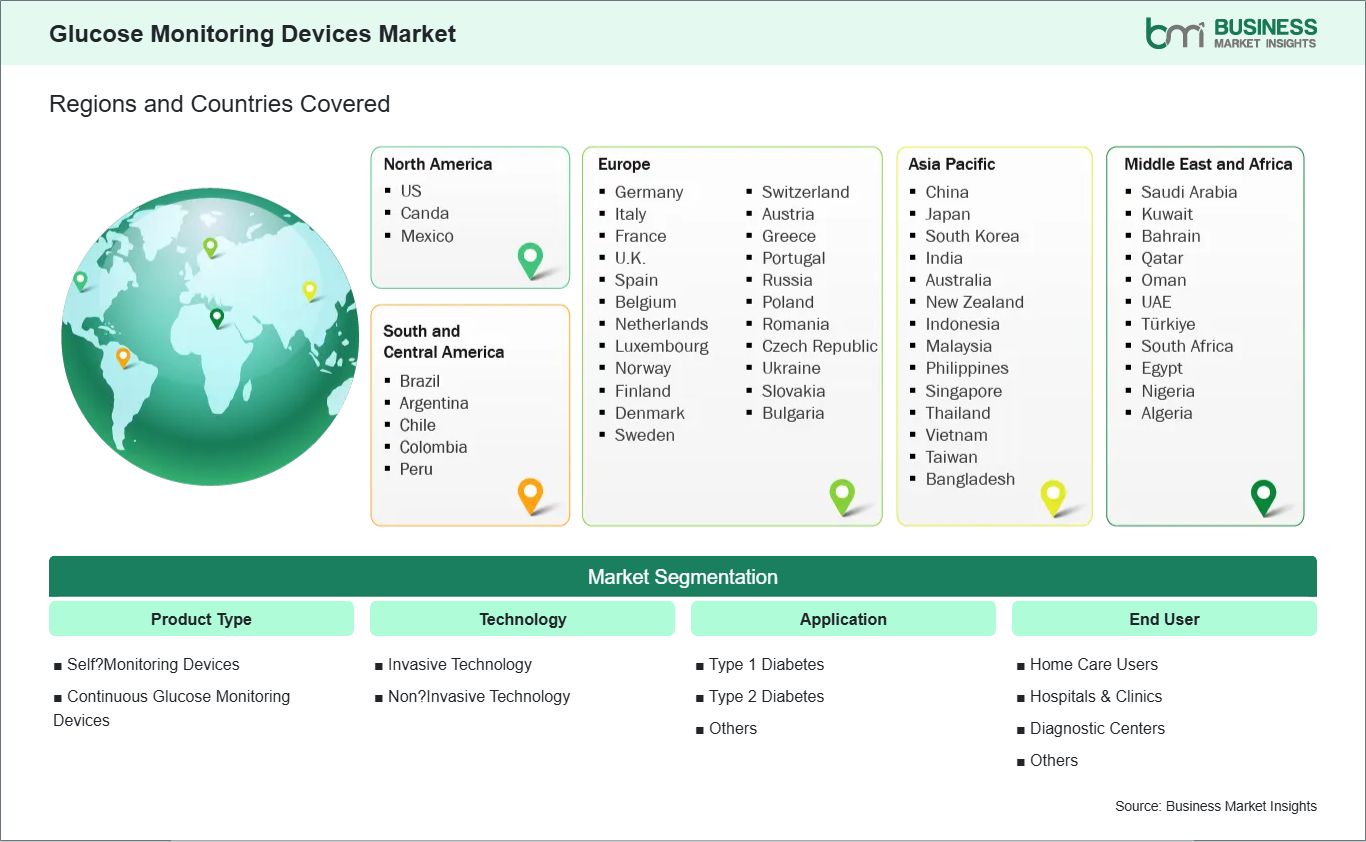
Key segments that contributed to the derivation of the Glucose Monitoring Devices market analysis are product type, technology, application, and end user.
- By product type, the glucose monitoring devices market is segmented into self-monitoring devices, continuous glucose monitoring (CGM) devices. The continuous glucose monitoring (CGM) devices segment dominated the market in 2024.
- By technology, the market is segmented into invasive technology, non-invasive technology. The invasive technology segment held the largest share of the market in 2024.
- By application, the market is segmented into type 1 diabetes, type 2 diabetes, others. The type 2 diabetes segment held the largest share of the market in 2024.
- By end user, the market is segmented into home care users, hospitals and clinics, diagnostic centers, others. The home care users segment held the largest share of the market in 2024.
Market Forces
Glucose Monitoring Devices Market Drivers and Opportunities
Rising Prevalence of Diabetes and Need for Glycemic Control
Diabetes has become more prevalent globally. The prevalence is increasing for all types of diabetes (Type 1 and Type 2) due to increasing life expectancy, increasing rates of obesity, Increased sedentary behaviour, and unhealthy eating patterns. The effective management of diabetes depends on the appropriate frequency and accuracy of the tests used to monitor the Glucose (sugar) content of the blood to avoid severe complications associated with diabetes including heart disease, nerve damage, eye damage (retinopathy), and kidney failure. One way that patients and their physicians can monitor the epithelial trend (how often the blood glucose has been tested) in relationship to a patient's blood glucose level is through Paid Device Monitoring Systems for Glucose Monitoring. Devices that enable doctors and patients to receive real-time feedback on their blood glucose levels and enable patients to develop a proactive approach to managing blood glucose levels produce actionable treatment plans for patients. As technology advances, including the introduction of wearable devices, integration with smartphones using Bluetooth technology, and AI-driven algorithms for analysis, glucose monitoring devices will be increasingly adopted, especially by patients using insulin therapy. Additionally, due to increased awareness of the importance of maintaining normal blood glucose levels and the availability of supportive policies and reimbursement programs for healthcare organizations in developed countries, patients' use of glucose monitoring devices will continue to increase. Accordingly, The increasing diabetic population and the critical need for early and continuous management of diabetes will continue to drive the growth of the global market for glucose monitoring devices.
Expansion of Home-Based and Remote Monitoring Solutions
The market for glucose monitoring devices has many growth opportunities due to the increasing demand for home-based and remote monitoring solutions. More people with diabetes prefer using either self-monitoring blood glucose (SMBG) systems or continuous glucose monitors (CGMs) rather than frequently visiting hospitals. This improves the ability of patients to manage their diabetes continuously since doctors have access to real-time data through these systems. By integrating remote monitoring devices with telemedicine platforms and mobile applications, healthcare providers can monitor patients remotely, analyze real-time data, and make necessary adjustments to treatment, resulting in increased patient compliance and better outcomes. These solutions are particularly beneficial to areas with limited healthcare access, populations living in rural areas, and patients affected by public health restrictions, allowing for consistent disease management. The advent of new technologies, such as wearable and non-invasive glucose monitors, also offers a viable alternative for continuous monitoring of patients by providing a more patient-friendly experience without the pain and inconvenience associated with finger sticks. As an example, the increasing prevalence of smartphones; cloud-based analytics; and, AI based predictive alerts combined with the expanding number of consumers using remote patient management services will support the growth of remote patient management. Companies that invest in connected devices, digital platforms, and affordable home solutions will be well-positioned to capitalize on this growing segment of the market and address the unmet needs of developed and developing countries. Overall, offering home-based and remote glucose monitoring represents a significant opportunity for growth within the glucose monitoring device market.
Size and Share Analysis
Glucose Monitoring Devices Market Size and Share Analysis
By product type, the glucose monitoring devices market is segmented into self-monitoring devices, continuous glucose monitoring (CGM) devices. The continuous glucose monitoring (CGM) devices segment dominated the market in 2024. CGM devices are favored over traditional self, monitoring blood glucose (SMBG) systems because they give more comprehensive data, lessen the number of finger, prick tests, and help both patients and clinicians quickly detect fluctuations and trends.
By technology, the market is segmented into invasive technology, non-invasive technology. The invasive technology segment held the largest share of the market in 2024. The established accuracy and reliability of invasive systems make them the preferred choice of clinicians and patients, especially in the case of type 1 diabetes and insulin, dependent type 2 diabetes.
By application, the market is segmented into type 1 diabetes, type 2 diabetes, others. The type 2 diabetes segment held the largest share of the market in 2024. Patients need regular glucose monitoring in order to manage their condition, prevent complications, and make lifestyle or medication adjustments.
By end user, the market is segmented home care users, hospitals and clinics, diagnostic centers, others. The home care users segment held the largest share of the market in 2024. This growth has been largely influenced by the comfort, easy access, and necessity of measuring glucose levels daily outside of clinical environments.
Report Coverage
Glucose Monitoring Devices Market Report Coverage and Deliverables
The "Glucose Monitoring Devices Market Size and Forecast (2022–2033)" report provides a detailed analysis of the market covering below areas:
- Glucose Monitoring Devices market size and forecast at global, regional, and country levels for all the key market segments covered under the scope
- Glucose Monitoring Devices market trends, as well as market dynamics such as drivers, restraints, and key opportunities
- Glucose Monitoring Devices market analysis covering key market trends, global and regional framework, major players, regulations, and recent market developments
- Industry landscape and competition analysis covering market concentration, heat map analysis, prominent players, and recent developments for the Glucose Monitoring Devices market
- Detailed company profiles, including SWOT analysis
Geographic Insights
Glucose Monitoring Devices Market Geographic Insights
The geographical scope of the Glucose Monitoring Devices market report is divided into five regions: North America, Asia Pacific, Europe, Middle East and Africa, and South and Central America. The Glucose Monitoring Devices market in Asia Pacific is expected to grow significantly during the forecast period.
The Asia-Pacific Glucose Monitoring Devices market is segmented into China, Japan, South Korea, India, Australia, New Zealand, Indonesia, Malaysia, the Philippines, Singapore, Thailand, Vietnam, Taiwan, Bangladesh, and the Rest of Asia. Diabetes is becoming increasingly common in many countries across Asia Pacific. This is mainly due to many factors, including obesity levels and sedentary behaviour of their populations, as well as the ageing of these countries' populations. With this high prevalence of diabetes comes an increased demand for blood glucose (BG) monitoring devices. The rise of SMBG and CGM in the region will continue to fuel growth in this area as more people become aware of how important it is to control their BG levels. The advancements made for SMBG and CGM technologies have enhanced patient compliance with BG monitoring and enabled real-time data collection from patients' homes; some patients may not even need to visit the hospital for any ongoing monitoring of their BG levels. Governments and health campaigns have also been increasing support in this area through insurance reimbursement for diabetic-related expenses related to CGM devices and education programmes regarding glycaemic control and early diagnosis of diabetes. In addition, there is a growing trend of using home care and remote monitoring of diabetic patients, especially for individuals living in rural or other locations that lack access to traditional healthcare services. As disposable incomes continue to rise in many areas of Asia Pacific, patients will continue to have greater access to BG monitors and other healthcare devices. Thus, the Asia Pacific glucose monitoring devices market represents a major growth opportunity, based on the continued rise in the number of people diagnosed with diabetes, the advances made in technology and the increased amount of medically recommended diabetes education.
Industry Activity
Recent Developments
The Glucose Monitoring Devices market is evaluated by gathering qualitative and quantitative data post primary and secondary research, which includes important corporate publications, association data, and databases. A few of the key developments in the glucose monitoring devices market are:
- In August 2025, Abbott launched FreeStyle Libre 2 Plus sensor, Abbott’s latest addition to the FreeStyle Libre sensor portfolio. This innovative device offers automatic glucose readings every minute straight to your phone, empowering people with diabetes to manage their condition with confidence, precision, and ease.
- In July 2024, Roche has received the CE Mark for its Accu-Chek SmartGuide continuous glucose monitoring (CGM) solution. This significant milestone paves the way for the solution to be made available to people living with type 1 and type 2 diabetes over the age of 18 on flexible insulin therapy.
- In March 2024, The US Food and Drug Administration cleared for marketing the first over-the-counter (OTC) continuous glucose monitor (CGM).
Trust & Transparency
Research Methodology
The market analysis combines proprietary research with secondary data from government agencies, company disclosures, regulatory filings, industry databases and expert interviews. Market estimates are validated through data triangulation, cross-market benchmarking and analyst
review.
View Full Research Methodology
Key Sources Referred:
World Bank – Global Trade Indicators
World Trade Organization (WTO)
Centers for Disease Control and Prevention (CDC)
World Health Organization (WHO)
(International Monetary Fund )IMF
International Trade Administration (ITA)
Company website
Company annual reports
Company investor presentations