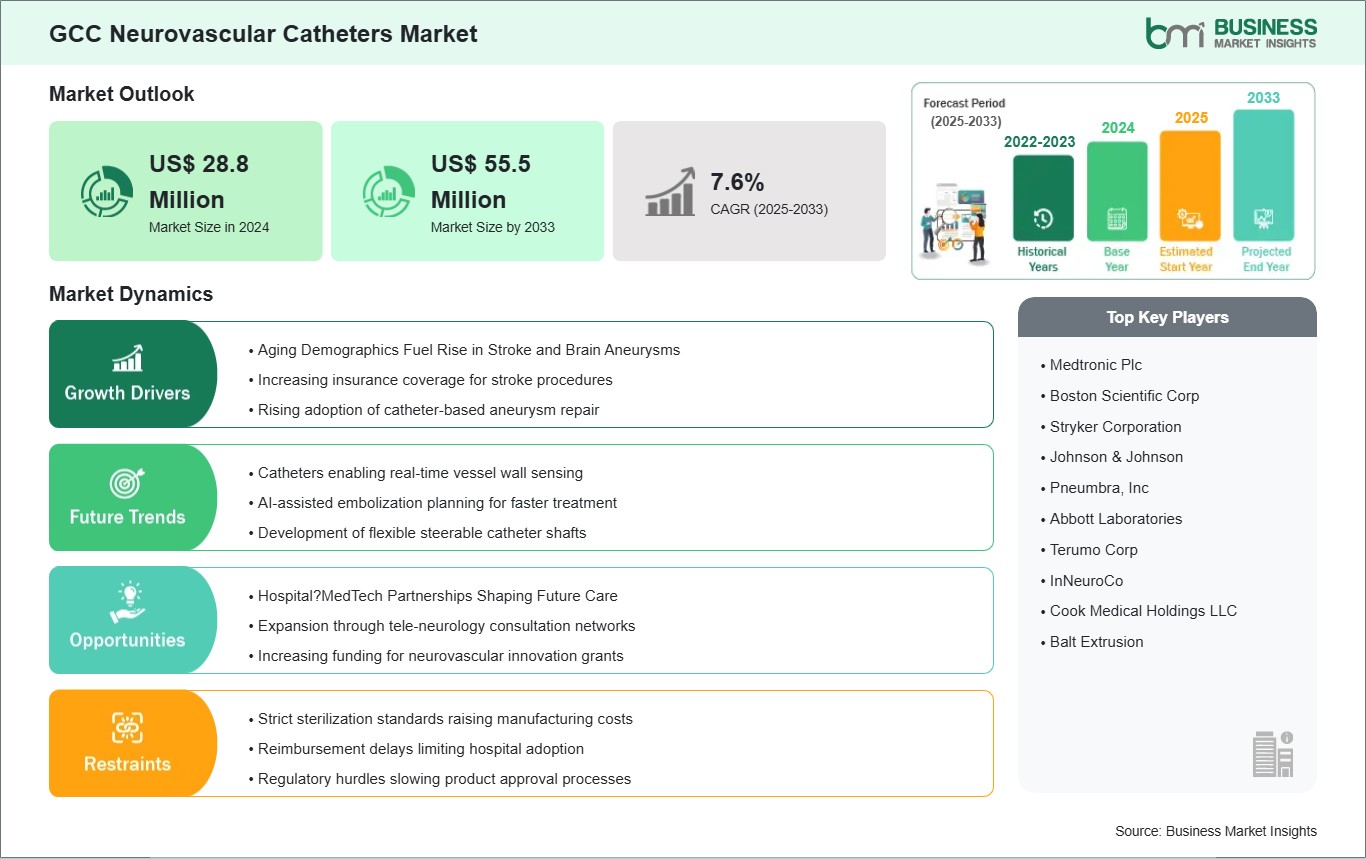
The GCC Neurovascular Catheters market size is expected to reach US$ 55.5 million by 2033 from US$ 28.8 million in 2024. The market is estimated to record a CAGR of 7.6% from 2025 to 2033.
Rising incidence of ischemic stroke and cerebral aneurysms, coupled with aging demographics and widespread prevalence of vascular risk factors (such as diabetes and hypertension), is driving demand for minimally invasive catheter‑based procedures in Saudi Arabia, the UAE, Qatar, Kuwait, Oman, and Bahrain. Clinical adoption of mechanical thrombectomy, embolization, and flow diversion procedures requires neurovascular catheter technologies to navigate complex cerebral vasculature and deliver therapeutic devices with precision.
Government healthcare initiatives — such as Saudi Vision 2030’s focus on specialty care expansion and the UAE’s drive to become a medical tourism hub — are supporting investments in comprehensive stroke centers and hybrid angiography labs, increasing procedural volumes across tertiary care hospitals. Hospitals in major urban centers such as Riyadh, Abu Dhabi, and Doha are enhancing emergency neurology services with state‑of‑the‑art imaging and interventional suites to improve rapid diagnosis and intervention outcomes. Coated catheter systems are adopted to meet infection prevention priorities, while multi‑lumen catheters are preferred in critical care settings for simultaneous multi‑therapy delivery.
Hospitals and clinics dominate end user adoption due to higher procedural frequencies and better reimbursement support. Competitive dynamics include global MedTech firms collaborating with regional distributors and healthcare providers to enhance access, training, and post‑market support. Strategic partnerships, clinical education programs, and localized distribution help drive awareness and uptake of neurovascular catheter technologies in GCC markets, driving market growth.

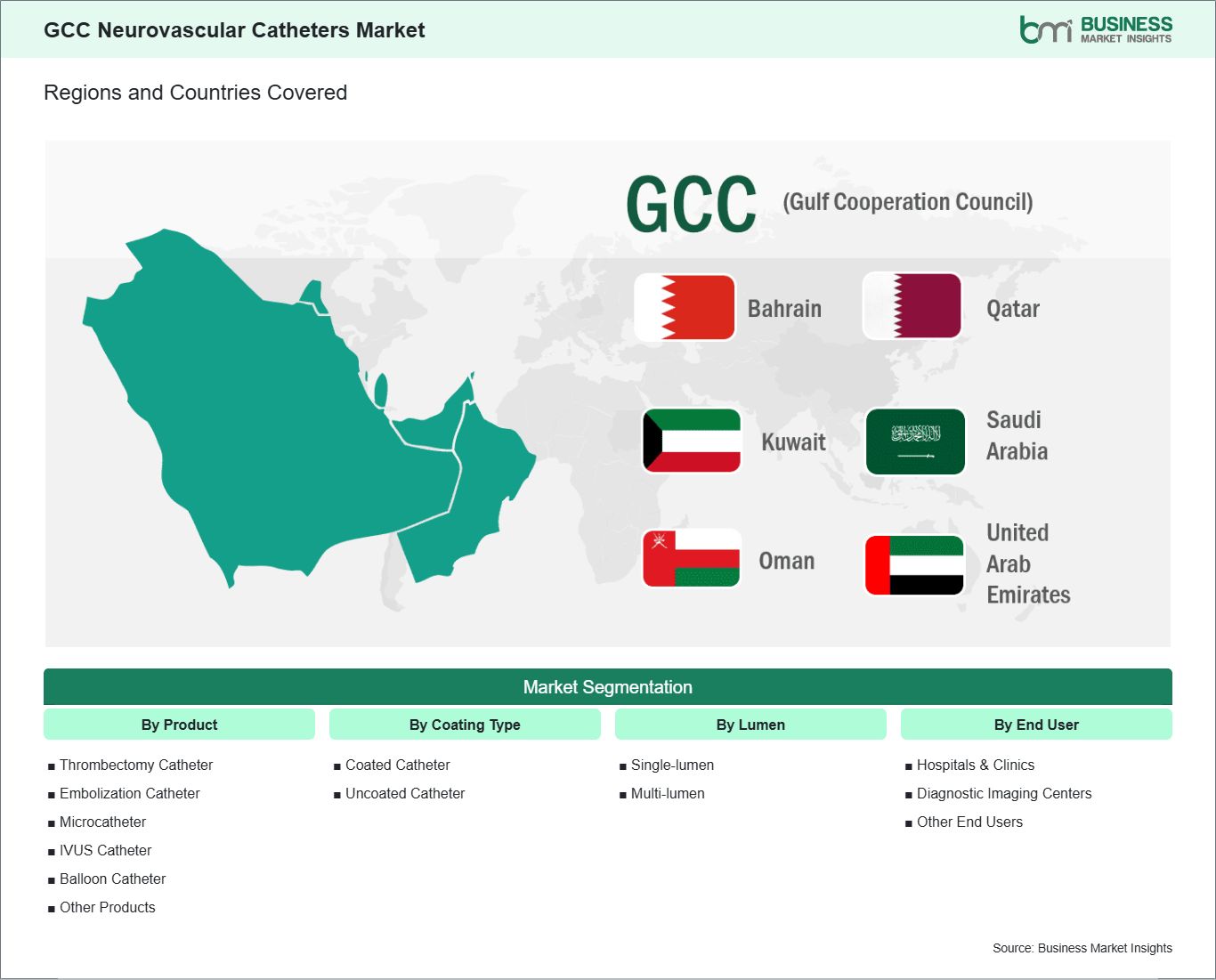
Key segments that contributed to the derivation of the GCC Neurovascular Catheters market analysis are product, coating type, lumen, and end user.
Stroke, particularly ischemic stroke, remains a leading cause of mortality and long‑term disability globally, and its prevalence is increasing in the GCC due to demographic aging and high rates of vascular risk factors such as diabetes, hypertension, and obesity — conditions that elevate cerebrovascular disease risk. Mechanical thrombectomy procedures have become standard care for eligible patients with large vessel occlusions, enabling rapid clot removal and improving functional outcomes when performed promptly. Neurovascular catheters are critical to these procedures, facilitating navigation through complex cerebral vasculature, clot engagement, and recanalization, which can reduce neurological damage.
Improved access to advanced diagnostic imaging — including CT angiography and MRI — in GCC hospitals has led to earlier detection of cerebral aneurysms, increasing interventional volumes for endovascular aneurysm repair procedures such as coil embolization and flow diversion. These treatments depend on specialized microcatheters and embolization catheter systems for precise device delivery and occlusion. Urban centers in Saudi Arabia and the UAE are broadening stroke care pathways with dedicated stroke units and hybrid angiography suites that support catheter‑based interventions.
Rising stroke rates, enhanced diagnostic capabilities, and growing adoption of minimally invasive neurovascular therapies are driving sustained demand for advanced neurovascular catheter technologies throughout the region.
GCC health systems are engaging with international medical device manufacturers to access advanced catheter technologies, specialized training, and procedural support that enhance clinical capabilities and improve patient outcomes. Long‑term supply agreements and formal partnerships help MedTech firms gain insights into regional clinical practices and procedural challenges specific to GCC populations, enabling them to tailor catheter solutions with optimal flexibility, trackability, and precision.
Hospitals benefit from these collaborations through early access to next‑generation devices, joint clinical education programs, and simulation‑based training for interventional neurologists and neuroradiologists. Structured training helps build proficiency with advanced catheter systems used in mechanical thrombectomy, embolization, and flow diversion procedures — techniques that are critical for managing complex neurovascular conditions such as large vessel occlusion strokes and cerebral aneurysms. Clinical research partnerships generate real‑world evidence that supports regulatory acceptance, guideline inclusion, and reimbursement coverage across varied health systems.
Commercially, collaborations with major hospital networks and national health ministries provide device manufacturers with stable procurement pathways and enhanced market penetration. In emerging markets, such partnerships help overcome adoption barriers related to technical expertise and post‑market support. As healthcare systems emphasize value‑based care and minimally invasive treatment strategies, strategic engagements between MedTech firms and hospitals will remain pivotal to expanding access to neurovascular catheter technologies and driving long‑term market growth.

The GCC neurovascular catheters market demonstrates steady growth, with size and share analysis highlighting evolving trends and competitive dynamics among key players. The report further examines subsegments categorized within product, coating type, lumen, and end user, offering insights into their contribution to overall market performance.
By product, the thrombectomy catheter subsegment dominated the market in 2024, driven by the widespread use in acute ischemic stroke procedures and emergency neurovascular interventions across GCC hospitals and clinics.
Based on coating type, the coated catheters subsegment dominated the market in 2024, driven by infection prevention initiatives and demand for biocompatible devices in GCC healthcare systems.
Per lumen, the multi-lumen subsegment dominated the market in 2024, driven by its utility in managing multiple therapies simultaneously in critical care settings.
By end user, the hospitals and clinics subsegment dominated the market in 2024, driven by increasing investments in comprehensive stroke care and interventional suites across the GCC.
| Report Attribute | Details |
|---|---|
| Market size in 2024 | US$ 28.8 Million |
| Market Size by 2033 | US$ 55.5 Million |
| CAGR (2025 - 2033) | 7.6% |
| Historical Data | 2022-2023 |
| Forecast period | 2025-2033 |
| Segments Covered | By Product
|
| Regions and Countries Covered | GCC
|
| Market leaders and key company profiles |
|
The "GCC Neurovascular Catheters Market Size and Forecast (2025–2033)" report provides a detailed analysis of the market covering below areas:
The geographical scope of the GCC Neurovascular Catheters market report is divided into: United Arab Emirates, Bahrain, Saudi Arabia, Oman, Qatar, and Kuwait. Saudi Arabia held the largest share in 2024.
The GCC neurovascular catheters market exhibits diverse adoption patterns influenced by healthcare infrastructure development, regulatory frameworks, and investment in specialized care. Saudi Arabia is the largest market, led by Vision 2030 initiatives to expand specialty healthcare services, upgrade hospital capabilities, and centralize advanced stroke care infrastructure. Tertiary hospitals in Riyadh, Jeddah, and Dammam perform neurovascular interventions, stimulating demand for advanced thrombectomy, embolization, and microcatheter systems. The UAE — particularly Abu Dhabi and Dubai — has developed dedicated stroke units and interventional suites supported by public health insurance frameworks and private sector investments, enhancing procedural volumes for catheter‑based treatments.
Qatar has made strategic healthcare investments, establishing comprehensive neurology and neurointervention services in major facilities that support endovascular stroke and aneurysm care. Kuwait and Oman are expanding stroke care pathways and imaging capabilities, fostering incremental adoption of advanced catheter technologies in urban tertiary care centers. Bahrain is increasing regulatory alignment with certified neurovascular device standards, supporting broader availability of approved catheter systems. Across the GCC, hospitals and clinics dominate end user adoption due to concentrated procedural volumes and centralized specialist services, although diagnostic imaging centers are beginning to integrate interventional capabilities to support neurovascular procedures.

The GCC Neurovascular Catheters market is evaluated by gathering qualitative and quantitative data post primary and secondary research, which includes important corporate publications, association data, and databases. A few of the key developments in the GCC neurovascular catheters market are:
The GCC Neurovascular Catheters Market is valued at US$ 28.8 Million in 2024, it is projected to reach US$ 55.5 Million by 2033.
As per our report GCC Neurovascular Catheters Market, the market size is valued at US$ 28.8 Million in 2024, projecting it to reach US$ 55.5 Million by 2033. This translates to a CAGR of approximately 7.6% during the forecast period.
The GCC Neurovascular Catheters Market report typically cover these key segments-
The historic period, base year, and forecast period can vary slightly depending on the specific market research report. However, for the GCC Neurovascular Catheters Market report:
The GCC Neurovascular Catheters Market is populated by several key players, each contributing to its growth and innovation. Some of the major players include:
The GCC Neurovascular Catheters Market report is valuable for diverse stakeholders, including:
Essentially, anyone involved in or considering involvement in the GCC Neurovascular Catheters Market value chain can benefit from the information contained in a comprehensive market report.
Please tell us your area of interest
(Market Segments/ Regions and Countries/ Companies)