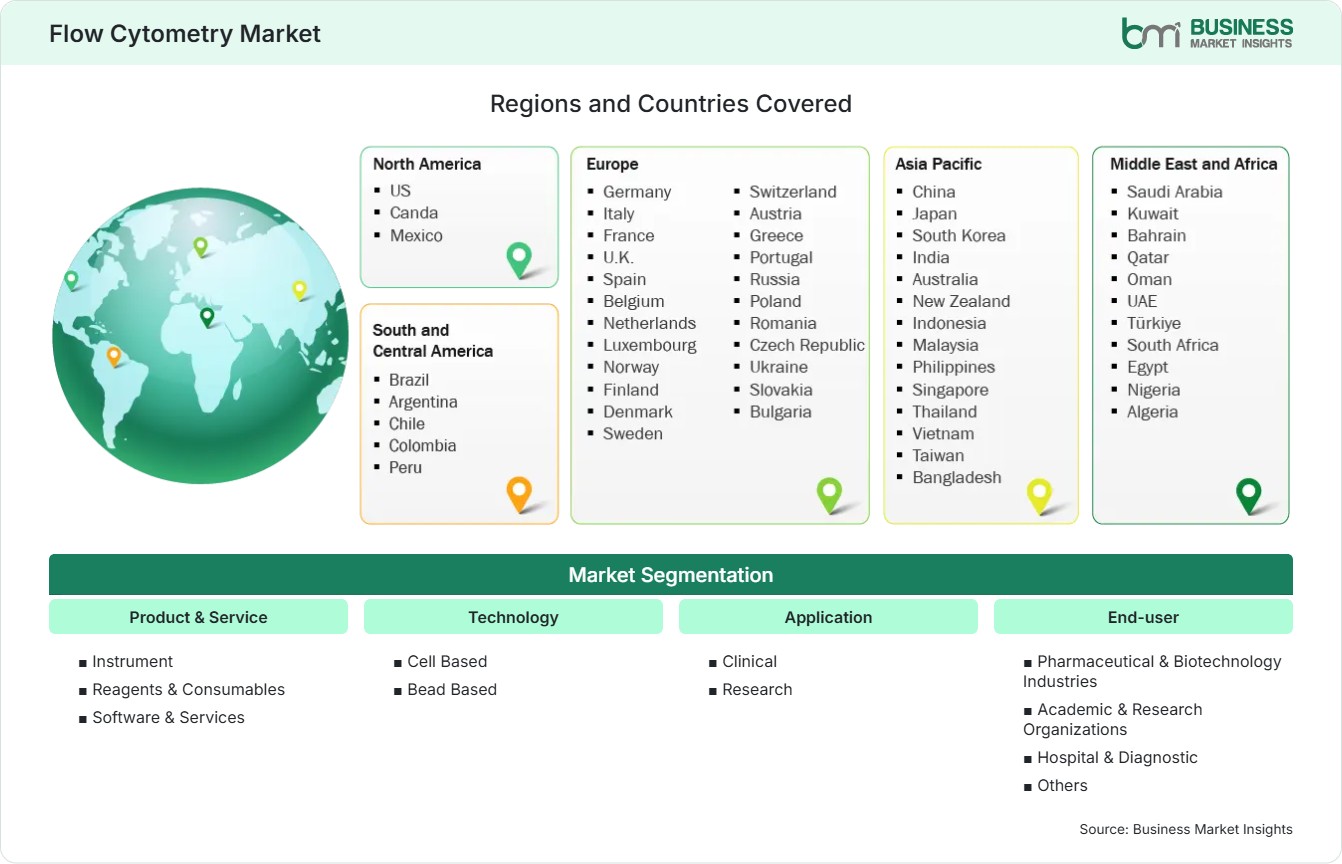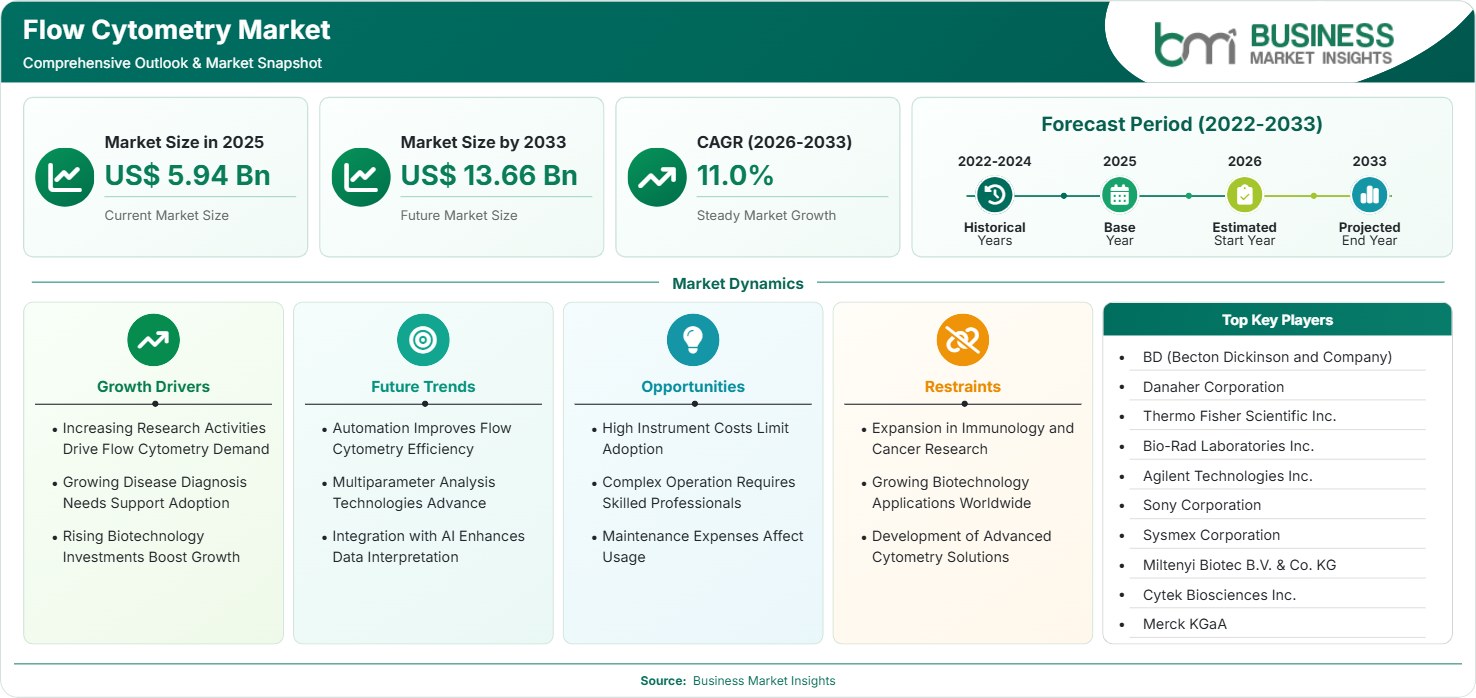
Flow Cytometry Market Regional Highlights
North America Flow Cytometry Market
North America represents the leading regional market with a share of 40%–43% in 2025 and is projected to grow at a CAGR of 10%–12% during 2026–2033. Strong biotechnology infrastructure, advanced healthcare systems, and significant research funding support regional leadership. Flow Cytometry Market share remains concentrated in the United States due to widespread adoption in diagnostics and pharmaceutical research.
- The United States leads adoption through advanced clinical laboratories and biotechnology research capabilities.
- Pharmaceutical companies are increasing flow cytometry utilization in immunotherapy and drug development programs.
- Academic institutions are expanding cellular research applications through advanced analytical platforms.
- Canada is supporting growth through healthcare innovation and life science research investments.
US Flow Cytometry Market
The US market holds a share of 36%–39% in 2025 and is estimated to register a CAGR of 10%–12% from 2026–2033. The country remains a major contributor due to strong pharmaceutical research, advanced diagnostic infrastructure, and significant biotechnology investments. Growing demand for cellular analysis in clinical and research environments continues supporting technology adoption.
- Clinical laboratories are increasing use of flow cytometry for immune monitoring and disease analysis.
- Biotechnology companies are integrating cellular analysis into therapeutic development workflows.
- Research organizations are expanding applications in oncology, immunology, and cell therapy studies.
- Healthcare investments continue supporting laboratory modernization and advanced diagnostic adoption.
Europe Flow Cytometry Market
Europe accounts for a share of 26%–29% in 2025 and is expected to expand at a CAGR of 10%–12% during 2026–2033. The region benefits from established research networks, strong pharmaceutical presence, and increasing adoption of advanced diagnostics. Germany, the United Kingdom, and France represent leading markets, while Switzerland and the Netherlands demonstrate expanding life science activities.
- Germany supports market development through strong pharmaceutical research and laboratory infrastructure.
- The United Kingdom is expanding cellular analysis adoption through biomedical research programs.
- France is increasing diagnostic technology implementation across healthcare institutions.
- Switzerland and the Netherlands continue supporting biotechnology innovation and research collaborations.
Asia Pacific Flow Cytometry Market
Asia Pacific represents the fastest-growing regional market with a share of 23%–26% in 2025 and a projected CAGR of 13%–15% during 2026–2033. Flow Cytometry Market growth is supported by biotechnology expansion, healthcare modernization, and increasing research investments. China, Japan, India, and South Korea are key contributors, with China and India demonstrating significant development potential.
- China is expanding life science research infrastructure through biotechnology investments and healthcare initiatives.
- India is increasing adoption through diagnostic modernization and growing pharmaceutical research activities.
- Japan continues advancing cellular analysis through established biotechnology capabilities.
- South Korea is supporting innovation through government-backed healthcare technology programs.
Rest of World Flow Cytometry Market
Rest of World markets represent a share of 8%–11% in 2025 and are projected to grow at a CAGR of 10%–12% during 2026–2033. Latin America, Middle East, and Africa markets are developing through healthcare infrastructure improvements, research expansion, and increasing diagnostic demand. Brazil, Mexico, UAE, and South Africa represent important regional contributors.
- Brazil is improving laboratory capabilities through healthcare investment and biotechnology development.
- Mexico is increasing adoption of advanced diagnostic technologies across healthcare facilities.
- UAE is investing in healthcare innovation and life science infrastructure development.
- South Africa is expanding research capabilities through academic and clinical collaborations.