
Fibrin Sealants Market Outlook: Size, Share, Trends, Growth Analysis, Competitive Landscape & Forecast, 2026-2033

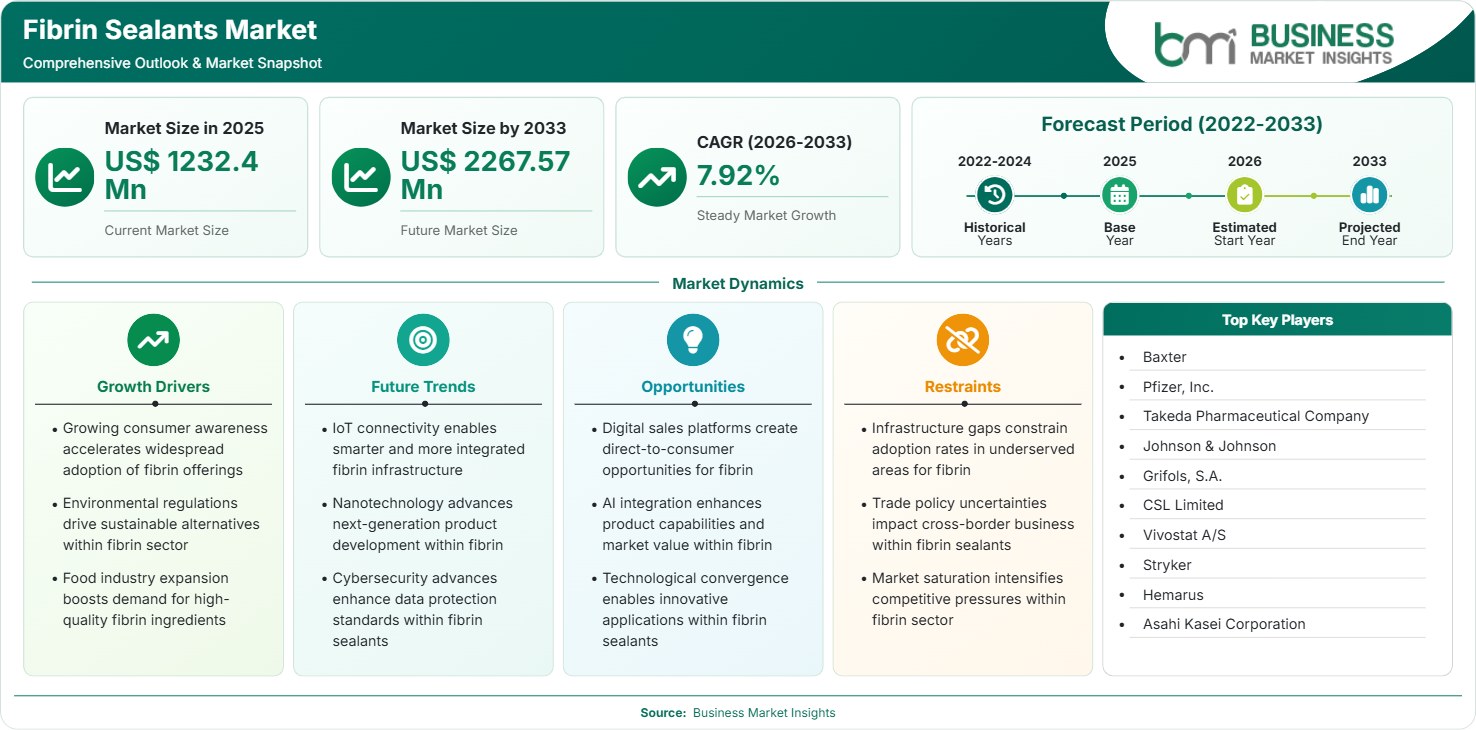
The Fibrin Sealants Market size was valued at US$ 1232.4 Million in 2025 and is projected to reach US$ 2267.57 Million by 2033, growing at a CAGR of 7.92% during 2026–2033. Rising surgical procedure volumes, increasing preference for biologic hemostatic agents, expanding minimally invasive surgeries, and continuous product innovation are creating significant opportunities across hospitals, specialty clinics, and advanced surgical care settings.

Report Coverage
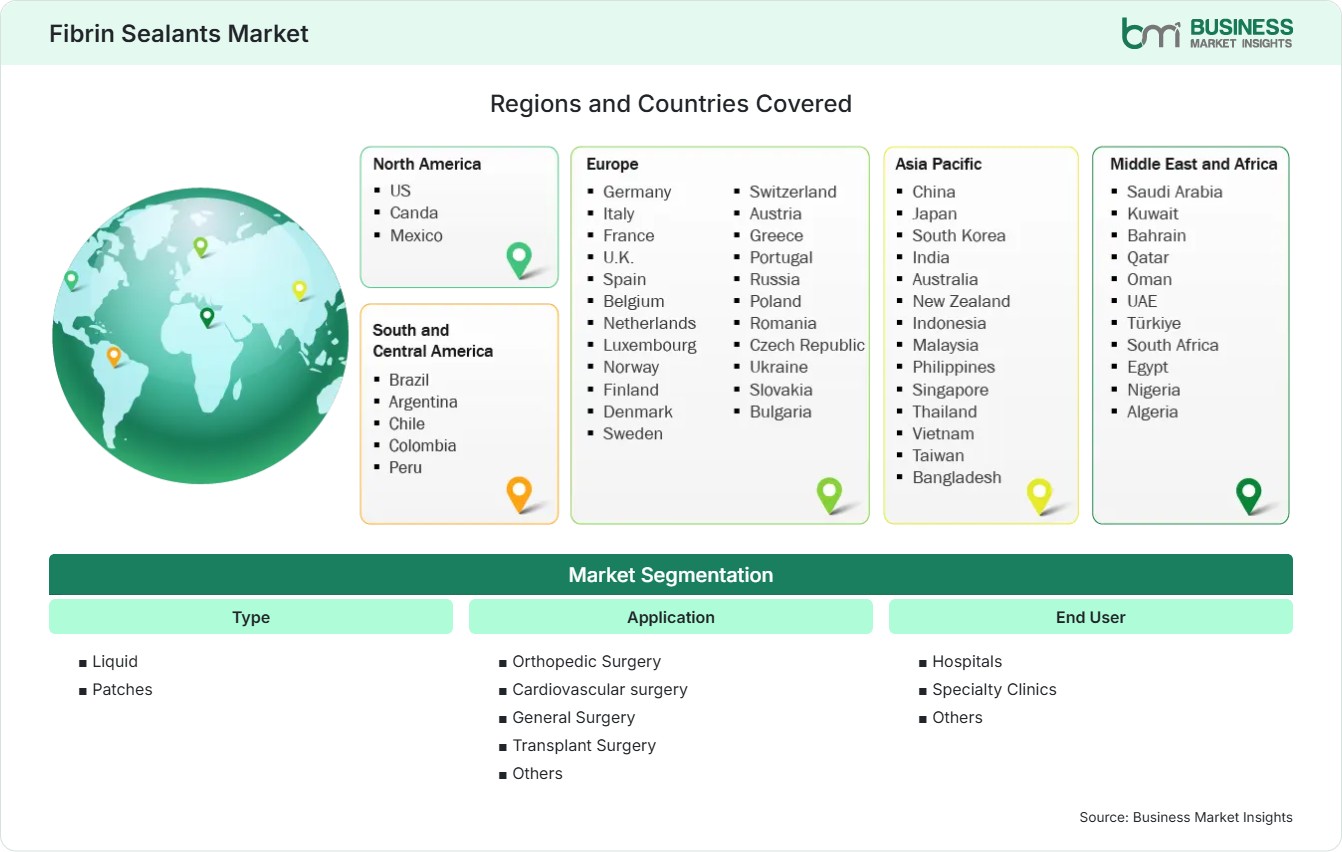
  • Type: Liquid, Patches
  • Application: Orthopedic Surgery, Cardiovascular surgery, General Surgery, Transplant Surgery, Others
  • End User: Hospitals, Specialty Clinics, Others
US$ 1232.4 Mn Market size in 2025
US$ 2267.57 Mn Market Size by 2033
7.92% CAGR, 2026 - 2033
2026-2033 Forecast Period

01 AI Overview

Fibrin Sealants Market Summary

  • North America Region: North America holds 37% – 40% market share in 2025, growing with a CAGR of 7.3% – 7.8% during 2026–2033, supported by advanced surgical infrastructure, favorable reimbursement, increasing complex procedures, biologics innovation, and expanding adoption of premium hemostatic technologies across healthcare systems. The United States remains the regional growth engine through expanding surgical volumes, continuous biologics innovation, and hospital investments, advancing at a CAGR of 7.4% – 7.9% during 2026–2033.
  • Fastest Growing Region: Asia Pacific accounts for 24% – 27% market share in 2025 and is anticipated to expand at a CAGR of 9.0% – 9.6% during 2026–2033, driven by healthcare modernization, rising surgical capacity, expanding insurance coverage, increasing trauma care demand, domestic manufacturing, and government investment supporting advanced surgical technologies.
  • Leading Segment: General Surgery represents 34% – 37% market share in 2025 while advancing at a CAGR of 7.6% – 8.1% through 2026–2033. Increasing abdominal procedures, improved intraoperative bleeding management, hospital preference for biological sealants, shorter recovery expectations, and expanding surgical precision continue strengthening demand worldwide.
  • High Growth Segment: Cardiovascular Surgery contributes 18% – 21% market share in 2025 and is forecast to record a CAGR of 8.8% – 9.3% during 2026–2033. Rising cardiac interventions, aging populations, minimally invasive techniques, superior hemostasis requirements, and growing investments in specialized cardiac centers accelerate product adoption.
  • Key Market Opportunity: Expansion of bioengineered sealants compatible with robotic and minimally invasive surgery, supported by personalized surgical care, next-generation biomaterials, and increasing healthcare investments, is expected to unlock sustained commercial opportunities across developed and emerging healthcare systems.
  • Major Market Players: Baxter International Inc., CSL Limited, Takeda Pharmaceutical Company Limited, Johnson & Johnson Services, Inc., Stryker Corporation, Vivostat A/S, Becton, Dickinson and Company, Pfizer Inc., Integra LifeSciences Holdings Corporation, and Advanced Medical Solutions Group plc.
02 Strategic Insights

Fibrin Sealants Market: Strategic Insights

Fibrin Sealants Market Strategic Framework
FREE PDF
Request your free sample
Request free sample
03 Stakeholder View

Key Takeaways

  • The Fibrin Sealants Market ecosystem continues evolving toward integrated biologics manufacturing, plasma fractionation, sterile packaging, specialized distribution, and hospital procurement networks, enabling manufacturers to strengthen supply reliability while meeting stringent regulatory expectations for surgical hemostatic products.
  • The strongest commercial opportunities are emerging from cardiovascular, transplant, and minimally invasive surgical applications where effective bleeding control, reduced operative time, and improved postoperative recovery generate measurable clinical and economic value for healthcare providers.
  • Product innovation is shifting toward synthetic-enhanced biologic formulations, rapid-setting delivery technologies, dual-syringe applicators, and customized sealant systems designed to improve surgeon convenience while supporting robotic-assisted and image-guided surgical procedures.
  • Asia Pacific presents an increasingly compelling investment destination because healthcare infrastructure expansion, rising procedure volumes, favorable demographic trends, and domestic medical technology manufacturing collectively create sustained demand for advanced surgical hemostatic solutions over the forecast period.
  • Strategic collaborations, licensing agreements, and targeted acquisitions are becoming prominent competitive strategies as manufacturers seek broader geographic presence, expanded biologics portfolios, enhanced manufacturing capacity, and access to innovative tissue engineering technologies supporting next-generation surgical sealants.
  • Sustainability and manufacturing resilience are gaining strategic importance as producers diversify plasma sourcing, strengthen quality assurance systems, invest in advanced sterilization technologies, and optimize supply chains to ensure uninterrupted availability for critical surgical procedures worldwide.
04 Geographic Outlook

Fibrin Sealants Market Regional Highlights

North America Fibrin Sealants Market

North America accounted for 37% – 40% of the global market in 2025 and is projected to register a CAGR of 7.3% – 7.8% during 2026–2033. The region benefits from advanced surgical infrastructure, high adoption of biologic hemostatic products, and favorable reimbursement frameworks. The Fibrin Sealants Market share remains the highest globally because hospitals increasingly integrate tissue sealants into cardiovascular, orthopedic, trauma, and transplant procedures. Strong clinical evidence supporting reduced surgical complications and continuous innovation by regional manufacturers further reinforce market leadership.

  • The United States and Canada continue investing in sophisticated operating room technologies, while increasing numbers of minimally invasive and robotic-assisted surgeries expand the clinical use of fibrin sealants across complex procedures.
  • Regulatory oversight by the U.S. Food and Drug Administration and Health Canada encourages continuous product quality improvements, creating confidence among surgeons while supporting commercialization of innovative biologic surgical sealants.
  • Growing prevalence of cardiovascular diseases, musculoskeletal disorders, and age-related degenerative conditions contributes to increasing surgical volumes, encouraging hospitals to prioritize efficient hemostatic solutions that reduce procedure duration and postoperative complications.
  • Continuous investments in plasma fractionation facilities, biotechnology manufacturing, and hospital procurement modernization strengthen supply chain resilience, enabling healthcare providers to maintain reliable access to advanced fibrin-based surgical products.
  • Strategic collaborations between medical technology developers, academic institutions, and surgical research centers accelerate clinical validation, expand product indications, and promote evidence-based adoption across multiple surgical specialties.

US Fibrin Sealants Market

The United States represented 82% – 85% of North American Fibrin Sealants Market revenue in 2025 and is anticipated to expand at a CAGR of 7.4% – 7.9% through 2026–2033. Rising procedural complexity, expanding ambulatory surgery centers, and rapid integration of robotic-assisted surgery continue supporting market expansion. Strong reimbursement policies, advanced healthcare infrastructure, and consistent innovation from domestic and multinational manufacturers position the country as the primary contributor to regional demand.

  • High procedural volumes across orthopedic reconstruction, cardiac surgery, neurosurgery, and trauma care sustain consistent demand for biologic sealants that improve bleeding control and enhance overall surgical efficiency in healthcare institutions.
  • Extensive clinical research conducted by leading academic medical centers generates robust evidence supporting expanded indications, strengthening physician confidence and encouraging broader integration into standard surgical protocols.
  • Hospital purchasing organizations increasingly prioritize premium hemostatic technologies that demonstrate measurable reductions in operating time, blood transfusion requirements, and postoperative complications, supporting long-term commercial growth.
  • Continued investment in biologics manufacturing, advanced plasma processing, and healthcare digitalization enhances production capabilities while ensuring regulatory compliance and uninterrupted product availability nationwide.

Europe Fibrin Sealants Market

Europe captured 28% – 31% of global Fibrin Sealants Market revenue in 2025 and is forecast to record a CAGR of 7.5% – 8.0% during 2026–2033. Strong healthcare systems, expanding elderly populations, and increasing surgical intervention rates sustain regional demand. Germany remains the leading national market due to advanced hospital infrastructure, while Spain demonstrates the fastest expansion with an estimated CAGR of 8.2% – 8.7%, supported by healthcare modernization and growing adoption of biologic surgical technologies.

  • The European Medicines Agency maintains rigorous quality standards that encourage innovation while strengthening clinician confidence in plasma-derived fibrin sealants across diverse surgical specialties.
  • Germany benefits from high procedural volumes, established biologics manufacturing capabilities, and continuous investment in technologically advanced operating rooms, reinforcing its leadership within the regional marketplace.
  • Spain experiences accelerated adoption through expanding public healthcare investments, modernization of tertiary hospitals, and increasing utilization of minimally invasive surgical procedures requiring effective hemostatic solutions.
  • Cross-border research collaborations and biotechnology funding programs encourage development of next-generation sealant formulations with enhanced biocompatibility, rapid polymerization, and improved clinical outcomes for complex surgeries.
  • Rising orthopedic and cardiovascular interventions associated with demographic aging continue generating sustainable demand for premium surgical adhesives throughout Western and Central European healthcare systems.

Asia Pacific Fibrin Sealants Market

Asia Pacific represented 24% – 27% of the global Fibrin Sealants Market in 2025 and is expected to achieve the fastest regional expansion with a CAGR of 9.0% – 9.6% during 2026–2033. China leads regional revenue generation through expanding surgical capacity and domestic manufacturing, while India records the strongest growth with a CAGR of 9.6% – 10.1% supported by healthcare infrastructure investments, rising insurance coverage, and increasing access to advanced surgical procedures.

  • China continues strengthening biologics manufacturing, hospital infrastructure, and plasma collection capabilities, enabling broader availability of advanced fibrin sealants across both metropolitan and secondary healthcare facilities.
  • India benefits from increasing healthcare expenditure, rapidly expanding multispecialty hospitals, medical tourism growth, and government initiatives encouraging adoption of modern surgical technologies throughout the country.
  • Japan maintains stable demand driven by advanced healthcare delivery, high surgical precision standards, and significant numbers of elderly patients requiring orthopedic, cardiovascular, and reconstructive surgical procedures.
  • Southeast Asian countries increasingly modernize healthcare systems through public-private partnerships, encouraging procurement of advanced biologic hemostatic products across tertiary hospitals and specialized surgical centers.
  • Local biotechnology companies continue forming partnerships with global manufacturers to strengthen regional production capacity, technology transfer, and clinical education supporting widespread physician adoption.

Rest of World Fibrin Sealants Market

The Rest of World region accounted for 8% – 10% of global Fibrin Sealants Market revenue in 2025 and is projected to expand at a CAGR of 7.8% – 8.4% through 2026–2033. South & Central America continues benefiting from improving surgical capabilities and healthcare investments, while the Middle East and Africa experience gradual adoption supported by modernization of tertiary care facilities, increasing trauma management capacity, and expanding access to specialized surgical services.

Brazil remains the largest South & Central American Fibrin Sealants Market due to established hospital networks, whereas Saudi Arabia demonstrates the strongest regional momentum with a CAGR of 8.6% – 9.1%, driven by healthcare transformation initiatives and substantial investments in advanced surgical infrastructure.

  • Brazil continues investing in tertiary hospitals, specialized surgical centers, and physician training programs, supporting wider clinical utilization of biologic tissue sealants across public and private healthcare facilities.
  • Saudi Arabia's healthcare transformation strategy encourages procurement of innovative surgical technologies, expansion of advanced operating rooms, and localization of medical device manufacturing capabilities.
  • The United Arab Emirates strengthens regional demand through medical tourism, premium hospital investments, and increasing availability of technologically advanced surgical procedures requiring effective bleeding management solutions.
  • South Africa gradually expands adoption through improving trauma care capabilities, enhanced specialist training, and public-private healthcare partnerships supporting access to advanced biologic surgical products.
  • Regional distributors increasingly collaborate with multinational manufacturers to improve product availability, regulatory compliance, and clinician education, strengthening long-term commercial opportunities across developing healthcare markets.
Global Market Geography
FREE PDF
Request your free sample
Request free sample
05 Segment Analysis

Fibrin Sealants Market Segmentation

Type

The Type segment accounted for the largest proportion of product demand, with liquid formulations representing the dominant commercial category. This segment held an estimated 58% – 61% share in 2025 and is expected to expand at a CAGR of 7.8% – 8.3% during 2026–2033. The Fibrin Sealants Market scope continues expanding as surgeons increasingly prefer procedure-specific delivery systems that improve intraoperative efficiency, tissue adhesion, and bleeding control across diverse surgical specialties.

  • Liquid: Widely adopted because of rapid application, uniform tissue coverage, and compatibility with minimally invasive procedures, making liquid formulations the preferred choice across cardiovascular, orthopedic, and transplant surgeries.
  • Patches: Growing utilization is supported by localized bleeding management, simplified handling, and effective sealing performance in open surgical procedures requiring prolonged tissue reinforcement and controlled hemostasis.

Application

Application-based demand remains closely aligned with global surgical procedure volumes and clinical complexity. General Surgery maintained the leading position with 34% – 37% market share in 2025 and is anticipated to grow at a CAGR of 7.6% – 8.1% through 2033. The Fibrin Sealants Market trends indicate increasing integration into high-risk procedures requiring effective hemostasis, tissue sealing, and reduced postoperative complications while supporting shorter hospital stays.

  • Orthopedic Surgery: Increasing joint replacement procedures, sports injury treatment, and spinal interventions encourage surgeons to utilize biologic sealants for improved bleeding control and enhanced postoperative tissue healing.
  • Cardiovascular Surgery: Rising incidence of cardiac disorders and growing numbers of bypass, valve replacement, and vascular reconstruction procedures accelerate demand for advanced fibrin-based hemostatic solutions.
  • General Surgery: The largest application segment benefits from high procedural volumes involving abdominal, gastrointestinal, and laparoscopic surgeries where reliable tissue sealing improves surgical efficiency and patient recovery outcomes.
  • Transplant Surgery: Expanding organ transplantation programs increase demand for highly effective biologic sealants that minimize bleeding, improve graft stability, and reduce procedure-related complications during complex operations.

End User

Hospitals continue dominating product consumption because they perform the majority of complex surgical procedures requiring advanced hemostatic technologies. The Fibrin Sealants Market segment accounted for approximately 69% – 72% of market revenue in 2025 and is projected to register a CAGR of 7.9% – 8.4% through 2033. Increasing investments in operating room modernization, robotic surgery, and specialty surgical departments continue strengthening long-term adoption across healthcare institutions.

  • Hospitals: Large multispecialty hospitals remain primary consumers due to extensive surgical case volumes, comprehensive infrastructure, skilled surgeons, and procurement of premium biologic hemostatic technologies.
  • Specialty Clinics: Adoption continues increasing as outpatient surgical centers expand minimally invasive procedures requiring rapid hemostasis, shorter recovery periods, and improved procedural efficiency for specialized patient care.
06 Market Forces

Fibrin Sealants Market Dynamics

Key Market Drivers

Increasing Global Surgical Procedure Volumes

The growing number of surgical interventions worldwide remains the strongest catalyst supporting market expansion. Based on the reports of the World Health Organization, there are many surgical procedures conducted in one year; however, the aging population makes more demands for surgery in such areas as orthopedic, cardiovascular, oncological, and transplant surgery. Therefore, it is essential for hospitals to use devices that can decrease bleeding during operations. The Fibrin Sealants Market growth is greatly fueled by rising procedural complexities, higher use of minimal invasive surgeries, and increased knowledge on the part of the surgeons regarding biologic hemostatic products that could improve the outcome without hampering procedural efficiency.

Expansion of Minimally Invasive and Robotic Surgery

Rapid adoption of laparoscopic and robotic-assisted procedures is creating sustained demand for advanced tissue sealants that offer precise application and reliable bleeding control. The contemporary surgery technique requires products which can function effectively in the limited setting of surgery theater and help reduce the time taken during surgery along with reducing the chances of postoperative complications. The health care experts continue investing in robotic surgery operations in the fields of cardiovascular surgery, urological surgery, gynecological surgery, and gastroenterological surgery. These developments lead to production of convenient dispensing systems for surgical equipment.

Growing Investments in Advanced Biologic Hemostatic Technologies

Biotechnology companies continue expanding research and development investments focused on plasma-derived proteins, recombinant biomaterials, and enhanced delivery technologies. Collaboration among manufacturers, research institutes, and clinical research facilities leads to innovations that are more advanced biologically and have better biocompatibility and a quick polymerization process. Regulations on the approval of more sophisticated biological materials increase the level of physicians' confidence in addition to their increased adoption for commercial use. Innovative products aimed at making surgery easier and more stable are adopted for a wider variety of surgical applications.

Key Market Opportunities

Development of Next-Generation Bioengineered Surgical Sealants

New advancements in biomaterial science allow the creation of specialized fibrin products that have increased adhesion power, increased speed of curing, and improved biodegradability. Such developments provide a chance to satisfy unmet needs for specialized products in such fields as neurosurgery, pediatrics, and complicated reconstructive surgery. Growing interest in recombinant proteins and biologic-synthetic combinations encourages product commercialization. Fibrin Sealants Market Forecasts indicate that manufacturers investing in intellectual property, clinical validation, and scalable biologics manufacturing will strengthen competitive positioning while expanding premium product portfolios throughout the forecast period.

Healthcare Infrastructure Expansion Across Emerging Economies

Rapid modernization of healthcare systems throughout Asia Pacific, Latin America, and the Middle East creates substantial commercial opportunities for manufacturers. Further developments in government investments that will ensure the development of tertiary hospitals, specialty surgery centers, and operating room technologies will continue to drive the demand for biologic hemostats products. The increased insurance coverage in the market, higher spending in the healthcare sector, and increased training of the doctors will further increase the adoption of the products in the market.

Integration with Personalized and Precision Surgery

Precision medicine increasingly influences surgical practice by emphasizing patient-specific treatment planning and optimized procedural outcomes. Fibrin sealants that have advanced to fit into robotic surgery procedures, image-guided procedures, and tailored surgical protocols provide great opportunities for companies. Combining biomaterials with regenerative medicine and tissue engineering is a way of developing differentiated products. Cooperation between biotechnology innovators and medical specialists will help bring the next-generation products onto the market for very specialized purposes.

Market Restraints and Challenges

High Product Costs and Budget Constraints

Factor: Advanced plasma-derived manufacturing, stringent quality control, and regulatory compliance significantly increase production costs for biologic sealants.

Impact: Higher pricing of products results in purchasing constraints especially in the case of healthcare service providers working under reimbursement constraints or a limited budget for public healthcare facilities. Cost-consciousness is quite apparent in emerging markets where medical institutions prefer the use of traditional techniques of hemostasis over expensive biological products. There should be proper consideration between innovation and cost while improving production efficiencies.

Complex Regulatory and Plasma Supply Requirements

Factor: Dependence on plasma-derived raw materials, rigorous donor screening, and extensive regulatory review processes creates operational complexity throughout manufacturing.

Impact: Suppliers can face disruptions in supply, delays in production, and delays in the approval process. Agencies have extremely high standards on issues of product safety, inactivation of viruses, and manufacturing process consistency. This requires a significant investment in quality assurance programs. Companies that are able to diversify sources of plasma and improve the manufacturing processes through recombinant technologies are likely to overcome these challenges.

07 Company Analysis

Competitive Landscape

The competitive environment remains moderately consolidated, with multinational biotechnology and medical device manufacturers competing through product innovation, manufacturing scale, regulatory approvals, strategic collaborations, and geographic expansion. Fibrin Sealants Market analysis indicates that companies are strengthening plasma fractionation capabilities, investing in advanced delivery systems, and expanding clinical evidence supporting broader surgical applications. Product differentiation increasingly focuses on ease of use, rapid polymerization, enhanced biocompatibility, and compatibility with minimally invasive and robotic-assisted surgical procedures.

Company Name

Overview

Products and Services Relevant to this Market

Baxter International Inc.

Global healthcare company with strong expertise in biologics, surgical care, and hospital solutions, supported by extensive manufacturing and distribution capabilities across international markets.

Fibrin sealants, hemostatic agents, surgical adhesives, operating room products, biologics, and advanced wound management solutions supporting complex surgical procedures.

CSL Limited

International biotechnology company specializing in plasma-derived therapies, recombinant technologies, and innovative biologic products serving hospitals and specialty healthcare providers worldwide.

Plasma-derived biologics, coagulation therapies, specialty proteins, and technologies supporting advanced surgical bleeding management and tissue repair applications.

Takeda Pharmaceutical Company Limited

Global biopharmaceutical organization with diversified therapeutic expertise, advanced plasma-derived technologies, and continuous investment in innovative biologic manufacturing capabilities.

Plasma-derived therapeutics, specialty biologics, surgical support products, and research programs addressing complex clinical and perioperative care requirements.

Johnson & Johnson Services, Inc.

Diversified healthcare leader offering broad surgical technology portfolios supported by global research, innovation, and strong hospital relationships across developed and emerging markets.

Surgical technologies, wound closure solutions, hemostatic products, operating room devices, and advanced products supporting tissue management during surgery.

Stryker Corporation

Leading medical technology company focused on innovative surgical equipment, orthopedic solutions, and integrated operating room technologies improving procedural efficiency.

Surgical instruments, operating room technologies, orthopedic devices, and complementary solutions supporting advanced surgical workflows and precision procedures.

Vivostat A/S

Specialized biotechnology company recognized for autologous fibrin technology and innovative point-of-care systems serving reconstructive and complex surgical applications.

Autologous fibrin sealant systems, regenerative medicine technologies, wound healing solutions, and customized biologic tissue sealing platforms.

Others

Regional manufacturers and specialized biotechnology companies continue strengthening competition through niche innovations, localized manufacturing, and strategic healthcare collaborations.

Plasma-derived sealants, surgical biomaterials, hospital supply products, customized delivery systems, and specialty biologic technologies for diverse surgical procedures.

10 Trust & Transparency

Research Methodology

The market analysis combines proprietary research with secondary data from government agencies, company disclosures, regulatory filings, industry databases and expert interviews. Market estimates are validated through data triangulation, cross-market benchmarking and analyst review.

View Full Research Methodology

11 Questions Answered

Frequently Asked Questions

What does the Fibrin Sealants Market Report indicate about future industry direction?

The report highlights sustained investment in biologic innovation, expanding healthcare infrastructure, greater adoption of minimally invasive surgery, and increasing use of advanced tissue sealing technologies as the primary forces shaping long-term market development through 2033.

How is product innovation influencing competitive positioning?

Manufacturers are investing in recombinant biomaterials, improved delivery systems, rapid-setting formulations, and products compatible with robotic-assisted surgery. These innovations enhance surgeon convenience, improve clinical outcomes, and strengthen competitive differentiation across healthcare markets.

Which application segment offers the greatest commercial potential?

General surgery remains the largest revenue-generating application due to extensive procedural volumes, while cardiovascular surgery is expected to experience the fastest expansion owing to increasing cardiac interventions and demand for highly effective bleeding management solutions.

Which region is expected to maintain market leadership during the forecast period?

North America is projected to remain the leading regional market because of advanced healthcare infrastructure, high surgical procedure volumes, favorable reimbursement systems, extensive clinical adoption, and continuous innovation by leading biotechnology and medical technology companies.

What factors are driving demand for the Fibrin Sealants Market?

Increasing surgical volumes, expanding minimally invasive procedures, growing elderly populations, higher incidence of cardiovascular and orthopedic diseases, and continuous innovation in biologic hemostatic technologies are collectively supporting sustained market demand across hospitals and specialty surgical centers.

Access the Full Fibrin Sealants Market Report

Get segment-level forecasts, regional estimates, competitive benchmarking, company profiles and downloadable Excel datasets.

Access the full Fibrin Sealants Market Report
350 pages PDF & Excel | 2026-08-17