Feed Additives Market Regional Highlights
North America Feed Additives Market
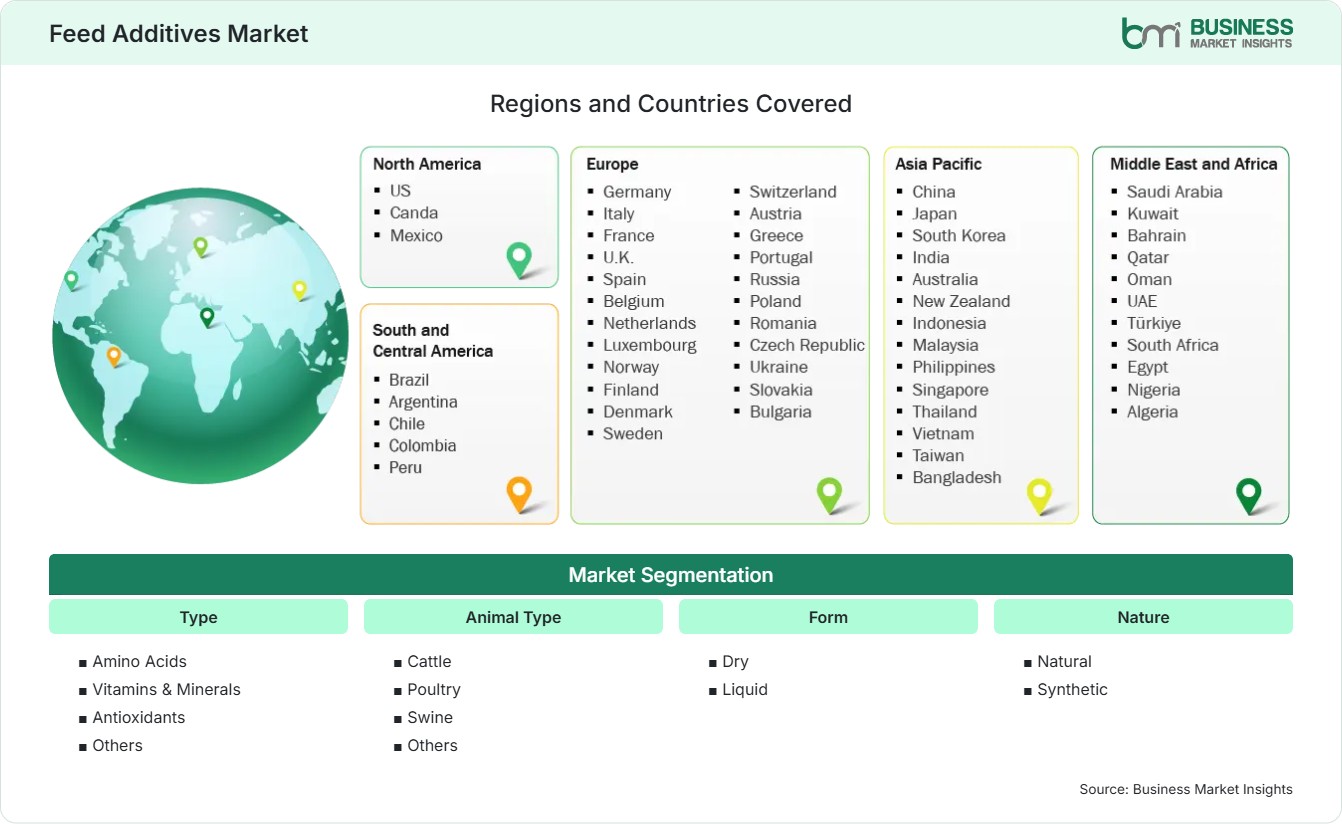
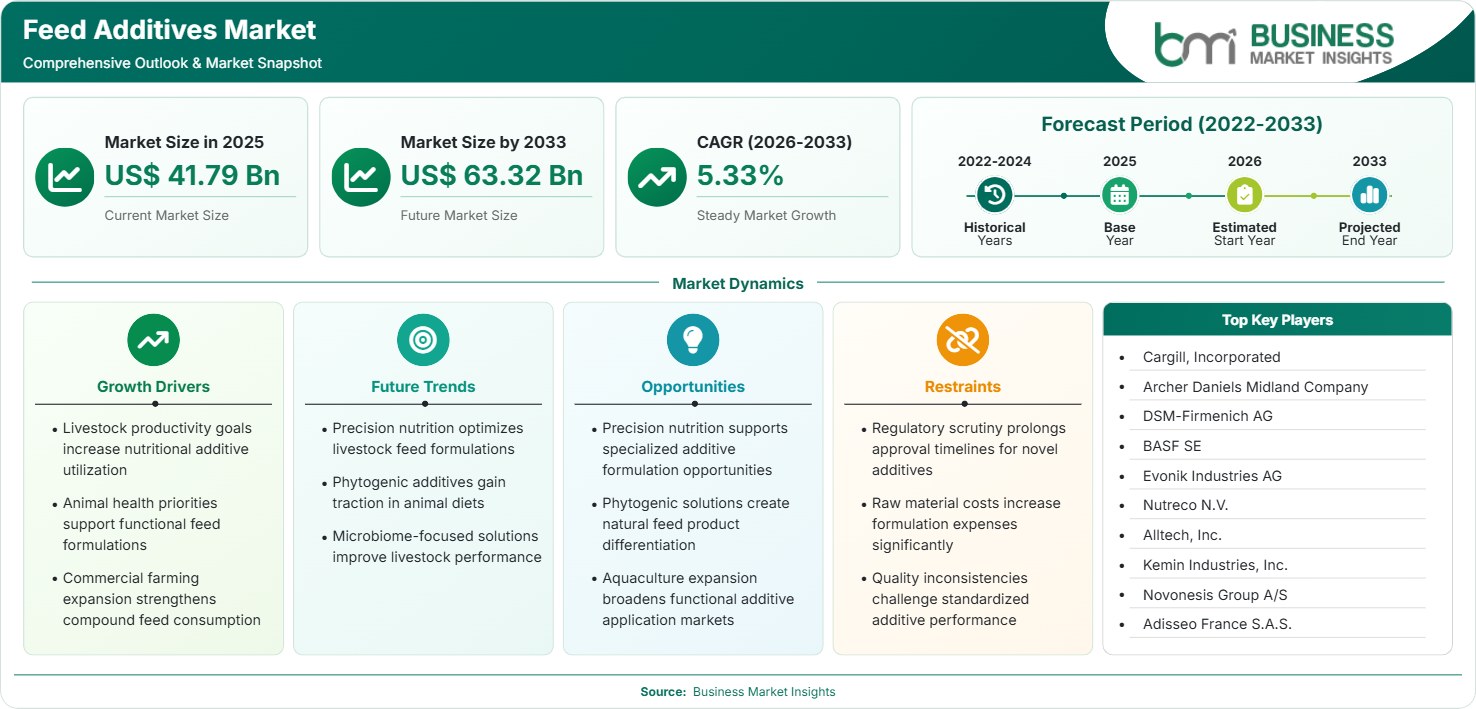
North America accounts for 33%–36% of global revenue in 2025 and is expected to expand at a 4.6%–5.0% CAGR through 2033. The region benefits from advanced feed manufacturing, strong regulatory oversight, and widespread adoption of value-added nutrition products. Feed Additives Market share leadership remains supported by large-scale poultry, dairy, and swine industries. Producers increasingly deploy enzymes, amino acids, and specialty additives to improve productivity, animal health, and operational sustainability across commercial livestock systems.
- To improve feed efficiency and reduce production costs, farmers who raise livestock are turning to precision nutrition strategies.
- There is a strong demand for producing protein in a residue-free manner, which is promoting the use of probiotics, phytogenics, and enzymes.
- Sustainability initiatives promote the development of formulations that reduce nutrient waste and have a lower environmental impact.
- Integrated supply chains allow innovative nutritional technologies to be brought to market more quickly.
US Feed Additives Market
The US contributes approximately 78%–82% of North American revenue and records a 4.7%–5.1% CAGR. Large poultry and cattle populations, extensive feed infrastructure, and active research programs support demand growth. Advanced nutrition strategies, productivity enhancement initiatives, and animal welfare standards continue influencing purchasing patterns. Commercial producers increasingly prioritize formulations that support profitability while addressing environmental and regulatory considerations.
- Poultry producers are still the main users of amino acids and enzyme technologies.
- Efficiency-oriented feed programs are increasingly being adopted by dairy operations.
- Investments in biotechnology help to strengthen the pipelines for specialty ingredients.
- Attention from regulators helps to move towards more balanced nutrition approaches.
Europe Feed Additives Market
Europe represents 24%–27% share in 2025 and is projected to grow at 4.8%–5.3% CAGR. Strong regulations regarding animal health, feed safety, and sustainability support innovation across the region. Germany leads regional demand, while Eastern European markets demonstrate faster expansion. Producers continue emphasizing alternatives to antibiotic growth promoters and sustainability-oriented nutritional solutions that align with environmental objectives and consumer preferences.
- Germany is still the largest national market and has extensive capabilities in the field of livestock nutrition.
- Growth in Poland and Romania is above average, driven by expansion in their livestock sectors.
- The demand for natural additives continues to rise in both the poultry and dairy industries.
- Sustainability frameworks encourage investment in efficient nutrient technologies.
Asia Pacific Feed Additives Market
Asia Pacific holds 28%–31% share in 2025 and demonstrates the strongest regional trajectory with a 6.3%–6.8% CAGR. Feed Additives Market growth is supported by rising meat consumption, aquaculture expansion, urbanization, and increasing commercial livestock production. China maintains regional leadership, while India and Vietnam record higher growth rates. Expanding feed manufacturing capacity and modernization initiatives continue to strengthen long-term prospects.
- China remains the leading consumer due to the size of its livestock industry.
- India is experiencing strong growth as a result of its poultry and dairy productivity programs.
- The aquaculture sector in Southeast Asia is meeting the increasing demand for special nutritional products.
- Investment in modern feed mills improves additive penetration rates.
- The demand for premium protein leads to the adoption of advanced nutrition technologies.
Rest of World Feed Additives Market
The Rest of World region accounts for 11%–14% share and is forecast to grow at 5.4%–5.9% CAGR. South America benefits from large-scale poultry and beef production, while Middle East and Africa markets gain momentum through food security initiatives and livestock productivity improvements. Brazil leads demand in South America, while Saudi Arabia and South Africa are important contributors to growth.
- Brazil still plays a crucial role as a exporter of livestock and thus supports additive consumption.
- Argentina increases demand through its feed-efficiency improvement programs.
- The Gulf countries are investing in technologies that enhance agricultural resilience and nutrition.
- The fact that poultry production in Africa is growing means that there are long-term opportunities.
- Import substitution efforts help grow the domestic feed industry.