Animal Feed Market Regional Highlights
North America Animal Feed Market
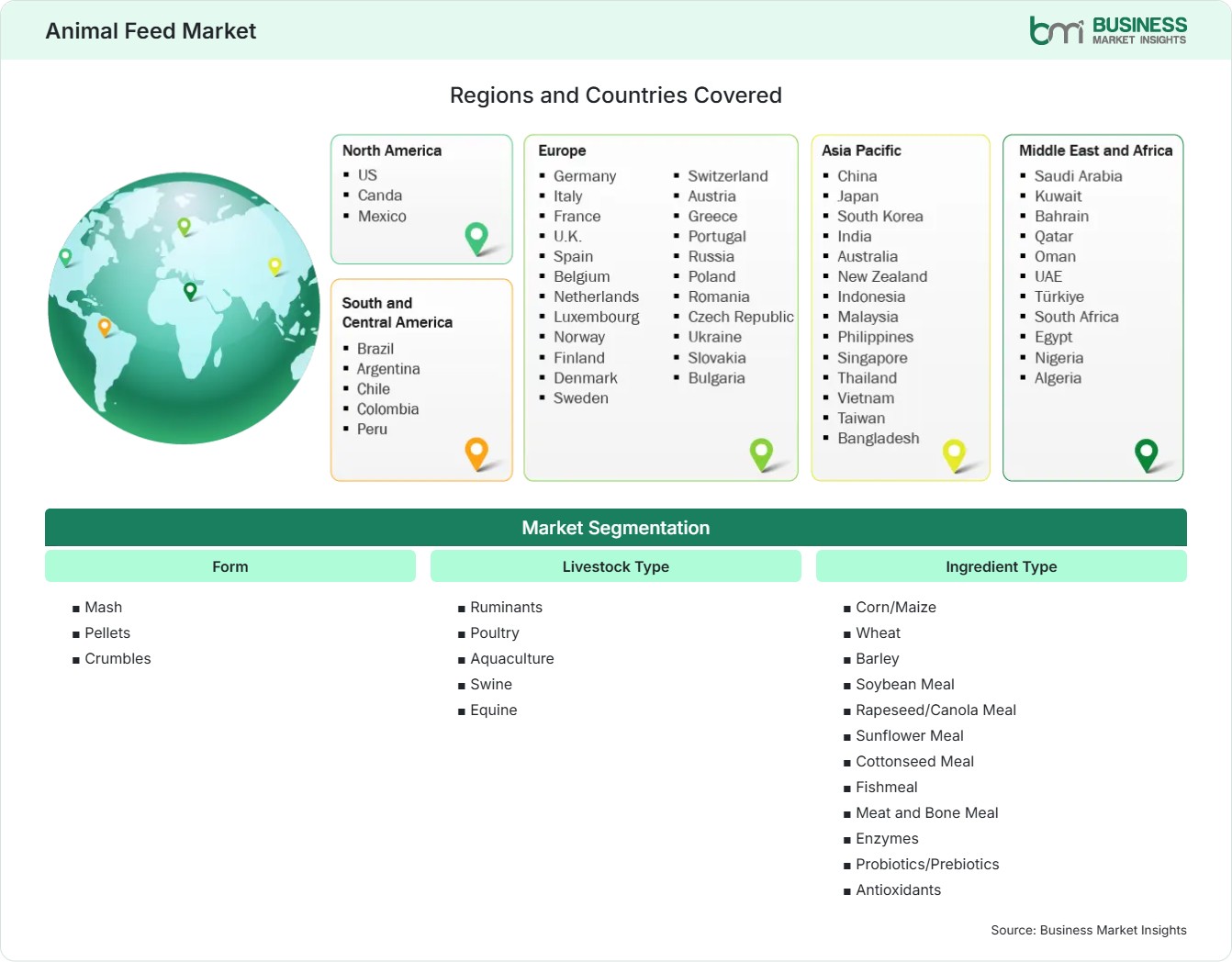
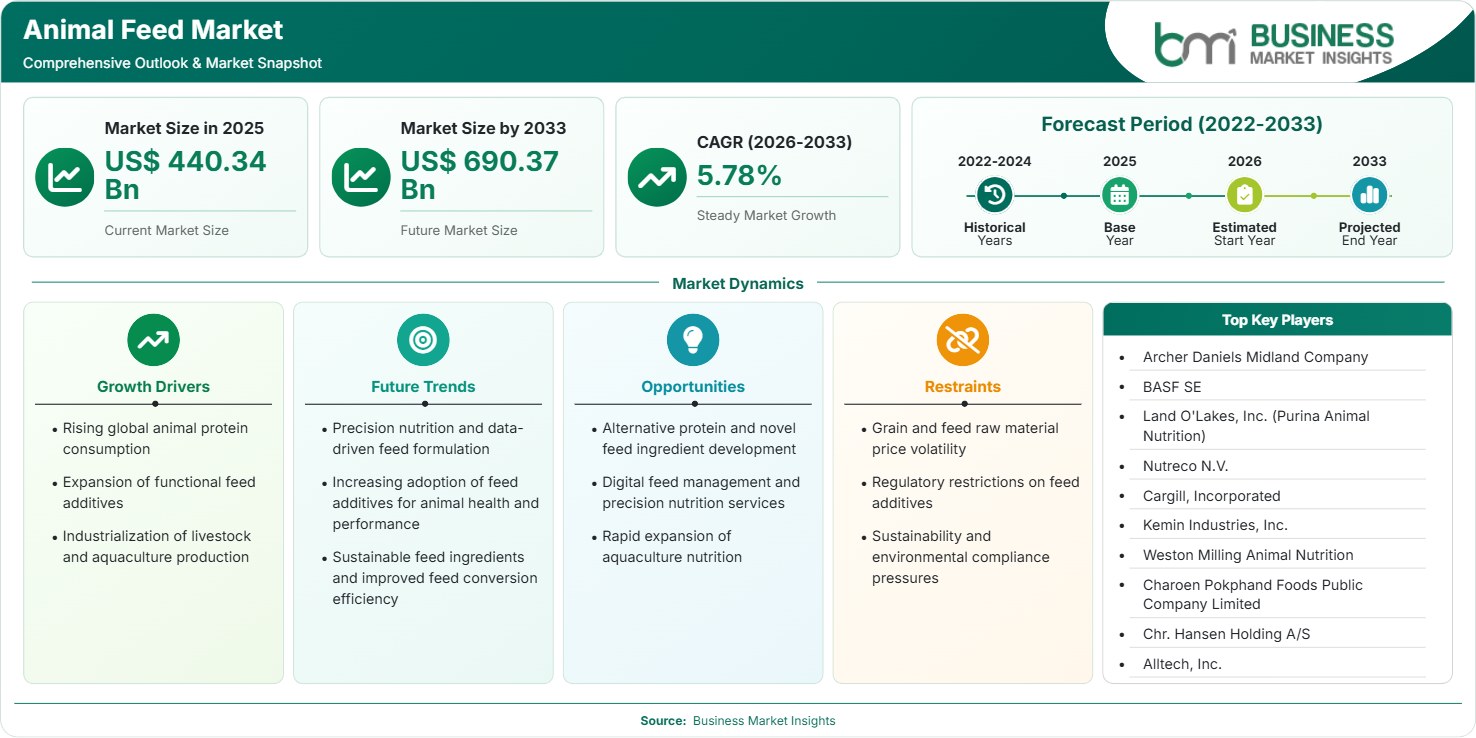
North America accounts for 32%–35% of the global Animal Feed Market share in 2025 and is projected to expand at a CAGR of 4.8%–5.3% through 2033. Strong livestock productivity, advanced feed manufacturing infrastructure, and extensive adoption of feed additives support market maturity. Large-scale poultry, swine, dairy, and beef operations increasingly utilize precision nutrition technologies to optimize feed conversion. Sustainability initiatives and demand for antibiotic alternatives are encouraging investment in enzymes, probiotics, and specialty nutritional solutions across commercial production systems.
- Commercial livestock operations continue adopting digital feed management platforms that improve ration formulation accuracy, reduce wastage, and enhance productivity across poultry, dairy, beef, and swine enterprises.
- Strong grain production capacity supports ingredient availability, helping manufacturers maintain competitive pricing while improving feed quality consistency and supply chain resilience.
- Feed additive penetration continues increasing as producers seek improved digestibility, disease resistance, and production efficiency through scientifically validated nutritional interventions.
- Sustainability initiatives are accelerating adoption of precision feeding systems designed to reduce nutrient losses, emissions intensity, and resource consumption throughout livestock production cycles.
US Animal Feed Market
The United States accounts for 72% to 76% of regional demand and is projected to see a CAGR of 4.9% to 5.4% through 2033. Large integrated poultry and livestock farms contribute to high feed usage volumes. Well-developed R&D facilities, high-tech feed formulation systems, and broad use of additives favor market development. Innovations in specialty nutrition, microbiome research, and sustainable ingredients sourcing are further improving industry competitiveness and productivity.
- Poultry producers remain major consumers of compound feed, supported by strong domestic meat demand and export-oriented production systems.
- Research investments are accelerating commercialization of next-generation feed additives targeting gut health, immunity enhancement, and nutrient efficiency.
- Increasing interest in alternative proteins and insect-derived ingredients is creating opportunities for innovative feed formulations.
Europe Animal Feed Market
The European region accounts for 21%-24% of market share in 2025 and is projected to grow at a CAGR of 4.7%-5.2% between 2025 and 2033. Sustainability, feed safety, and antibiotic reduction within the regulatory environment will drive innovations in nutritional solutions. The leading country in terms of regional demand will be Germany, while Poland will be among the fastest-growing countries with a CAGR growth of 5.4%-5.9%. Increasing use of probiotics, enzymes, and specialty additives supports productivity improvements while aligning with stringent environmental and animal welfare standards.
- Sustainability-driven regulations encourage development of low-emission nutritional strategies and resource-efficient feed ingredients.
- Feed additive adoption continues rising as producers prioritize animal welfare, productivity, and compliance with evolving regulations.
- Alternative protein sources are gaining attention as companies seek diversified ingredient portfolios and reduced environmental impacts.
- Strong dairy and poultry industries support demand for specialized formulations designed to improve production performance.
Asia Pacific Animal Feed Market
Asia Pacific leads in market share, accounting for 34%-37% of the global market in 2025 and showing the highest CAGR of 6.7%-7.2% from 2023 to 2033. China is the largest market in the region; however, India boasts one of the highest growth rates, estimated at 7.2%-7.7%. Increased per capita incomes, growing urbanization, higher meat consumption, and increased investments in aquaculture drive high demand for feed ingredients. Feed mill capacity expansion, modernization of livestock systems, and government-backed food security initiatives strengthen long-term market prospects across the region.
- Poultry and aquaculture industries continue expanding rapidly, creating sustained demand for compound feed and nutritional additives.
- Large-scale investments in feed manufacturing facilities improve production efficiency and regional supply availability.
- Growing awareness of feed quality and animal health supports adoption of premium formulations and specialty ingredients.
- Increasing export competitiveness in seafood and poultry encourages investment in advanced nutritional technologies.
Rest of World Animal Feed Market
South and Central America account for a significant share within the Rest of World region, supported by Brazil's large livestock and poultry sectors. Regional producers benefit from abundant grain availability and strong export demand for animal protein products.
The Middle East and Africa together account for the expanding demand, with a regional market share of 10%–13% and a CAGR of 5.8%–6.3% by 2033. Brazil ranks first in regional consumption, while Saudi Arabia is among the countries with the highest growth rate, driven by food security investments and livestock modernization programs.
- Brazil remains a major production hub due to extensive poultry and beef industries supported by competitive agricultural resources.
- Gulf countries continue investing in feed manufacturing and livestock productivity enhancement initiatives to strengthen domestic food supply.
- Aquaculture development projects are supporting demand growth for specialized nutritional formulations across several emerging markets.
- Infrastructure improvements and commercial farming expansion are improving feed accessibility throughout developing economies.