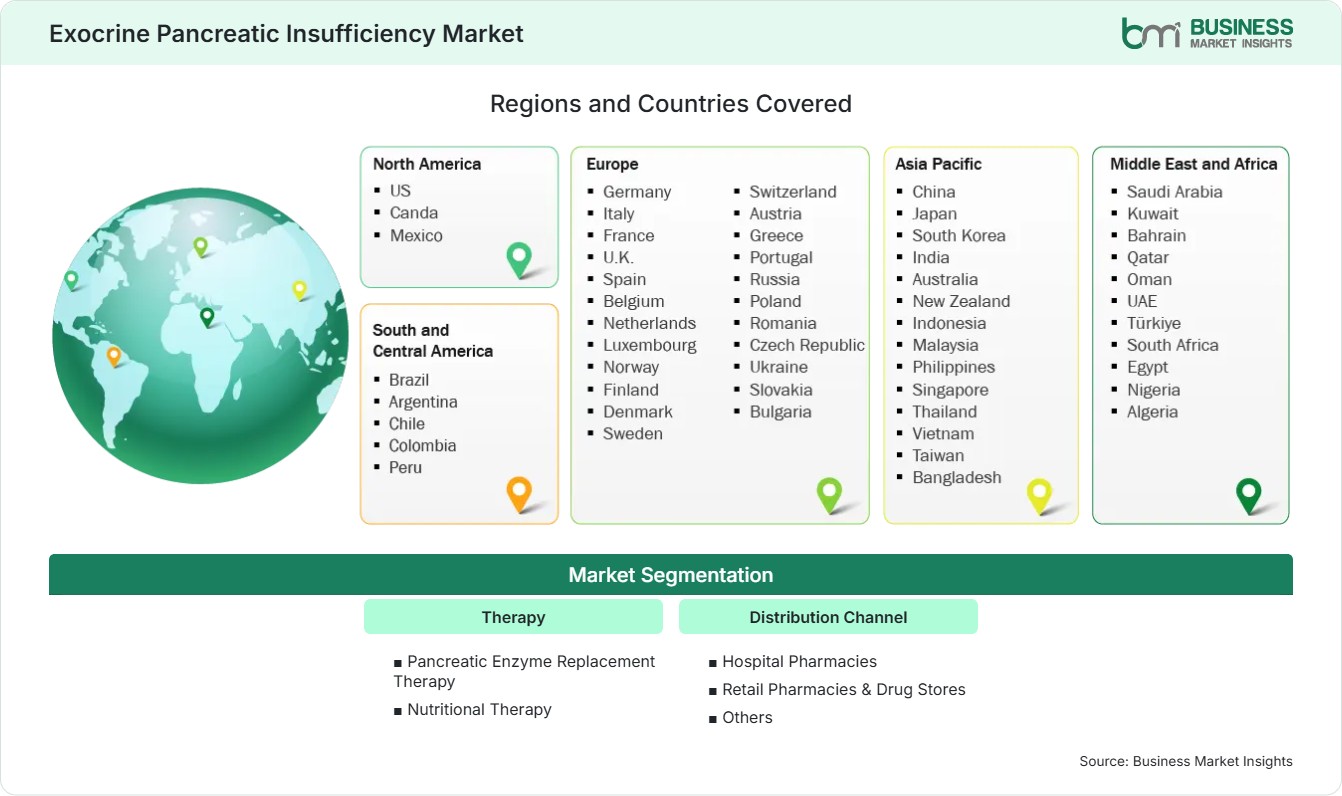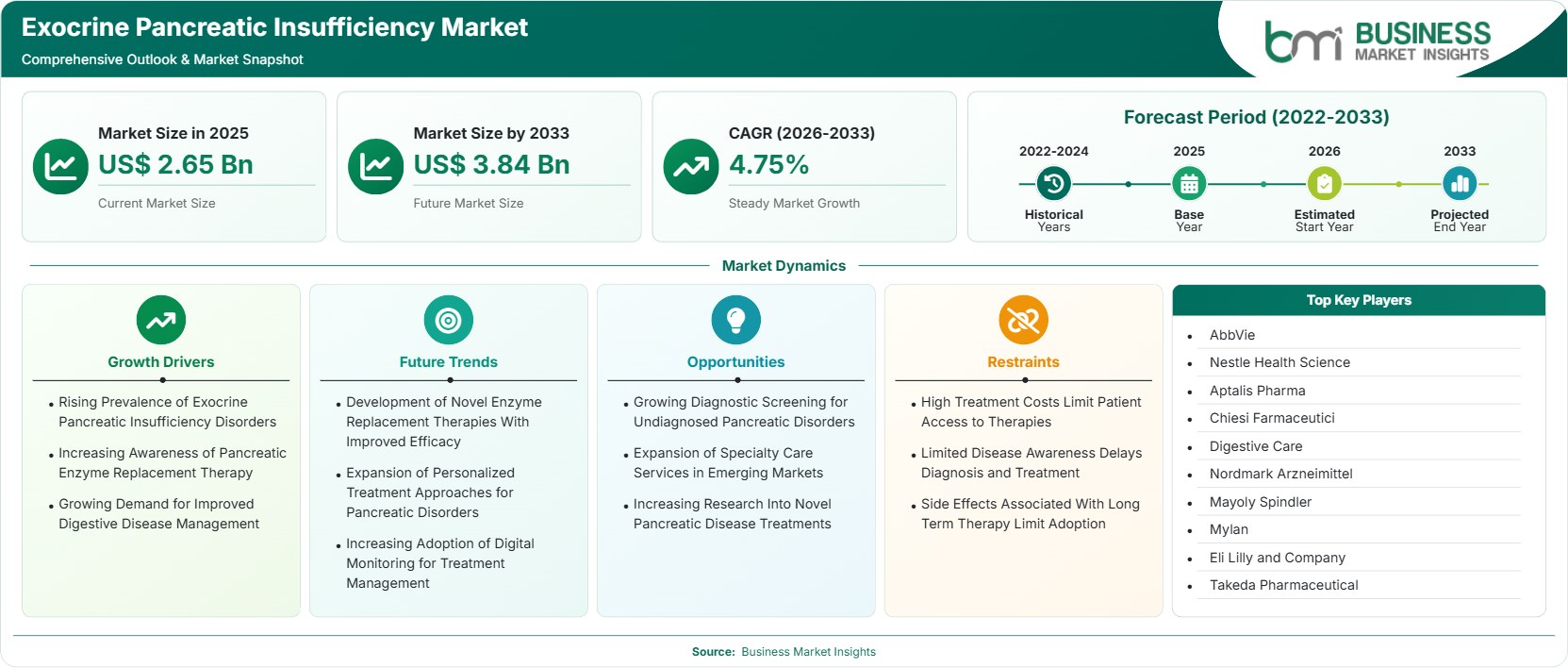
Exocrine Pancreatic Insufficiency Market Regional Highlights
North America Exocrine Pancreatic Insufficiency Market
North America held an estimated 39%–43% share in 2025 and is projected to expand at a 4.9%–5.3% CAGR through 2033. The regional Exocrine Pancreatic Insufficiency Market share is supported by established gastroenterology services, treatment access, and greater recognition of pancreatic disorders. The U.S. dominates regional demand, while Canada offers additional opportunities through specialist care and improved diagnostic awareness.
- The U.S. benefits from broad access to gastroenterology specialists, established treatment pathways, and greater clinical awareness of pancreatic enzyme replacement therapy.
- Canada offers opportunities as healthcare providers improve recognition of malabsorption and pancreatic disorders requiring nutritional management and enzyme replacement.
- Specialty gastroenterology centers play an important role in diagnosing complex patients, particularly those with chronic pancreatic conditions and persistent digestive symptoms.
- Patient education and adherence support can improve treatment continuity by helping patients understand appropriate enzyme administration and nutritional management requirements.
US Exocrine Pancreatic Insufficiency Market
The U.S. represented an estimated 35%–39% share in 2025 and is projected to grow at a 5.0%–5.4% CAGR through 2033. Strong specialist infrastructure, established treatment availability, and increasing recognition of pancreatic disorders support demand. Diagnosis and management increasingly involve gastroenterologists, dietitians, hospitals, and specialty pharmacies, creating opportunities for integrated patient support and treatment optimization.
- Growing awareness among gastroenterologists is supporting earlier consideration of pancreatic insufficiency in patients with chronic digestive symptoms and unexplained nutritional deficiencies.
- Specialty pharmacies provide opportunities for coordinated medication access, patient education, refill management, and adherence support for long-term enzyme therapy.
- Hospital-based diagnosis remains important for patients with complex pancreatic disease, particularly when insufficiency occurs alongside chronic pancreatitis or other serious conditions.
- Increasing focus on nutritional status is encouraging multidisciplinary management involving physicians, dietitians, and pharmacy professionals.
Europe Exocrine Pancreatic Insufficiency Market
Europe held an estimated 30%–34% share in 2025 and is projected to grow at a 4.3%–4.7% CAGR through 2033. Germany, France, and the UK represent leading markets, supported by specialist digestive care and established healthcare systems. Germany is projected to grow at a 4.5%–4.9% CAGR, while emerging opportunities are developing across Central and Eastern Europe.
- Germany benefits from established gastroenterology services and pharmaceutical capabilities, supporting diagnosis and treatment of pancreatic digestive disorders.
- France provides opportunities through specialist healthcare networks and growing clinical focus on pancreatic disease management and nutritional support.
- The UK benefits from structured specialist services and increasing awareness of pancreatic disorders among healthcare professionals.
- Central and Eastern European Exocrine Pancreatic Insufficiency Markets offer longer-term growth potential as diagnostic infrastructure and access to specialty digestive care improve.
Asia Pacific Exocrine Pancreatic Insufficiency Market
Asia Pacific represented an estimated 19%–23% share in 2025 and is projected to grow at a 5.6%–6.0% CAGR through 2033. Japan and China lead regional demand, while India and South Korea offer high-growth opportunities. Japan is projected to grow at a 5.4%–5.8% CAGR, supported by advanced healthcare infrastructure and an aging demographic profile.
- Japan benefits from sophisticated healthcare services and strong specialist capabilities in diagnosing and managing pancreatic and digestive disorders.
- China offers substantial potential as healthcare access expands, specialist services improve, and awareness of pancreatic disease management increases.
- India represents an emerging opportunity as private healthcare expansion and specialist gastroenterology services improve access to diagnosis and treatment.
- South Korea's advanced medical infrastructure supports adoption of specialized digestive disease treatments and diagnostic approaches.
Rest of World Exocrine Pancreatic Insufficiency Market
South and Central America accounted for an estimated 5%–7% share in 2025 and are projected to grow at a 4.1%–4.5% CAGR through 2033. Brazil and Mexico lead regional opportunities. The Middle East and Africa represented an estimated 4%–6% share and are projected to grow at a 3.8%–4.2% CAGR, supported by gradual healthcare modernization.
- Brazil offers opportunities through expanding specialty care and growing recognition of pancreatic disorders within larger urban healthcare systems.
- Mexico's private healthcare infrastructure provides potential for improved diagnosis and access to enzyme replacement and nutritional management.
- Saudi Arabia benefits from healthcare modernization and investment in specialist medical services, creating opportunities for improved digestive disease management.
- The UAE provides opportunities through advanced private healthcare facilities and increasing availability of specialist gastroenterology services.