
Ethylbenzene Market Outlook: Size, Share, Trends, Growth Analysis, Competitive Landscape & Forecast, 2026-2033

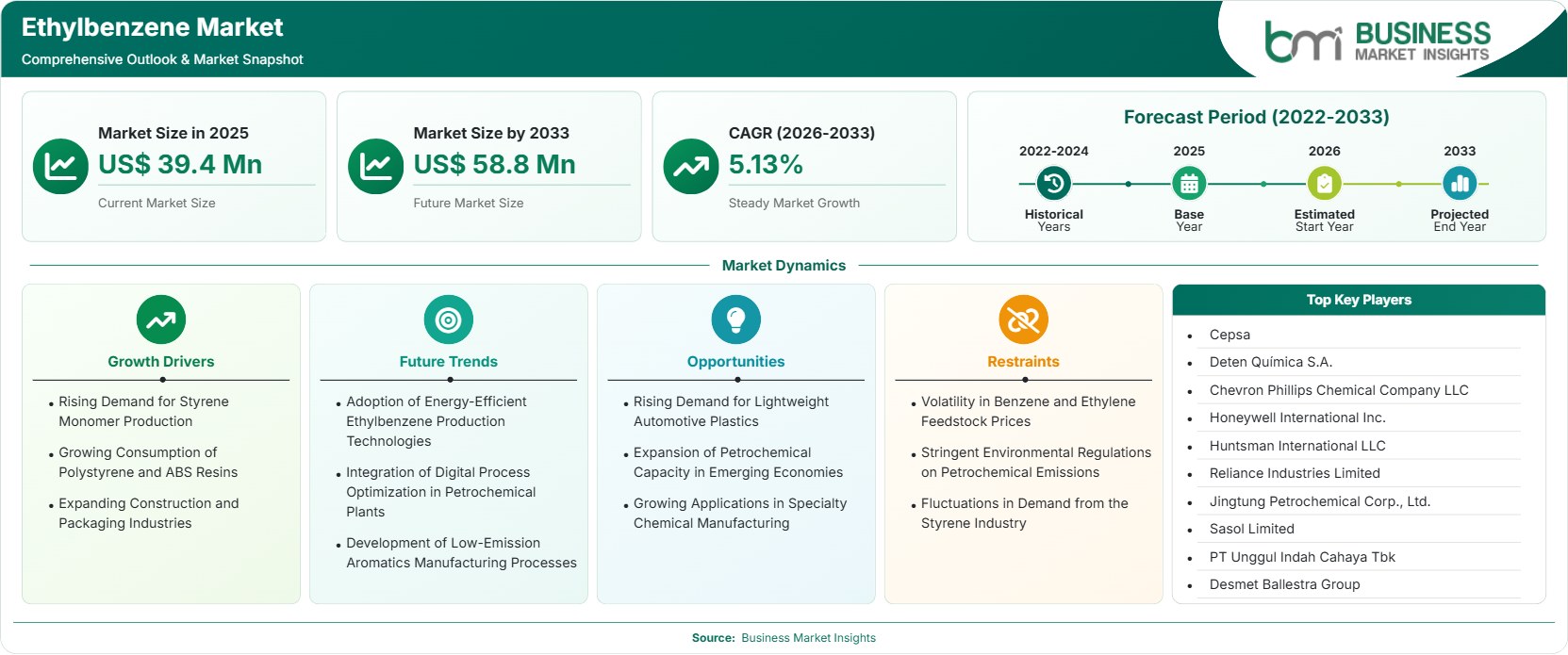
The Ethylbenzene Market size was valued at US$ 39.4 Million in 2025 and is projected to reach US$ 58.8 Million by 2033, growing at a CAGR of 5.13% during 2026–2033. Rising styrene production, expanding packaging demand, increasing construction activities, and growing petrochemical investments continue creating opportunities for ethylbenzene manufacturers across global markets.

Report Coverage
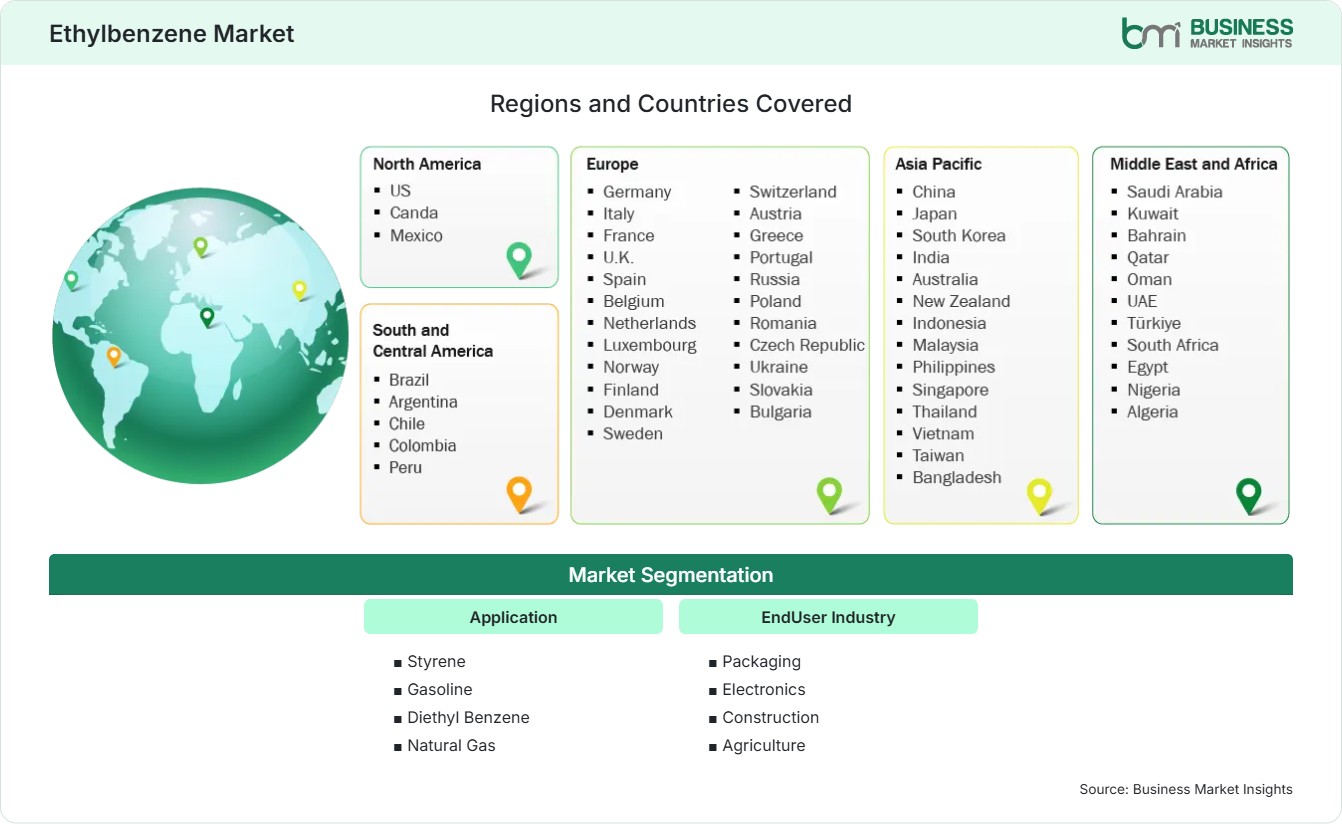
  • Application: Styrene, Gasoline, Diethyl Benzene, Natural Gas
  • EndUser Industry: Packaging, Electronics, Construction, Agriculture
US$ 39.4 Mn Market size in 2025
US$ 58.8 Mn Market Size by 2033
5.13% CAGR, 2026 - 2033
2026-2033 Forecast Period

AI Overview

Ethylbenzene Market Summary

  • North America Region: North America holds 30%–33% market share in 2025 and is projected to expand at a CAGR of 4.8%–5.2% during 2026–2033. Strong petrochemical production, integrated refinery infrastructure, styrene manufacturing capacity, packaging demand, and industrial modernization continue supporting stable market expansion.
  • Fastest Growing Region: Asia Pacific accounts for 43%–46% of the market in 2025 and is anticipated to grow at a CAGR of 5.8%–6.2%. Expanding petrochemical capacity, rising plastics demand, infrastructure development, electronics manufacturing, and industrial investments continue driving regional consumption.
  • Leading Segment: Styrene accounts for 76%–79% market share in 2025 while expanding at a CAGR of 5.3%–5.7%. Increasing production of polystyrene, ABS resins, synthetic rubber, and insulation materials continues supporting segment dominance.
  • High Growth Segment: Packaging represents 35%–38% market share in 2025 and is projected to register a CAGR of 5.9%–6.3%. Growing demand for lightweight plastics, food packaging, protective materials, and consumer goods continues accelerating consumption.
  • Key Market Opportunity: Increasing investments in high-performance polymers, sustainable petrochemical technologies, and capacity expansion projects are creating long-term opportunities for ethylbenzene producers across global value chains.
  • Major Market Players: Cepsa Química, Deten Química S.A., Chevron Phillips Chemical Company LLC, Honeywell International Inc., Huntsman International LLC, Reliance Industries Limited, Jingtung Petrochemical Corp., Ltd., Sasol Limited, PT Unggul Indah Cahaya Tbk, and Desmet Ballestra.
Strategic Insights

Ethylbenzene Market: Strategic Insights

Ethylbenzene Market Strategic Framework
FREE PDF
Request your free sample
Request free sample
Stakeholder View

Key Takeaways

  • Integration between various petrochemical facilities continues to optimize supply chains through the integration of benzene, ethylene, ethylbenzene, styrene, and polymer manufacture into efficient manufacturing environments.
  • The packaging and construction industries continue to provide lucrative investment opportunities, fueled by rising demands for styrene plastics, insulations, and building materials.
  • Businesses continue to make investments in the efficiency of the use of catalysts, optimization of processes, reduction in energy, and emissions management.
  • Asia Pacific continues to be the most lucrative investment region because of rising production capabilities in the petrochemical industry and electronics manufacturing.
  • The formation of partnerships, expansions of capacity, and integration of refineries continue to help companies position themselves competitively.
  • The companies which focus on efficient production techniques and processes continue to boost their competitiveness in the future because of tough environmental regulations.
Geographic Outlook

Ethylbenzene Market Regional Highlights

North America Ethylbenzene Market

North America accounted for approximately 30%–33% of global revenue during 2025 and is projected to expand at a CAGR of 4.8%–5.2% through 2033. The region benefits from integrated petrochemical infrastructure, abundant feedstock availability, and well-established styrene production capacity. The Ethylbenzene Market share continues to be supported by strong downstream plastics manufacturing, technological advancements, and expanding industrial applications.

  • Combined refinery and petrochemical activities optimize the use of raw materials and also promote effective production of ethylbenzene and styrene.
  • The demand for Styrene-based plastic packaging is on the rise due to the growing demand for lightweight and recyclable packaging material.
  • Advancements in technology have made the catalysts used in the process more efficient in terms of production and energy saving.
  • Research and development investment keeps promoting innovation in the field of petrochemicals and its uses.

US Ethylbenzene Market

The United States represents approximately 84%–87% of North American demand and is expected to register a CAGR of 4.9%–5.3% during the forecast period. Extensive petrochemical manufacturing capacity, strong styrene production, and stable industrial demand continue supporting sustained market expansion.

  • Large integrated petrochemical facilities ensure reliable production of ethylbenzene and downstream styrene derivatives.
  • Packaging, automotive, and construction industries continue supporting consistent domestic consumption of styrene-based materials.
  • Process modernization and energy efficiency initiatives improve operational competitiveness across production facilities.
  • Export capabilities and robust logistics infrastructure strengthen the country's position within global petrochemical trade.

Europe Ethylbenzene Market

Europe accounted for approximately 20%–23% of global revenue during 2025 and is expected to grow at a CAGR of 4.7%–5.1% through 2033. Mature petrochemical infrastructure, sustainability initiatives, and strong industrial manufacturing continue supporting regional demand. Germany leads regional consumption, while Poland records one of the fastest growth rates due to expanding industrial activities.

  • Germany maintains leadership through advanced chemical manufacturing capabilities and integrated petrochemical production facilities.
  • Poland continues expanding industrial production, increasing downstream demand for styrene-based products.
  • Sustainability initiatives encourage manufacturers to improve process efficiency and reduce emissions across petrochemical operations.
  • Investments in specialty chemicals and advanced materials continue strengthening regional market competitiveness.

Asia Pacific Ethylbenzene Market

Asia Pacific represented approximately 43%–46% of global revenue during 2025 and is forecast to grow at a CAGR of 5.8%–6.2% through 2033, making it the fastest-growing regional market. Expanding petrochemical investments, rising plastics demand, and rapid industrialization continue driving consumption. China leads regional demand, while India records the fastest growth.

  • China dominates regional production through large integrated petrochemical complexes and expanding downstream styrene manufacturing.
  • India experiences rapid growth supported by infrastructure development, packaging demand, and increasing domestic petrochemical investments.
  • Japan and South Korea continue emphasizing high-value chemical production supported by advanced manufacturing technologies.
  • Southeast Asian countries continue attracting investments in petrochemical capacity expansion and industrial development.

Rest of World Ethylbenzene Market

The Rest of World region accounted for approximately 6%–8% of global market revenue during 2025 and is projected to grow at a CAGR of 5.2%–5.6% through 2033. South & Central America benefit from industrial expansion, while the Middle East and Africa strengthen petrochemical production through feedstock availability and refinery investments. Brazil leads Latin America, whereas Saudi Arabia records the fastest regional growth.

  • Brazil continues expanding downstream chemical manufacturing and packaging industries supporting ethylbenzene demand.
  • Saudi Arabia strengthens petrochemical production through integrated refinery investments and feedstock advantages.
  • Regional industrialization increases demand for styrene-derived polymers across multiple manufacturing sectors.
  • Investments in chemical processing infrastructure continue improving long-term production capabilities and export potential.
Global Market Geography
FREE PDF
Request your free sample
Request free sample
Segment Analysis

Ethylbenzene Market Segmentation

Application

The Application segment accounted for approximately 76%–79% of the market in 2025 and is projected to expand at a CAGR of 5.3%–5.7% during 2026–2033. Rising demand for styrene derivatives, petrochemical intermediates, and fuel blending applications continues supporting market expansion. The Ethylbenzene Market scope continues broadening as downstream industries increase investments in plastics, specialty chemicals, and integrated petrochemical manufacturing.

  • Styrene: Styrene remains the dominant application as ethylbenzene serves as its primary feedstock for producing polystyrene, ABS resins, synthetic rubber, insulation materials, and engineering plastics.
  • Gasoline: Ethylbenzene is utilized in gasoline blending to enhance octane ratings and improve fuel combustion characteristics while supporting refinery blending operations in selected markets.
  • Diethyl Benzene: Diethyl benzene is used as an intermediate in chemical synthesis and specialty manufacturing processes requiring aromatic hydrocarbon derivatives with specific performance characteristics.
  • Natural Gas: Ethylbenzene participates in selected natural gas processing and petrochemical operations where aromatic hydrocarbons support solvent applications, separation processes, and industrial chemical production.

End-User Industry

End-user demand continues expanding as ethylbenzene supports multiple downstream manufacturing industries. This segment accounted for approximately 35%–38% of the market in 2025 and is anticipated to register a CAGR of 5.5%–5.9% during the forecast period. The Ethylbenzene Market trends indicate sustained demand from industries requiring high-performance polymers, packaging materials, and specialty petrochemical products.

  • Packaging: Packaging manufacturers increasingly utilize styrene-derived plastics for food containers, protective packaging, consumer products, and lightweight industrial packaging applications owing to their durability and cost efficiency.
  • Electronics: Electronics manufacturers utilize styrene-based polymers for electrical insulation, consumer electronics housings, connectors, and durable engineering plastic components requiring reliable mechanical performance.
  • Construction: Construction applications consume styrene-based insulation materials, pipes, coatings, adhesives, and building products that improve structural performance, durability, and thermal efficiency.
  • Agriculture: Agricultural industries utilize specialty plastic products manufactured from styrene derivatives for irrigation systems, storage containers, greenhouse components, and protective agricultural equipment.
Market Forces

Ethylbenzene Market Dynamics

Key Market Drivers

Rising Demand for Styrene Monomer Production

Ethylbenzene demand is mainly driven by styrene monomer manufacturing, with almost all the ethylbenzene produced being processed into styrene via catalytic dehydrogenation processes. Continued increase in the use of styrene in applications such as packaging, construction, automotive, consumer goods, and electronics drives the ethylbenzene demand even further. Expansions in the capacity of integrated petrochemical companies reinforce regular consumption of feedstock. The Ethylbenzene Market growth will be positively influenced by investments in downstream styrene manufacturing plants, catalyst technology advances, and the rise in global demand for polymer products in various industries.

Growing Consumption of Polystyrene and ABS Resins

The need for polystyrene and ABS resin will keep on growing in the packaging, electronic, automobile, appliance, and consumer goods industries. The reason why these materials have been extensively used by the industries is due to their great mechanical properties, weight saving features, economic benefits, and processibility. The production of more and more electronic equipment, household appliances, packaging material, and automobile parts is contributing towards an increase in styrene demand, which in turn is leading to increased ethylbenzene demand.

Expanding Construction and Packaging Industries

The processes of urbanization, development of infrastructure, and growing demands from consumers for packaged products ensure the steady growth of construction and packaging industries. The products made using styrene provide good strength-to-weight ratios and have insulating characteristics; therefore, these products are used extensively in various applications including insulation, packaging, pipes, adhesives, and construction materials. Growing construction projects in residences, offices, and industries contribute to the increased demand for such products worldwide. At the same time, the growing sectors of food packaging, e-commerce, and manufacturing of consumer goods ensure further demand for styrene products.

Key Market Opportunities

Rising Demand for Lightweight Automotive Plastics

Automobile makers are making use of lightweight engineering plastics in order to optimize fuel economy, decrease the weight of cars, and boost electric vehicles performance. Polymers like ABS from the styrene family have substituted metals in the interior and exterior of the car, as well as electronics, in automobiles. The Ethylbenzene Market forecast is positive, owing to the increasing demand for lightweight materials in the manufacturing of vehicles around the world. Companies operating in the petrochemicals and automobile sectors are poised to gain commercially from these ventures.

Expansion of Petrochemical Capacity in Emerging Economies

Investments in integrated refineries and petrochemical plants remain on the rise among developing nations as they seek to enhance their own chemical manufacturing operations and lessen their reliance on imports. The construction of new ethylbenzene and styrene manufacturing units in various parts of Asia, the Middle East, and certain Latin American countries increases the region’s manufacturing abilities while also aiding in downstream manufacturing operations. Good industrial policies and rising demands within the nation drive foreign companies to increase their capacities.

Growing Applications in Specialty Chemical Manufacturing

Specialty chemical companies are now turning to aromatic intermediates in the production of innovative paints, adhesives, specialty chemicals, industrial solvents, and custom chemical compounds. The increasing diversification and advancement in the industry as well as the production of high-value chemicals will continue to foster investment in specialty chemical plants. Companies that are coming up with innovative processes of making high-purity ethyl benzene and new uses for these chemicals will benefit greatly from increased industrial demand.

Market Restraints and Challenges

Volatility in Benzene and Ethylene Feedstock Prices

Factor: Ethylbenzene production depends heavily on benzene and ethylene feedstocks, whose prices fluctuate because of crude oil market volatility, refinery operations, supply disruptions, and changing global petrochemical demand.

Impact: Unstable feedstock costs directly influence manufacturing expenses, profit margins, and pricing strategies for ethylbenzene producers. Frequent raw material price fluctuations also complicate production planning, inventory management, and long-term customer contracts. Manufacturers increasingly pursue integrated production facilities, feedstock diversification, and operational efficiency improvements to reduce exposure to volatile upstream raw material markets.

Stringent Environmental Regulations on Petrochemical Emissions

Factor: Governments continue implementing stricter environmental regulations governing volatile organic compound emissions, hazardous air pollutants, industrial waste management, and greenhouse gas reduction across petrochemical manufacturing facilities.

Impact: Compliance requirements increase capital expenditure for emission control systems, environmental monitoring technologies, cleaner production processes, and regulatory reporting. Smaller manufacturers may face greater financial pressure when upgrading production facilities to meet evolving environmental standards. Companies investing in sustainable manufacturing technologies, energy-efficient operations, and advanced emission reduction systems are better positioned to maintain long-term regulatory compliance and operational competitiveness.

Company Analysis

Competitive Landscape

The Ethylbenzene Market analysis is moderately consolidated, with major petrochemical manufacturers, process technology providers, and integrated refinery operators competing through production efficiency, feedstock integration, catalyst innovation, and downstream styrene capacity expansion. Companies continue investing in sustainable manufacturing technologies, operational optimization, and strategic partnerships to strengthen their presence across global petrochemical value chains.

Company Name

Overview

Products and Services Relevant to this Market

Cepsa Química

Cepsa Química is a leading producer of petrochemical intermediates with integrated manufacturing operations supporting global styrene and aromatic chemical value chains.

Ethylbenzene production, styrene monomer, aromatic chemicals, petrochemical intermediates, process optimization, and integrated manufacturing solutions.

Deten Química S.A.

Deten Química S.A. is one of Latin America's major producers of ethylbenzene and styrene, serving regional plastics and petrochemical industries.

Ethylbenzene, styrene monomer, petrochemical intermediates, aromatic chemicals, industrial feedstocks, and technical production services.

Chevron Phillips Chemical Company LLC

Chevron Phillips Chemical Company LLC operates integrated petrochemical facilities supplying aromatic chemicals and advanced feedstocks for downstream manufacturing industries.

Petrochemical intermediates, benzene derivatives, process technologies, chemical feedstocks, industrial chemicals, and production support services.

Honeywell International Inc.

Honeywell International Inc. provides advanced catalyst technologies, process automation, and petrochemical production solutions supporting efficient chemical manufacturing operations.

Process technologies, catalysts, industrial automation, refinery optimization solutions, petrochemical engineering, and digital process management.

Huntsman International LLC

Huntsman International LLC manufactures specialty chemicals and performance products serving construction, automotive, industrial, and consumer markets globally.

Specialty chemicals, performance materials, industrial intermediates, chemical technologies, process solutions, and manufacturing support services.

Reliance Industries Limited

Reliance Industries Limited operates one of the world's largest integrated refining and petrochemical complexes with significant aromatic chemical production capacity.

Petrochemicals, aromatic intermediates, styrene feedstocks, refinery products, integrated chemical manufacturing, and industrial supply solutions.

Jingtung Petrochemical Corp., Ltd.

Jingtung Petrochemical Corp., Ltd. manufactures aromatic hydrocarbons and petrochemical intermediates supporting regional chemical and plastics industries.

Ethylbenzene, aromatic chemicals, petrochemical intermediates, industrial feedstocks, chemical processing, and downstream manufacturing products.

Sasol Limited

Sasol Limited is an integrated chemicals and energy company producing a broad portfolio of petrochemical products for global industrial customers.

Petrochemicals, aromatic compounds, specialty chemicals, industrial feedstocks, process technologies, and integrated chemical manufacturing.

PT Unggul Indah Cahaya Tbk

PT Unggul Indah Cahaya Tbk manufactures petrochemical intermediates serving plastics, industrial chemicals, and downstream manufacturing applications across Asia.

Ethylbenzene, styrene intermediates, aromatic chemicals, industrial feedstocks, chemical manufacturing, and regional supply solutions.

Desmet Ballestra

Desmet Ballestra supplies engineering technologies, industrial processing systems, and plant solutions for chemical and petrochemical manufacturing industries worldwide.

Process engineering, plant technologies, industrial processing equipment, petrochemical engineering services, automation solutions, and manufacturing technologies.

Trust & Transparency

Research Methodology

The market analysis combines proprietary research with secondary data from government agencies, company disclosures, regulatory filings, industry databases and expert interviews. Market estimates are validated through data triangulation, cross-market benchmarking and analyst review.

View Full Research Methodology

Questions Answered

Frequently Asked Questions

What does an ethylbenzene market report typically include?

A comprehensive report covers market size, segmentation, competitive landscape, regional outlook, application analysis, end-user trends, production technologies, growth opportunities, regulatory developments, and long-term industry forecasts.

How do feedstock prices affect ethylbenzene manufacturers?

Since ethylbenzene production depends primarily on benzene and ethylene, fluctuations in crude oil prices and feedstock availability directly influence manufacturing costs, profitability, pricing strategies, and investment decisions.

Which region dominates the market?

Asia Pacific holds the largest market share due to extensive petrochemical manufacturing capacity, expanding plastics production, rising industrialization, and increasing demand from packaging, construction, and electronics industries.

Why does the packaging industry consume significant quantities of ethylbenzene-derived products?

Packaging manufacturers extensively utilize styrene-based plastics because they offer lightweight properties, durability, cost-effectiveness, moisture resistance, and ease of processing for food, consumer goods, and protective packaging applications.

What is the primary application of ethylbenzene?

Ethylbenzene is primarily used as a feedstock for producing styrene monomer, which is subsequently utilized in manufacturing polystyrene, ABS resins, synthetic rubber, insulation materials, and numerous engineering plastics.

Access the Full Ethylbenzene Market Report

Get segment-level forecasts, regional estimates, competitive benchmarking, company profiles and downloadable Excel datasets.

Access the full Ethylbenzene Market Report
350 pages PDF & Excel | 2026-08-07
Similar Research

Related Market Reports