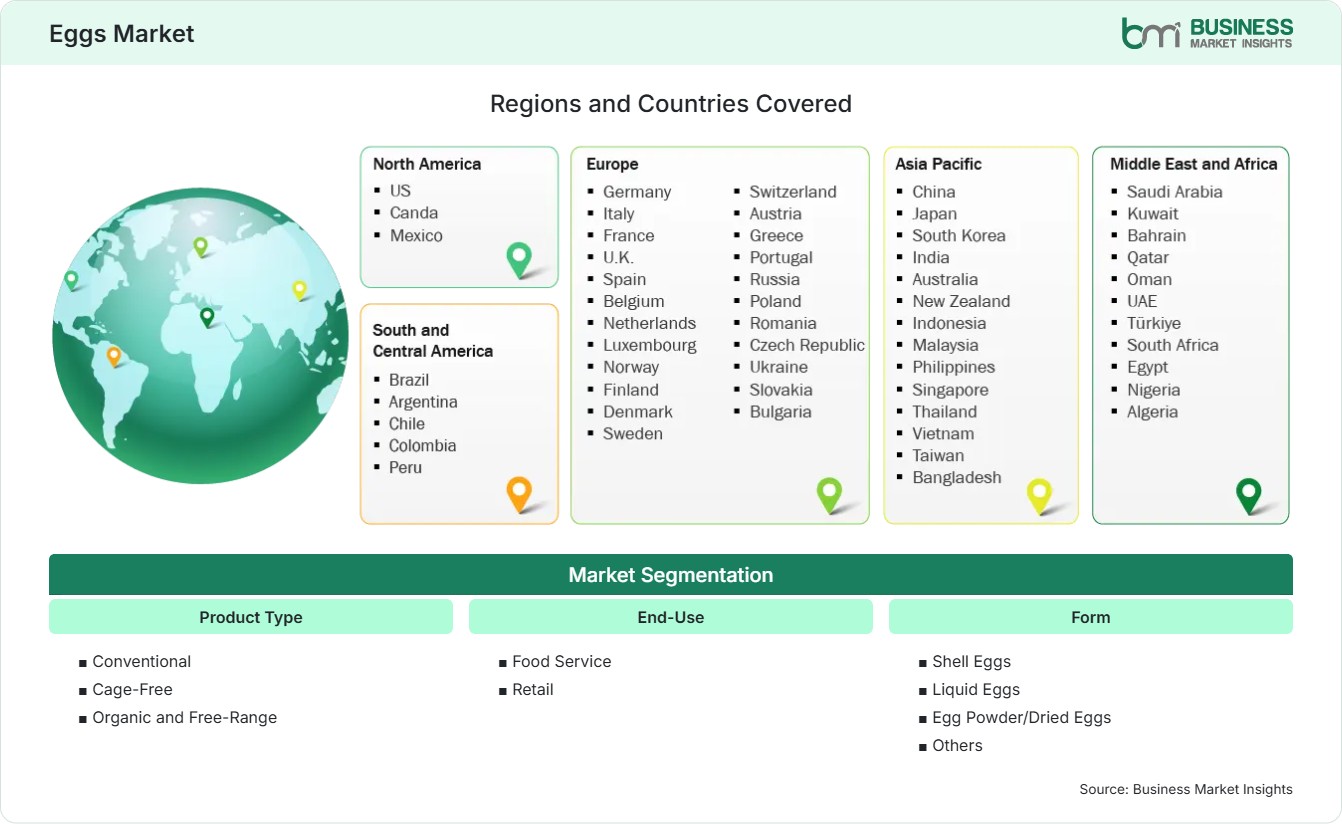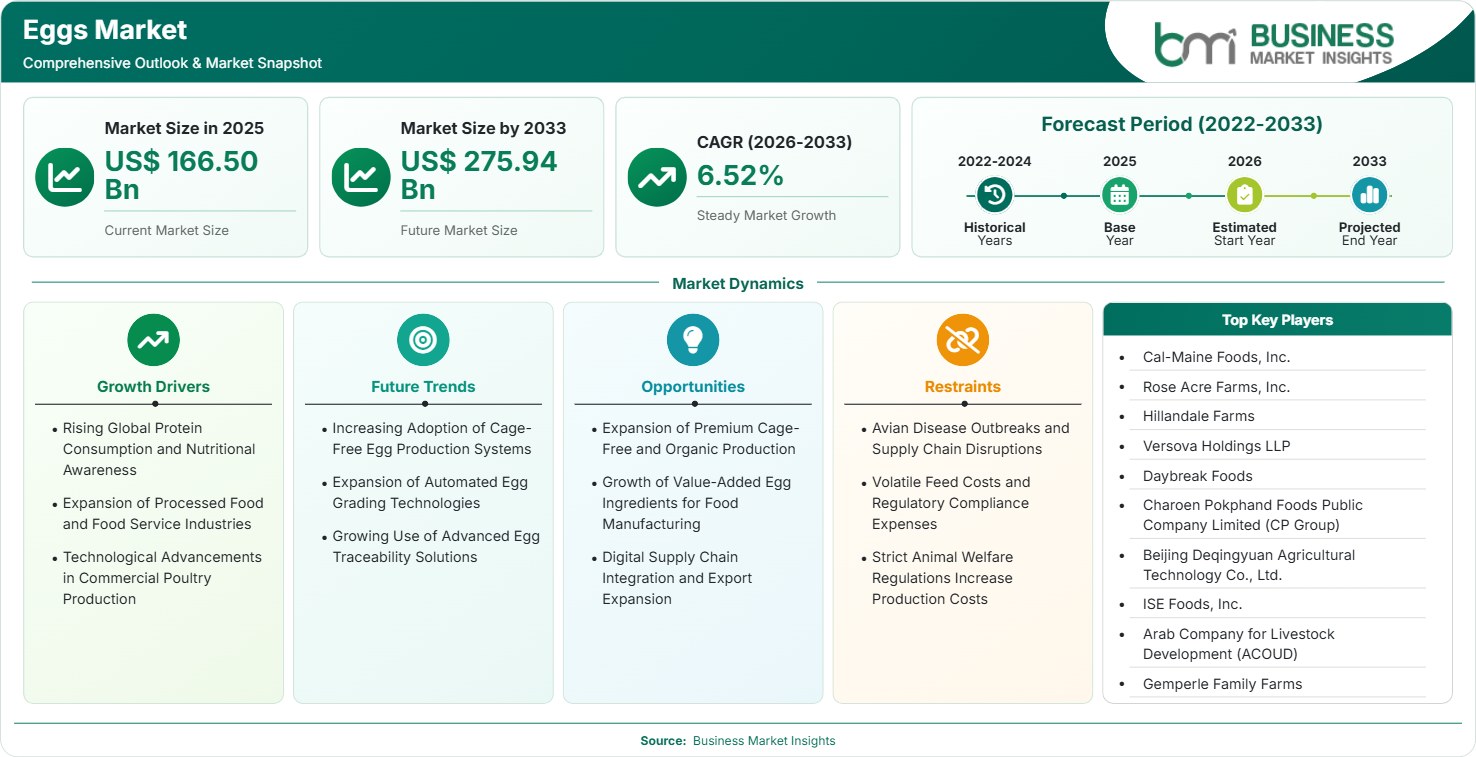
Eggs Market Regional Highlights
North America Eggs Market
North America accounted for 31%–34% of the global Eggs Market share in 2025 and is projected to register a CAGR of 5.8%–6.3% during 2026–2033. Strong commercial poultry infrastructure, advanced breeding technologies, automated production systems, and stringent food safety regulations continue supporting regional leadership.
- Large-scale vertically integrated poultry companies continue improving operational efficiency through automation, precision feeding technologies, and digital flock monitoring, enabling higher productivity while maintaining stringent biosecurity standards and consistent product quality across commercial operations.
- Growing retailer commitments toward cage-free sourcing encourage producers to modernize housing systems, invest in animal welfare improvements, and diversify premium product portfolios while supporting long-term supply agreements with supermarkets and restaurant chains.
- Food manufacturers increasingly utilize liquid eggs and dried egg ingredients across bakery, confectionery, ready-to-eat meals, and protein-rich foods, strengthening demand for advanced egg processing facilities throughout the region.
- Strong veterinary healthcare systems, disease surveillance programs, and government-backed food safety frameworks help maintain stable commercial production despite periodic avian influenza outbreaks affecting poultry populations.
- Sustainable packaging innovations, renewable energy adoption, and water-efficient poultry farming practices continue improving environmental performance while supporting corporate sustainability objectives and evolving consumer purchasing preferences.
US Eggs Market
The United States represents 82%–85% of North America's regional market in 2025 and is expected to expand at a CAGR of 5.9%–6.4% through 2033. Advanced poultry genetics, large commercial farms, sophisticated cold-chain logistics, and strong retail distribution networks sustain domestic production leadership.
- Leading producers continue expanding automated egg grading, robotic collection systems, and digital quality assurance technologies to improve production efficiency while minimizing labor dependency and operational costs.
- Strong bakery, foodservice, and packaged food industries sustain demand for processed egg ingredients, encouraging continuous investment in liquid egg and egg powder manufacturing facilities nationwide.
- Growing consumer awareness regarding animal welfare and sustainability encourages retailers to increase shelf space dedicated to cage-free, organic, and specialty egg products with certified sourcing practices.
- Continued investments in poultry disease prevention, environmental monitoring, and precision livestock farming strengthen production resilience while supporting long-term domestic supply stability.
Europe Eggs Market
Europe accounted for 24%–27% of the global market in 2025 and is anticipated to grow at a CAGR of 5.9%–6.5% during 2026–2033. Strict animal welfare regulations, advanced food safety standards, and increasing adoption of cage-free production systems continue shaping regional development. Germany maintains the largest regional demand, while Poland demonstrates the fastest expansion with an estimated CAGR of 6.8%–7.3%, supported by poultry sector modernization and export-oriented production investments.
- Regulatory support for sustainable poultry farming and animal welfare certification encourages continuous modernization of housing systems while strengthening consumer confidence in premium egg products.
- Germany leads regional consumption through well-developed retail infrastructure, diversified product offerings, and increasing preference for certified organic and free-range eggs across urban households.
- Poland continues attracting investments in commercial poultry production, automated processing facilities, and export capabilities, strengthening its position as one of Europe's fastest-growing egg-producing countries.
- Expanding demand from bakery, confectionery, and ready-meal manufacturers increases utilization of processed egg ingredients across industrial food production throughout the European Union.
- Carbon reduction initiatives and renewable energy adoption across poultry operations improve production sustainability while supporting long-term regulatory compliance and operational efficiency.
Asia Pacific Eggs Market
Asia Pacific represented 26%–29% of the global market in 2025 and is forecast to register the highest CAGR of 7.4%–8.1% between 2026 and 2033. China remains the largest producer and consumer, while India records the fastest regional expansion with a CAGR of 7.9%–8.5%, supported by increasing protein consumption and organized poultry farming.
- China maintains regional leadership through extensive poultry production capacity, advanced breeding programs, and continuous investments in modern processing technologies serving domestic and export markets.
- India's expanding organized poultry industry, improving cold-chain infrastructure, and rising consumer awareness regarding nutrition continue strengthening long-term consumption across urban and rural markets.
- Rapid growth of supermarkets, convenience stores, and online grocery platforms increases accessibility to premium eggs while supporting branded product expansion throughout emerging economies.
- Government initiatives encouraging agricultural modernization and food security stimulate investments in commercial poultry farms, disease management, and sustainable production systems across Southeast Asia.
- Rising demand for protein-rich diets, processed foods, and functional nutrition products creates favorable conditions for premium egg product manufacturers throughout the region.
Rest of World Eggs Market
The Rest of World region accounted for 15%–18% of global revenue in 2025 and is projected to expand at a CAGR of 6.2%–6.9% through 2033. South and Central America continue benefiting from expanding poultry exports and commercial farming modernization.
- Brazil strengthens regional competitiveness through large-scale poultry farming, export-oriented production, and continuous investments in advanced hatchery technologies supporting domestic and international demand.
- Saudi Arabia expands commercial poultry production under national food security programs while increasing investments in automated farming systems and modern processing infrastructure.
- Growing hospitality, tourism, and institutional catering industries increase demand for processed egg ingredients, creating opportunities for regional manufacturers and international suppliers.
- International partnerships supporting poultry genetics, feed optimization, and disease management improve production efficiency while strengthening regional food supply resilience.
- Expanding retail modernization, urban population growth, and rising disposable incomes encourage greater consumption of premium egg products across developing economies.