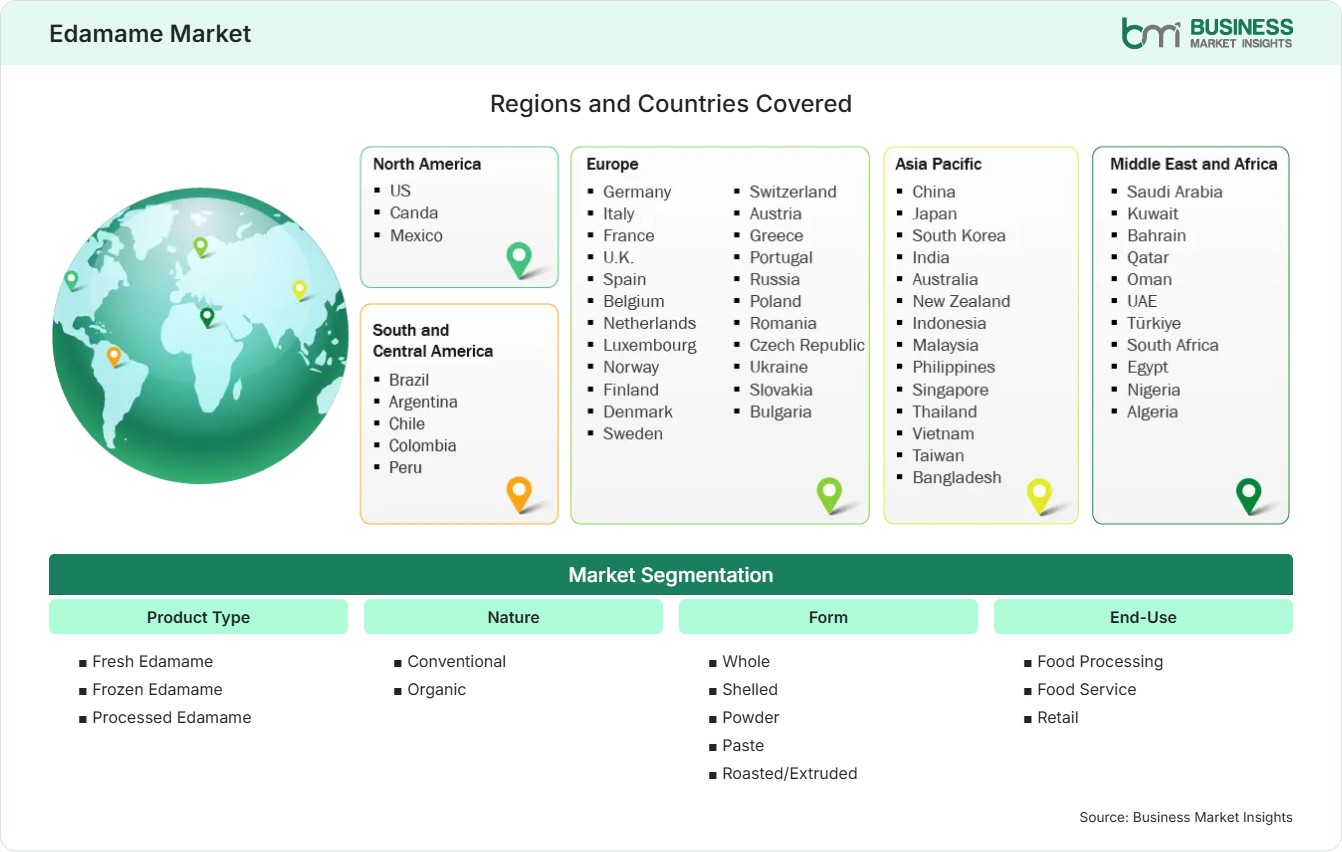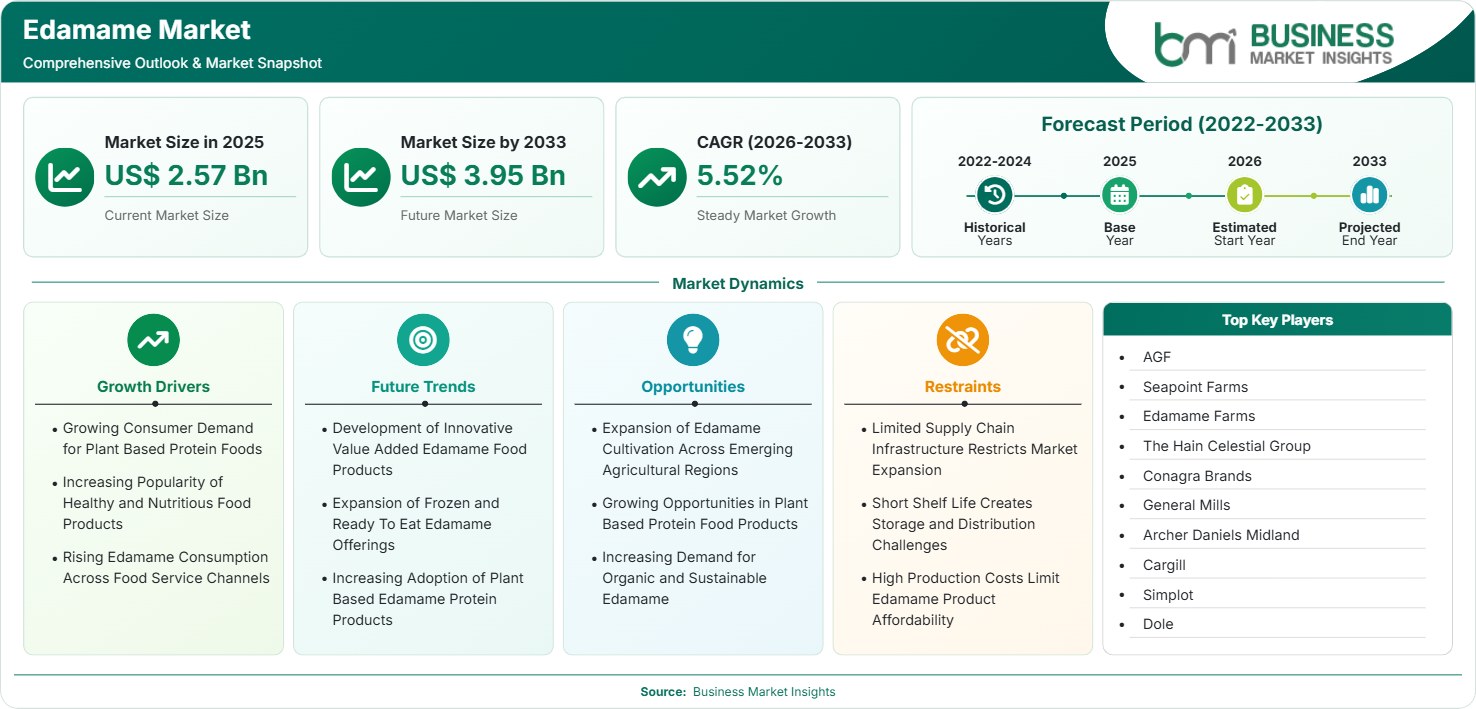
Edamame Market Regional Highlights
North America Edamame Market
North America represents an estimated 28%–32% share in 2025 and is projected to grow at a CAGR of 5.8%–6.8% through 2033. The US accounts for the majority of regional demand, supported by growing consumer interest in plant-based diets, healthier snacking, and convenient frozen foods. The Edamame Market share is also benefiting from increasing availability across supermarkets, specialty retailers, food service operators, and online grocery platforms.
- Frozen edamame is widely used because it provides convenient preparation and year-round availability. Retail products increasingly include shelled and ready-to-cook formats.
- Restaurants and food service providers are incorporating edamame into salads, appetizers, bowls, sushi, and fusion cuisine, supporting demand beyond household consumption.
- Plant-based protein innovation is creating opportunities for edamame powders, snacks, spreads, and blended products.
- Organic and sustainably sourced products are gaining interest among consumers seeking traceable and environmentally responsible food options.
US Edamame Market
The US market is projected to grow at a CAGR of 5.9%–6.9% during 2026–2033. Rising demand for plant-based protein, convenient frozen foods, and healthier snacks is supporting expansion. Retailers are increasing product visibility through frozen food sections, natural food stores, and online grocery channels.
- Consumers increasingly view edamame as a convenient source of plant-based protein that can be added to meals and snacks.
- Food manufacturers are developing roasted edamame snacks and other value-added products to attract health-conscious consumers.
- Food service demand is supported by Asian-inspired menus and the broader popularity of plant-forward dining.
Europe Edamame Market
Europe accounts for approximately 17%–21% share in 2025 and is projected to expand at a CAGR of 5.0%–6.0%. Growing interest in vegetarian and flexitarian diets is supporting demand, while sustainability considerations are encouraging interest in locally produced and responsibly sourced soy products. The Edamame Market trend is increasingly linked with broader consumer shifts toward plant-based nutrition and environmentally conscious food choices.
- Western European markets are seeing greater availability of frozen edamame through supermarkets and specialty food retailers.
- Germany, the UK, France, and the Netherlands offer opportunities due to strong plant-based food adoption and established modern retail infrastructure.
- Organic and sustainable sourcing can support premium positioning as consumers increasingly evaluate environmental and agricultural practices.
Asia Pacific Edamame Market
Asia Pacific represents approximately 40%–44% share in 2025 and is expected to grow at a CAGR of 6.0%–7.0%. Japan and China remain major markets because of established consumption patterns, while other Asian economies are developing new opportunities through modern retail and food service expansion. The region's established culinary familiarity with soy products provides a strong foundation for market development.
- Japan remains an important consumption market, with edamame widely used as a snack, side dish, and food service offering.
- China provides opportunities across fresh, frozen, and processed formats as food processing and modern retail infrastructure develop.
- India and Southeast Asia present emerging opportunities as plant-based diets and interest in protein-rich foods increase.
- Regional producers can benefit from investments in improved cultivation, cold-chain logistics, processing, and packaging.
Rest of World Edamame Market
Rest of World represents an emerging opportunity as consumers in Latin America, the Middle East, and Africa increasingly explore plant-based protein and healthier food choices. The region is expected to expand gradually as modern retail, food service, and cold-chain infrastructure improve. The Edamame Market forecast indicates that product availability, consumer education, and distribution capabilities will remain important factors influencing regional adoption.
- Latin American markets offer opportunities as consumers become more familiar with plant-based protein products and value-added soy foods.
- Brazil provides potential for agricultural production and food processing due to its established soybean industry.
- Middle Eastern markets offer opportunities for premium frozen and processed products through modern retail and hospitality channels.
- Improvements in refrigeration, distribution, and consumer awareness can support future regional expansion.