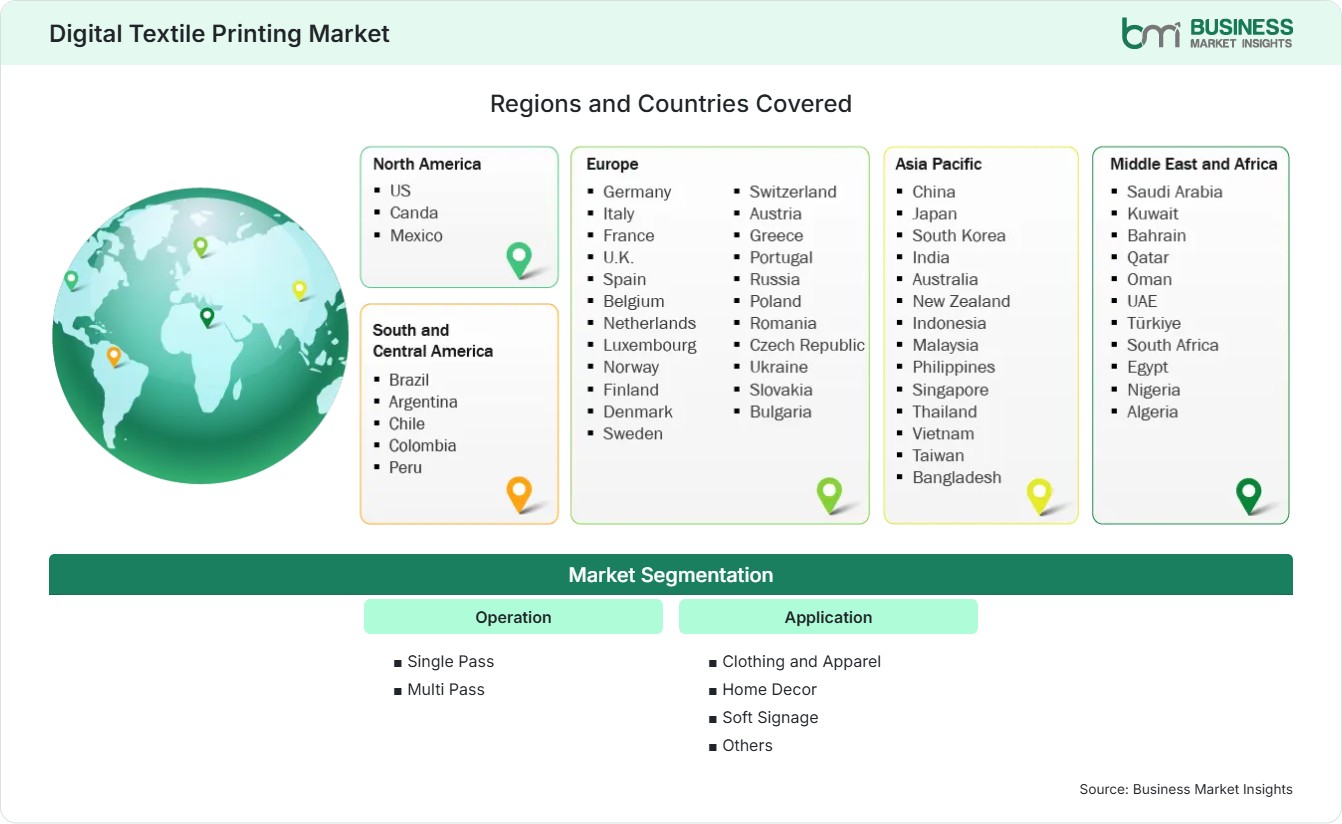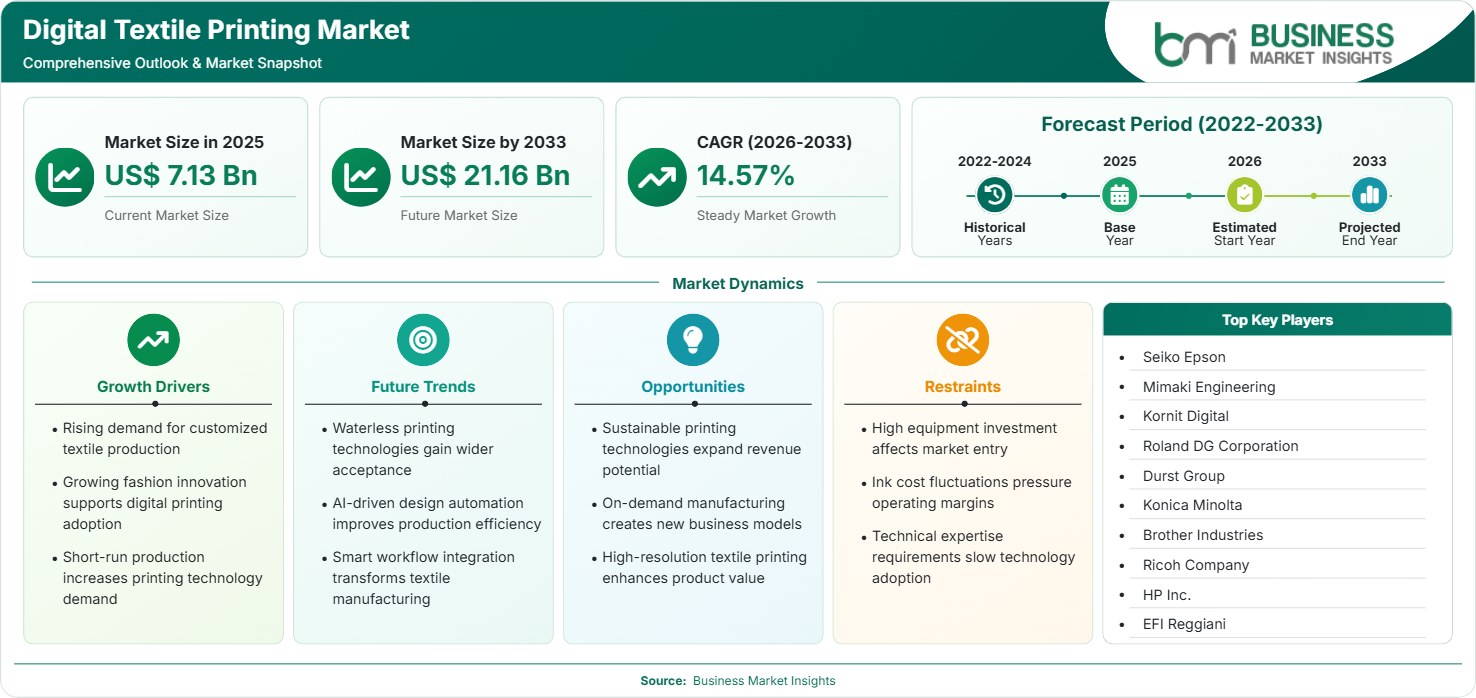
Digital Textile Printing Market Regional Highlights
North America Digital Textile Printing Market
North America represents 27%–30% Digital Textile Printing Market share in 2025 and is expected to register a CAGR of 13.8%–14.4% during 2026–2033. The region benefits from strong apparel branding, increasing demand for customized products, and expanding adoption of automated textile production systems. The U.S. remains the dominant market due to advanced manufacturing capabilities, digital fashion businesses, and growing investment in sustainable printing technologies.
- Fashion brands increasingly adopt digital printing for personalized collections and limited production runs.
- E-commerce growth is encouraging local textile production and faster customization capabilities.
- Sustainable ink solutions are gaining attention among environmentally conscious manufacturers.
- Advanced printing equipment adoption continues across commercial textile and apparel businesses.
US Digital Textile Printing Market
The United States contributes 82%–85% of North American revenue and is projected to grow at a CAGR of 14.0%–14.6% through 2033. Growth is supported by customized apparel demand, domestic textile production initiatives, and increasing adoption of automated digital printing technologies.
- Apparel companies are investing in digital printing to improve product personalization.
- Local manufacturing trends are supporting demand for flexible textile production systems.
- Brands increasingly utilize digital printing for faster market response and reduced inventory requirements.
- Sustainable production goals are encouraging adoption of low-waste printing technologies.
Europe Digital Textile Printing Market
Europe accounts for 24%–27% market share in 2025 and is projected to grow at a CAGR of 13.7%–14.3% during 2026–2033. Sustainability regulations, premium fashion manufacturing, and strong textile innovation ecosystems support regional development. Germany remains a leading market, while Italy and Spain continue expanding digital textile adoption through fashion and specialty textile applications.
- European fashion manufacturers increasingly integrate digital printing into sustainable production strategies.
- Luxury textile producers use advanced printing technologies for complex designs and premium products.
- Environmental regulations encourage reduced water consumption and lower chemical usage.
- Textile technology companies continue investing in automation and precision printing systems.
Asia Pacific Digital Textile Printing Market
Asia Pacific holds 38%–42% market share in 2025 and is expected to record the fastest 15.2%–15.9% CAGR during 2026–2033. The region benefits from large textile manufacturing bases, increasing apparel exports, and rapid industrial digitalization. China remains the largest contributor, while India, Vietnam, and Bangladesh are expanding digital printing adoption through growing textile production capabilities.
- Textile manufacturers are replacing conventional printing methods with efficient digital alternatives.
- Growing apparel exports are increasing demand for advanced printing equipment.
- Government initiatives supporting manufacturing modernization encourage technology adoption.
- Rising domestic fashion markets create opportunities for customized textile production.
Rest of World Digital Textile Printing Market
The Rest of World region accounts for 5%–8% digital textile printing market share in 2025 and is projected to grow at a CAGR of 14.2%–14.8% during 2026–2033. Growth across Latin America, the Middle East, and Africa is supported by expanding apparel industries, rising consumer demand for customized products, and increasing investments in textile manufacturing modernization.
- Brazil and Mexico are developing stronger digital textile production capabilities.
- Middle Eastern countries are investing in advanced textile and fashion manufacturing projects.
- African textile producers are adopting digital technologies to improve competitiveness.
- Regional brands increasingly use digital printing for specialized and short-run production.
Top of Form
Bottom of Form