
Dialyzers Market Outlook: Size, Share, Trends, Growth Analysis, Competitive Landscape & Forecast, 2026-2033

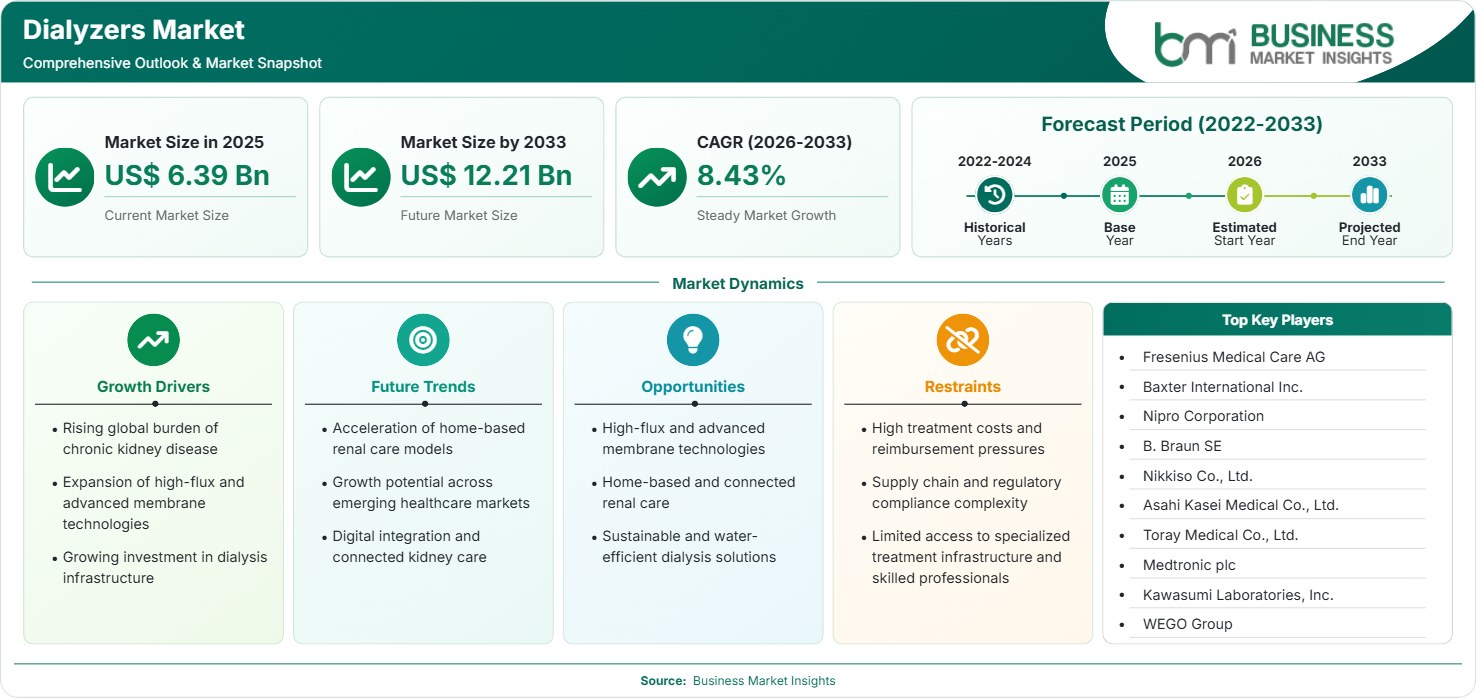
The Dialyzers Market size was valued at US$ 6.39 Billion in 2025 and is projected to reach US$ 12.21 Billion by 2033, growing at a CAGR of 8.43% during 2026–2033. Rising chronic kidney disease prevalence, expanding dialysis infrastructure, greater adoption of high-flux membranes, and increasing home-based renal care create strong demand alongside technology-driven treatment efficiency opportunities.

Report Coverage
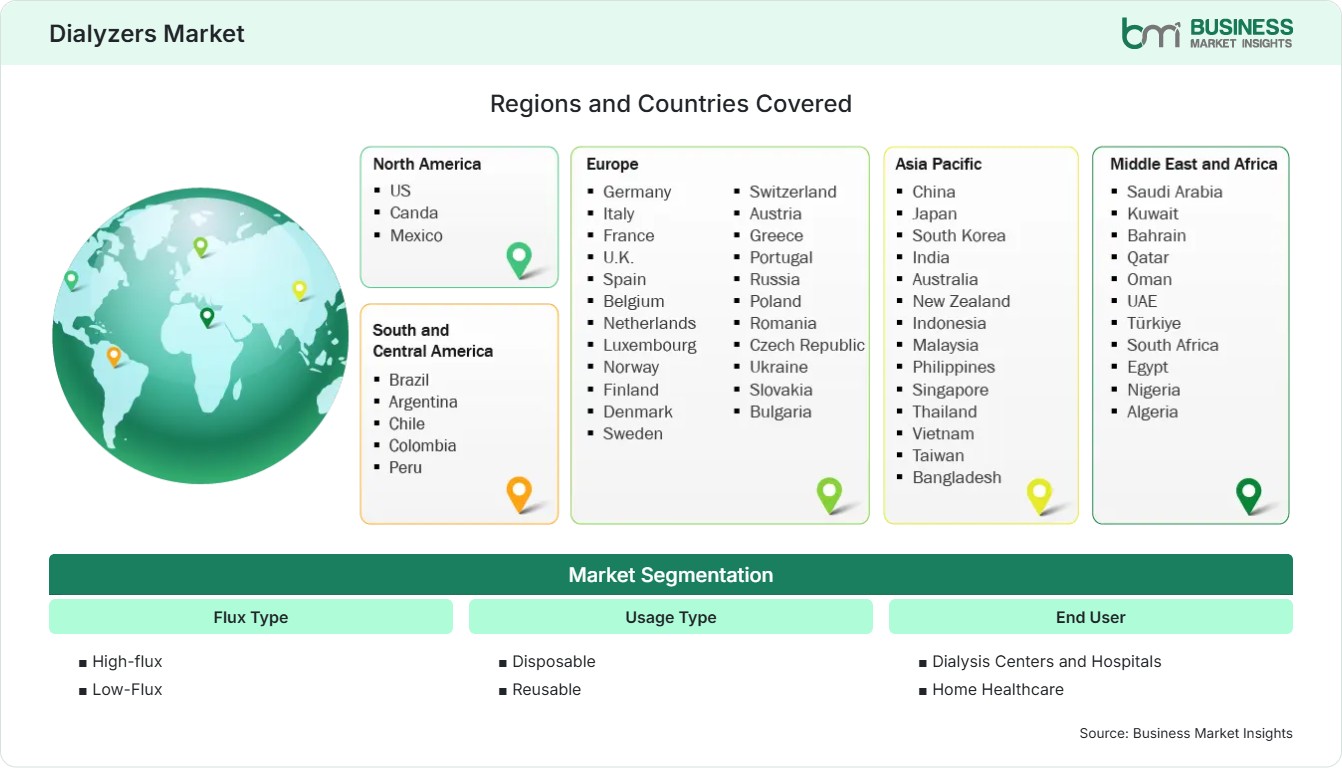
  • Flux Type: High-flux, Low-Flux
  • Usage Type: Disposable, Reusable
  • End User: Dialysis Centers and Hospitals, Home Healthcare
US$ 6.39 Bn Market size in 2025
US$ 12.21 Bn Market Size by 2033
8.43% CAGR, 2026 - 2033
2026-2033 Forecast Period

AI Overview

Dialyzers Market Summary

  • North America Region: North America holds a market share of 36%–39% in 2025, growing with a CAGR of 7.2%–7.8% during 2026–2033. Growth is supported by extensive reimbursement systems, high end-stage renal disease incidence, advanced dialysis networks, premium membrane adoption, home therapy expansion, value-based care programs, innovation investments, and strong nephrology infrastructure development. US market benefits from widespread dialysis access, ESRD funding support, and approximately 7.4%–8.0% CAGR growth.
  • Fastest Growing Region: Asia Pacific holds a Dialyzers Market share of 27%–30% in 2025, advancing at 9.8%–10.5% CAGR through 2033. Demand is supported by expanding healthcare access, increasing diabetic nephropathy cases, public dialysis investments, rising treatment awareness, local manufacturing expansion, hospital infrastructure growth, urbanization, favorable demographics, and broader reimbursement coverage.
  • Leading Segment: High-flux holds a market share of 60%–64% in 2025 and grows at 8.8%–9.4% CAGR. Adoption increases through enhanced middle-molecule clearance, stronger clinical outcomes, wider physician preference, compatibility with modern hemodialysis systems, premium membrane technologies, treatment efficiency requirements, reimbursement support, and growing patient volumes globally.
  • High Growth Segment: Home Healthcare holds a market share of 12%–15% in 2025 and expands at 10.5%–11.2% CAGR. Growth stems from telehealth integration, patient convenience, lower facility dependence, supportive policies, portable dialysis technologies, caregiver engagement, remote monitoring systems, reduced travel burdens, and healthcare cost optimization initiatives.
  • Key Market Opportunity: Expanding home dialysis ecosystems combined with connected monitoring platforms enables providers to improve treatment accessibility, reduce care delivery costs, enhance patient compliance, and create recurring consumable demand streams.
  • Major Market Players: Fresenius Medical Care AG, Baxter International Inc., Nipro Corporation, B. Braun SE, Nikkiso Co., Ltd., Asahi Kasei Medical Co., Ltd., Toray Medical Co., Ltd., Medtronic plc, Kawasumi Laboratories, Inc., WEGO Group.
Strategic Insights

Dialyzers Market: Strategic Insights

Dialyzers Market Strategic Framework
FREE PDF
Request your free sample
Request free sample
Stakeholder View

Key Takeaways

  • The value chain is becoming increasingly integrated, with manufacturers partnering directly with dialysis networks, expanding recurring revenue through consumables, services, and digital monitoring platforms.
  • Home healthcare applications represent the strongest long-term upside because healthcare systems are seeking lower treatment delivery costs while improving patient convenience and accessibility.
  • Innovation is concentrating on high-flux, medium cut-off, and advanced membrane technologies designed to improve middle-molecule clearance and support next-generation hemodiafiltration protocols.
  • India, China, Indonesia, Saudi Arabia, and Brazil present compelling investment cases due to rising kidney disease incidence and ongoing dialysis infrastructure expansion.
  • Industry consolidation continues through distribution partnerships, regional manufacturing investments, and technology collaborations focused on strengthening dialysis portfolios.
  • Sustainability initiatives, including reduced plastic consumption, water-efficient systems, and improved waste management practices, are increasingly influencing procurement decisions.
Geographic Outlook

Dialyzers Market Regional Highlights

North America Dialyzers Market

North America accounted for approximately 36%–39% of the Dialyzers Market share in 2025 and is projected to expand at 7.2%–7.8% CAGR through 2033. Strong reimbursement mechanisms, a large end-stage renal disease population, and extensive dialysis center penetration support demand. The region benefits from rapid adoption of premium high-flux products and clinical preference for innovative membrane technologies. Growing home treatment initiatives and value-based kidney care programs continue reshaping procurement strategies while supporting replacement demand across established dialysis networks.

  • ESRD prevalence and diabetes incidence continue expanding patient pools requiring routine hemodialysis treatment.
  • Major providers increasingly favor advanced high-flux membranes that improve treatment efficiency and clinical outcomes.
  • Home dialysis promotion programs encourage development of compact, patient-focused treatment ecosystems.
  • Strong regulatory frameworks support product quality, safety, and commercialization of innovative technologies.

US Dialyzers Market

The United States represents roughly 82%–86% of North American share and grows at 7.4%–8.0% CAGR. A large dialysis patient population, supportive Medicare frameworks, and rapid adoption of innovative hemodialysis technologies sustain demand. The country remains a critical market for advanced membrane products and value-added renal care solutions. Continuous provider investments in care modernization strengthen long-term procurement activity.

  • Large dialysis organizations influence purchasing patterns through network-wide procurement strategies.
  • Increased adoption of home therapies encourages demand for compatible consumables and connected care solutions.
  • Innovation pipelines focus on hemodiafiltration, membrane performance enhancement, and workflow optimization.
  • Strong clinical evidence requirements favor established manufacturers with proven product portfolios.

Europe Dialyzers Market

Europe captures 24%–27% share in 2025 and is forecast to grow at 7.8%–8.4% CAGR of the Dialyzers Market. The region benefits from strong nephrology expertise, established dialysis programs, and wide adoption of high-performance dialyzers. Germany remains the leading national market, while Eastern European countries exhibit faster expansion. Procurement increasingly emphasizes clinical effectiveness, sustainability, and compatibility with modern dialysis workflows. Demand remains supported by aging populations and rising chronic kidney disease incidence.

  • Germany leads regional demand, supported by advanced renal care infrastructure and technology adoption.
  • Poland and Romania demonstrate faster growth with expanding healthcare investments and treatment access.
  • Sustainability considerations increasingly influence provider purchasing decisions.
  • Clinical preference for advanced toxin-removal performance supports premium product uptake.

Asia Pacific Dialyzers Market

Asia Pacific is another market player, holding 27% to 30% market share and offering the highest regional growth rate at 9.8% to 10.5% CAGR. The factors that contribute to consumption include population, diabetes prevalence, and infrastructure development. China is identified as the top country earning for this region, while India has the highest growth rate. Investments by the public and private sectors in dialysis centers increase dialysis access. Local manufacturing expansion and reimbursement improvements further enhance market penetration across emerging economies.

  • China remains the largest regional market due to extensive patient volumes and infrastructure investments.
  • India exhibits the highest growth supported by expanding dialysis networks and government initiatives.
  • Domestic manufacturing capabilities improve affordability and supply reliability.
  • Urban healthcare expansion increases accessibility to renal replacement treatments.
  • Rising awareness programs encourage earlier diagnosis and treatment initiation.

Rest of World Dialyzers Market

South & Central America and the Middle East & Africa combined represent a 9%–12% share by 2025 and grow at an 8.6%–9.2% CAGR during 2023–2033 in the Dialyzers Market. Brazil is the dominant country in Latin America, with an increasing number of facilities for treating kidney disease, whereas Saudi Arabia is among the countries experiencing impressive growth in the Middle East. Improvements in healthcare services, rising prevalence of chronic kidney disease, and increased access to care drive the use of dialysis.

  • Brazil remains the leading Latin American market supported by established dialysis networks.
  • Saudi Arabia demonstrates strong growth through healthcare transformation initiatives.
  • Private investment enhances service capacity in several emerging healthcare systems.
  • Rising CKD screening efforts improve treatment penetration rates.
  • Import dependence encourages local manufacturing and distribution partnerships.
Global Market Geography
FREE PDF
Request your free sample
Request free sample
Segment Analysis

Dialyzers Market Segmentation

Flux Type

Flux Type contributed significantly to revenue, with High-flux being the largest segment. This segment is favored by clinicians for its enhanced toxin-clearing capability, which makes treatments more effective. There has been an expansion in the market scope of the Dialyzers Market segment due to technological advancements. The segment's share stood at 60%-64% in 2025 and is growing at an 8.8%-9.4% CAGR.

  • High-flux: Widely adopted across modern hemodialysis centers due to improved middle-molecule clearance, compatibility with advanced treatment protocols, and growing physician preference for enhanced therapeutic performance.
  • Low-Flux: Maintains relevance in cost-sensitive healthcare settings where affordability, infrastructure compatibility, and established treatment protocols remain primary procurement considerations.

Usage Type

The Usage Type segment is driven by emerging trends in clinical practice and infection control measures. The usage of disposable products is prevalent in procurement decisions owing to concerns about patient safety, efficacy, and process efficiency. Usage Type Segment represents around 68%–72% of the market share in 2025 and is growing at a CAGR of 8.5%–9.0%, supported by regulatory emphasis on minimizing contamination risks.

  • Disposable: Preferred for infection-control benefits, workflow simplicity, and compliance with evolving healthcare quality standards across hospitals and dialysis centers.
  • Reusable: Retains utilization in selected markets where cost management remains important and established reprocessing practices support continued use.

End User

The demand for end users is limited to the professional care setting, despite decentralization becoming a norm. It is characterized by adoption dynamics as providers try to keep costs low and be more patient-friendly. The Dialyzers Market trends indicate a shift towards more decentralized care. The Dialysis Centers and Hospitals category accounts for 85%- 88% share in 2025, while the broader segment grows at an 8.4%–8.9% CAGR.

  • Dialysis Centers and Hospitals: Continue leading utilization through established infrastructure, specialist oversight, high patient throughput, and broader availability of advanced treatment technologies.
  • Home Healthcare: Gains momentum through remote monitoring, policy support, patient-centric care models, and growing availability of portable dialysis solutions.
Market Forces

Dialyzers Market Dynamics

Key Market Drivers

Rising Global Burden of Chronic Kidney Disease

Chronic kidney disease continues to be among the most serious healthcare problems globally. According to health organizations, several hundred million individuals suffer from kidney diseases. The growth in patient numbers would increase the need for dialysis supplies and improved filtration technologies. Similarly, an increased number of elderly patients would mean a greater need due to age-related deterioration in renal function. Therefore, investments in dialysis machines and high-performance supplies will be necessary. The steady rise in renal disease cases will lead to increased long-term procurement needs.

Expansion of High-Flux and Advanced Membrane Technologies

Manufacturers are paying increasing attention to membrane development to enhance treatment efficacy and outcomes. The high-flux dialyzers enable more effective removal of middle molecules than conventional equipment, thereby increasing physicians’ preference for them. Innovations in membrane and filtration technologies enhance compatibility and treatment efficacy. The emphasis on hemodiafiltration leads manufacturers to use more advanced consumables. Competition among rivals in the sphere of clinical efficacy is another trend driving market penetration into premium markets. All of this shortens the renewal cycle and encourages medical institutions to update dialysis equipment.

Growing Investment in Dialysis Infrastructure

Both public and private investments in the healthcare industry have been helping increase the provision of dialysis globally. Emerging market governments have been improving access to kidney treatments by launching reimbursement schemes, investing in infrastructure, and conducting public health campaigns. At the same time, private companies have been expanding their footprint by adding dialysis centers to meet the rising number of patients. Accessibility has been playing a role in increasing the number of patients accessing dialysis treatments. There have been localization trends in supply chains that minimize risks while ensuring product availability. The combination of infrastructure development and broader patient access creates a supportive environment for renal care consumables and long-term demand expansion across multiple regions.

Key Market Opportunities

Acceleration of Home-Based Renal Care Models

The adoption of home dialysis offers a significant growth opportunity for manufacturers and service providers. There is a growing realization among healthcare organizations of the economic benefits of decentralized dialysis treatments, such as cost savings on facilities and more efficient resource utilization. With technological advancements that make home treatments safer through remote monitoring and connected treatment systems, patients will also enjoy greater flexibility and the convenience of not having to travel. In light of changing reimbursement policies to promote home-based care, the demand for appropriate dialyzers and patient-friendly solutions will grow. Dialyzers Market Forecasts indicate that home treatment ecosystems will become a strategically important growth channel for both established manufacturers and emerging innovators.

Growth Potential Across Emerging Healthcare Markets

Underserved patient groups are still prevalent in the Asian, Latin American, African, and Middle Eastern markets. Numerous countries are increasing their healthcare spending while simultaneously emphasizing the availability of services for managing chronic conditions. Increasing diagnosis rates, insurance coverage, and infrastructure investments drive increased use of dialysis. Companies that are developing production and distribution facilities in the target market benefit from lower prices, supply security, and regulatory efficiency. There is business potential not only in terms of volume but also in the implementation of innovative membrane technologies.

Digital Integration and Connected Kidney Care

Digital innovations in health care are developing value propositions within the delivery of renal care. With remote monitoring systems, predictive analytics, and the integration of treatment data, providers can manage their patients and streamline operations effectively. Manufacturers can distinguish themselves by developing an ecosystem of products that enable clinical decision-making. This could help not only improve outcomes but also minimize unnecessary complications. In pursuit of value-based care, digitally enabled dialysis solutions are bound to see increased investments. Integration of data-driven capabilities with consumable product portfolios creates opportunities for recurring revenue and stronger customer retention.

Market Restraints and Challenges

High Treatment Costs and Reimbursement Pressures

Factor: The expense of dialysis treatment remains high due to equipment, disposables, staffing, and facility operations. Impact: Financial constraints influence purchasing strategies and sometimes prevent companies from buying high-quality technology due to limited budgets. Developing countries still face increasing demand; therefore, they are more preoccupied with such financial problems. Irregular reimbursement programs affect the supplier's purchasing and profitability strategies. Price pressure usually occurs in public bids and when purchasing large quantities of goods. These financial constraints can slow penetration of advanced products, especially where healthcare funding remains limited, or reimbursement coverage is inconsistent across patient populations.

Supply Chain and Regulatory Compliance Complexity

Factor: The production of medical-grade filtration products requires quality control and regulatory compliance. Impact: Compliance expenses and supply chain disruptions may affect the manufacturing process, product availability, and business expansion. The global procurement of goods, logistics issues, and regulatory requirements add to the complexities of the business process. The providers expect suppliers to deliver a continuous flow of materials because continuity of treatment is key to patient health; transportation or compliance approvals may influence procurement schedules, create pressure on manufacturers' margins, and affect healthcare service delivery.

Company Analysis

Competitive Landscape

The competitive environment reflects ongoing innovation, capacity expansion, and product differentiation. Current Dialyzers Market analysis shows manufacturers emphasizing membrane technology, regional manufacturing, and integrated renal care solutions.

Company Name

Overview

Products and Services relevant to this market

Fresenius Medical Care AG

Global leader in kidney care with extensive dialysis product and service portfolio.

High-flux dialyzers, hemodiafiltration systems, dialysis machines, renal care services.

Baxter International Inc.

Major healthcare company with strong renal care and home therapy capabilities.

Dialysis consumables, renal therapy systems, home dialysis solutions.

Nipro Corporation

Significant dialysis technology manufacturer with expanding global footprint.

Dialyzers, bloodline systems, dialysis machines, membrane technologies.

B. Braun SE

Diversified medical technology company serving renal care providers worldwide.

Hemodialysis systems, dialyzers, water treatment and consumables.

Nikkiso Co., Ltd.

Renal care specialist with strong presence in dialysis equipment.

Dialysis machines, blood purification products, related consumables.

Asahi Kasei Medical Co., Ltd.

Technology-focused healthcare business emphasizing filtration innovation.

Advanced dialyzers, membrane technologies, blood purification products.

Toray Medical Co., Ltd.

Established supplier of renal therapy products and membranes.

High-performance dialyzers and specialty filtration technologies.

Medtronic plc

Global medical device company with participation in renal therapy technologies.

Renal care solutions, monitoring technologies, supporting devices.

Kawasumi Laboratories, Inc.

Specialist developer of blood purification and dialysis products.

Dialyzers, extracorporeal circulation products, treatment accessories.

WEGO Group

Expanding healthcare manufacturer with broad medical consumables portfolio.

Dialyzers, disposable treatment products, hospital consumables.

Trust & Transparency

Research Methodology

The market analysis combines proprietary research with secondary data from government agencies, company disclosures, regulatory filings, industry databases and expert interviews. Market estimates are validated through data triangulation, cross-market benchmarking and analyst review.

View Full Research Methodology

Questions Answered

Frequently Asked Questions

Why is home dialysis gaining attention?

Home treatment improves patient convenience, reduces travel burdens, supports healthcare cost optimization, and benefits from remote monitoring technologies that enable safe and effective decentralized care.

What does a Dialyzers Market Report typically evaluate?

It typically examines demand drivers, technology developments, regional performance, competitive positioning, regulatory influences, supply-chain dynamics, segmentation trends, and future revenue opportunities.

How are high-flux dialyzers different from low-flux products?

High-flux products offer superior clearance of larger molecular toxins and are increasingly preferred for advanced dialysis protocols, whereas low-flux variants remain relevant in cost-sensitive treatment settings.

Which region offers the strongest long-term growth potential?

Asia Pacific presents the strongest growth outlook due to large patient populations, expanding healthcare infrastructure, reimbursement improvements, and increasing dialysis accessibility across developing economies.

What factors are increasing demand for advanced dialyzers?

Rising chronic kidney disease prevalence, diabetes incidence, aging populations, and the need for improved toxin removal are accelerating demand. Healthcare providers are also upgrading to higher-performance membrane technologies.

Access the Full Dialyzers Market Report

Get segment-level forecasts, regional estimates, competitive benchmarking, company profiles and downloadable Excel datasets.

Access the full Dialyzers Market Report
350 pages PDF & Excel | 2026-08-31