
Cystic Fibrosis Market Outlook: Size, Share, Trends, Growth Analysis, Competitive Landscape & Forecast, 2026-2033

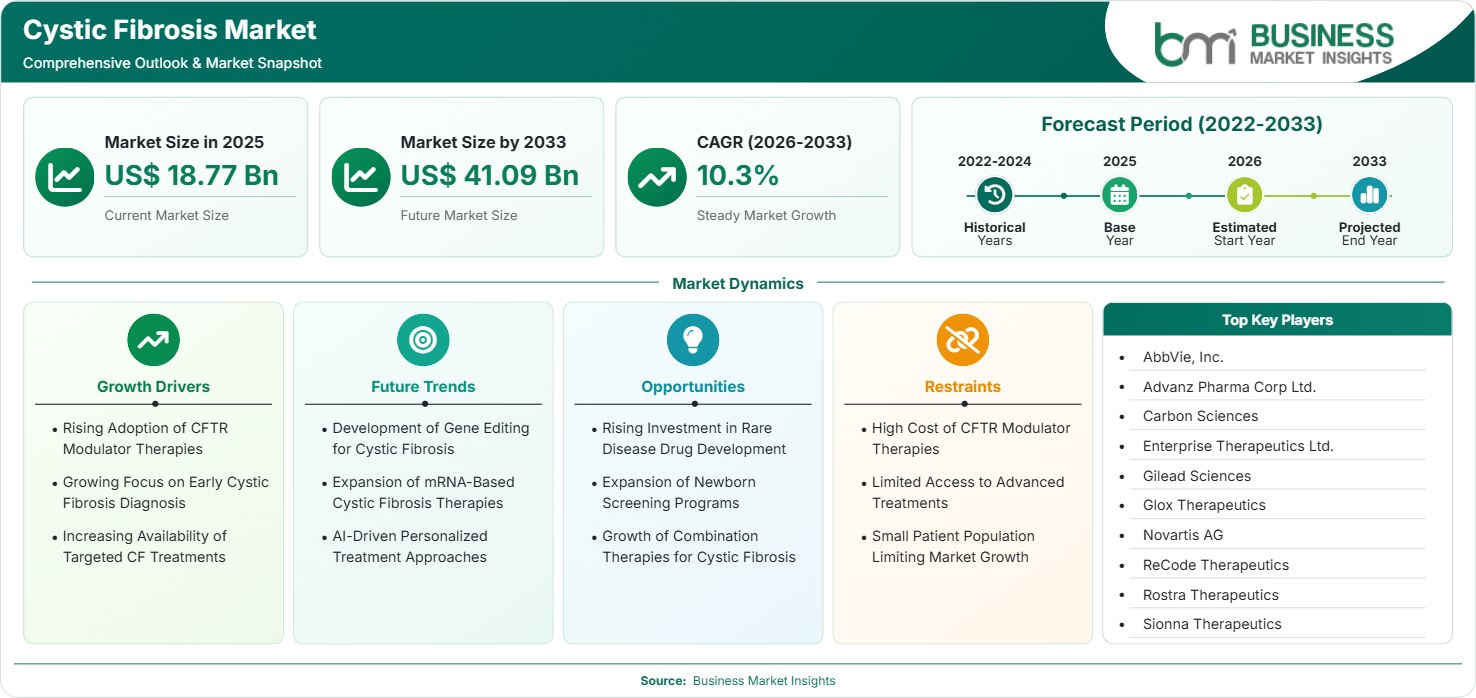
The Cystic Fibrosis Market size was valued at USD 18.77 Billion in 2025 and is projected to reach USD 41.09 Billion by 2033, growing at a CAGR of 10.3% during 2026–2033. Growth is driven by increasing diagnosis rates of cystic fibrosis, growing adoption of CFTR modulator therapies, rising investments in rare disease drug development, expanding genetic testing programs, and continuous advancements in precision medicine and targeted treatment approaches.

Report Coverage
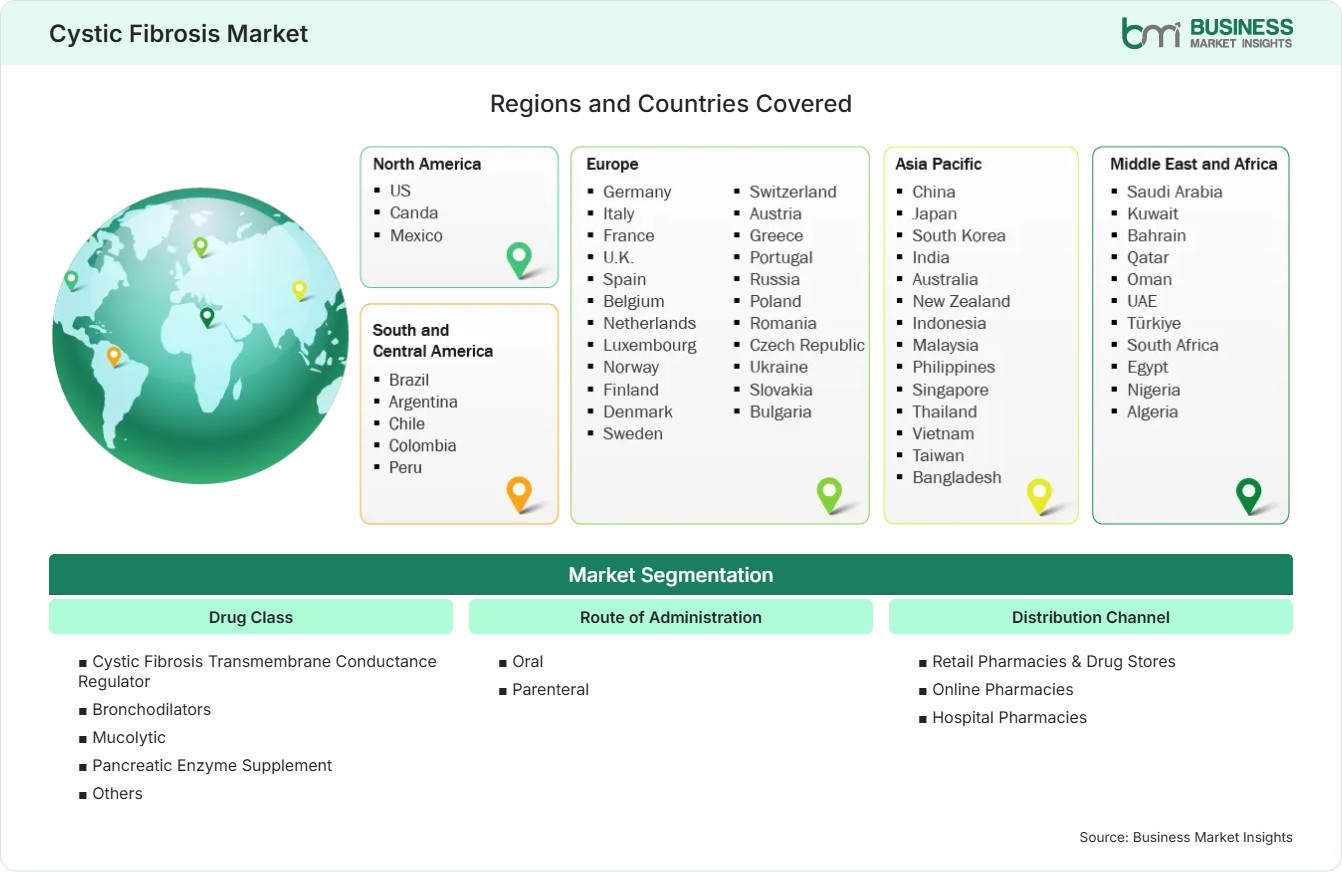
  • Drug Class: Cystic Fibrosis Transmembrane Conductance Regulator, Bronchodilators, Mucolytic, Pancreatic Enzyme Supplement, Others
  • Route of Administration: Oral, Parenteral
  • Distribution Channel: Retail Pharmacies & Drug Stores, Online Pharmacies, Hospital Pharmacies
US$ 18.77 Bn Market size in 2025
US$ 41.09 Bn Market Size by 2033
10.3% CAGR, 2026 - 2033
2026-2033 Forecast Period

AI Overview

Cystic Fibrosis Market Summary

  • North America Region: North America holds a cystic fibrosis market share of 42%–45% in 2025, growing at a CAGR of 9.6%–10.2% during 2026–2033. Demand is supported by strong treatment accessibility, favorable reimbursement frameworks, and extensive adoption of advanced cystic fibrosis therapies. The U.S. remains the dominant market, advancing at a CAGR of 9.8%–10.4%.
  • Fastest Growing Region: Asia Pacific accounts for 20%–23% of revenue in 2025 and is projected to register a CAGR of 11.5%–12.2% through 2033. Improving diagnosis capabilities, growing healthcare expenditure, and increasing awareness of rare genetic diseases continue supporting market development.
  • Leading Segment: Cystic Fibrosis Transmembrane Conductance Regulator (CFTR) Modulators hold a market share of 48%–52% in 2025 and are expected to grow at a CAGR of 10.8%–11.4%. Demand is driven by their ability to target the underlying cause of cystic fibrosis rather than only managing symptoms.
  • High Growth Segment: Oral Route of Administration accounts for 70%–74% of cystic fibrosis market revenue in 2025 and is projected to register a CAGR of 10.9%–11.6% during the forecast period. Growing preference for convenient long-term treatment options continues supporting expansion.
  • Key Market Opportunity: Growing development of next-generation gene-based therapies, RNA therapeutics, and mutation-targeted treatment approaches is creating significant opportunities for manufacturers and research organizations.
  • Major Market Players: AbbVie, Inc., Advanz Pharma Corp Ltd., Carbon Sciences, Enterprise Therapeutics Ltd., Gilead Sciences, Glox Therapeutics, Novartis AG, ReCode Therapeutics, Rostra Therapeutics, and Sionna Therapeutics.
Strategic Insights

Cystic Fibrosis Market: Strategic Insights

Cystic Fibrosis Market Strategic Framework
FREE PDF
Request your free sample
Request free sample
Stakeholder View

Key Takeaways

  • The market analysis includes pharmaceutical companies, biotechnology firms, healthcare providers, specialty pharmacies, research institutions, and patient advocacy organizations.
  • CFTR modulator therapies remain the dominant segment due to their ability to address underlying disease mechanisms and improve long-term clinical outcomes.
  • Product innovation increasingly focuses on mutation-specific therapies, gene editing technologies, RNA-based therapeutics, and precision medicine approaches.
  • Asia Pacific presents substantial growth potential due to improving healthcare access, enhanced diagnostic capabilities, and increasing awareness of rare diseases.
  • Oral therapies continue gaining strong patient preference because of convenience, ease of administration, and long-term treatment suitability.
  • Pharmaceutical companies continue investing heavily in next-generation treatments designed to benefit patients who do not respond adequately to existing therapies.
  • Expansion of newborn screening initiatives is improving early diagnosis rates and supporting timely treatment intervention.
  • Personalized treatment approaches are becoming increasingly important as therapeutic development focuses on specific genetic mutations.
  • Hospital pharmacies continue to play a critical role in dispensing advanced therapies requiring specialist oversight and long-term monitoring.
  • Advances in gene therapy, molecular medicine, and targeted respiratory treatments are expected to act as a major cystic fibrosis market trend.
Geographic Outlook

Cystic Fibrosis Market Regional Highlights

North America Cystic Fibrosis Market

North America accounted for 42%–45% of global revenue in 2025 and is projected to expand at a CAGR of 9.6%–10.2% through 2033. Growth is supported by strong healthcare infrastructure, extensive availability of advanced CFTR modulator therapies, favorable reimbursement systems, and high awareness regarding cystic fibrosis diagnosis and treatment. The Cystic Fibrosis Market share in the region continues benefiting from robust research activities and substantial investments in rare disease therapeutics.

  • Advanced genetic testing and newborn screening programs continue supporting early diagnosis and treatment initiation.
  • Healthcare providers are increasingly adopting personalized treatment approaches tailored to specific CF gene mutations.
  • Specialty treatment centers continue improving long-term disease management and patient outcomes.
  • Pharmaceutical companies maintain strong research and commercialization activities focused on innovative cystic fibrosis therapies.
  • Supportive reimbursement frameworks continue facilitating access to advanced medications and long-term treatment programs.

US Cystic Fibrosis Market

The United States represented 37%–40% of global revenue in 2025 and is anticipated to register a CAGR of 9.8%–10.4% during the forecast period. Demand is driven by widespread adoption of CFTR modulators, increasing access to advanced therapies, and strong clinical research activities. Continued therapeutic innovation supports Cystic Fibrosis Market forecasts.

  • Healthcare systems continue emphasizing early intervention and mutation-specific treatment strategies.
  • Specialty pharmacies play an important role in supporting long-term therapy adherence.
  • Ongoing clinical trials continue expanding treatment possibilities for underserved patient populations.
  • Patient advocacy initiatives are increasing awareness and supporting improved healthcare access.

Europe Cystic Fibrosis Market

Europe held 27%–30% of global revenue in 2025 and is projected to grow at a CAGR of 10.0%–10.6% through 2033. Increasing adoption of targeted therapies, improving rare disease management programs, and growing access to advanced treatments continue supporting cystic fibrosis market expansion. Germany remains the leading market with a CAGR of 10.1%–10.7%, while Poland is the fastest-growing country, expanding at a CAGR of 10.8%–11.4%.

  • Healthcare authorities continue strengthening rare disease diagnosis and treatment programs.
  • Access to advanced CFTR therapies is increasing across major European markets.
  • Germany maintains leadership through strong healthcare spending and advanced treatment accessibility.
  • Growing emphasis on personalized medicine continues supporting therapeutic innovation.
  • Research collaborations between healthcare institutions and pharmaceutical companies are accelerating development activities.

Asia Pacific Cystic Fibrosis Market

Asia Pacific accounted for 20%–23% of global revenue in 2025 and is expected to remain the fastest-growing region, registering a CAGR of 11.5%–12.2% through 2033. Improving disease awareness, expanding access to specialized healthcare services, increasing genetic testing capabilities, and rising healthcare expenditure continue driving cystic fibrosis market growth. China remains the largest regional market with a CAGR of 11.3%–12.0%, while India records the highest growth at 12.0%–12.7%.

  • Growing availability of genetic screening services is improving diagnosis rates across the region.
  • China benefits from healthcare modernization initiatives and increasing access to specialty therapeutics.
  • India is witnessing rising awareness regarding rare genetic disorders and targeted treatment options.
  • Expanding healthcare infrastructure is improving access to specialist respiratory and genetic care services.
  • Increasing investments in biotechnology research and precision medicine are supporting long-term market development.

Rest of World Cystic Fibrosis Market

The Rest of World region accounted for 5%–8% of global revenue in 2025 and is expected to register a CAGR of 9.4%–10.0% through 2033. Market growth is supported by improving access to advanced therapies, rising awareness regarding genetic disorders, and expanding healthcare infrastructure investments. Demand remains particularly strong within major urban healthcare centers and specialized treatment facilities.

Brazil is the leading market in South & Central America and is forecast to grow at a CAGR of 9.6%–10.2%. In the Middle East & Africa, Saudi Arabia is expected to be the fastest-growing country with a CAGR of 9.9%–10.5%.

  • Brazil continues benefiting from expanded rare disease treatment programs and improving healthcare access.
  • Saudi Arabia is witnessing increasing investment in specialized healthcare and genetic disease management.
  • Growing availability of diagnostic testing is supporting earlier disease identification.
  • Healthcare providers are increasingly adopting advanced treatment protocols and specialist care models.
  • Expanding patient support initiatives continue creating long-term opportunities for market participants.
Global Market Geography
FREE PDF
Request your free sample
Request free sample
Segment Analysis

Cystic Fibrosis Market Segmentation

Drug Class

Drug innovation continues transforming cystic fibrosis treatment as healthcare providers increasingly adopt therapies that target the underlying cause of the disease rather than focusing solely on symptom management. Cystic Fibrosis Transmembrane Conductance Regulator (CFTR) Modulators lead the segment with 48%–52% share in 2025 and are projected to grow at a CAGR of 10.8%–11.4% through 2033. The Cystic Fibrosis Market scope continues expanding as new mutation-specific therapies improve patient outcomes and extend treatment accessibility.

  • CFTR Modulators: Dominate market demand due to their ability to address the defective CFTR protein responsible for disease progression.
  • Bronchodilators: Continue supporting respiratory symptom management and airway function improvement in cystic fibrosis patients.
  • Mucolytic: Remain essential for reducing mucus viscosity and improving airway clearance capabilities.
  • Pancreatic Enzyme Supplement: Widely utilized to improve digestion and nutrient absorption among patients experiencing pancreatic insufficiency.
  • Others: Include anti-infective therapies, anti-inflammatory agents, and supportive treatments used in comprehensive disease management programs.

Route of Administration

Treatment accessibility and patient convenience continue influencing route-of-administration preferences. Oral Administration accounts for 70%–74% share in 2025 and is projected to register the fastest growth at a CAGR of 10.9%–11.6% through 2033.

  • Oral: Leads due to ease of administration, long-term treatment suitability, and widespread use of CFTR modulator therapies.
  • Parenteral: Maintains importance in severe disease management, hospital-based care, and specialized therapeutic interventions.

Distribution Channel

Distribution channels continue evolving as healthcare systems seek to improve patient access to specialty medications and long-term disease management programs.

  • Retail Pharmacies & Drug Stores: Support ongoing prescription fulfillment and chronic treatment adherence.
  • Online Pharmacies: Witness increasing adoption due to convenience, digital healthcare expansion, and home delivery services.
  • Hospital Pharmacies: Remain the dominant channel due to specialist oversight, advanced therapy dispensing, and comprehensive patient monitoring requirements.
Market Forces

Cystic Fibrosis Market Dynamics

Key Market Drivers

Rising Adoption of CFTR Modulator Therapies

CFTR modulators have fundamentally changed the treatment landscape for cystic fibrosis by targeting the underlying genetic defect responsible for disease development. Unlike traditional therapies that primarily focused on managing symptoms, CFTR modulators improve protein function and address disease progression mechanisms. Healthcare providers increasingly prescribe these therapies due to their demonstrated benefits in improving lung function, reducing pulmonary exacerbations, and enhancing overall quality of life. Growing clinical evidence and expanding eligibility across different genetic mutations continue driving adoption. As next-generation modulators enter the market, this trend is expected to remain a key contributor to industry growth.

Growing Focus on Early Cystic Fibrosis Diagnosis

Healthcare systems worldwide are increasingly emphasizing early diagnosis of cystic fibrosis to enable timely therapeutic intervention and improve long-term outcomes. Expanded newborn screening programs, enhanced genetic testing capabilities, and growing disease awareness are contributing to higher diagnosis rates. Early identification allows healthcare providers to initiate treatment before significant disease progression occurs, helping optimize patient health and quality of life. Governments and healthcare organizations continue investing in diagnostic infrastructure and awareness initiatives. These efforts are expected to support sustained growth in treatment demand throughout the forecast period.

Increasing Availability of Targeted CF Treatments

Scientific advancements in molecular medicine and genetics are expanding the availability of targeted treatment options for cystic fibrosis patients. Researchers are developing therapies designed to address specific genetic mutations and improve treatment effectiveness across diverse patient populations. Pharmaceutical companies continue investing heavily in precision medicine programs aimed at delivering personalized therapeutic approaches. Growing availability of targeted treatments is improving disease management while creating new opportunities for healthcare providers and manufacturers. This ongoing innovation remains a significant market growth driver.

Key Market Opportunities

Rising Investment in Rare Disease Drug Development

Rare disease research has become a major area of focus for pharmaceutical and biotechnology companies seeking to address unmet medical needs. Cystic fibrosis remains a priority therapeutic area due to advances in genetic science and growing understanding of disease mechanisms. Investments in novel drug discovery, mutation-specific therapies, and advanced treatment platforms continue accelerating development activities. Regulatory incentives and orphan drug designations are further encouraging innovation within this space. As investment levels continue increasing, the market is expected to benefit from a stronger development pipeline and broader treatment options.

Expansion of Newborn Screening Programs

The expansion of newborn screening programs represents a significant opportunity for the cystic fibrosis treatment market. Early detection enables clinicians to initiate therapies more quickly, improving long-term disease management and patient outcomes. Governments and healthcare authorities are increasingly incorporating cystic fibrosis screening into national health programs due to the proven benefits of earlier intervention. Improved diagnostic coverage is increasing the number of identified patients receiving treatment. As screening adoption expands worldwide, demand for approved therapeutic options is expected to rise steadily.

Growth of Combination Therapies for Cystic Fibrosis

Combination therapies are emerging as an important area of innovation within cystic fibrosis treatment. Researchers are developing treatment regimens that combine multiple therapeutic mechanisms to improve effectiveness and broaden patient eligibility. These approaches have demonstrated potential to enhance CFTR protein function, improve respiratory outcomes, and provide more comprehensive disease management. Pharmaceutical companies continue exploring new combinations designed to deliver superior clinical performance. The growing focus on combination therapies is expected to create substantial opportunities for market participants over the coming years.

Market Restraints and Challenges

High Cost of CFTR Modulator Therapies

Factor: CFTR modulator therapies involve advanced research, specialized development processes, and complex manufacturing requirements that contribute to premium pricing structures.

Impact: High treatment costs can limit patient access, particularly in regions with constrained healthcare budgets or limited reimbursement support. Healthcare systems and payers may face significant financial burdens associated with long-term treatment coverage. Affordability challenges can influence adoption rates despite strong clinical benefits.

Limited Access to Advanced Treatments

Factor: Access to innovative cystic fibrosis therapies may vary significantly across regions due to reimbursement limitations, healthcare infrastructure disparities, regulatory delays, and diagnostic challenges.

Impact: Uneven treatment availability can restrict patient access to advanced therapies and create disparities in clinical outcomes. Manufacturers may face challenges expanding market penetration in underserved regions. Addressing accessibility barriers remains essential for broader adoption and long-term market growth.

Company Analysis

Competitive Landscape

The market remains highly competitive with the presence of biotechnology companies, specialty pharmaceutical manufacturers, rare disease therapy developers, and genetic medicine innovators. Companies are focusing on next-generation CFTR modulators, gene therapies, RNA-based treatments, mutation-specific medicines, and advanced respiratory disease management solutions. Growing investment in precision medicine and rare disease drug development continues shaping Cystic Fibrosis Market analysis and competitive strategies across the global cystic fibrosis therapeutics industry.

Company Name

Overview

Products and Services Relevant to this Market

AbbVie, Inc.

Global biopharmaceutical company engaged in innovative specialty therapies.

Respiratory disease therapies, specialty pharmaceuticals, rare disease research programs.

Advanz Pharma Corp Ltd.

Specialty pharmaceutical company focused on niche and rare disease treatments.

Rare disease therapeutics, specialty medicines, chronic disease management products.

Carbon Sciences

Biotechnology company involved in advanced healthcare research initiatives.

Research programs supporting innovative therapeutic development.

Enterprise Therapeutics Ltd.

Biotechnology company focused on respiratory disease innovation.

Cystic fibrosis therapeutic candidates, respiratory treatment technologies.

Gilead Sciences

Biopharmaceutical company with expertise in innovative drug development.

Specialty therapeutics, respiratory disease research, rare disease treatment programs.

Glox Therapeutics

Biotechnology company engaged in next-generation treatment development.

Novel cystic fibrosis therapeutic research and antimicrobial innovation.

Novartis AG

Global pharmaceutical company focused on advanced therapies and specialty medicines.

Respiratory products, rare disease therapies, precision medicine solutions.

ReCode Therapeutics

Genetic medicines company developing targeted therapies for pulmonary diseases.

RNA and gene-based therapies for cystic fibrosis and related disorders.

Rostra Therapeutics

Biotechnology company specializing in genetic and molecular therapies.

Innovative cystic fibrosis treatment programs and rare disease drug development.

Sionna Therapeutics

Biotechnology company focused on restoring CFTR protein function.

CFTR-targeted therapies, mutation-specific cystic fibrosis treatment solutions.

Industry Activity

Recent Developments

June 2026

Vertex Pharmaceuticals presented new Phase 3 and long-term extension data on ALYFTREK® at the European Cystic Fibrosis Conference, demonstrating improved CFTR function, favorable safety outcomes, and supporting regulatory expansion for younger cystic fibrosis patients.

June 2026

SpliSense secured up to US$13 million from the Cystic Fibrosis Foundation to support the Phase 2b development of SPL84, its inhaled RNA therapy for cystic fibrosis, following encouraging Phase 2a safety and efficacy results.

May 2026

Enterprise Therapeutics reported positive Phase 2 results for ETD001, its inhaled ENaC blocker for cystic fibrosis, achieving the primary efficacy endpoint with significant lung-function improvement and a favorable safety profile in patients with high unmet needs.

April 2026

Vertex Pharmaceuticals announced U.S. FDA approval for label extensions of ALYFTREK® and TRIKAFTA®, expanding eligibility to approximately 95% of people with cystic fibrosis in the U.S. and enabling around 800 additional patients to access CFTR modulator therapies.

Trust & Transparency

Research Methodology

The market analysis combines proprietary research with secondary data from government agencies, company disclosures, regulatory filings, industry databases and expert interviews. Market estimates are validated through data triangulation, cross-market benchmarking and analyst review.

View Full Research Methodology

Questions Answered

Frequently Asked Questions

What challenge has the greatest long-term impact on the industry?

High costs associated with CFTR modulator therapies remain a major challenge because affordability and reimbursement limitations can restrict patient access in several healthcare systems.

How are newborn screening programs influencing market growth?

Newborn screening programs enable earlier diagnosis of cystic fibrosis, allowing timely treatment intervention and improving long-term patient outcomes, which supports therapeutic adoption.

Why is Asia Pacific the fastest-growing region?

The region benefits from improving healthcare access, expanding genetic testing capabilities, rising awareness of rare diseases, increasing healthcare expenditure, and enhanced diagnostic infrastructure.

Which drug class segment leads the market?

CFTR Modulators lead the market because they target the underlying genetic cause of cystic fibrosis and provide significant clinical benefits compared with conventional symptom-management therapies.

What is driving growth in the Cystic Fibrosis Market Report?

Rising adoption of CFTR modulator therapies, growing focus on early cystic fibrosis diagnosis, increasing availability of targeted treatments, and continued advancement in rare disease therapeutics are the primary growth drivers.

Access the Full Cystic Fibrosis Market Report

Get segment-level forecasts, regional estimates, competitive benchmarking, company profiles and downloadable Excel datasets.

Access the full Cystic Fibrosis Market Report
350 pages PDF & Excel | 2026-07-30