
Crude Oil Desalter Electrostatic Dehydrator Market Outlook: Size, Share, Trends, Growth Analysis, Competitive Landscape & Forecast, 2026-2033

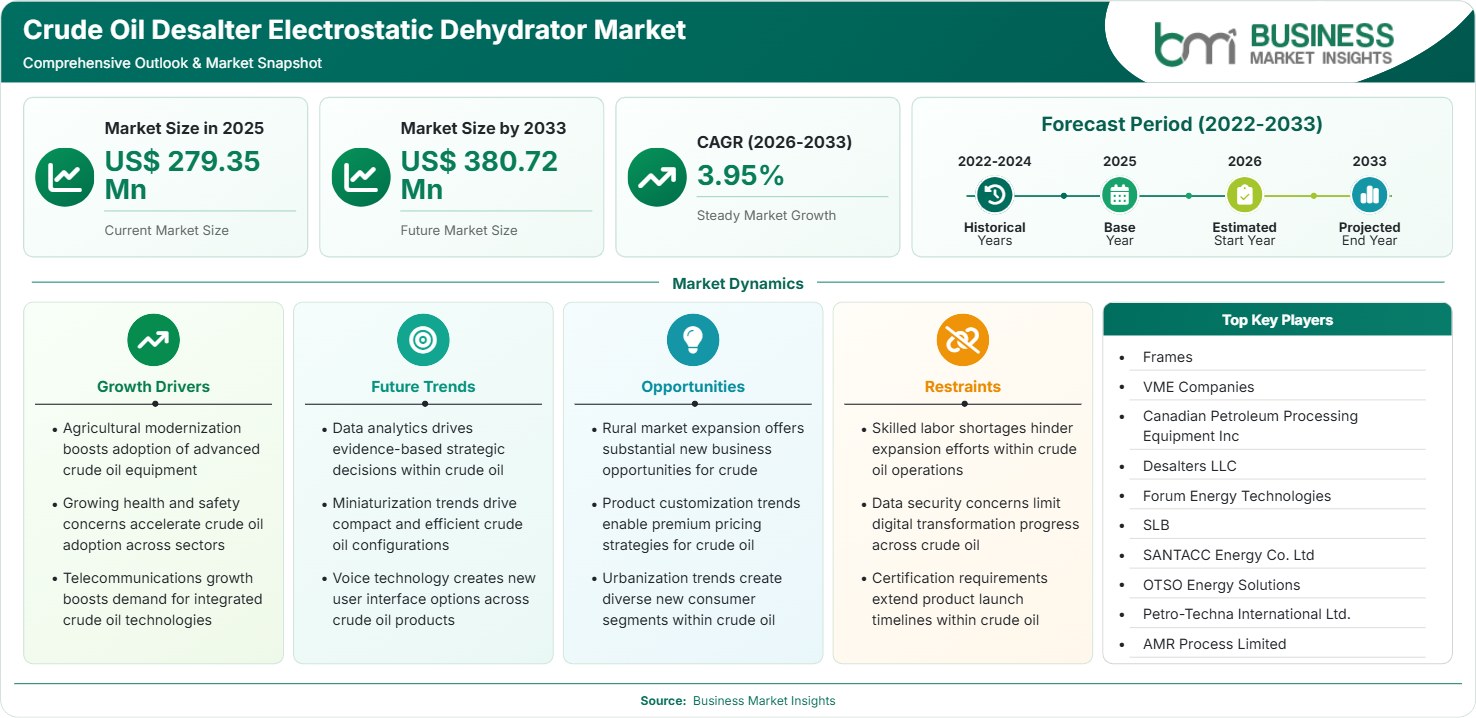
The Crude Oil Desalter Electrostatic Dehydrator Market size was valued at US$ 279.35 Million in 2025 and is projected to reach US$ 380.72 Million by 2033, growing at a CAGR of 3.95% during 2026–2033. Increasing crude oil quality requirements, refinery modernization, production efficiency improvements, and demand for advanced separation technologies are supporting market expansion.

Report Coverage
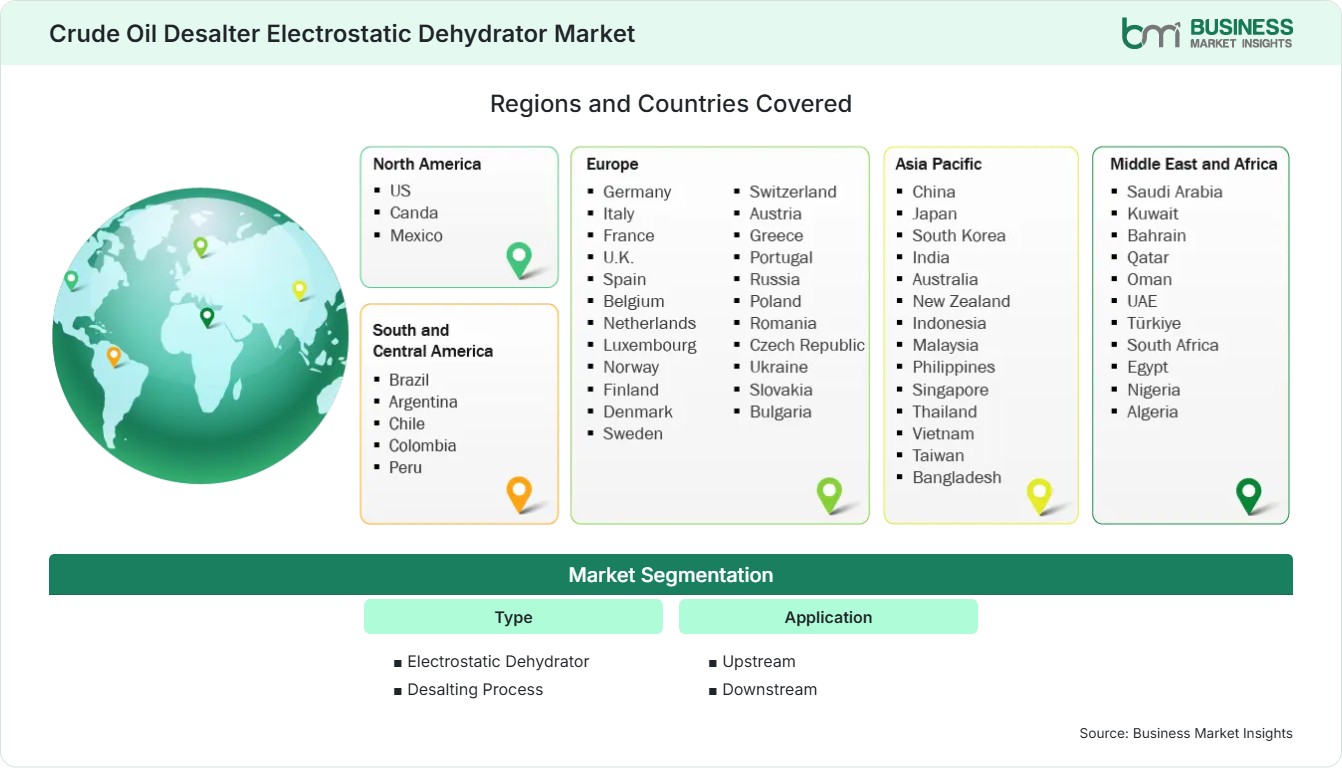
  • Type: Electrostatic Dehydrator, Desalting Process
  • Application: Upstream, Downstream
US$ 279.35 Mn Market size in 2025
US$ 380.72 Mn Market Size by 2033
3.95% CAGR, 2026 - 2033
2026-2033 Forecast Period

AI Overview

Crude Oil Desalter Electrostatic Dehydrator Market Summary

  • North America Region: North America accounted for 32%–35% share in 2025 and is expected to grow at a CAGR of 3.8%–4.3% during 2026–2033. The region benefits from established oil and gas infrastructure, refinery upgrades, heavy crude processing requirements, and investments in production optimization technologies. The U.S. remains a major contributor due to large-scale refining capacity, shale oil production, and modernization of processing facilities, with the market growing at a CAGR of 3.9%–4.4%.
  • Fastest Growing Region: Asia Pacific represented 27%–30% share in 2025 and is projected to expand at a CAGR of 4.2%–4.7%. Rising refinery capacity, increasing crude processing demand, and investments in downstream infrastructure are supporting adoption of electrostatic dehydration and desalting systems.
  • Leading Segment: Electrostatic Dehydrator represented 58%–62% share in 2025 and is projected to grow at a CAGR of 3.7%–4.1%. High separation efficiency, reduced corrosion risks, and improved crude oil treatment performance are supporting segment leadership.
  • High Growth Segment: Downstream applications are expected to register a CAGR of 4.0%–4.5% due to refinery expansion, stricter crude quality standards, and increasing demand for efficient processing technologies.
  • Key Market Opportunity: Modernization of aging refineries, increasing processing of challenging crude grades, and adoption of energy-efficient separation technologies are creating opportunities for advanced desalter system providers.
  • Major Market Players: Frames, VME Companies, Canadian Petroleum Processing Equipment Inc., Desalters LLC, Forum Energy Technologies, SLB, SANTACC Energy Co. Ltd., OTSO Energy Solutions, Petro-Techna International Ltd., and AMR Process Limited.
Strategic Insights

Crude Oil Desalter Electrostatic Dehydrator Market: Strategic Insights

Crude Oil Desalter Electrostatic Dehydrator Market Strategic Framework
FREE PDF
Request your free sample
Request free sample
Stakeholder View

Key Takeaways

  • The market ecosystem includes equipment manufacturers, oil producers, refinery operators, engineering companies, and service providers supporting crude processing optimization.
  • Refinery modernization and downstream expansion represent major opportunities as operators replace outdated separation systems with advanced electrostatic technologies.
  • Technology development is focused on improving dehydration efficiency, reducing energy consumption, enhancing automation, and supporting treatment of complex crude feedstocks.
  • Asia Pacific provides significant growth potential due to refinery capacity expansion, rising energy demand, and increasing investments in oil processing infrastructure.
  • Strategic collaborations between equipment suppliers and energy companies are becoming important for delivering customized desalter solutions suited to specific crude characteristics.
Geographic Outlook

Crude Oil Desalter Electrostatic Dehydrator Market Regional Highlights

North America Crude Oil Desalter Electrostatic Dehydrator Market

North America accounted for 32%–35% share in 2025 and is projected to grow at a CAGR of 3.8%–4.3% during 2026–2033. The region benefits from mature oil and gas infrastructure, extensive refining capacity, and continuous investments in processing efficiency improvements. The United States and Canada remain key markets due to crude production activities, refinery modernization programs, and demand for reliable separation technologies. The Crude Oil Desalter Electrostatic Dehydrator Market share remains strong as operators focus on corrosion reduction and improved crude treatment performance.

  • Refinery operators are upgrading existing facilities with advanced desalting systems to improve processing efficiency and reduce equipment maintenance requirements.
  • Increasing production of unconventional crude oil is creating demand for efficient dehydration and contaminant removal technologies.
  • Energy companies are adopting automated electrostatic systems to improve operational control and minimize processing interruptions.
  • Infrastructure investments across oil-producing regions are supporting demand for advanced crude treatment equipment.

US Crude Oil Desalter Electrostatic Dehydrator Market

The United States represented 78%–82% of North American revenue in 2025 and is expected to expand at a CAGR of 3.9%–4.4% through 2033. Strong refinery capacity, domestic crude production, and investments in processing efficiency are supporting market development. Refiners are increasingly adopting advanced desalter systems to manage variations in crude quality and improve downstream reliability. Growing focus on operational optimization is encouraging replacement of aging equipment with modern electrostatic dehydration solutions.

  • Shale oil production growth is increasing demand for effective crude treatment technologies across processing facilities.
  • Refinery operators are investing in equipment upgrades to improve efficiency, reliability, and compliance with operational requirements.
  • Advanced monitoring and automation features are supporting better performance management of desalting operations.

Europe Crude Oil Desalter Electrostatic Dehydrator Market

Europe accounted for 22%–25% share in 2025 and is forecast to grow at a CAGR of 3.2%–3.7% between 2026–2033. The region is characterized by mature refining infrastructure, increasing focus on operational efficiency, and modernization of existing processing assets. Countries including Germany, the United Kingdom, France, and Italy continue investing in refinery upgrades to improve reliability and environmental performance. The Crude Oil Desalter Electrostatic Dehydrator Market growth is supported by the need to process diverse crude feedstocks efficiently.

  • European refiners are modernizing existing facilities to extend asset life and improve crude processing capabilities.
  • Increasing focus on energy efficiency is encouraging adoption of optimized electrostatic separation technologies.
  • Refinery operators are implementing advanced process control systems to enhance desalting performance.
  • Integration of digital monitoring solutions is improving equipment reliability and operational visibility.

Asia Pacific Crude Oil Desalter Electrostatic Dehydrator Market

Asia Pacific represented 27%–30% share in 2025 and is expected to register the fastest CAGR of 4.2%–4.7% during 2026–2033. Rising energy consumption, expanding refinery capacity, and increasing investments in downstream infrastructure are driving regional demand. China, India, South Korea, and Southeast Asian countries are major contributors due to refinery expansion projects and growing crude processing requirements. The Crude Oil Desalter Electrostatic Dehydrator Market trends indicate increasing adoption of efficient separation systems across new and upgraded facilities.

  • China continues expanding refinery capacity, supporting demand for advanced crude treatment and processing technologies.
  • India is investing in refinery modernization and capacity expansion to meet increasing domestic energy requirements.
  • Southeast Asian countries are developing downstream infrastructure to strengthen regional petroleum processing capabilities.
  • Digitalization and automation adoption are improving operational efficiency in modern refinery projects.

Rest of World Crude Oil Desalter Electrostatic Dehydrator Market

The Rest of World region accounted for 13%–16% Crude Oil Desalter Electrostatic Dehydrator Market share in 2025 and is projected to grow at a CAGR of 3.5%–4.0% during 2026–2033. The region includes Latin America, the Middle East, and Africa, where crude production activities and refinery development continue supporting equipment demand. Oil-producing countries are focusing on improving processing efficiency and increasing refinery capabilities to capture greater value from crude resources.

  • Middle Eastern countries are investing in refinery expansion and modernization to improve downstream processing capacity.
  • Gulf region operators are adopting advanced separation technologies for efficient handling of varying crude qualities.
  • Latin American markets are upgrading refining assets to improve operational performance and reduce processing challenges.
  • African oil-producing nations are developing energy infrastructure and increasing interest in efficient crude treatment solutions.
  • Regional partnerships with international technology providers are supporting adoption of advanced desalting equipment.
Global Market Geography
FREE PDF
Request your free sample
Request free sample
Segment Analysis

Crude Oil Desalter Electrostatic Dehydrator Market Segmentation

Type

The Type segment includes Electrostatic Dehydrator and Desalting Process technologies used for removing water, salts, and contaminants from crude oil before refining. Electrostatic Dehydrator accounted for the leading position with 58%–62% share in 2025 and is expected to grow at a CAGR of 3.7%–4.1% during 2026–2033. Increasing refinery efficiency requirements, corrosion prevention needs, and demand for reliable crude treatment systems are supporting adoption. The Crude Oil Desalter Electrostatic Dehydrator scope is expanding as operators prioritize improved separation performance and operational reliability.

  • Electrostatic Dehydrator: Electrostatic dehydrators are widely adopted due to high separation efficiency, lower operational complexity, improved water removal capability, and suitability for modern refinery processing environments.
  • Desalting Process: Desalting processes remain essential for removing inorganic salts and impurities from crude oil, helping reduce corrosion risks and improving downstream equipment performance during refining operations.

Application

The Application segment includes Upstream and Downstream operations where crude oil treatment technologies support production and refining efficiency. Downstream applications represented the leading category with 60%–64% share in 2025 and are projected to grow at a CAGR of 4.0%–4.5% through Crude Oil Desalter Electrostatic Dehydrator Market Forecasts. Refinery modernization, increasing crude processing requirements, and stricter operational standards are driving demand for advanced desalting systems. The segment continues benefiting from investments in refinery upgrades and processing optimization initiatives.

  • Upstream: Upstream applications use desalting and dehydration technologies to improve crude quality before transportation and processing, particularly in facilities handling challenging crude characteristics.
  • Downstream: Downstream applications represent the largest demand area due to refinery operations requiring efficient salt and water removal to protect equipment and maintain product quality.
Market Forces

Crude Oil Desalter Electrostatic Dehydrator Market Dynamics

Key Market Drivers

Rising Refinery Modernization and Asset Upgrade Activities

Growing refinery investments across Asia Pacific, the Middle East, and other emerging markets are creating opportunities for crude oil desalter electrostatic dehydrator suppliers. In countries that are building more refining capacity, the need for sophisticated separation equipment is important in improving efficiency in crude processing and meeting operational needs. Desalting technology is becoming increasingly integrated into new refineries during the design phase in order to ensure reliability and eliminate upgrade needs in the future. Engineering-focused technology companies that have a local presence will find growing demands for their specialized equipment. The growth in downstream infrastructure coupled with the increasing energy demands should provide solid growth opportunities for technology providers.

Increasing Demand for Processing Heavy and Complex Crude Grades

The growing requirement to process heavy, sour, and complex crude oils is creating opportunities for advanced desalter system manufacturers. These crude types often contain higher levels of water, salts, and impurities that require efficient treatment before refining. Electrostatic dehydration systems provide the means for enhancing separation efficiency, minimizing the risk of corrosion, and ensuring that refinery operations continue at full capacity. With increasing diversification of the world's crude oil supply, there has been growing interest in building refineries equipped with processing units that can accommodate a variety of feedstock. Firms developing advanced processing units stand to benefit from this trend.

Integration of Energy-Efficient and Sustainable Processing Technologies

Increasing focus on reducing energy consumption and improving refinery sustainability is encouraging adoption of advanced desalting technologies. The need is now for machines that ensure greater efficiency during separation at the same time ensuring low operating cost and minimal environmental effect. There is ongoing development of electrostatic machines that have optimized power consumption and automation, which will help the refining efficiency needs and the effort by the industry to ensure efficient use of resources. By incorporating sustainable technology in crude oil processing, it is possible for equipment providers to distinguish themselves. With the continued efficiency improvement of energy companies, there will be increased demand for desalting technologies.

Market Restraints and Challenges

High Capital Investment Requirements for Advanced Desalter Systems

Factor: Electrostatic dehydrator and desalting systems require significant capital expenditure due to specialized engineering, installation complexity, and integration with existing refinery infrastructure.

Impact: Higher upfront cost can defer decisions on equipment replacement especially in case of small companies and refineries which have tight budgets for modernization projects. Companies have to determine whether there is any long-term advantage from such systems based on the cost factor. The need for engineers who install and maintain such equipment can raise the total cost of the project. Manufacturers should ensure that their products are more economical, flexible, and offer added value throughout the lifecycle. Although the need for modernization is high, there may be financial difficulties for some operators.

Fluctuating Oil Industry Investment Cycles

Factor: Oil price volatility and changing investment priorities influence spending decisions across exploration, production, and refining sectors.

Impact: Energy market uncertainty may pose some impact on refining projects and equipment upgrading projects. At times when investments are low, it might be prudent to defer non-essential investments that could have an effect on demand for new desalters. In such circumstances, equipment vendors should manage the cycle of investments by catering to needs such as replacements, servicing, and efficiency. Diversified companies that have good after-sales support will manage their investments better than those without it. Despite the importance of crude refining in refineries, the timing of investments still plays a major role.

Company Analysis

Competitive Landscape

The competitive environment is driven by engineering expertise, process technology innovation, refinery partnerships, and customized equipment solutions. The Crude Oil Desalter Electrostatic Dehydrator Market analysis indicates that companies are focusing on improving separation efficiency, reducing operational costs, enhancing automation, and delivering reliable systems for upstream and downstream applications.

Company Name

Overview

Products and Services Relevant to this Market

Frames

Netherlands-based engineering company specializing in energy processing equipment and separation technologies.

Electrostatic desalters, dehydration systems, process equipment, and customized oil and gas solutions.

VME Companies

U.S.-based provider of engineered separation and processing equipment for energy industries.

Crude oil desalters, electrostatic dehydration systems, process engineering, and refinery equipment solutions.

Canadian Petroleum Processing Equipment Inc.

Canadian company supplying specialized petroleum processing equipment and services.

Crude processing equipment, desalting systems, refinery solutions, and customized engineering support.

Desalters LLC

U.S.-based specialist focused on crude oil desalting and dehydration technologies.

Electrostatic desalter systems, process optimization solutions, and crude treatment equipment.

Forum Energy Technologies

Global energy technology company providing equipment and solutions for oil and gas operations.

Processing equipment, energy technology solutions, and oilfield services supporting production efficiency.

SLB

Global energy technology company delivering integrated solutions across oil and gas operations.

Production technologies, digital solutions, processing systems, and energy services.

SANTACC Energy Co. Ltd.

China-based energy equipment provider serving industrial and oil processing markets.

Oil processing equipment, separation technologies, and energy industry solutions.

OTSO Energy Solutions

U.S.-based energy solutions provider supporting industrial processing applications.

Process equipment, energy solutions, and customized oil and gas technologies.

Petro-Techna International Ltd.

Canadian engineering company specializing in petroleum processing technologies.

Desalting systems, crude treatment solutions, and refinery process technologies.

AMR Process Limited

U.K.-based process technology company providing industrial engineering solutions.

Process equipment, separation technologies, and energy processing systems.

Trust & Transparency

Research Methodology

The market analysis combines proprietary research with secondary data from government agencies, company disclosures, regulatory filings, industry databases and expert interviews. Market estimates are validated through data triangulation, cross-market benchmarking and analyst review.

View Full Research Methodology

Questions Answered

Frequently Asked Questions

What challenges affect the adoption of advanced desalter equipment?

The Crude Oil Desalter Electrostatic Dehydrator Market report highlights that high capital requirements, refinery investment cycles, installation complexity, and operational budget limitations can influence purchasing decisions among energy companies.

What technological developments are influencing desalter system adoption?

Automation, digital monitoring, improved process controls, energy-efficient designs, and advanced separation technologies are influencing the development and adoption of modern desalter systems.

Which application segment has stronger growth potential?

Downstream applications demonstrate stronger growth potential due to refinery expansion, modernization projects, increasing processing complexity, and demand for improved crude treatment efficiency.

Why are electrostatic dehydrators important in crude oil processing?

Electrostatic dehydrators improve crude quality by separating water and contaminants, reducing corrosion risks, protecting downstream equipment, and supporting stable refinery performance.

What is driving demand for crude oil desalter electrostatic dehydrator systems?

Demand is increasing due to refinery modernization, growing crude quality requirements, corrosion prevention needs, and the requirement for efficient removal of water and salts before refining operations.

Access the Full Crude Oil Desalter Electrostatic Dehydrator Market Report

Get segment-level forecasts, regional estimates, competitive benchmarking, company profiles and downloadable Excel datasets.

Access the full Crude Oil Desalter Electrostatic Dehydrator Market Report
350 pages PDF & Excel | 2026-08-17
Similar Research

Related Market Reports