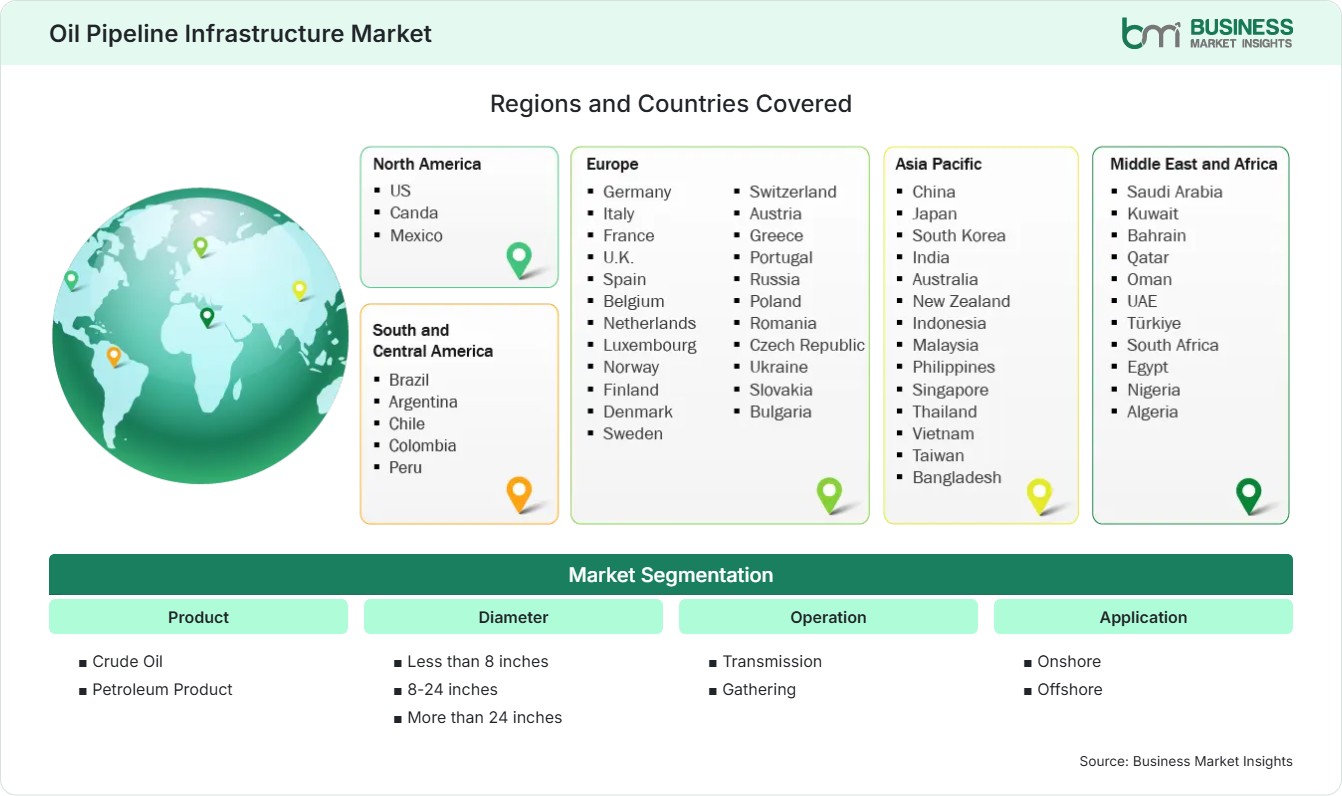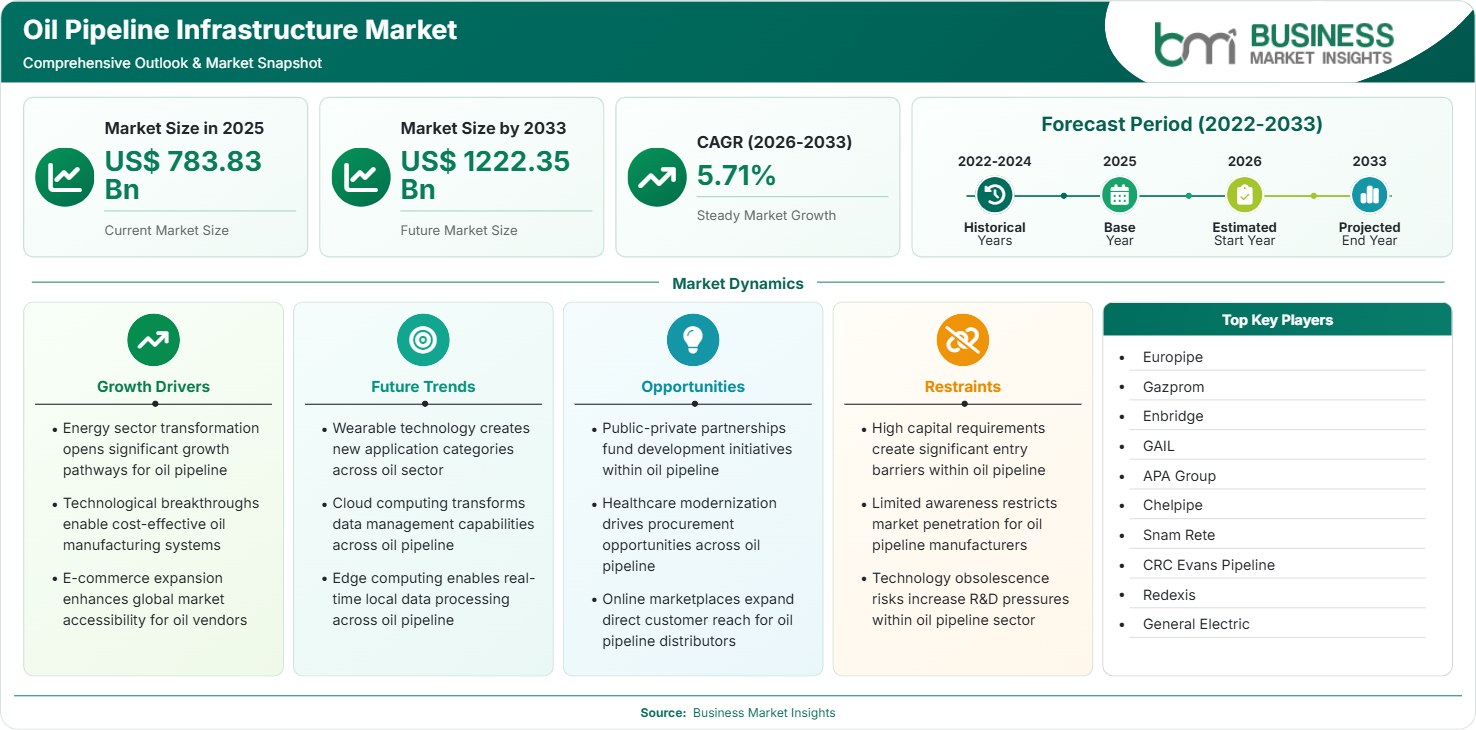
Oil Pipeline Infrastructure Market Regional Highlights
North America Oil Pipeline Infrastructure Market
North America accounts for 36%–39% of global revenue in 2025 and is projected to advance at a CAGR of 5.3%–5.8% through 2033. Strong shale production, export-oriented infrastructure, and replacement of aging assets are key regional themes. Oil Pipeline Infrastructure Market share leadership remains supported by extensive transmission networks and advanced operational practices. Energy security priorities, asset integrity investments, and capacity optimization initiatives continue driving capital expenditure across major pipeline corridors.
- Shale production from key basins supports sustained transportation demand and encourages strategic network expansion projects.
- Pipeline operators are deploying advanced monitoring technologies to improve safety performance and reduce maintenance costs.
- Export infrastructure along major coastal hubs strengthens long-distance transportation requirements.
- Regulatory compliance investments support modernization initiatives and operational resilience.
US Oil Pipeline Infrastructure Market
The United States contributes approximately 74%–78% of regional revenue and records a CAGR of 5.4%–5.9% through the forecast period. Major upstream production regions, extensive midstream networks, and high export activity support market leadership. Significant investments focus on integrity upgrades, digitalization, and throughput optimization. Collaboration among producers, midstream operators, and refiners sustains infrastructure utilization and future development prospects.
- Permian Basin output continues supporting long-term transmission investments.
- Export terminal connectivity drives network enhancement requirements.
- Digital inspection solutions improve operational reliability and planning efficiency.
- Infrastructure modernization programs remain a major capital allocation priority.
Europe Oil Pipeline Infrastructure Market
Europe region accounts for 22%-25% of worldwide revenues in 2025 and is projected to grow at a CAGR of 4.8%-5.3% through 2033. Norway continues to be a top investment destination, while the Eastern European markets have greater growth potential of around 5.5%-6.0%. Supply chain security, infrastructure renewal, and efficiency improvements justify expenditure. Interregional connectivity projects improve regional transport systems and market development.
- Pipeline refurbishment programs support reliability and longevity objectives.
- Norway benefits from continued offshore energy investments.
- Eastern Europe experiences elevated infrastructure modernization activity.
- Digital asset management adoption accelerates across established networks.
Asia Pacific Oil Pipeline Infrastructure Market
Asia Pacific is projected to hold a market share of 24% to 27% in 2025 and exhibit a CAGR of 6.4% to 6.9%, making it the fastest-growing region globally. China is the major investor in the region, whereas India witnesses strong growth. Capacity expansion, rising import demand, and industrialization will continue to drive growth in transportation infrastructure.
- China continues investing in extensive domestic transmission infrastructure.
- India expands crude transportation capacity to support refining growth.
- Regional energy consumption increases demand for reliable logistics networks.
- Import dependency encourages strategic infrastructure planning.
- Smart monitoring systems gain traction among major operators.
Rest of World Oil Pipeline Infrastructure Market
Rest of World accounts for 13%–16% of global revenue and is expected to expand at a CAGR of 5.7%–6.2% during the forecast period. Middle Eastern producers continue investing in export-oriented transportation corridors and production-linked infrastructure.
South and Central America benefit from upstream developments and network reinforcement works. The growth of the market in these regions is supported by energy exports, increased production, and modernization initiatives. Saudi Arabia leads regional spending, while Brazil shows strong momentum through offshore-linked developments.
- National oil companies continue expanding transportation capabilities.
- Offshore production growth supports subsea and coastal infrastructure demand.
- Export-oriented projects strengthen long-distance transmission requirements.
- Strategic energy investments enhance regional competitiveness.
- Infrastructure reliability remains a major operational priority.