
Craft Rum Market Outlook: Size, Share, Trends, Growth Analysis, Competitive Landscape & Forecast, 2026-2033

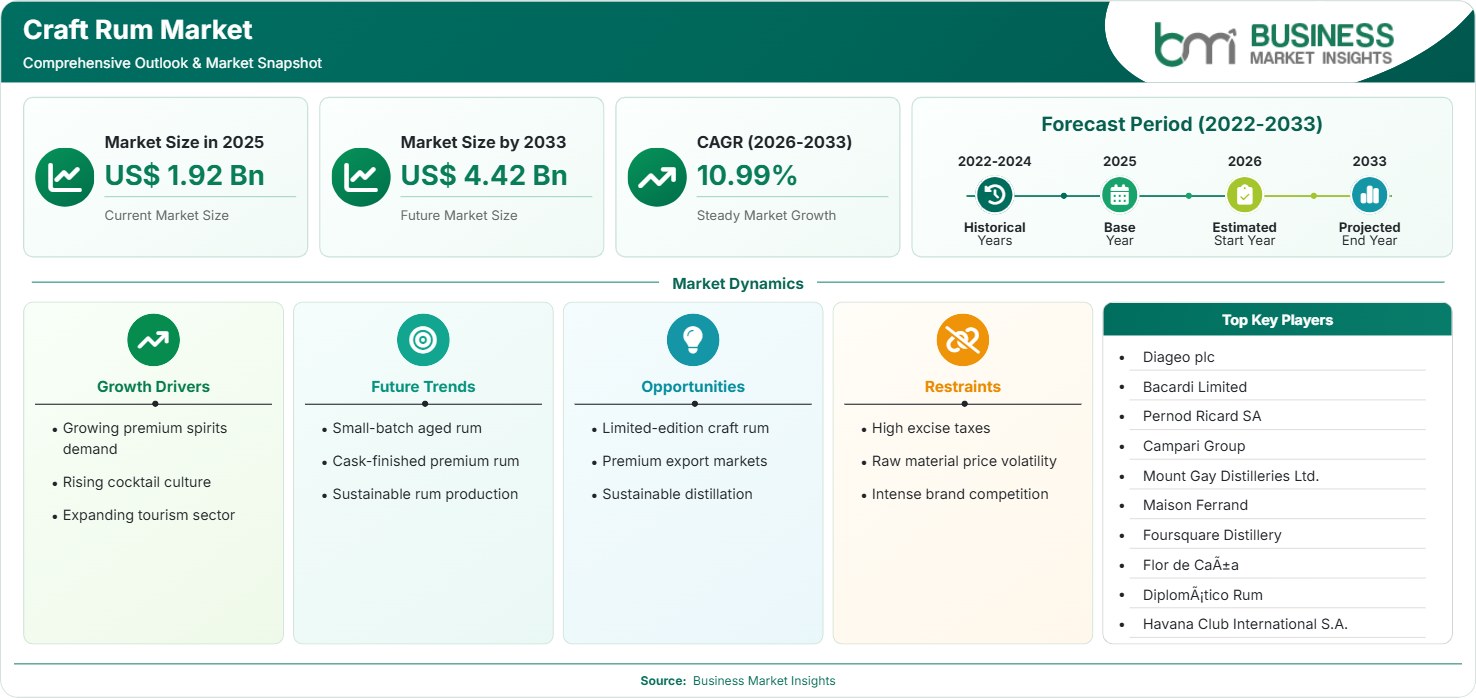
The Craft Rum Market size was valued at US$ 1.92 billion in 2025 and is projected to reach US$ 4.42 billion by 2033, growing at a CAGR of 10.99% during 2026–2033, driven by rising premium spirits consumption, expanding cocktail culture, increasing tourism, growing demand for artisanal alcoholic beverages, and innovation in flavored and aged rum products.

Report Coverage
  • Product Type: Unflavored Craft Rum, Flavor & Spiced Rum, Specialty Craft Rum
  • End Use: Foodservice, Household
US$ 1.92 Bn Market size in 2025
US$ 4.42 Bn Market Size by 2033
10.99% CAGR, 2026 - 2033
2026-2033 Forecast Period

01 AI Overview

Craft Rum Market Summary

  • North America Region: North America held 34%–37% share in 2025 and is expected to grow at a CAGR of 10.2%–10.8% during 2026–2033, supported by premium spirits demand, craft distillery expansion, and strong on-premise consumption. The US market is projected to register a CAGR of 10.3%–10.9%, driven by premiumization trends, cocktail culture, and growing consumer preference for handcrafted spirits.
  • Fastest Growing Region: Asia Pacific accounted for 22%–25% share in 2025 and is forecast to expand at a CAGR of 11.8%–12.6%, fueled by rising disposable income, expanding hospitality industries, premium alcohol consumption, and tourism-driven demand.
  • Leading Segment: Unflavored Craft Rum represented 48%–52% share in 2025 and is expected to grow at a CAGR of 10.6%–11.2%, supported by consumer preference for authentic rum profiles, premium cocktails, and traditional distillation techniques.
  • High Growth Segment: Household consumption is anticipated to expand at a CAGR of 11.8%–12.5% during 2026–2033, driven by premium home mixology, online retail expansion, and increasing at-home social consumption.
  • Key Market Opportunity: Limited-edition premium rum collections, sustainable distillation technologies, premium export expansion, and experiential tourism are creating attractive opportunities for craft rum producers.
  • Major Market Players: Diageo plc, Bacardi Limited, Pernod Ricard SA, Campari Group, Mount Gay Distilleries Ltd., Maison Ferrand, Foursquare Distillery, Flor de Caña, Diplomático Rum, Havana Club International S.A.
02 Strategic Insights

Craft Rum Market: Strategic Insights

Craft Rum Market Strategic Framework
FREE PDF
Request your free sample
Request free sample
03 Stakeholder View

Key Takeaways

  • Premium craft spirits are reshaping the value chain through stronger collaboration between distilleries, distributors, hospitality operators, and specialty retailers.
  • Premium unflavored rum and household consumption channels present the strongest long-term commercial opportunities due to evolving consumer purchasing behavior.
  • Product innovation increasingly focuses on limited editions, barrel-aging techniques, sustainable production, and premium packaging to strengthen brand differentiation.
  • Asia Pacific offers attractive investment opportunities as premium alcohol consumption, tourism, and modern retail infrastructure continue expanding.
  • Strategic acquisitions, premium brand partnerships, and international distribution agreements are strengthening competitive positioning among leading rum producers.
04 Geographic Outlook

Craft Rum Market Regional Highlights

North America Craft Rum Market

North America accounted for 34%–37% share in 2025 and is expected to expand at a CAGR of 10.2%–10.8% during 2026–2033. Strong consumer preference for premium spirits, vibrant cocktail culture, and growing numbers of craft distilleries continue supporting regional leadership. The Craft Rum Market share remains robust due to increasing demand for artisanal alcoholic beverages across restaurants, bars, premium retailers, and e-commerce platforms.

  • Premium cocktail culture continues supporting demand for handcrafted rum across hospitality establishments and specialty beverage retailers.
  • Consumers increasingly prefer authentic spirits featuring traditional distillation methods and premium aging processes.
  • Digital alcohol retailing strengthens access to premium rum brands through direct-to-consumer purchasing channels.
  • Tourism and premium hospitality industries contribute significantly to premium craft spirit consumption.

US Craft Rum Market

The United States represented 29%–32% share in 2025 and is projected to grow at a CAGR of 10.3%–10.9% through 2033. Consumer preference for premium spirits, expanding craft distilleries, growing home mixology trends, and increasing cocktail consumption continue supporting strong demand for artisanal rum products. Premium retail and hospitality channels remain major revenue contributors.

  • Premiumization trends continue encouraging consumers to purchase higher-value handcrafted spirits.
  • Craft cocktail bars increasingly feature artisanal rum within premium beverage menus.
  • Online beverage retailing expands accessibility to premium and limited-edition rum products.

Europe Craft Rum Market

Europe held 28%–31% share in 2025 and is forecast to grow at a CAGR of 10.1%–10.7% between 2026–2033. The United Kingdom, Germany, France, and Spain remain key regional markets supported by mature premium spirits industries, expanding cocktail culture, and increasing consumer interest in premium imported rum. Growth is also supported by tourism and specialty beverage retail expansion.

  • The United Kingdom remains a leading premium rum market supported by established cocktail culture.
  • Germany experiences increasing premium spirits consumption through specialty beverage retailers.
  • France continues expanding demand for premium imported and craft alcoholic beverages.
  • Spain benefits from tourism-driven hospitality demand and premium bar expansion.

Asia Pacific Craft Rum Market

Asia Pacific accounted for 22%–25% of the Craft Rum Market share in 2025 and is projected to register the fastest growth at a CAGR of 11.8%–12.6% during 2026–2033. Rising disposable incomes, premiumization of alcoholic beverages, expanding tourism, and rapid growth of premium hospitality establishments continue supporting regional demand. Countries including China, India, Japan, Australia, and Southeast Asian economies are witnessing increasing consumption of premium spirits through modern retail channels and upscale restaurants.

  • China continues driving premium spirits demand through rising middle-class spending and expanding premium beverage retail.
  • India records increasing craft spirit consumption supported by urbanization, premium hospitality, and changing consumer preferences.
  • Japan strengthens premium rum demand through established cocktail culture and premium dining experiences.
  • Australia benefits from growing craft distillery activity and increasing consumer interest in artisanal alcoholic beverages.

Rest of World Craft Rum Market

Rest of World represented 11%–14% share in 2025 and is expected to expand at a CAGR of 10.8%–11.5% through 2033. Latin America, the Caribbean, the Middle East, and Africa continue to create growth opportunities through tourism, premium hospitality expansion, and increased exports of premium rum brands, according to craft rum market forecasts. Caribbean nations remain important production hubs while emerging markets gradually increase premium spirit consumption.

  • Caribbean distilleries continue strengthening exports through premium and aged rum offerings.
  • Brazil expands premium spirits consumption, supported by urban retail growth and hospitality development.
  • Middle Eastern hospitality investments increase demand for premium beverage offerings in international tourism destinations.
  • African premium beverage markets are gradually expanding due to rising disposable incomes and the development of organized retail.
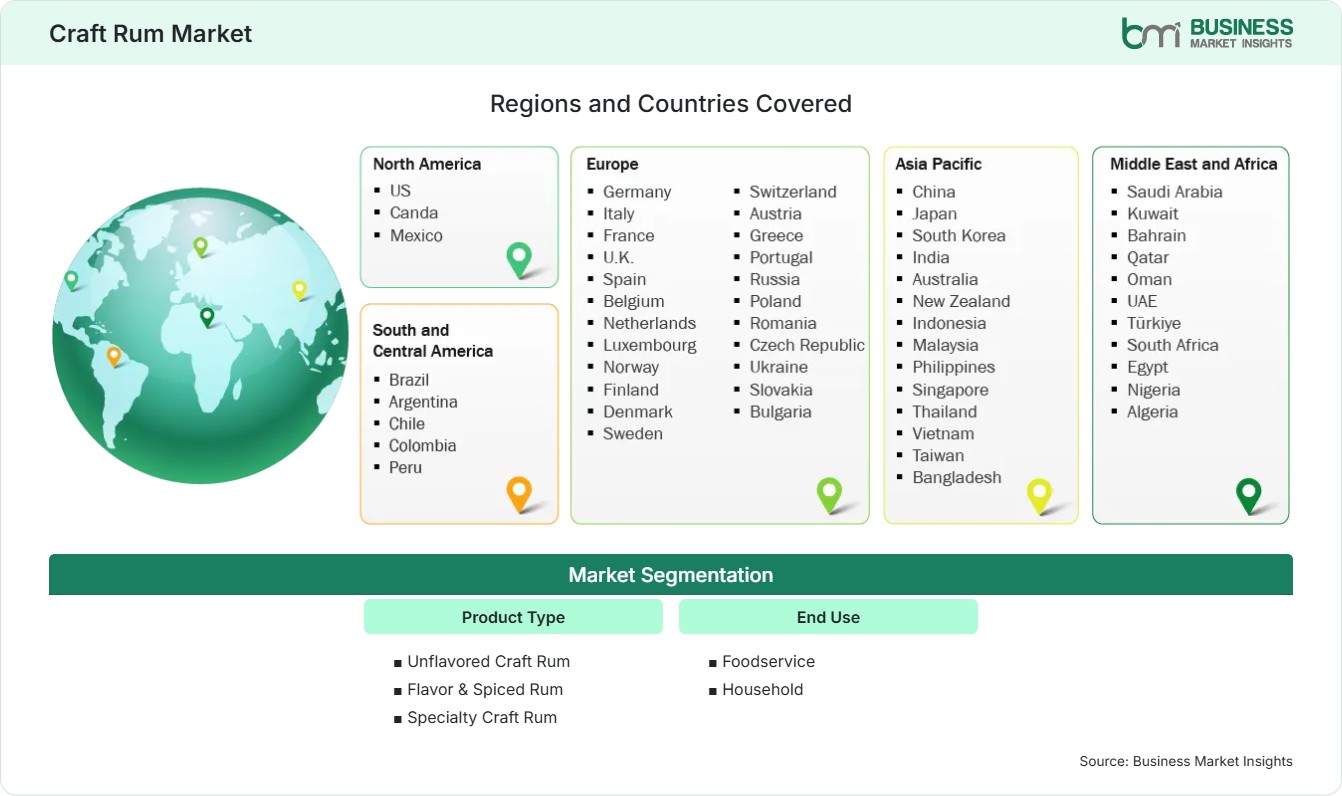
Global Market Geography
FREE PDF
Request your free sample
Request free sample
05 Segment Analysis

Craft Rum Market Segmentation

Product Type

The Product Type segment comprises Unflavored Craft Rum, Flavored & Spiced Rum, and Specialty Craft Rum. The unflavored Craft Rum segment currently holds the highest market position, contributing to an overall market share of 48%–52% in 2025 and showing a CAGR of 10.6%–11.2% in 2026–2033. Market growth and segment leadership are being fueled by consumer demand for authentic flavors, premium cocktails, and traditional distillation. The market's scope is growing as producers expand their premium product ranges by adopting new aging methods and releasing limited editions.

  • Unflavored Craft Rum: Traditional unflavored craft rum still holds its supremacy among premium spirits buyers for its taste preferences, natural sugarcane flavor, and superior craftsmanship. The aged-in-barrel versions, single-origin varieties, and limited batches satisfy those who appreciate quality and tradition. It keeps adding value to premium cocktails and is served neat, thus continuing its popularity in restaurants, bars, and luxury hotels around the world.
  • Flavor & Spiced Rum: Flavored and spiced craft rum continues attracting younger consumers through innovative botanical blends, tropical fruit infusions, natural spices, and creative flavor combinations. These products are widely used in premium cocktails, seasonal beverages, and ready-to-serve drinks. Attractive packaging, limited-edition flavors, and social media-driven marketing campaigns further strengthen consumer engagement and expand the category's presence in global premium spirits markets.
  • Specialty Craft Rum: Specialty craft rum offerings emphasize limited-edition releases, unique cask finishes, extended maturation, and experimental aging techniques to appeal to collectors and premium spirit enthusiasts. Distilleries frequently introduce exclusive batches featuring wine, sherry, bourbon, or cognac barrel finishes to create distinctive flavor profiles. These premium products command higher prices, strengthen brand prestige, and drive growth in luxury retail and collector-focused markets.

End Use

The End Use segment has two categories: Foodservice and Household. Foodservice remains the primary source of revenue for restaurants, bars, luxury hotels, and other hospitality establishments. Household consumption is the fastest-growing category, driven by expanding e-commerce platforms, luxurious home entertainment, and increased interest in cocktail preparation, aligning with craft rum market trends.

  • Foodservice: Premium cocktail bars, restaurants, hotel facilities, resorts, and other venues involved in the luxury hospitality industry remain the key drivers of commercial demand for craft rums through the introduction of premium cocktail mixes. Craft and limited-edition rums are now common ingredients in mixologist-prepared cocktails, while fine-dining restaurants focus on offering premium drink pairings. Growing tourism, corporate events, and nightlife activities further strengthen on-premise consumption and support consistent demand for high-quality craft rum products.
  • Household: Household spending on products is steadily rising through e-commerce sites, gifting of premium products, beverage subscription services, and a growing trend in home mixology. People have increasingly begun buying craft rum for personal consumption, partying, and mixing cocktails, owing to online advertising, virtual tastings, influencer endorsements, and easy DTC sales. Increased disposable income and desire for premium home entertainment also drive household demand.  
06 Market Forces

Craft Rum Market Dynamics

Key Market Drivers

Growing Premium Spirits Demand

With the growing consumer inclination toward premium alcoholic drinks, the global need for handcrafted rum has continued to grow. With growing disposable income, the trend toward premiumization and the appreciation of traditional distilling methods encourage consumers to opt for authentic craft spirits. Packaging and marketing heritage, flavors, and limited-batch production have helped develop consumer preference, supporting sustained Craft Rum Market growth across domestic and international markets.

Rising Cocktail Culture

The rise in popularity of cocktail bars, upscale dining establishments, and premium lounges is causing increased demand for premium rum. Bartenders are increasingly mixing premium rum into signature cocktails, offering customers an experience with unique flavoring and artisanal spirits. The hospitality industry continues to expand its premium beverage menu, and cocktail events and social media trends help maintain craft rum sales growth.

Expanding Tourism Sector

An increasingly thriving tourism industry helps make premium rum, as luxury hotels, cruises, gourmet food service facilities, and distillation destinations promote their products. Tourism in the Caribbean and Latin America helps tourists experience traditional rum-making practices, thereby increasing sales and exports of the product. Distillery tours and tastings help develop consumer awareness and create demand for premium craft rum.

Key Market Opportunities

Limited-edition Craft Rum Collections

Streams of premium income are becoming feasible owing to the launch of limited-edition products, as consumers seek distillations produced using unique methods that set them apart. According to craft rum market forecasts, there is increasing consumer interest in the release of single casks, vintages, experimental barrel finishes, and limited collaborations. Seasonal releases, numbered bottles, and premium packaging are becoming popular among distilleries to increase their brand value and profit margins across luxury retail and hospitality channels.

Expansion into Premium Export Markets

The growing popularity of premium liquor products worldwide has created considerable export potential for craft rum manufacturers. Consumers in North America, Europe, and Asia Pacific are now looking for genuine, high-quality liquors with distinct regional character. Rum distilleries are developing distribution channels worldwide and are making a name for themselves in the duty-free retail market, as well as through premium bars, luxury hotels, and specialty liquor shops, all in line with international quality standards.

Sustainable Distillation Practices

These sustainability programs are leading to increased growth opportunities for distilleries since more people want responsibly-made alcohol products. Distilleries are adopting renewable energy programs, water recycling programs, sustainable sourcing of sugarcane, lightweight packaging, biodegradable materials, and carbon offsetting programs. Such programs increase operational efficiencies, brand reputation, regulatory compliance, reduce production costs, and increase competitiveness in the global premium beverages industry.

Market Restraints and Challenges

High Excise Taxes

Factor: Alcoholic beverages remain subject to substantial excise duties and varying taxation policies across countries. Impact: High tax burdens increase retail prices, reducing affordability and limiting premium craft rum consumption in price-sensitive markets. Frequent regulatory changes also create uncertainty for producers planning international expansion strategies. Companies must optimize pricing, distribution, and product positioning to remain competitive and maintain profitability across different tax regimes.

Raw Material Price Volatility

Factor: Fluctuations in sugarcane, molasses, packaging materials, transportation, and energy costs directly influence production expenses. Impact: Rising input costs compress operating margins and increase final product prices, particularly for small craft distilleries with limited purchasing power. Producers increasingly diversify sourcing strategies, improve operational efficiency, and invest in sustainable supply chains to reduce exposure to commodity price volatility.

07 Company Analysis

Competitive Landscape

The Craft Rum Market analysis reflects a competitive environment driven by premium product innovation, heritage branding, international expansion, and sustainable production practices. Leading producers are investing in limited-edition offerings, premium aging techniques, direct-to-consumer channels, and strategic acquisitions to strengthen global market presence while addressing evolving consumer demand for authentic craft spirits.

Company Name

Overview

Products and Services Relevant to this Market

Diageo plc

Global premium beverage company with an extensive international spirits portfolio.

Premium rum brands, aged rum, craft spirits, distribution and brand management.

Bacardi Limited

One of the world's largest privately owned spirits companies.

Premium rum, flavored rum, cocktail spirits, premium beverage portfolio.

Pernod Ricard SA

Global producer of premium wines and spirits.

Premium rum, imported spirits, luxury beverage distribution.

Campari Group

International spirits producer focused on premium alcoholic beverages.

Premium rum, cocktail spirits, specialty alcoholic beverages.

Mount Gay Distilleries Ltd.

Historic Barbados rum producer specializing in premium craft rum.

Aged rum, premium craft rum, limited-edition collections.

Maison Ferrand

Premium spirits producer recognized for artisanal distillation expertise.

Plantation Rum portfolio, aged rum, specialty premium spirits.

Foursquare Distillery

Independent Barbados distillery producing award-winning premium rum.

Small-batch rum, cask-strength rum, premium aged expressions.

Flor de Caña

Premium sustainable rum producer from Nicaragua.

Aged rum, sustainable premium rum, luxury rum portfolio.

Diplomático Rum

Premium Venezuelan rum producer with international distribution.

Super-premium rum, reserve collections, sipping rum products.

Havana Club International S.A.

International producer specializing in Cuban rum heritage.

White rum, aged rum, cocktail rum, premium reserve collections.

08 Industry Activity

Recent Developments

June 2026

Wicked Dolphin Rum won a Double Gold Medal at the 2026 San Francisco World Spirits Competition for its 3-Year Barrel Aged Rum, crafted from Florida-grown sugarcane and aged in American oak barrels, strengthening its position in the premium market through international recognition.

June 2026

Desert Diamond Distillery won a Gold Medal and earned 98 points at the 2026 International Wine & Spirit Competition for its 10-Year Gold Miner Premium Crafted Barrel Rum Reserve. The recognition positioned the distillery among only 16 rum producers worldwide to receive the distinction, reinforcing its presence in the premium aged rum segment.

February 2026

Third Eye Distillery and Lost & Found launched a tropical spiced rum in Goa, marking its expansion into the premium spiced rum category. The launch broadened the company's spirits portfolio, with planned distribution across Maharashtra, Haryana, and Karnataka to strengthen its presence in India's premium rum market.

January 2026

Brix Distillers entered voluntary administration, with administrators appointed to oversee the process while exploring the sale of the business or recapitalisation, marking a significant development for Australia's craft rum industry.

10 Trust & Transparency

Research Methodology

The market analysis combines proprietary research with secondary data from government agencies, company disclosures, regulatory filings, industry databases and expert interviews. Market estimates are validated through data triangulation, cross-market benchmarking and analyst review.

View Full Research Methodology

11 Questions Answered

Frequently Asked Questions

What does the market include?

The Craft Rum Market Report provides analysis of market size, regional trends, segmentation, competitive landscape, industry dynamics, opportunities, challenges, and future growth outlook.

How does tourism influence craft rum demand?

Tourism supports craft rum consumption through destination distilleries, luxury hospitality venues, duty-free retail channels, and consumer exposure to regional rum heritage.

Why is premiumization important for craft rum producers?

Premiumization allows producers to introduce higher-value products through aged expressions, limited editions, sustainable production, and unique brand storytelling, improving consumer engagement and profitability.

Which product type dominates the craft rum segment?

Unflavored Craft Rum leads due to consumer preference for traditional rum profiles, premium cocktails, authentic production methods, and versatility across different consumption occasions.

What factors are driving the Craft Rum Market growth?

The market is driven by premium spirits demand, expanding cocktail culture, tourism growth, consumer interest in authentic craft beverages, and increasing demand for aged and specialty rum products.

Access the Full Craft Rum Market Report

Get segment-level forecasts, regional estimates, competitive benchmarking, company profiles and downloadable Excel datasets.

Access the full Craft Rum Market Report
350 pages PDF & Excel | 2026-07-31