
Craft Wine Market Outlook: Size, Share, Trends, Growth Analysis, Competitive Landscape & Forecast, 2026-2033

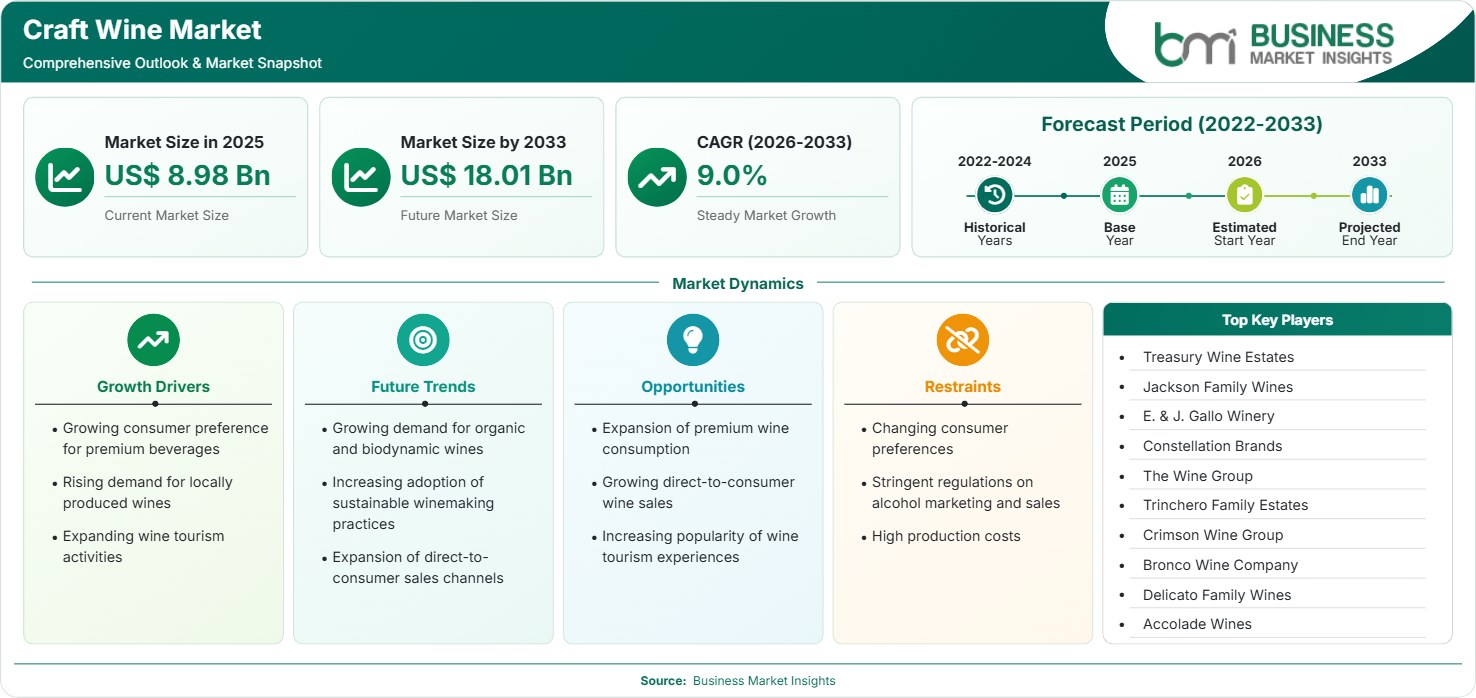
The Craft Wine Market size was valued at US$ 8.98 Billion in 2025 and is projected to reach US$ 18.01 Billion by 2033, growing at a CAGR of 9.0% from 2026 to 2033. Growth is supported by premium beverage demand, locally produced wine preferences, wine tourism expansion, direct-to-consumer channels, and increasing interest in unique artisanal wine experiences.

Report Coverage
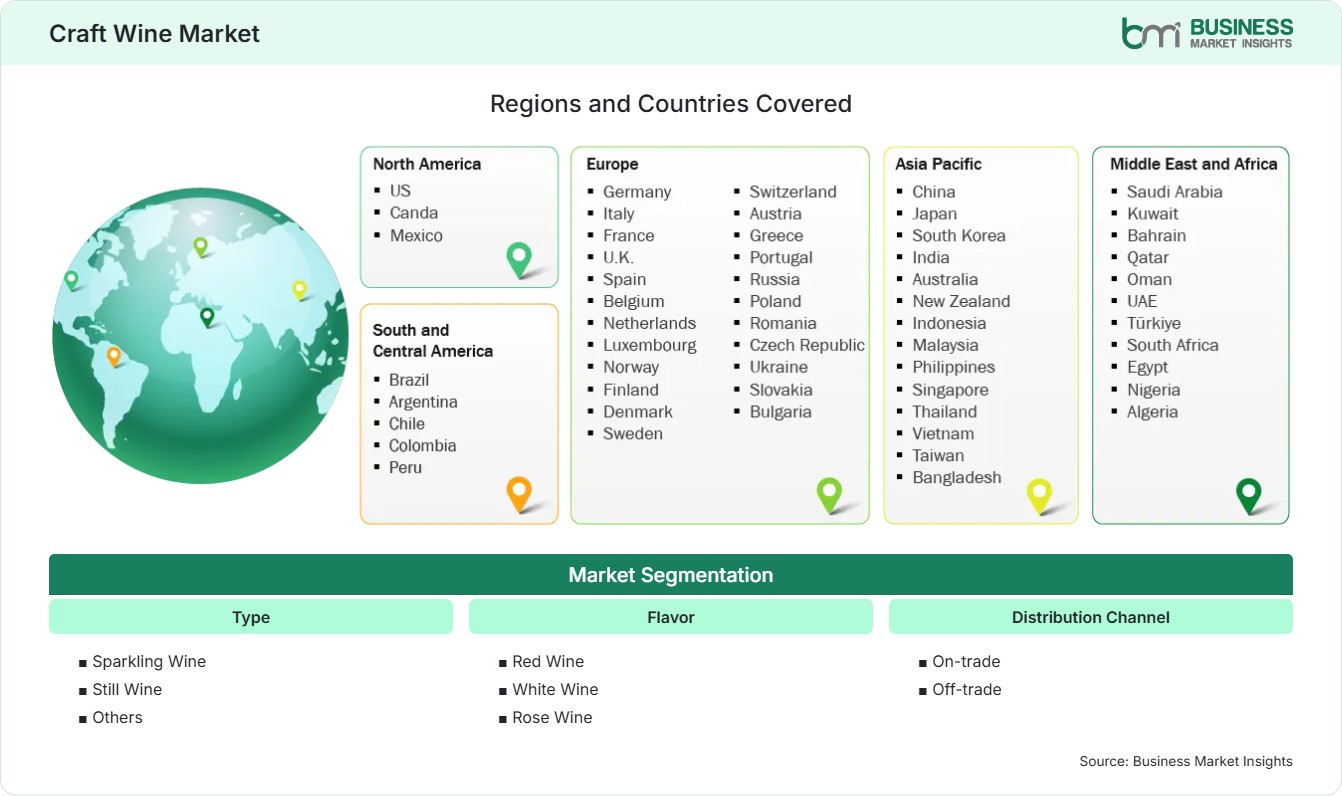
  • Type: Sparkling Wine, Still Wine, Others
  • Flavor: Red Wine, White Wine, Rose Wine
  • Distribution Channel: On-trade, Off-trade
US$ 8.98 Bn Market size in 2025
US$ 18.01 Bn Market Size by 2033
9.0% CAGR, 2026 - 2033
2026-2033 Forecast Period

AI Overview

Craft Wine Market Summary

  • North America Region: North America holds a market share of 38%–41% in 2025 and is projected to grow at a CAGR of 8.5%–9.3% during 2026–2033, supported by premium wine consumption, strong winery networks, direct sales channels, and expanding wine tourism. The US market is expected to register a CAGR of 8.7%–9.5% through 2033, driven by boutique wineries, consumer experimentation, and premium beverage adoption.
  • Fastest Growing Region: Asia Pacific represents 16%–19% share in 2025 and is forecast to expand at a CAGR of 10.2%–11.0% during 2026–2033, supported by rising disposable incomes, growing wine appreciation, urban lifestyle changes, expanding hospitality sectors, and increasing interest in premium international and locally crafted wine products.
  • Leading Segment: Still Wine accounts for a market share of 55%–58% in 2025 and is projected to grow at a CAGR of 8.6%–9.4% during 2026–2033, supported by broad consumer acceptance, established production practices, diverse flavor profiles, and strong availability across retail and hospitality channels.
  • High Growth Segment: Sparkling Wine represents a high-growth segment with a market share of 18%–21% in 2025 and is expected to grow at a CAGR of 10.0%–10.8% during 2026–2033, driven by celebration-based consumption, premium positioning, younger consumer interest, and expanding availability through online channels.
  • Key Market Opportunity: Premiumization, direct-to-consumer sales models, experiential wine tourism, and personalized craft wine offerings are creating opportunities for wineries to strengthen customer engagement and increase brand loyalty.
  • Major Market Players: Treasury Wine Estates, Jackson Family Wines, E. & J. Gallo Winery, Constellation Brands, The Wine Group, Trinchero Family Estates, Crimson Wine Group, Bronco Wine Company, Delicato Family Wines, Accolade Wines.
Strategic Insights

Craft Wine Market: Strategic Insights

Craft Wine Market Strategic Framework
FREE PDF
Request your free sample
Request free sample
Stakeholder View

Key Takeaways

  • The craft wine value chain is shifting toward smaller-batch production, sustainable vineyard management, digital sales platforms, and consumer-focused branding strategies that enhance product differentiation.
  • Premium wines, sparkling varieties, and personalized offerings provide significant growth potential as consumers increasingly prioritize quality, authenticity, and unique beverage experiences.
  • Innovation is centered around sustainable winemaking practices, alternative packaging formats, low-intervention production methods, and technology-enabled customer engagement approaches.
  • North America remains a strategic investment region due to established winery ecosystems, strong premium wine demand, and expanding direct-to-consumer sales opportunities.
  • Competitive strategies are increasingly focused on winery acquisitions, portfolio expansion, regional brand development, and strengthening online sales capabilities.
  • Wine tourism is becoming an important revenue stream by combining beverage consumption with travel experiences, hospitality services, and customer relationship development.
Geographic Outlook

Craft Wine Market Regional Highlights

North America Craft Wine Market

North America accounted for a 38%–41% of the Craft Wine Market share in 2025 and is projected to grow at a CAGR of 8.5%–9.3% during 2026–2033. The region benefits from established winery ecosystems, strong premium beverage consumption, direct-to-consumer sales models, and expanding wine tourism activities. The US represents the largest contributor due to its extensive vineyard regions, consumer willingness to explore boutique wines, and increasing adoption of personalized wine experiences.

  • The US market benefits from strong winery networks, premium wine demand, e-commerce adoption, and increasing consumer interest in locally produced beverages.
  • California remains a major wine-producing hub due to established vineyards, tourism infrastructure, and strong brand recognition among domestic and international consumers.
  • Direct-to-consumer sales channels are expanding through winery subscriptions, online platforms, and personalized customer engagement programs.
  • Premium wine brands are investing in sustainable production practices and unique storytelling strategies to strengthen consumer loyalty.

US Craft Wine Market

The US represented a 34%–37% share of the Craft Wine Market in 2025 and is expected to grow at a CAGR of 8.7%–9.5% from 2026–2033. Growth is supported by increasing premium beverage consumption, regional winery expansion, wine tourism development, and rising demand for authentic products. Craft producers are focusing on limited-release wines, sustainable vineyards, and digital sales strategies to attract younger and experience-oriented consumers.

  • Boutique wineries are increasing market participation through specialized products, tasting experiences, and direct consumer relationships.
  • Online wine sales are expanding due to convenient purchasing options, subscription models, and improved digital marketing strategies.
  • Younger consumers are exploring premium wines through experiential events, social media engagement, and educational wine experiences.

Europe Craft Wine Market

Europe held a 28%–31% share of the Craft Wine Market in 2025 and is forecast to expand at a CAGR of 8.2%–9.0% during 2026–2033. The region benefits from long-standing wine traditions, diverse grape varieties, and strong tourism-based wine consumption. France, Italy, Spain, Germany, and Portugal are leading markets due to established vineyards and growing demand for premium, sustainable, and region-specific wines.

  • France maintains strong market influence through premium wine production, heritage vineyards, and global recognition of regional wine identities.
  • Italy is expanding craft wine adoption through diverse grape varieties, tourism activities, and increasing export opportunities.
  • Spain is developing premium wine categories through sustainable production methods and modernization of winery operations.
  • Germany and Portugal are gaining attention through boutique wineries, specialty products, and growing consumer interest in unique wine experiences.

Asia Pacific Craft Wine Market

Asia Pacific accounted for a 16%–19% share of the Craft Wine Market in 2025 and represents the fastest-growing region with a CAGR of 10.2%–11.0% during 2026–2033. The region benefits from rising disposable incomes, expanding hospitality sectors, urban lifestyle changes, and increasing awareness of premium alcoholic beverages. China, Japan, Australia, South Korea, and India are key contributors due to growing wine consumption and developing domestic wine industries.

  • China is expanding premium wine consumption through urban consumers, luxury beverage demand, and hospitality sector development.
  • Australia benefits from established wine production capabilities, export strength, and growing interest in sustainable winery practices.
  • Japan and South Korea are experiencing increasing wine appreciation through premium retail channels and changing consumer preferences.
  • India is emerging as a growth market through rising urban consumption, hospitality expansion, and increasing wine tourism initiatives.

Rest of World Craft Wine Market

Rest of World represented a 8%–11% share of the Craft Wine Market in 2025 and is projected to grow at a CAGR of 8.8%–9.6% during 2026–2033. Latin America, the Middle East, and Africa are experiencing gradual growth due to expanding tourism, hospitality investments, and increasing interest in premium beverage categories. Regional wineries are improving production capabilities while consumers are exploring diverse wine experiences through specialty channels.

  • Latin American countries are increasing craft wine production through vineyard development, tourism growth, and premium export opportunities.
  • Chile and Argentina are strengthening market presence through established wine industries and international recognition of regional varieties.
  • South Africa is expanding wine tourism and premium wine offerings through sustainable vineyard practices and export-focused production.
  • Middle Eastern markets are developing premium beverage segments through hospitality growth and controlled wine tourism initiatives.
Global Market Geography
FREE PDF
Request your free sample
Request free sample
Segment Analysis

Craft Wine Market Segmentation

Type

The type segment comprises Sparkling Wine, Still Wine, and Other categories. These categories indicate different kinds of winemaking processes and consumer preferences in the Craft Wine Market. This segment accounts for the entire market revenue base in 2025 and is expected to grow at a CAGR of 9.0% from 2026-2033. Still wines enjoy good popularity among consumers, whereas sparkling wines have begun to make a mark due to their premium positioning and consumption. Craft producers are focusing on limited-batch production, unique grape varieties, and differentiated branding to strengthen market presence.

  • Sparkling Wine: Sparkling wine demand is increasing through premium celebrations, social occasions, luxury positioning, and growing consumer interest in sophisticated beverage experiences.
  • Still Wine: Still wine remains dominant due to broad acceptance, diverse flavor profiles, established consumption habits, and extensive availability across global retail channels.

Flavor

The flavor segment comprises Red Wine, White Wine, and Rose Wine. Each of them targets consumers based on their preferences, occasions, and usage. The flavor segment represented the entire market revenue base in 2025 and is projected to grow at a CAGR of 9.0% during 2026-2033. Experiments, premiumization, and regional attributes of wines are affecting consumer taste preferences. Product differentiation is being achieved by craft wineries through unique techniques and grapes, along with a storytelling brand approach.

  • Red Wine: Red wine maintains strong demand due to rich flavor profiles, food pairing applications, premium positioning, and established consumer preference worldwide.
  • White Wine: White wine adoption is supported by lighter taste preferences, seasonal consumption patterns, seafood pairings, and increasing interest among younger consumers.
  • Rose Wine: Rose wine is gaining popularity through refreshing characteristics, lifestyle branding, social occasions, and expanding demand among experience-focused consumers.

Distribution Channel

The distribution channel segment involves two major channels of On-trade and Off-trade, which form major channels for craft wine sales and accessibility. The segment formed the total market revenue basis in 2025 and is expected to exhibit a 9.0% CAGR between 2026-2033. Wine producers are focusing on developing their experience in the hospitality and retail sectors to attract consumers. Digital platforms, subscriptions, and direct deals with wineries are transforming buying trends alongside support from restaurants and wine-related venues.

  • On-trade: On-trade channels create demand through the hospitality experience provided by restaurants, hotels, wine bars, tasting rooms, and premium consumption.
  • Off-trade: Off-trade channels develop through supermarkets, specialty stores, digital platforms, and direct-to-consumer sales.
Market Forces

Craft Wine Market Dynamics

Key Market Drivers

Growing Consumer Preference for Premium Beverages

The growing consumer demand for quality beverages plays a pivotal role in market expansion. The trends associated with premiumization motivate wineries to create limited-edition, sustainable, and regional wines with unique branding. Consumers tend to become more interested in purchasing high-end beverages via tastings, specialty stores, and winery visits. The Craft Wine Market trends show that wineries are making an effort to engage with consumers and meet their demands through personalized experiences, digital interaction, and ethical production. The premium strategy is a way for craft wineries to compete with other wine producers.

Rising Demand for Locally Produced Wines

Increasing demand for locally made wines has led to market expansion, with customers valuing the wines' identity, authenticity, and sustainable production methods. Local wineries have benefited from customers' interest in farm-to-table practices, regional offerings, and specific grape varieties. Tourist activities and wine experiences for the locals have raised awareness of local wine producers. Local wineries are utilizing stories and vineyard experiences to foster brand loyalty. This trend is encouraging investment in small-scale production capabilities, regional branding initiatives, and sustainable agricultural practices that support long-term industry development.

Expanding Wine Tourism Activities

Expanding wine tourism activities are contributing to market growth by creating direct engagement opportunities between wineries and consumers. Vineyard visits, tasting experiences, festivals, and educational events are increasing consumer awareness and supporting premium product sales. Tourism in wine helps build connections with customers while generating additional revenue for the industry through hospitality and purchasing activities. Areas with established wine traditions are developing their tourism industries to attract visitors from both within and outside the country. The combination of travel and beverages has helped craft wineries improve their facilities and offer more experiences to customers.

Key Market Opportunities

Expansion of Premium Wine Consumption

The growing number of people drinking premium wine is creating new opportunities for craft wineries, as many are seeking distinctive wines with exceptional provenance, quality, and a story behind their production. The process of premiumization is motivating producers to release special-edition products, sustainable wines, and distinct wines that appeal to more valuable customers. Investments in vineyard development, fermentation processes, and branding are helping wineries position themselves to improve their market standing. The increasing focus on experience-based consumption is also facilitating premium wine consumption through tasting and hospitality programs and membership programs. Such trends are positively influencing Craft Wine Market forecasts by enabling craft producers to enhance customer engagement, improve profit margins, and build stronger brand identities in domestic and international markets.

Growing Direct-to-Consumer Wine Sales

Growing direct-to-consumer wine sales are creating opportunities by allowing wineries to establish direct relationships with customers, improve brand visibility, and increase sales efficiency. Advancements in technology, through digital platforms, subscriptions, and memberships, have enabled producers to interact with their consumers without fully relying on conventional distribution channels. It is advantageous for small-scale wineries to make use of online marketing, recommendations, and consumer behavior analysis to increase engagement. The development of the e-commerce system and the adoption of digital payments allow consumers to buy craft wines easily. In addition, direct-to-consumer selling channels offer producers an opportunity to sell exclusive items and receive consumer feedback.

Increasing Popularity of Wine Tourism Experiences

Growing trends in wine tourism are creating business opportunities as consumers combine travel, leisure, and beverage consumption. Wine producers are investing in engaging activities such as wine tours, tastings, and food pairings to attract consumers and build brands. The adoption of tourism activities has enabled specialty wine producers to earn more through wine tourism initiatives showcasing regional wines. Hospitality investments and marketing campaigns are allowing wine tourism activities to expand in existing and new regions. Wine tourism activities encourage repeat business, create consumer awareness, and provide small wineries with an excellent platform for their wines.

Market Restraints and Challenges

Changing Consumer Preferences

Factor: Changing consumer preferences create challenges for craft wine producers as younger consumers increasingly explore alternative alcoholic beverages, low-alcohol products, and non-alcoholic options. Impact: Shifting consumption patterns can affect traditional wine demand, requiring wineries to adapt product portfolios, marketing strategies, and innovation approaches. Producers are responding through the development of new wine styles, sustainable products, and consumer-focused experiences to maintain relevance. Increased competition from other beverage categories requires craft wineries to strengthen brand differentiation and understand evolving purchasing behaviors. Continuous market monitoring and product innovation remain essential for maintaining consumer engagement in a changing beverage landscape.

Stringent Regulations on Alcohol Marketing and Sales

Factor: Stringent regulations on alcohol marketing and sales create operational challenges through restrictions on advertising, distribution practices, labeling requirements, and promotional activities. Impact: Regulatory limitations can increase compliance costs, restrict brand communication strategies, and influence market expansion opportunities across different regions. Craft wineries must navigate varying national and regional regulations while maintaining effective consumer engagement. Companies are investing in compliance systems, responsible marketing approaches, and transparent labeling practices to address regulatory requirements. Although regulations support responsible consumption, they can create additional complexity for smaller producers seeking broader market visibility and distribution expansion.

Company Analysis

Competitive Landscape

The Craft Wine Market analysis shows that the beverage sector is highly competitive, comprising established, family-owned, and premium wine firms that are increasingly focusing on brand differentiation, regionality, and consumer interaction. The competitors are competing through product portfolio diversification, sustainable business operations, a direct-to-consumer business model, and experiential marketing. The major competitors are improving their vineyard skills, building online presence, and creating premium wine segments. Strategic acquisitions, partnerships, and international expansion remain important approaches for improving market presence.

Company Name

Overview

Products and Services relevant to this market

Treasury Wine Estates

Treasury Wine Estates is a global wine company with premium wine portfolios.

Premium wines, craft wine brands, vineyard operations, and wine experiences.

Jackson Family Wines

Jackson Family Wines produces premium wines from diverse vineyard regions.

Craft wines, estate wines, sustainable wine production, and tasting experiences.

E. & J. Gallo Winery

E. & J. Gallo Winery is a major global wine producer.

Wine brands, premium wines, craft wine offerings, and distribution solutions.

Constellation Brands

Constellation Brands develops beverage portfolios with a strong wine presence.

Premium wines, wine brands, beverage marketing, and distribution networks.

The Wine Group

The Wine Group produces wines across multiple consumer categories.

Wine products, premium labels, craft wine offerings, and consumer brands.

Trinchero Family Estates

Trinchero Family Estates operates family-owned wine brands globally.

Craft wines, premium wines, vineyard products, and winery experiences.

Crimson Wine Group

Crimson Wine Group focuses on premium and luxury wine production.

Estate wines, boutique wines, vineyards, and direct sales channels.

Bronco Wine Company

Bronco Wine Company produces wines across multiple market segments.

Wine brands, specialty wines, vineyards, and distribution services.

Delicato Family Wines

Delicato Family Wines develops premium wine brands with global reach.

Craft wines, sustainable wines, premium labels, and winery operations.

Accolade Wines

Accolade Wines manages international wine brands and portfolios.

Wine brands, premium wines, distribution networks, and consumer offerings.

Industry Activity

Recent Developments

October 2025

Craft & Art Wine and Spirits announced a strategic investment partnership with Sip & Savor Investments to expand its capabilities, strengthen brand-building resources, and accelerate growth of its portfolio of wine and beverage brands across the U.S. market.

August 2025

Diageo India announced the development of The Good Craft Co. Flavour Market in Ponda, Goa, a large-scale craft beverage destination combining a craft distillery, innovation lab, startup incubator, retail hub, and consumer experience centre. The project is designed to support craft beverage innovation and strengthen India’s premium craft alcohol ecosystem.

August 2025

The Artisanal Spirits Company announced expansion into India through a new franchise partnership with PNM Tech Beverages, supporting wider distribution of its premium craft beverage portfolio and strengthening its presence in emerging craft alcohol markets.

July 2024

Maker Wine, a premium craft canned wine producer, announced a distribution partnership with Regal Wine Company to expand availability of its minimal-intervention wines and Reserve portfolio across California, strengthening retail distribution for craft wine products.

Trust & Transparency

Research Methodology

The market analysis combines proprietary research with secondary data from government agencies, company disclosures, regulatory filings, industry databases and expert interviews. Market estimates are validated through data triangulation, cross-market benchmarking and analyst review.

View Full Research Methodology

Questions Answered

Frequently Asked Questions

What does this Craft Wine Market Report provide?

This market report provides analysis of market size, segmentation, regional performance, competitive landscape, recent developments, growth drivers, opportunities, challenges, and future industry trends.

What opportunities are available for craft wine producers?

Opportunities include premium product expansion, online direct sales, sustainable wine development, personalized customer experiences, and growth in emerging wine-consuming regions.

How is wine tourism influencing craft wine sales?

Wine tourism supports market growth by creating direct consumer relationships through vineyard visits, tasting events, educational programs, and immersive experiences that encourage brand loyalty and premium purchases.

Which segment dominates the market?

Still Wine represents the leading segment due to broad consumer acceptance, extensive availability, established production methods, and strong usage across retail, hospitality, and direct winery channels.

What factors are driving the Craft Wine Market growth?

The market is driven by increasing premium beverage preferences, demand for locally produced wines, expanding wine tourism, direct-to-consumer sales growth, and consumer interest in authentic and differentiated wine experiences.

Access the Full Craft Wine Market Report

Get segment-level forecasts, regional estimates, competitive benchmarking, company profiles and downloadable Excel datasets.

Access the full Craft Wine Market Report
350 pages PDF & Excel | 2026-08-04