
Corporate Wellness Market Outlook: Size, Share, Trends, Growth Analysis, Competitive Landscape & Forecast, 2026-2033

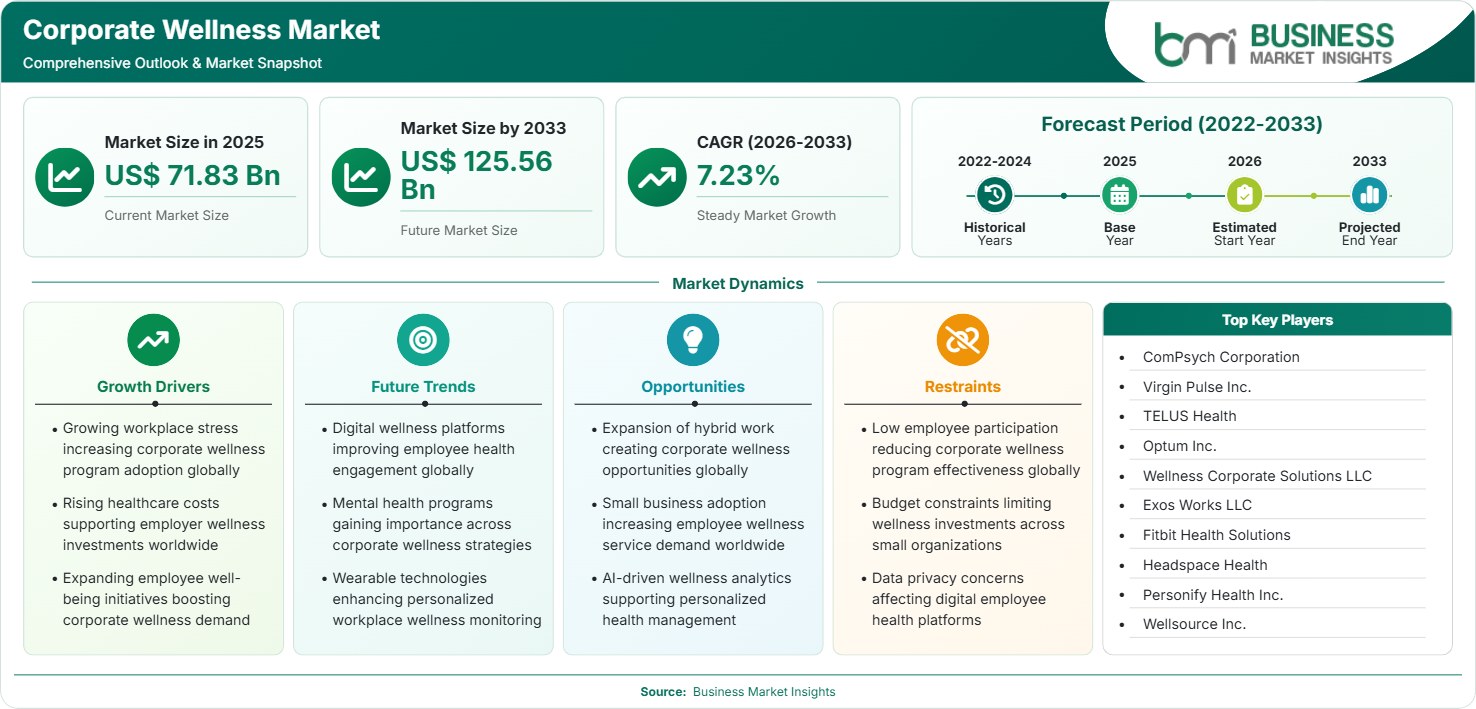
The Corporate Wellness Market size was valued at US$ 71.83 billion in 2025 and is projected to reach US$ 125.56 billion by 2033, growing at a CAGR of 7.23% during 2026–2033, driven by increasing workplace stress, employer healthcare cost management, employee well-being initiatives, digital health platforms, and preventive healthcare adoption across organizations.

Report Coverage
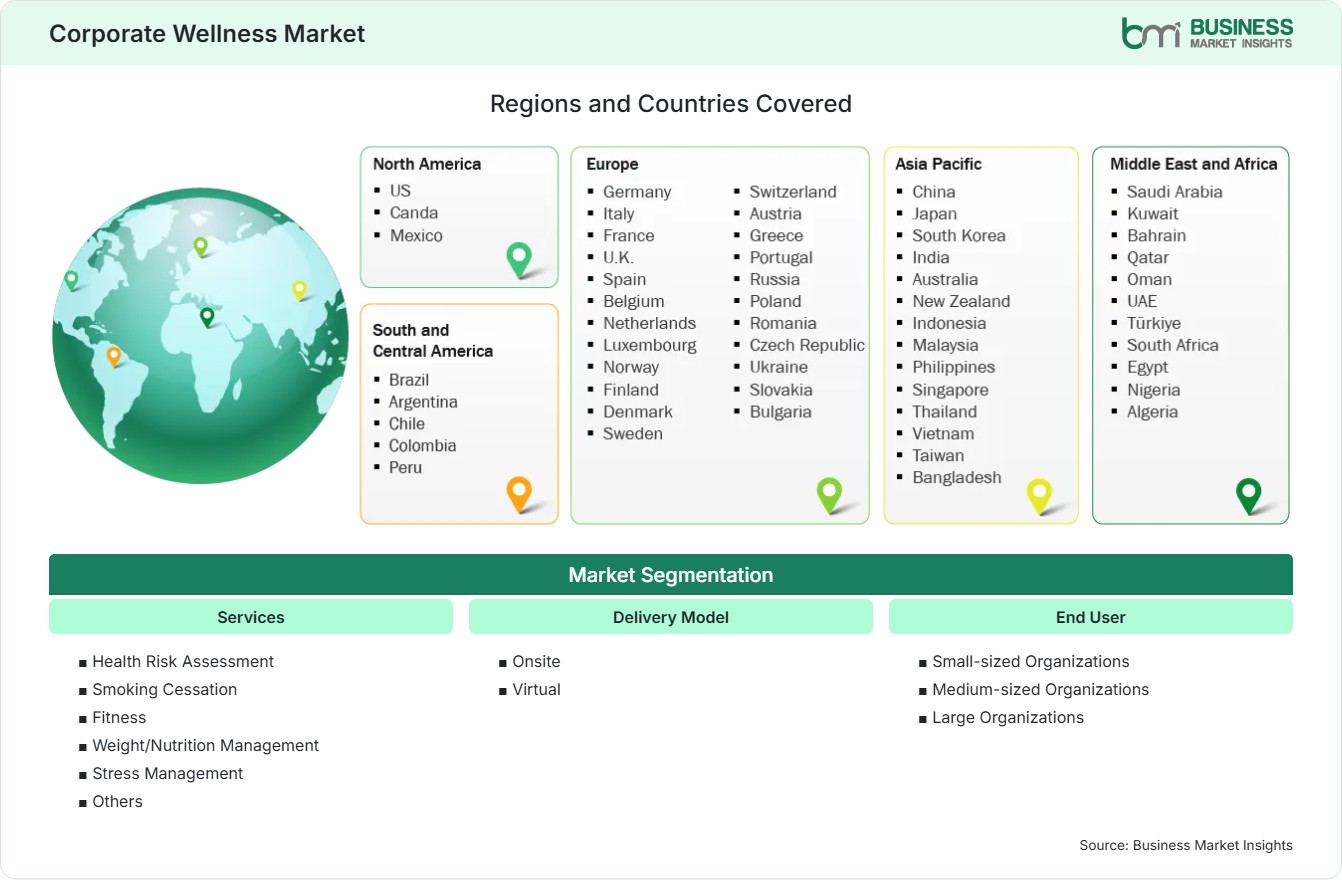
  • Services: Health Risk Assessment, Smoking Cessation, Fitness, Weight/Nutrition Management, Stress Management, Others
  • Delivery Model: Onsite, Virtual
  • End User: Small-sized Organizations, Medium-sized Organizations, Large Organizations
US$ 71.83 Bn Market size in 2025
US$ 125.56 Bn Market Size by 2033
7.23% CAGR, 2026 - 2033
2026-2033 Forecast Period

01 AI Overview

Corporate Wellness Market Summary

  • North America Region: North America holds 38%–41% share in 2025 and is projected to grow at a CAGR of 6.80%–7.20% during 2026–2033, supported by employer-sponsored wellness programs, preventive healthcare adoption, and digital employee engagement platforms. The US market is expected to register a CAGR of 6.90%–7.30%, driven by rising healthcare expenditure, workplace mental health initiatives, and expanding virtual wellness services.
  • Fastest Growing Region: Asia Pacific accounts for 23%–26% share in 2025 and is forecast to grow at a CAGR of 8.40%–8.90% during 2026–2033, supported by expanding corporate employment, workplace health awareness, and increasing employer investments in employee wellness.
  • Leading Segment: Fitness accounts for 26%–29% share in 2025 and is projected to expand at a CAGR of 7.40%–7.80%, supported by preventive health strategies, physical activity programs, and employer-sponsored fitness initiatives.
  • High Growth Segment: Virtual is projected to register a CAGR of 8.60%–9.10%, supported by hybrid workplaces, digital healthcare accessibility, and personalized wellness platforms.
  • Key Market Opportunity: AI-enabled health management, digital wellness platforms, preventive healthcare, and personalized employee engagement solutions continue creating long-term growth opportunities for wellness service providers globally.
  • Major Market Players: ComPsych Corporation, Virgin Pulse Inc., TELUS Health, Optum Inc., Wellness Corporate Solutions LLC, Exos Works LLC, Fitbit Health Solutions, Headspace Health, Personify Health Inc., Wellsource Inc.
02 Strategic Insights

Corporate Wellness Market: Strategic Insights

Corporate Wellness Market Strategic Framework
FREE PDF
Request your free sample
Request free sample
03 Stakeholder View

Key Takeaways

  • The market ecosystem increasingly connects employers, healthcare providers, insurers, wellness technology developers, fitness specialists, and mental health professionals to deliver integrated workforce well-being solutions.
  • Fitness services remain the leading revenue contributor, while virtual wellness delivery offers the strongest long-term growth potential through scalable and personalized employee engagement.
  • Innovation increasingly focuses on AI-powered wellness analytics, wearable health monitoring, behavioral coaching, digital therapeutics, and integrated employee health management platforms.
  • Asia Pacific presents the strongest future investment opportunity due to expanding organized employment, increasing corporate healthcare spending, and rising workplace wellness awareness.
  • Strategic investments continue targeting virtual wellness platforms, preventive healthcare programs, mental health services, AI-enabled health analytics, and personalized employee wellness ecosystems.
04 Geographic Outlook

Corporate Wellness Market Regional Highlights

North America Corporate Wellness Market

North America accounts for 38%–41% share in 2025 and is projected to grow at a CAGR of 6.80%–7.20% during 2026–2033. Strong employer investment in preventive healthcare, employee engagement, and occupational health programs continues supporting regional expansion. The Corporate Wellness Market share remains the highest globally because organizations increasingly integrate digital wellness platforms, mental health support, and fitness initiatives to improve workforce productivity, retention, and healthcare cost management.

  • The US leads regional adoption through employer-sponsored wellness programs, expanding digital health platforms, and increasing workplace mental health investments.
  • Canada continues strengthening employee wellness through preventive healthcare initiatives, virtual care adoption, and supportive occupational health policies.
  • Organizations increasingly integrate wearable technologies and personalized health coaching into workforce wellness strategies.
  • Employers continue expanding incentive-based wellness programs that improve participation and long-term employee engagement.

US Corporate Wellness Market

The US accounts for 82%–85% of the North American market in 2025 and is projected to register a CAGR of 6.90%–7.30% through 2026–2033. Rising employer healthcare expenditures, growing mental health awareness, and adoption of hybrid work models continue supporting demand for integrated wellness services. Digital health technologies further enhance accessibility and employee participation.

  • Employers increasingly deploy AI-enabled wellness platforms for personalized employee health management.
  • Corporate healthcare strategies continue emphasizing preventive care and chronic disease management.
  • Virtual wellness services improve employee access regardless of workplace location.
  • Wellness incentives continue supporting long-term workforce engagement and productivity improvements.

Europe Corporate Wellness Market

Europe represents 28%–31% share in 2025 and is expected to grow at a CAGR of 7.10%–7.50% during 2026–2033. Germany, the UK, France, and the Nordic countries continue driving demand through workplace health regulations, preventive healthcare initiatives, and employer well-being programs. Germany remains the regional leader, while Central and Eastern Europe experience faster adoption as corporate wellness awareness expands.

  • Germany leads regional demand through comprehensive occupational health and employee wellness initiatives.
  • The UK continues expanding mental health support and workplace well-being services across public and private sectors.
  • Corporate sustainability strategies increasingly incorporate employee health and wellness objectives.
  • Digital wellness platforms continue improving accessibility and program participation across organizations.

Asia Pacific Corporate Wellness Market

Asia Pacific holds 23%–26% share in 2025 and is projected to expand at a CAGR of 8.40%–8.90% during 2026–2033. China, India, Japan, Australia, and Singapore continue investing in employee health programs as organized employment and workplace wellness awareness increase. Corporate healthcare spending and digital wellness adoption continue supporting long-term regional growth.

  • China remains the largest regional market through expanding corporate employment and employer-sponsored wellness initiatives.
  • India is the fastest-growing country because of rising organized workforce participation and increasing workplace health investments.
  • Japan continues emphasizing preventive healthcare and employee productivity improvement programs.
  • Australia expands digital wellness services through employer health management initiatives.
  • Regional organizations increasingly adopt integrated virtual wellness platforms.

Rest of World Corporate Wellness Market

Rest of World accounts for 8%–10% share in 2025 and is forecast to grow at a CAGR of 7.20%–7.60% during 2026–2033. Latin America is strengthening workplace health initiatives, while the Middle East and Africa continue investing in employee well-being as workforce development becomes a strategic priority. Brazil, the UAE, and South Africa remain important emerging markets.

  • Brazil continues expanding employer-sponsored wellness and preventive healthcare programs.
  • UAE organizations increasingly integrate digital wellness solutions into employee benefit strategies.
  • South Africa continues strengthening occupational health initiatives across major industries.
  • International wellness providers are expanding partnerships across emerging economies.
  • Growing employer awareness continues supporting long-term investment in workforce health management.

Top of Form

Bottom of Form
Global Market Geography
FREE PDF
Request your free sample
Request free sample
05 Segment Analysis

Corporate Wellness Market Segmentation

Services

The Services segment defines the Corporate Wellness Market scope by offering preventive health programs that improve workforce well-being, productivity, and healthcare cost management. The segment accounted for 100% of the market in 2025 and is projected to grow at a CAGR of 7.23% during 2026–2034. Organizations continue expanding employee wellness initiatives through integrated physical, mental, and behavioral health services.

  • Health Risk Assessment: Health Risk Assessment services help employers identify employee health risks early, enabling preventive interventions, personalized wellness planning, and improved long-term workforce health outcomes.
  • Smoking Cessation: Smoking Cessation programs support healthier workplaces by reducing tobacco use through counseling, behavioral coaching, educational resources, and continuous employee engagement.
  • Fitness: Fitness represents the leading service category because organizations increasingly promote physical activity, exercise programs, and wellness challenges to improve employee health and productivity.
  • Weight/Nutrition Management: Weight/Nutrition Management services encourage healthier lifestyles through dietary guidance, nutrition counseling, personalized meal planning, and preventive healthcare support.
  • Stress Management: Stress Management programs address workplace mental health through counseling, resilience training, mindfulness sessions, and employee assistance initiatives.

Delivery Model

The Delivery Model segment accounted for 100% of the market in 2025 and is projected to expand at a CAGR of 7.23% during 2026–2034. The Corporate Wellness Market trends increasingly reflect demand for flexible wellness delivery supported by digital technologies, hybrid workplaces, and personalized employee engagement platforms.

  • Onsite: Onsite wellness programs remain widely adopted by large employers through workplace fitness centers, health screenings, medical consultations, and wellness education initiatives.
  • Virtual: Virtual wellness services are expanding rapidly because employers increasingly utilize telehealth, mobile applications, wearable devices, and AI-enabled health coaching for distributed workforces.

End User

The End User segment accounted for 100% of market demand in 2025 and is expected to grow at a CAGR of 7.23% during 2026–2034. Organizations of every size continue investing in employee well-being initiatives to improve workforce productivity, engagement, retention, and overall organizational performance.

  • Small-sized Organizations: Small-sized Organizations increasingly adopt scalable digital wellness platforms and outsourced wellness services to improve employee health while managing operational budgets.
  • Medium-sized Organizations: Medium-sized Organizations continue expanding integrated wellness programs combining preventive healthcare, fitness, and mental health support to strengthen workforce performance.
  • Large Organizations: Large Organizations remain the leading adopters because they invest extensively in comprehensive wellness ecosystems, analytics platforms, and personalized employee health management solutions.
06 Market Forces

Corporate Wellness Market Dynamics

Key Market Drivers

Growing workplace stress increasing corporate wellness program adoption globally

The increase in work-related stress, burnout, and anxiety is prompting companies to implement wellness programs for their workers. Companies today understand that healthier workers will be more productive, less likely to miss work, and will retain their jobs for longer periods of time. Based on the global findings on workplace health from bodies such as WHO, workplace mental well-being greatly impacts organizational performance. Corporate Wellness Market growth is supported by rising employer investment in preventive healthcare, digital wellness platforms, and behavioral health programs, while market trends continue emphasizing personalized health management, mental wellness, and data-driven employee engagement across diverse industries.

Rising healthcare costs supporting employer wellness investments worldwide

Growing expenses in healthcare have made it necessary for the organizations to adopt wellness programs that will result in decreased costs in the long run along with the well-being of their workers. Organizations still spend money on health screening programs, disease management, nutrition, and physical activities to avoid any claim made against them and keep workers from being absent from work.

It has been found out that there is an increase in interest of organizations to adopt preventive health initiatives that could decrease the expenses associated with chronic diseases, injuries at the workplace, and worker turnover. The use of digital health tools, wearables, and telehealth services has made it easy for employers to track the results of the wellness program and give recommendations to their employees. The focus on mental health programs and the improvement in work-life balance programs has contributed in making the programs more popular. Moreover, favorable health insurance policies and government programs have made it important for businesses to offer health benefits to their workers.

Expanding employee well-being initiatives boosting corporate wellness demand

Employee well-being is becoming an essential strategy for businesses to improve productivity, retain talent, and create resilient organizations. Companies are offering well-being services in areas like mental health care, financial well-being, stress reduction, and digital health. The increasing focus by companies on having an inclusive work environment and preventive healthcare has led to the greater use of comprehensive well-being services.

Key Market Opportunities

Expansion of hybrid work creating corporate wellness opportunities globally

Hybrid work environments are transforming employee health management by increasing demand for flexible and digitally accessible wellness services. Employers are investing in virtual fitness programs, telehealth consultations, mental health platforms, and personalized wellness applications supporting geographically distributed employees. Corporate Wellness Market Forecasts indicate continued expansion as organizations prioritize scalable wellness ecosystems that improve workforce engagement, accessibility, and long-term employee well-being.

Small business adoption increasing employee wellness service demand worldwide

Wellness programs are being embraced by small to medium-sized businesses to boost satisfaction, retention, and productivity among their employees. Low-cost subscription-based wellness packages, outsourcing and cloud-based health management solutions are making it possible even without enough health care professionals in-house. Tech companies keep launching more flexible wellness programs aimed at small businesses.

AI-driven wellness analytics supporting personalized health management

AI is making wellness programs more effective by helping organizations to engage in predictive health analysis, give out recommendations tailored to each individual’s health status, gain insights on how individuals behave and monitor employees continuously. Organizations are increasingly adopting AI technology to help them predict health risks and evaluate the effectiveness of their wellness programs.

Market Restraints and Challenges

Low employee participation reducing corporate wellness program effectiveness globally

Factor: Limited employee engagement, privacy concerns, inadequate incentives, and low awareness reduce participation in workplace wellness programs. Impact: Low participation is linked to the poor performance of programs, which in turn results in poor health outcomes and a low return on investment for the employers. While many organizations are adopting personalized wellness plans, digital engagement technologies, and participation-based incentives, maintaining participation levels is a tough task.

Budget constraints limiting wellness investments across small organizations

Factor: Smaller organizations often face limited financial resources for implementing comprehensive wellness initiatives, advanced digital platforms, and specialized healthcare services. Impact: Financial restrictions affect the availability of programs, service quality, and the adoption of comprehensive employee wellness packages. While subscription wellness programs offer more affordable services, financial restrictions are still affecting wide-scale implementation of such programs.

07 Company Analysis

Competitive Landscape

The Corporate Wellness Market analysis reflects a competitive landscape driven by digital health innovation, preventive care, mental health services, and personalized employee engagement. Leading providers continue expanding AI-enabled wellness platforms, virtual care capabilities, and integrated workforce health solutions to improve employee outcomes and employer value.

Company Name

Overview

Products and Services relevant to this market

ComPsych Corporation

ComPsych Corporation provides employee assistance programs and workforce well-being solutions for organizations worldwide.

Delivers employee assistance programs, behavioral health support, work-life services, wellness coaching, and organizational well-being solutions.

Virgin Pulse Inc.

Virgin Pulse Inc. develops digital employee well-being platforms focused on preventive health and engagement.

Provides digital wellness platforms, health coaching, fitness challenges, lifestyle management, and employee engagement solutions.

TELUS Health

TELUS Health delivers digital healthcare, employee wellness, and workplace health management services globally.

Offers virtual healthcare, mental health support, employee assistance, wellness programs, and occupational health solutions.

Optum Inc.

Optum Inc. provides healthcare management, analytics, and wellness solutions for employers and healthcare organizations.

Supplies population health management, wellness programs, digital health platforms, and preventive care services.

Wellness Corporate Solutions LLC

Wellness Corporate Solutions LLC specializes in customized workplace wellness and preventive health programs.

Provides biometric screenings, wellness consulting, health assessments, coaching, and employee engagement services.

Exos Works LLC

Exos Works LLC focuses on human performance, workplace wellness, and employee health optimization programs.

Delivers fitness programs, nutrition guidance, performance coaching, wellness consulting, and health education services.

Fitbit Health Solutions

Fitbit Health Solutions develops wearable-based employee wellness and digital health engagement platforms.

Provides wearable health monitoring, activity tracking, wellness analytics, digital coaching, and corporate wellness solutions.

Headspace Health

Headspace Health offers digital mental health and mindfulness solutions for employers and healthcare organizations.

Supplies meditation programs, behavioral health support, stress management, virtual mental healthcare, and wellness applications.

Personify Health Inc.

Personify Health Inc. provides integrated health management and employee well-being technologies.

Offers personalized wellness platforms, health analytics, coaching, benefits integration, and workforce health management solutions.

Wellsource Inc.

Wellsource Inc. develops evidence-based health assessment and wellness planning solutions.

Provides health risk assessments, wellness planning tools, employee education, and preventive health management services.

10 Trust & Transparency

Research Methodology

The market analysis combines proprietary research with secondary data from government agencies, company disclosures, regulatory filings, industry databases and expert interviews. Market estimates are validated through data triangulation, cross-market benchmarking and analyst review.

View Full Research Methodology

11 Questions Answered

Frequently Asked Questions

What does the market report include?

The Corporate Wellness Market Report provides detailed analysis of market size, segmentation, regional outlook, competitive landscape, technology trends, investment opportunities, and future growth prospects.

Why are organizations investing in corporate wellness programs?

Organizations invest in wellness programs to improve employee health, increase productivity, reduce absenteeism, strengthen workforce retention, lower healthcare costs, and enhance overall organizational performance.

Which delivery model is growing the fastest?

Virtual delivery is the fastest-growing model because hybrid workplaces, telehealth services, AI-enabled wellness platforms, and mobile health technologies improve accessibility and employee participation.

Which region dominates the market?

North America leads the market because of widespread employer-sponsored wellness programs, advanced digital healthcare infrastructure, strong occupational health policies, and high corporate healthcare spending.

What is driving the Corporate Wellness Market?

Growing workplace stress, rising healthcare costs, increasing employer focus on preventive healthcare, expanding digital wellness platforms, and stronger employee well-being initiatives are driving market growth.

Access the Full Corporate Wellness Market Report

Get segment-level forecasts, regional estimates, competitive benchmarking, company profiles and downloadable Excel datasets.

Access the full Corporate Wellness Market Report
350 pages PDF & Excel | 2026-08-12