
Contraceptives Market Outlook: Size, Share, Trends, Growth Analysis, Competitive Landscape & Forecast, 2026-2033

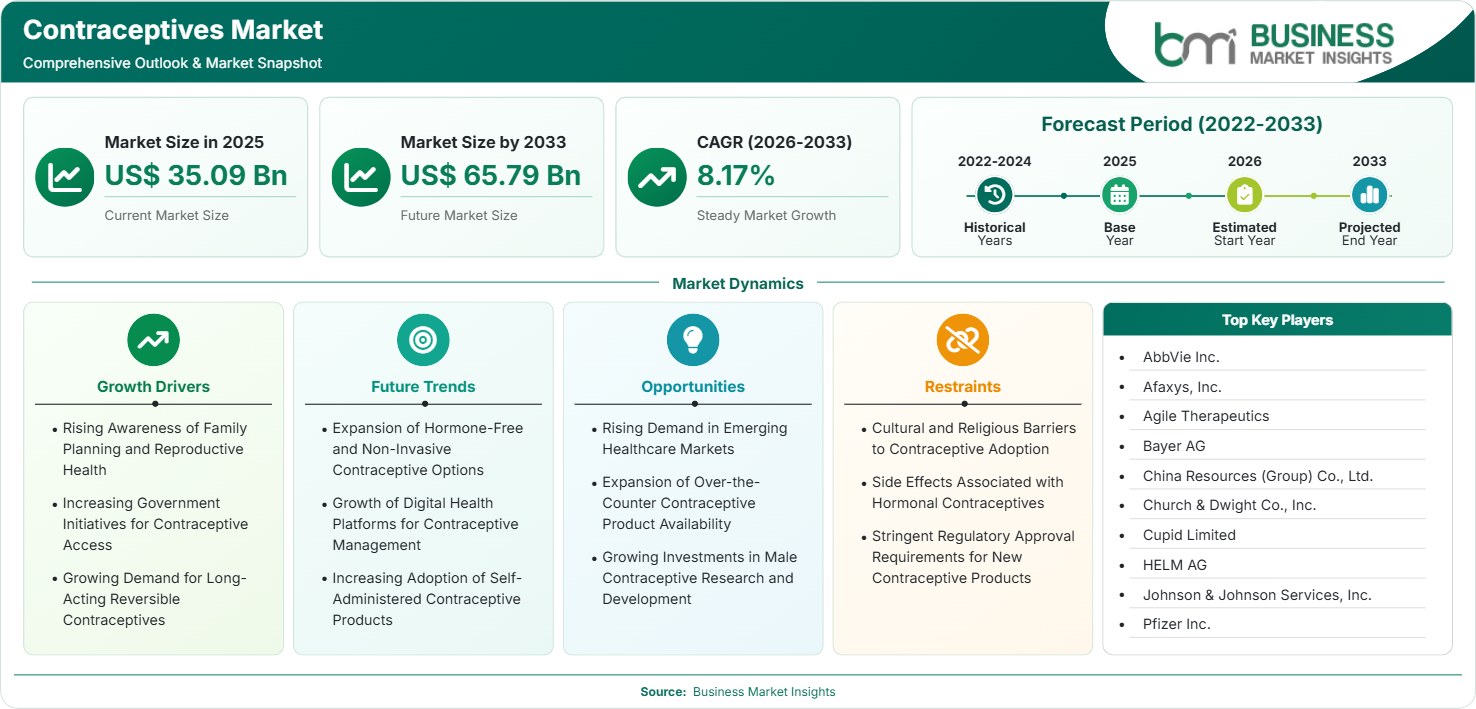
The Contraceptives Market Size was valued at US$ 35.09 Billion in 2025 and is projected to reach US$ 65.79 Billion by 2033, expanding at a CAGR of 8.17% during the forecast period. The increased attention that is being placed on reproductive health, increased availability of services relating to family planning, increased government efforts to promote birth control and continuous developments in contraceptive technology will ensure that the growth of this industry continues in the future. Efforts are being made by various stakeholders in this industry to increase the availability of contraceptives.

Report Coverage
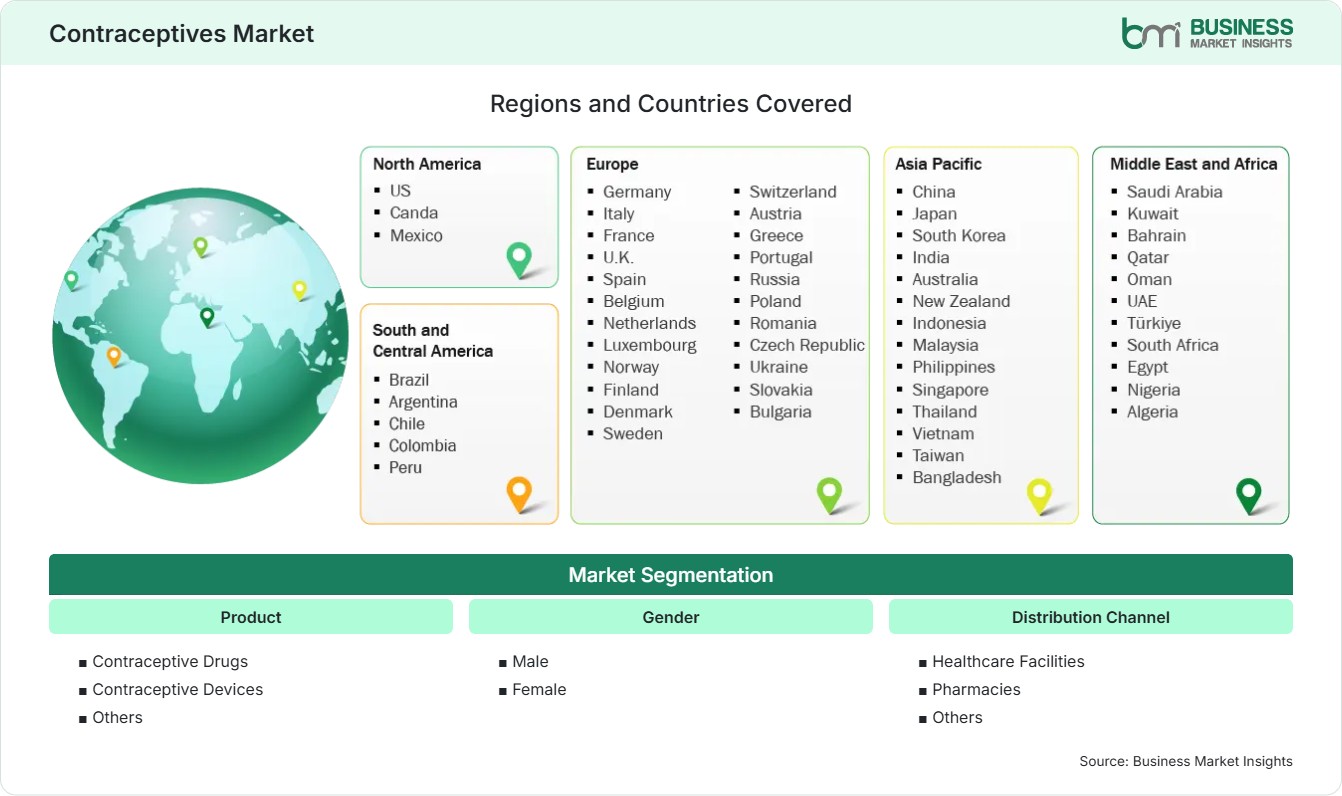
  • Product: Contraceptive Drugs, Contraceptive Devices, Others
  • Gender: Male, Female
  • Distribution Channel: Healthcare Facilities, Pharmacies, Others
US$ 35.09 Bn Market size in 2025
US$ 65.79 Bn Market Size by 2033
8.17% CAGR, 2026 - 2033
2026-2033 Forecast Period

AI Overview

Contraceptives Market Summary

  • North America Region: North America accounted for approximately 31%–34% of global revenue in 2025 and is projected to register a CAGR of 7.8%–8.3% through 2033. Strong healthcare infrastructure, widespread contraceptive awareness, and favorable reimbursement policies continue supporting regional demand. The Contraceptives Market Share remains highest in the United States due to high adoption of hormonal contraceptives, increasing access to reproductive healthcare services, and continuous product innovation.
  • Fastest Growing Region: Asia Pacific represented approximately 29%–32% of global revenue in 2025 and is expected to witness the fastest CAGR of 8.8%–9.3% during the forecast period. Rising population awareness, expanding healthcare access, and government-led family planning initiatives continue driving regional growth.
  • Leading Segment: Contraceptive Drugs accounted for approximately 58%–61% of global revenue in 2025 and are projected to expand at a CAGR of 8.0%–8.5% owing to widespread utilization of oral contraceptives, injectable contraceptives, and hormonal therapies.
  • High Growth Segment: Contraceptive Devices are anticipated to register the fastest CAGR of 8.8%–9.4%, supported by increasing adoption of long-acting reversible contraceptives and growing consumer preference for non-daily contraception methods.
  • Key Opportunity: Expanding reproductive healthcare programs, increasing female healthcare awareness, and continuous product innovation continue creating long-term business opportunities.
  • Major Market Players: AbbVie Inc., Afaxys, Inc., Agile Therapeutics, Bayer AG, China Resources (Group) Co., Ltd., Church & Dwight Co., Inc., Cupid Limited, HELM AG, Johnson & Johnson Services, Inc., and Pfizer Inc.
Strategic Insights

Contraceptives Market: Strategic Insights

Contraceptives Market Strategic Framework
FREE PDF
Request your free sample
Request free sample
Stakeholder View

Key Takeaways

  • Contraceptive drugs continue accounting for the largest revenue contribution owing to their widespread availability, clinical effectiveness, and broad physician acceptance.
  • Contraceptive devices represent the fastest-growing product category because of increasing preference for long-acting, convenient, and highly effective birth control options.
  • Pharmaceutical companies continue investing in innovative formulations that improve patient compliance while minimizing side effects.
  • Asia Pacific continues emerging as the fastest-growing regional market due to expanding healthcare access, favorable government initiatives, and increasing reproductive health awareness.
  • Healthcare providers continue emphasizing education, counseling, and personalized contraceptive choices to improve long-term patient outcomes.
  • The Contraceptives Market Trend indicates increasing adoption of long-acting reversible contraceptives, digital reproductive health services, self-administered contraceptive products, and patient-centered family planning solutions.
Geographic Outlook

Contraceptives Market Regional Highlights

North America Contraceptives Market

North America accounted for approximately 31%–34% of global revenue in 2025 and is projected to expand at a CAGR of 7.8%–8.3% through 2033. High healthcare expenditure, widespread awareness regarding reproductive health, and strong availability of prescription and over-the-counter contraceptive products continue supporting regional demand. Public health programs, private insurance coverage, and continuous pharmaceutical innovation further contribute to increasing product accessibility across diverse patient populations.

  • Strong healthcare infrastructure supports widespread access to modern contraceptive products across hospitals, clinics, and retail pharmacies.
  • Government-supported reproductive health initiatives continue promoting awareness regarding family planning and responsible contraception.
  • Pharmaceutical companies continue introducing innovative hormonal formulations and convenient drug delivery systems.
  • Increasing utilization of telemedicine platforms improves patient access to contraceptive counseling and prescription management.
  • Growing emphasis on women's health and preventive healthcare continues strengthening long-term product adoption.

U.S. Contraceptives Market

The United States represents approximately 84%–87% of North American demand and is projected to register a CAGR of 7.9%–8.4% during the forecast period. High awareness regarding reproductive healthcare, favorable insurance coverage, strong pharmaceutical innovation, and increasing physician recommendations continue driving market expansion. Rising utilization of long-acting reversible contraceptives, digital healthcare services, and personalized reproductive health management further support industry development. The Contraceptives Market Forecast remains positive as healthcare providers continue expanding access to modern contraception through multiple distribution channels.

  • Increasing adoption of hormonal contraceptives continues supporting demand across reproductive healthcare settings.
  • Long-acting contraceptive devices witness growing utilization due to improved convenience and clinical effectiveness.
  • Retail pharmacies and digital healthcare platforms continue expanding patient access to contraceptive products.
  • Public awareness campaigns continue encouraging informed family planning and reproductive health management.
  • Continuous pharmaceutical innovation strengthens product availability, patient compliance, and treatment options.

Europe Contraceptives Market

Europe accounted for approximately 25%–28% of global revenue in 2025 and is projected to expand at a CAGR of 8.0%–8.5% through 2033. High awareness regarding reproductive health, favorable healthcare reimbursement systems, and widespread availability of prescription contraceptives continue supporting regional growth. Government-backed family planning programs, increasing adoption of long-acting reversible contraceptives, and continuous product innovation are further strengthening market expansion. Healthcare providers continue emphasizing personalized contraceptive counseling to improve patient outcomes and reproductive healthcare accessibility.

  • Germany continues leading regional demand through a strong pharmaceutical industry, comprehensive reproductive healthcare services, and high contraceptive awareness.
  • The United Kingdom records significant adoption supported by publicly funded family planning services and increasing utilization of long-acting contraceptive methods.
  • France continues expanding market demand through favorable healthcare policies, growing women's health initiatives, and strong physician recommendations.
  • Italy supports market growth with improving reproductive health education, increasing pharmacy accessibility, and expanding contraceptive product availability.
  • Nordic countries continue promoting modern contraception through preventive healthcare programs, high healthcare expenditure, and comprehensive reproductive health services.

Asia Pacific Contraceptives Market

Asia Pacific represented approximately 29%–32% of global revenue in 2025 and is expected to register the fastest CAGR of 8.8%–9.3% through 2033. Rapid population growth, increasing government investment in family planning programs, improving healthcare infrastructure, and rising reproductive health awareness continue supporting regional expansion. Countries including China, India, Japan, and South Korea continue strengthening contraceptive accessibility through public health initiatives and expanding pharmaceutical distribution networks. The Contraceptives Market Scope continues expanding as governments prioritize maternal health, planned parenthood, and reproductive healthcare services.

  • China remains a major regional market supported by extensive reproductive healthcare infrastructure and broad contraceptive accessibility.
  • India records the fastest regional growth owing to expanding family planning initiatives, improving healthcare access, and increasing public awareness campaigns.
  • Japan continues witnessing stable demand supported by advanced healthcare infrastructure and continuous pharmaceutical innovation.
  • South Korea strengthens regional growth through increasing reproductive healthcare awareness and wider availability of modern contraceptive products.
  • Southeast Asian countries continue expanding contraceptive adoption through government-supported maternal health programs and improved healthcare delivery systems.

Rest of World Contraceptives Market

The Rest of World accounted for approximately 9%–11% of global revenue in 2025 and is projected to register a CAGR of 8.1%–8.6% through 2033. Growing investments in public healthcare infrastructure, increasing reproductive health education, and expanding family planning initiatives continue supporting market growth across Latin America, the Middle East, and Africa. International healthcare organizations and government agencies continue improving contraceptive accessibility while strengthening awareness regarding maternal and reproductive health.

  • Brazil continues leading Latin American demand through expanding public healthcare programs and increasing contraceptive availability.
  • Mexico supports regional growth through improved reproductive healthcare services and wider pharmacy distribution networks.
  • Saudi Arabia continues witnessing increasing adoption as healthcare investments and women's health awareness improve.
  • South Africa records steady demand through government-supported family planning initiatives and expanding healthcare infrastructure.
  • Regional healthcare organizations continue improving access to affordable contraceptive products through public health partnerships and awareness campaigns.
Global Market Geography
FREE PDF
Request your free sample
Request free sample
Segment Analysis

Contraceptives Market Segmentation

Product

The Product segment accounts for the largest share of industry revenue as healthcare providers and consumers increasingly adopt a wide range of contraceptive options based on effectiveness, convenience, duration of action, and individual health requirements. Continuous product innovation, expanding reproductive healthcare programs, and improved accessibility continue supporting growth across both pharmaceutical and device-based contraceptive solutions. Manufacturers are introducing safer formulations and user-friendly products to improve compliance and patient satisfaction. The Contraceptives Market Analysis indicates sustained demand for diversified contraceptive products supported by rising awareness regarding reproductive healthcare and family planning.

  • Contraceptive Drugs: This segment dominates the market owing to widespread utilization of oral contraceptive pills, injectable contraceptives, hormonal patches, vaginal rings, and emergency contraceptive medications across healthcare settings.
  • Contraceptive Devices: Rapidly growing adoption of intrauterine devices, contraceptive implants, male condoms, female condoms, diaphragms, and other long-acting contraceptive devices continues supporting segment expansion.
  • Others: Includes fertility awareness products, contraceptive sponges, spermicides, and additional non-hormonal contraceptive solutions developed for specific patient requirements.

Gender

Gender-based demand continues evolving as governments, healthcare providers, and manufacturers promote shared responsibility for family planning while expanding access to modern contraceptive products. Increasing awareness campaigns and product innovation continue supporting adoption among both male and female populations.

  • Male: Male contraceptive products continue generating stable demand through widespread use of condoms and increasing investments in research focused on next-generation male contraceptive technologies.
  • Female: Female contraceptives account for the largest revenue contribution owing to broad availability of hormonal contraceptives, intrauterine devices, implants, injectables, and physician-guided reproductive healthcare services.

Distribution Channel

Distribution channels continue expanding as healthcare providers improve accessibility to contraceptive products through hospitals, retail pharmacies, digital healthcare platforms, and public health programs. Multiple purchasing options continue enhancing product availability across urban and rural populations.

  • Healthcare Facilities: Hospitals, clinics, reproductive healthcare centers, and family planning organizations remain primary distribution channels for prescription contraceptive products and clinical consultations.
  • Pharmacies: Retail and online pharmacies continue witnessing growing demand due to convenient access to prescription and over-the-counter contraceptive products.
  • Others: Includes government supply programs, community healthcare centers, e-commerce platforms, and non-governmental organizations supporting wider contraceptive accessibility.
Market Forces

Contraceptives Market Dynamics

Key Market Drivers

Rising Awareness of Family Planning and Reproductive Health

Public awareness about reproductive health and proper family planning is constantly growing in developed as well as developing countries through educational programs, government health policies, and increased availability of health care information. Informed decisions about contraception usage are encouraged by governments, healthcare workers, and international organizations in order to decrease the number of unwanted pregnancies and improve the outcomes of pregnancy and childbirth for mothers and their babies.

Increasing Government Initiatives for Contraceptive Access

The government of several countries is still increasing their investment on infrastructures in reproductive healthcare and family planning in order to increase the availability of contraceptives. Subsidization of healthcare services, public funding, campaigns, and collaboration with international health organizations are all continuing to enhance the availability of contraceptives among both rural and urban communities.

Growing Demand for Long-Acting Reversible Contraceptives

Healthcare providers and consumers increasingly prefer long-acting reversible contraceptives because they offer high effectiveness, extended duration of protection, and reduced dependence on daily medication adherence. Products such as intrauterine devices and contraceptive implants continue witnessing strong clinical acceptance owing to their long-term reliability and convenience. Continuous technological improvements and physician recommendations are further supporting increasing utilization of these advanced contraceptive options.

Key Market Opportunities

Rising Demand in Emerging Healthcare Markets

Emerging economies continue presenting significant growth opportunities as governments strengthen healthcare infrastructure, improve reproductive health education, and expand access to modern contraceptive products. Increasing urbanization, rising disposable incomes, and broader healthcare coverage continue supporting higher adoption rates across developing regions. The Contraceptives Market Scope continues expanding as manufacturers increase investments in affordable product portfolios and regional distribution networks.

Expansion of Over-the-Counter Contraceptive Product Availability

Growing availability of over-the-counter contraceptive products is improving consumer convenience and expanding access to reproductive healthcare solutions. Regulatory authorities in several countries continue evaluating broader access to selected contraceptive products without prescription requirements. Increasing pharmacy availability and digital retail platforms further strengthen consumer accessibility while supporting timely contraceptive use.

Growing Investments in Male Contraceptive Research and Development

Pharmaceutical companies and research organizations continue investing in innovative male contraceptive technologies to diversify available family planning options. Development of non-hormonal therapies, reversible contraceptive methods, and advanced drug delivery systems continues attracting research funding worldwide. Successful commercialization of these technologies could significantly broaden future market opportunities while encouraging shared responsibility for contraception.

Market Restraints and Challenges

Cultural and Religious Barriers to Contraceptive Adoption

Factor: Cultural traditions, religious beliefs, social stigma, and misconceptions regarding contraception continue limiting product acceptance across several regions despite improvements in healthcare accessibility.

Impact: Lower adoption rates may reduce the effectiveness of national family planning programs and delay broader market penetration. Governments, healthcare providers, and non-governmental organizations continue investing in educational initiatives and community engagement programs to improve awareness and encourage informed reproductive healthcare decisions.

Side Effects Associated with Hormonal Contraceptives

Factor: Some hormonal contraceptive products may be associated with side effects including headaches, mood changes, weight fluctuations, irregular bleeding, and other patient-specific reactions, influencing treatment preferences.

Impact: Concerns regarding adverse effects may encourage consumers to seek alternative contraceptive methods or discontinue treatment. Manufacturers continue developing lower-dose formulations, improved delivery technologies, and non-hormonal alternatives to enhance patient safety, improve compliance, and strengthen long-term product adoption.

Company Analysis

Competitive Landscape

The market is highly competitive, with global pharmaceutical companies, medical device manufacturers, and reproductive healthcare providers focusing on product innovation, geographic expansion, regulatory approvals, and strategic collaborations. Companies continue investing in long-acting reversible contraceptives, low-dose hormonal formulations, over-the-counter contraceptive products, and next-generation reproductive health technologies to strengthen their market position. Expanding access to contraceptive products in emerging economies, increasing digital healthcare integration, and growing investments in male contraceptive research remain key competitive strategies. The Contraceptives Market Report indicates that continuous innovation and broader product accessibility will shape future competitive dynamics.

Company Name

Overview

Products and Services Relevant to this Market

AbbVie Inc.

Global biopharmaceutical company engaged in developing innovative therapies across multiple therapeutic areas, including women's healthcare.

Hormonal therapies, reproductive healthcare products, pharmaceutical research, and women's health solutions.

Afaxys, Inc.

U.S.-based pharmaceutical company focused on improving access to reproductive healthcare products and women's health services.

Oral contraceptives, emergency contraceptives, reproductive health pharmaceuticals, and healthcare distribution services.

Agile Therapeutics

Women's healthcare company specializing in prescription contraceptive technologies and innovative hormonal delivery systems.

Contraceptive transdermal patches, hormonal contraceptive products, and reproductive healthcare solutions.

Bayer AG

Global life sciences company with a strong portfolio of women's healthcare and contraceptive products.

Oral contraceptives, hormonal intrauterine devices (IUDs), contraceptive implants, emergency contraception, and reproductive healthcare therapies.

China Resources (Group) Co., Ltd.

Diversified healthcare and pharmaceutical company serving domestic and international healthcare markets.

Pharmaceutical products, reproductive healthcare medicines, healthcare distribution, and medical product supply.

Church & Dwight Co., Inc.

Consumer healthcare company recognized for manufacturing personal care and sexual wellness products.

Condoms, pregnancy testing products, sexual wellness products, and over-the-counter reproductive healthcare solutions.

Cupid Limited

Indian manufacturer specializing in barrier contraceptive products for domestic and international healthcare markets.

Male condoms, female condoms, water-based lubricants, and contraceptive devices.

HELM AG

Global chemical and pharmaceutical company supplying active pharmaceutical ingredients and healthcare products.

Pharmaceutical ingredients, reproductive healthcare products, pharmaceutical distribution, and healthcare supply solutions.

Johnson & Johnson Services, Inc.

Global healthcare company providing pharmaceutical and medical technology solutions across multiple therapeutic segments.

Women's healthcare products, pharmaceutical solutions, medical technologies, and reproductive health research.

Pfizer Inc.

Global pharmaceutical company engaged in developing innovative medicines across multiple therapeutic categories, including reproductive health.

Hormonal therapies, pharmaceutical products, reproductive healthcare medicines, and clinical research services.

Trust & Transparency

Research Methodology

The market analysis combines proprietary research with secondary data from government agencies, company disclosures, regulatory filings, industry databases and expert interviews. Market estimates are validated through data triangulation, cross-market benchmarking and analyst review.

View Full Research Methodology

Questions Answered

Frequently Asked Questions

What does the Contraceptives Market Forecast indicate for future demand?

The market forecast indicates sustained expansion supported by broader contraceptive accessibility, increasing investment in reproductive healthcare, continued pharmaceutical innovation, and growing development of next-generation contraceptive technologies.

Which region is expected to witness the fastest growth?

Asia Pacific is projected to register the highest growth due to expanding healthcare infrastructure, government-supported family planning initiatives, increasing reproductive health awareness, and improving access to contraceptive products.

Why are contraceptive devices witnessing strong growth?

Contraceptive devices are gaining popularity because they provide long-term protection, high clinical effectiveness, improved convenience, and reduced dependence on daily medication.

Which product segment accounts for the largest market share?

Contraceptive drugs account for the largest revenue share owing to widespread utilization of oral contraceptives, injectable contraceptives, emergency contraceptives, and other hormonal formulations.

What factors are driving demand for contraceptives globally?

Demand is primarily driven by increasing awareness of family planning, expanding government initiatives supporting contraceptive access, growing preference for long-acting reversible contraceptives, and continuous improvements in reproductive healthcare services.

Access the Full Contraceptives Market Report

Get segment-level forecasts, regional estimates, competitive benchmarking, company profiles and downloadable Excel datasets.

Access the full Contraceptives Market Report
350 pages PDF & Excel | 2026-08-21
Similar Research

Related Market Reports