Contact Lenses Market Regional Highlights
North America Contact Lenses Market
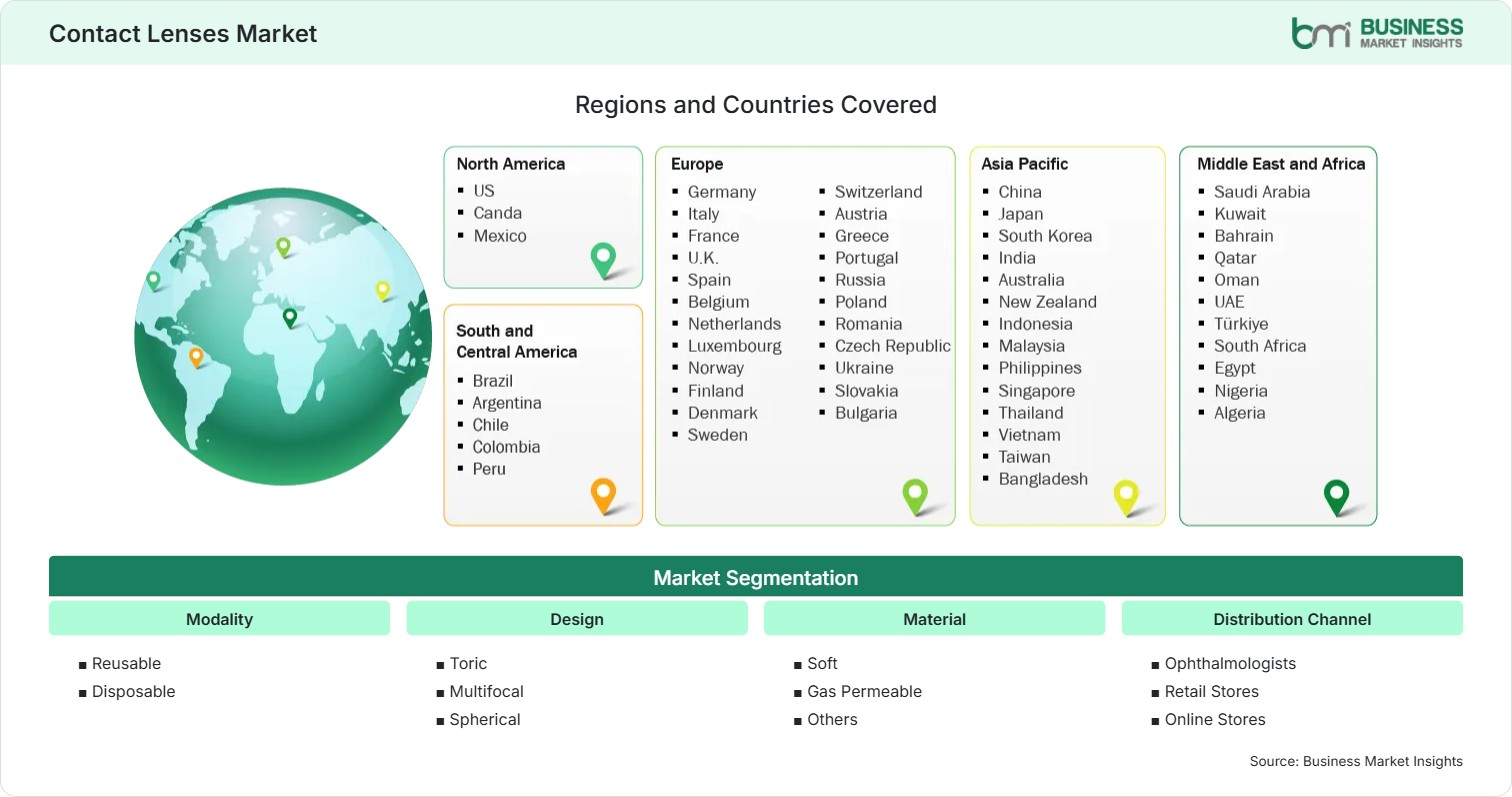
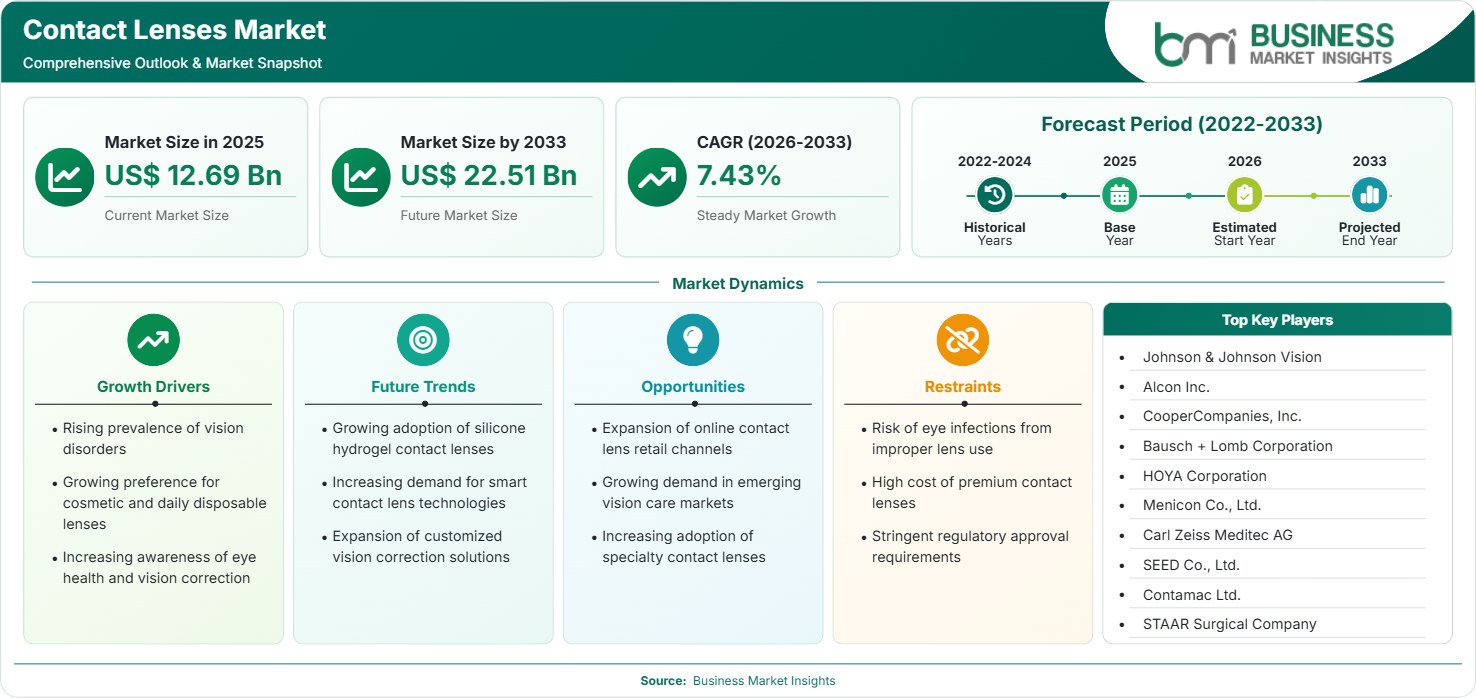
North America accounted for approximately 34%–37% of global revenue in 2025 and is projected to expand at a 6.5%–7.1% CAGR during 2026–2033. The region benefits from advanced eye care infrastructure, high consumer awareness, strong optical retail networks, and increasing demand for premium vision correction products. The Contact Lenses Market share in North America is supported by the United States, where disposable lenses, specialty designs, and digital purchasing channels continue influencing market development.
- The United States remains the largest regional contributor due to high contact lens adoption, established optometry practices, and strong demand for advanced vision correction products.
- Canada is witnessing steady expansion supported by increasing eye health awareness, optical care accessibility, and adoption of daily disposable lenses.
- Premium lens categories are gaining traction as consumers seek improved comfort, convenience, and customized solutions for different vision conditions.
- Online retail platforms are strengthening market accessibility by providing easier purchasing options and subscription-based lens delivery services.
US Contact Lenses Market
The United States represented approximately 80%–84% of North American revenue in 2025 and is expected to grow at a 6.7%–7.3% CAGR during 2026–2033. Growth is supported by a large contact lens user base, advanced eye care services, rising demand for specialty lenses, and increasing adoption of digital purchasing platforms in contact lenses market. The country’s mature healthcare ecosystem allows manufacturers to introduce innovative products targeting comfort, convenience, and personalized vision correction requirements.
- The aging population is increasing demand for multifocal lenses designed to address presbyopia and age-related vision changes.
- Optometrists and ophthalmologists continue influencing product adoption through professional recommendations and customized lens fitting services.
- Cosmetic and colored lenses are gaining popularity among younger consumers seeking appearance enhancement alongside vision correction.
- E-commerce platforms are expanding consumer access through convenient ordering, recurring purchases, and wider product availability.
Europe Contact Lenses Market
Europe accounted for approximately 28%–31% of global revenue in 2025 and is forecast to register a 6.2%–6.8% CAGR from 2026–2033. The region benefits from strong healthcare systems, established optical industries, and increasing demand for specialty contact lenses. Germany represents the leading contact lenses market due to advanced eye care infrastructure, while the United Kingdom and France show growth through expanding vision correction services and rising disposable lens adoption.
- Germany leads regional demand due to strong healthcare infrastructure, optical expertise, and increasing adoption of advanced contact lens technologies.
- The United Kingdom is expanding through digital eye care services, online lens purchasing, and growing consumer preference for convenient correction solutions.
- France contributes through established optical retail networks and rising awareness of specialty lenses for different vision conditions.
- European manufacturers are focusing on sustainable materials and improved lens designs to address changing consumer expectations.
- Aging demographics are supporting demand for multifocal lenses and customized solutions across major European countries.
Asia Pacific Contact Lenses Market
Asia Pacific represented approximately 27%–31% of global revenue in 2025 and is projected to achieve the fastest growth at a 8.4%–9.1% CAGR during 2026–2033. The region benefits from increasing myopia prevalence, expanding healthcare access, rising disposable income, and growing awareness of vision correction products. China remains the largest contact lenses market, while India, Japan, and South Korea provide significant growth opportunities due to increasing adoption of corrective and cosmetic lenses.
- China dominates regional demand due to a large population base, rising myopia cases, and expanding optical care infrastructure.
- India is experiencing strong growth through increasing vision awareness, improving healthcare access, and growing demand among younger consumers.
- Japan supports market development through advanced lens technology adoption and strong consumer preference for high-quality vision products.
- South Korea demonstrates increasing demand for cosmetic and specialty lenses due to fashion trends and advanced eye care awareness.
- Online retail growth is improving product accessibility across emerging Asian markets with limited traditional optical infrastructure.
Rest of World Contact Lenses Market
The Rest of World region accounted for approximately 6%–9% of global revenue in 2025 and is expected to grow at a 6.8%–7.5% CAGR during 2026–2033. Latin America is supported by rising vision care awareness, expanding optical services, and increasing adoption of corrective lenses. The Middle East and Africa region is developing through healthcare investments and improving access to ophthalmic products. Brazil, Mexico, and Gulf countries represent important growth markets.
Increasing healthcare infrastructure development and greater awareness of untreated vision problems are encouraging adoption across developing regions. Manufacturers are strengthening distribution partnerships to improve access to contact lens products.
- Brazil contributes through expanding optical retail networks, increasing consumer awareness, and growing demand for vision correction solutions.
- Mexico benefits from rising healthcare access, increasing urbanization, and improving availability of contact lens products.
- Middle Eastern countries are investing in eye care facilities and specialty vision services to address growing healthcare needs.
- African markets are developing gradually through healthcare initiatives and improved distribution of ophthalmic products.
- Regional growth opportunities are supported by increasing demand for affordable and accessible vision correction options.