
Cocktail Mixers Market Outlook: Size, Share, Trends, Growth Analysis, Competitive Landscape & Forecast, 2026-2033

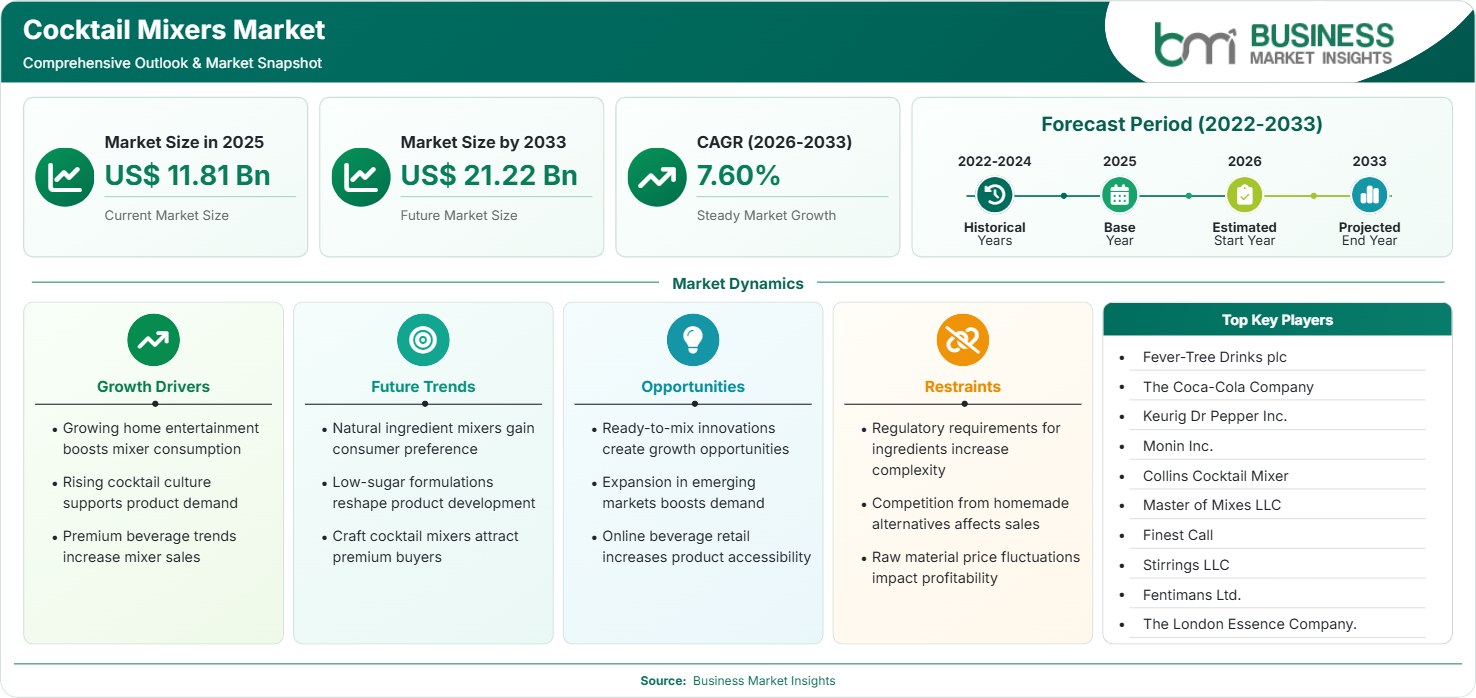
The Cocktail Mixers Market size was valued at US$ 11.81 Billion in 2025 and is projected to reach US$ 21.22 Billion by 2033, growing at a CAGR of 7.6% during 2026–2033. Growth is supported by premiumization of alcoholic beverages, expanding home mixology culture, low-sugar product innovation, hospitality recovery, e-commerce expansion, craft cocktail popularity, and rising demand for organic, natural ingredient-based mixer formulations.

Report Coverage
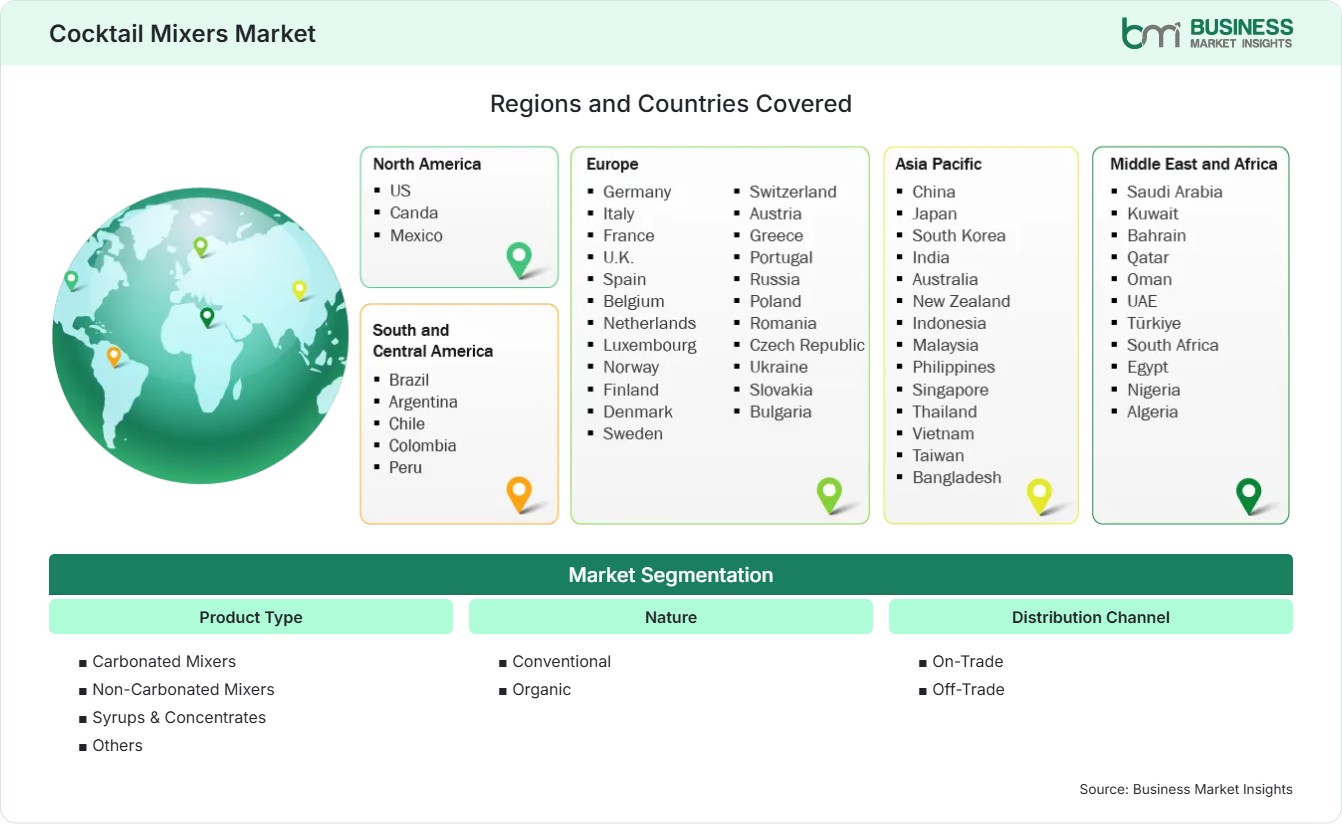
  • Product Type: Carbonated Mixers, Non-Carbonated Mixers, Syrups & Concentrates, Others
  • Nature: Conventional, Organic
  • Distribution Channel: On-Trade, Off-Trade
US$ 11.81 Bn Market size in 2025
US$ 21.22 Bn Market Size by 2033
7.60% CAGR, 2026 - 2033
2026-2033 Forecast Period

AI Overview

Cocktail Mixers Market Summary

  • North America Region: North America holds a market share of 36%–39% in 2025, growing with a CAGR of 6.8%–7.2% during 2026–2033. Growth is supported by premium spirits consumption, expanding home bartending culture, strong retail penetration, hospitality modernization, low-calorie mixer adoption, cocktail experimentation, natural ingredients demand, brand innovation, and e-commerce accessibility. The U.S. remains dominant through premium beverage retail channels and strong cocktail culture, advancing at 6.9%–7.3% CAGR.
  • Fastest Growing Region: Asia Pacific holds a Cocktail Mixers Market share of 24%–27% in 2025, growing with a CAGR of 8.8%–9.4% during 2026–2033. Urbanization, premium beverage awareness, tourism expansion, rising disposable income, digital commerce growth, bar network expansion, western lifestyle adoption, and premium mixer innovations collectively stimulate regional demand across markets.
  • Leading Segment: Carbonated Mixers account for 42%–45% share in 2025 and expand at 6.9%–7.4% CAGR. Strong demand for tonic water, ginger beer, soda-based formats, premium spirit pairings, hospitality channel consumption, established consumer familiarity, and expanding flavored carbonated portfolios sustain leadership.
  • High Growth Segment: Organic mixers represent 18%–21% share in 2025 and grow at 9.1%–9.7% CAGR. Clean-label positioning, natural sweeteners, botanical ingredients, health-conscious consumption, sustainability preferences, premium pricing potential, specialty retail expansion, and transparent sourcing practices continue encouraging category adoption globally.
  • Key Market Opportunity: Premium ready-to-mix cocktails, organic concentrates, digital direct-to-consumer channels, emerging Asian hospitality industries, and alcohol-free cocktail occasions create significant opportunities for ingredient innovation, brand differentiation, and margin expansion.
  • Major Market Players: Fever-Tree Drinks plc, The Coca-Cola Company, Keurig Dr Pepper Inc., Monin Inc., Collins Cocktail Mixer, Master of Mixes LLC, Finest Call, Stirrings LLC, Fentimans Ltd., and The London Essence Company.
Strategic Insights

Cocktail Mixers Market: Strategic Insights

Cocktail Mixers Market Strategic Framework
FREE PDF
Request your free sample
Request free sample
Stakeholder View

Key Takeaways

  • Supply chains are shifting toward premium botanicals, fruit concentrates, and natural sweeteners, increasing the strategic importance of ingredient sourcing partnerships and quality certification frameworks.
  • Organic formulations and online retail channels offer the strongest long-term upside as health-conscious consumers increasingly seek transparency, convenience, and premium beverage experiences.
  • Product innovation is moving toward low-sugar, functional, botanical, and alcohol-free mixer platforms designed to address modern wellness-centered consumption patterns.
  • Asia Pacific presents an attractive investment environment due to rapid urbanization, tourism growth, expanding cocktail culture, and increasing premium beverage consumption.
  • Strategic partnerships between spirits brands, mixer manufacturers, distributors, and hospitality operators are accelerating category visibility and market penetration.
  • Consolidation activity remains focused on acquiring premium niche brands with differentiated formulations, regional influence, and strong direct-to-consumer capabilities.
Geographic Outlook

Cocktail Mixers Market Regional Highlights

North America Cocktail Mixers Market

North America represents the largest regional market, accounting for 36%–39% Cocktail Mixers Market share in 2025. The region is projected to expand at a 6.8%–7.2% CAGR through 2033. Consumer preference for premium cocktails, extensive off-trade distribution, and strong penetration of craft spirits continue supporting demand. Bars, restaurants, and home mixology applications remain key consumption channels. Premium mixer innovation, including botanical and low-calorie offerings, further enhances regional competitiveness while maintaining category leadership.

  • Premium tonic waters and ginger beer products continue gaining shelf space across supermarkets, specialty retailers, and online channels.
  • Demand for low-sugar and natural ingredient formulations remains a major growth contributor among health-conscious consumers.
  • Strategic collaborations between spirit producers and mixer brands improve consumer engagement and cross-category merchandising.
  • Expanding ready-to-mix cocktail culture supports wider adoption among younger adult consumer groups.
  • Hospitality sector modernization and tourism activity continue strengthening premium beverage consumption patterns.

US Cocktail Mixers Market

The United States generates around 74%-78% of revenue from North America and is expected to have a CAGR of 6.9%-7.3%. Consumer readiness to purchase cocktail ingredients at high prices is higher than in any other market worldwide. Retail innovation, social events involving cocktails, and experimentation with non-alcoholic drinks drive product diversification. E-commerce and direct-to-consumer engagement strategies further strengthen category accessibility across demographic groups.

  • Premium mixer launches increasingly feature clean-label ingredients and reduced sugar content tailored to wellness-oriented consumers.
  • Cocktail preparation at home continues driving retail demand for concentrated, easy-to-use mixer formats.
  • Online retail channels create stronger access to specialty and imported premium mixer brands.
  • Restaurants and bars increasingly feature customized cocktail menus utilizing premium mixer solutions.

Europe Cocktail Mixers Market

Europe holds 28%–31% of the Cocktail Mixers Market share and is expected to grow at a CAGR of 6.7%–7.1% up to 2033. The UK is the market leader, but Spain and Germany have robust consumer preferences for premium products. France and Italy display growing demand linked to tourism-related expansion of hospitality. Existing cocktail culture, premium spirits consumption, and brand recognition help to build mature regional markets while supporting steady expansion.

  • The United Kingdom leads regional revenue generation with continued demand for premium tonic and cocktail mixer products.
  • Germany benefits from premium beverage innovation and increasing adoption across foodservice channels.
  • Spain demonstrates strong momentum due to tourism recovery and cocktail-focused hospitality establishments.
  • Organic and botanical formulations gain traction among sustainability-conscious consumers.
  • Premium glass packaging continues supporting premium positioning throughout retail and hospitality channels.

Asia Pacific Cocktail Mixers Market

Asia Pacific accounts for a 24%-27% market share in 2025 and demonstrates the highest growth rate at 8.8%-9.4% CAGR. China, Japan, Australia, and India serve as key sources of demand. Factors such as high disposable incomes, the impact of Western beverages, increasing tourism, and urbanization drive product penetration. Manufacturers, both international and local, are making greater investments due to the rising demand for premium beverages. The region offers substantial Cocktail Mixers Market growth opportunities through hospitality, retail, and online ecosystems.

  • China remains the largest regional contributor supported by premium consumption and urban retail expansion.
  • India records one of the highest country growth trajectories due to changing lifestyle preferences and hospitality development.
  • Japan emphasizes premium quality, botanical flavors, and sophisticated beverage experiences.
  • Australia supports demand through strong cocktail culture and specialty retail development.
  • E-commerce platforms accelerate premium product accessibility across developing consumer markets.

Rest of World Cocktail Mixers Market

The Rest of World market segment accounts for around 8% to 11%, while the forecasted CAGR is 7.4% to 8.0%. The South and Central America market is fueled by tourism and rising demand for premium drinks. On the other hand, the Middle East and Africa markets are driven by luxury hospitality and non-alcoholic cocktails. Increasing urbanization and the international presence of brands continue to strengthen product visibility.

  • Brazil remains a leading Latin American market due to strong foodservice and tourism demand.
  • Mexico benefits from tequila-associated cocktail culture and premium mixer consumption.
  • UAE drives regional Middle Eastern demand through luxury hospitality investments.
  • South Africa demonstrates increasing premium beverage awareness among urban consumers.
  • Retail modernization improves availability of international premium mixer brands.
Global Market Geography
FREE PDF
Request your free sample
Request free sample
Segment Analysis

Cocktail Mixers Market Segmentation

Product Type

Product Type is the primary source of revenue in the industry. Carbonated products are in higher demand because they pair well with premium liquor and are widely available in stores. Product type holds a share of around 42%-45% in 2025 and has a growth rate of 6.9%-7.4% CAGR. The Cocktail Mixers Market scope continues to broaden through premium carbonation technologies, flavor innovation, and specialized mixology applications.

  • Carbonated Mixers: Traditional tonic waters, soda products, and ginger beer maintain strong preference owing to versatility, premium spirit compatibility, and established usage across hospitality and home consumption channels.
  • Non-Carbonated Mixers: Fruit-based blends and cocktail preparation solutions benefit from customization flexibility, convenience, and growing consumer interest in premium cocktail experiences.
  • Syrups & Concentrates: Concentrated formats support cost efficiency, storage convenience, flavor consistency, and broad application across commercial and household beverage preparation.

Nature

Natural segmentation indicates a rising consumer focus on transparency and health. Traditional brands continue to lead the market, with market share at 79% to 82% by 2025, and are growing consistently at 7.1% to 7.5% CAGR. The organic segment in the Cocktail Mixers Market trends is gaining popularity due to the growth of organic brands offering botanical, sustainable, and naturally sourced products.

  • Conventional: Wide retail availability, competitive pricing, and extensive flavor portfolios continue supporting large-scale consumer adoption across established markets.
  • Organic: Demand is strengthened by clean-label preferences, natural formulations, certification standards, and premium positioning among health-conscious consumer groups.

Distribution Channel

The distribution channel continues to be a key factor in category development. The off-trade distribution channels are estimated to have a market share of 61%-64% in 2025 and are projected to grow at a CAGR of 7.3%-7.8%. Consumer preference for at-home beverage preparation, retail accessibility, and digital purchasing options continues strengthening these channels.

  • On-Trade: Bars, restaurants, hotels, and entertainment venues support premium brand visibility and encourage consumer experimentation with specialized mixer formulations.
  • Off-Trade: Supermarkets, hypermarkets, convenience stores, specialty stores, and online retail platforms provide convenient access and support recurring purchases.
  • Supermarkets/Hypermarkets: Broad assortment strategies and premium shelf placement drive visibility for established and emerging mixer brands.
  • Convenience Stores: Immediate consumption patterns and accessible urban locations encourage impulse purchases and brand trial opportunities.
  • Specialty Stores: Curated selections attract enthusiasts seeking craft, premium, imported, and organic beverage solutions.
  • Online Retail: Digital channels enable broader product access, subscription offerings, premium brand discovery, and direct consumer engagement.
Market Forces

Cocktail Mixers Market Dynamics

Key Market Drivers

Premiumization of Spirits and Cocktail Experiences

Increased consumption of premium spirits drives demand for quality mixers that enhance flavor. Continued growth in the premium categories of gin, tequila, whiskey, and rum also keeps consumers searching for premium mixers rather than mass-market products. Foodservice providers rely on craft cocktails to improve beverage margins. Manufacturers have adopted strategies like botanical blends, artisanal ingredients, and premium packaging. This creates a trend towards experiential consumption, which creates greater value for the category, enables increased prices, and constant innovation across both developed and emerging markets.

Expansion of Home Mixology Culture

Increasingly, consumers interested in making cocktails at home are buying mixers through retail or online channels. In particular, consumers are attempting to replicate their bar experiences using pre-mixed concentrates, syrups, and carbonated mixers. Cocktail recipes are frequently shared on social media, raising the profile of mixer brands. This trend leads to experimentation and increased purchase amounts at supermarkets and online. This is especially true for young consumers. The trend remains particularly powerful among younger consumers seeking convenience, customization, and premium experiences without frequent restaurant spending.

Rising Demand for Natural and Low-Sugar Formulations

Health-aware shoppers now analyze ingredient labels and the sugar content of beverages they choose. Companies adapt by using organic ingredients, lower-calorie variants, natural sweeteners, and botanically based flavor systems. This move away from artificial additives also contributes to positioning and brand loyalty. Growing regulation of sugar intake across multiple markets is driving development in this area. Products differentiated by wellness attributes continue to strengthen consumer engagement while opening opportunities across specialty retail, hospitality, and direct-to-consumer channels.

Key Market Opportunities

Growth of Organic and Clean-Label Offerings

Organic cocktail mixes constitute a lucrative investment segment owing to the growing trend of transparency and sustainability worldwide. Consumers tend to regard products with certification as higher in quality and safety. Firms that invest in traceability, certification, and strong branding can expect higher profits. According to Cocktail Mixers Market Forecasts, the continued demand for clean labels will attract customers in developed and developing nations. Expansion across online retail and specialty stores further supports scalable growth opportunities for emerging and established brands.

Expansion of Alcohol-Free Cocktail Ecosystems

The quick development of alcohol-free drinks opens up many possibilities for cocktail mixers. People look for a more sophisticated experience without having to drink any alcohol. Mixers designed for mocktails provide access to new customers without relying on spirits. There is a growing demand from hospitality outlets to offer more alcohol-free drinks. The right partnership with non-alcoholic spirit manufacturers might open up new product categories and strengthen long-term competitiveness.

Asia Pacific Hospitality and Tourism Investments

Strategic investment in hotels, entertainment, airports, and tourism infrastructure provides an ideal atmosphere for premium drinks consumption. The cocktail industry continues to grow in metropolitan cities, where international travel, disposable income, and lifestyle trends influence consumer behavior. Region-wise demand has lower penetration than in North America and Europe, indicating good growth potential. The adoption of localization strategies can go a long way in accessing markets and generating revenues.

Market Restraints and Challenges

Volatility in Premium Ingredient Costs

Factor: Dependence on fruits, botanicals, spices, and natural sweeteners exposes manufacturers to agricultural price fluctuations and climate-related supply uncertainty. Impact: Production costs increase unpredictably, compressing margins and limiting pricing flexibility. Companies frequently encounter challenges maintaining consistent formulations and premium positioning when input costs rise sharply. Supply chain disruptions affecting packaging materials and logistics networks can further intensify operational complexity. Smaller brands remain particularly vulnerable because they possess limited procurement scale and weaker negotiating leverage.

Intensifying Brand Competition Across Channels

Factor: Global beverage companies, regional specialists, private labels, and niche premium brands compete aggressively for retail space and consumer attention. Impact: Marketing expenditure requirements increase while price competition pressures profitability. New entrants must differentiate through formulation, branding, sustainability, or channel strategy to secure visibility. High promotional intensity can dilute customer loyalty and extend return-on-investment timelines. Maintaining relevance requires continuous innovation and strategic distribution partnerships throughout evolving retail environments.

Company Analysis

Competitive Landscape

Cocktail Mixers Market analysis indicates a competitive environment characterized by premiumization, flavor innovation, strong retail partnerships, and expansion of organic and low-sugar product portfolios.

Company Name

Overview

Products and Services relevant to this market

Fever-Tree Drinks plc

Premium mixer specialist with strong global presence across retail and hospitality channels.

Tonic waters, cocktail mixers, soda mixers, ginger beer and premium mixer solutions.

The Coca-Cola Company

Global beverage leader with broad distribution capabilities and premium mixer participation.

Carbonated mixers, flavored beverage bases, foodservice beverage solutions.

Keurig Dr Pepper Inc.

Major beverage company serving retail and foodservice customers worldwide.

Club soda, tonic water, mixer beverages and flavored drink products.

Monin Inc.

Leading flavor and beverage ingredient specialist with global operations.

Syrups, concentrates, cocktail ingredients and flavor solutions.

Collins Cocktail Mixer

Dedicated cocktail mixer company focused on convenience and mixology applications.

Cocktail mixes, syrups and ready-to-use beverage preparation products.

Master of Mixes LLC

Established cocktail ingredient supplier serving professional and retail markets.

Mixes, concentrates, fruit-based cocktail preparation products.

Finest Call

Hospitality-focused provider supplying professional beverage solutions.

Premium cocktail mixers, syrups, concentrates and flavor bases.

Stirrings LLC

Premium cocktail mixer brand emphasizing convenience and flavor variety.

Cocktail mixers, bar ingredients and specialty beverage products.

Fentimans Ltd.

Botanical beverage producer recognized for premium formulations.

Botanical mixers, tonic products and specialty carbonated beverages.

The London Essence Company

Premium brand focused on sophisticated flavor combinations and botanical profiles.

Tonic waters, crafted mixers and hospitality-oriented beverage solutions.

Trust & Transparency

Research Methodology

The market analysis combines proprietary research with secondary data from government agencies, company disclosures, regulatory filings, industry databases and expert interviews. Market estimates are validated through data triangulation, cross-market benchmarking and analyst review.

View Full Research Methodology

Questions Answered

Frequently Asked Questions

What does a Cocktail Mixers Market Report typically evaluate?

A Market Report generally assesses regional demand, competitive positioning, product innovation, distribution channels, consumer behavior, regulatory influences, and long-term growth opportunities.

What makes Asia Pacific an attractive market?

Urbanization, rising disposable income, hospitality investments, tourism growth, and increasing exposure to premium Western beverage trends support strong long-term regional expansion.

How are organic products influencing category development?

Organic variants attract health-conscious and sustainability-focused consumers seeking clean-label ingredients, supporting higher-value sales and premium brand positioning across retail channels.

What distribution channel generates the highest revenue?

Off-trade channels generate the largest revenue contribution due to supermarket availability, online retail growth, convenience purchasing behavior, and increasing at-home cocktail preparation.

What factors are driving demand for premium mixers?

Premium spirits consumption, cocktail culture expansion, growing home mixology activity, and demand for natural ingredients are encouraging consumers to upgrade from traditional mixer products.

Access the Full Cocktail Mixers Market Report

Get segment-level forecasts, regional estimates, competitive benchmarking, company profiles and downloadable Excel datasets.

Access the full Cocktail Mixers Market Report
350 pages PDF & Excel | 2026-09-02
Similar Research

Related Market Reports