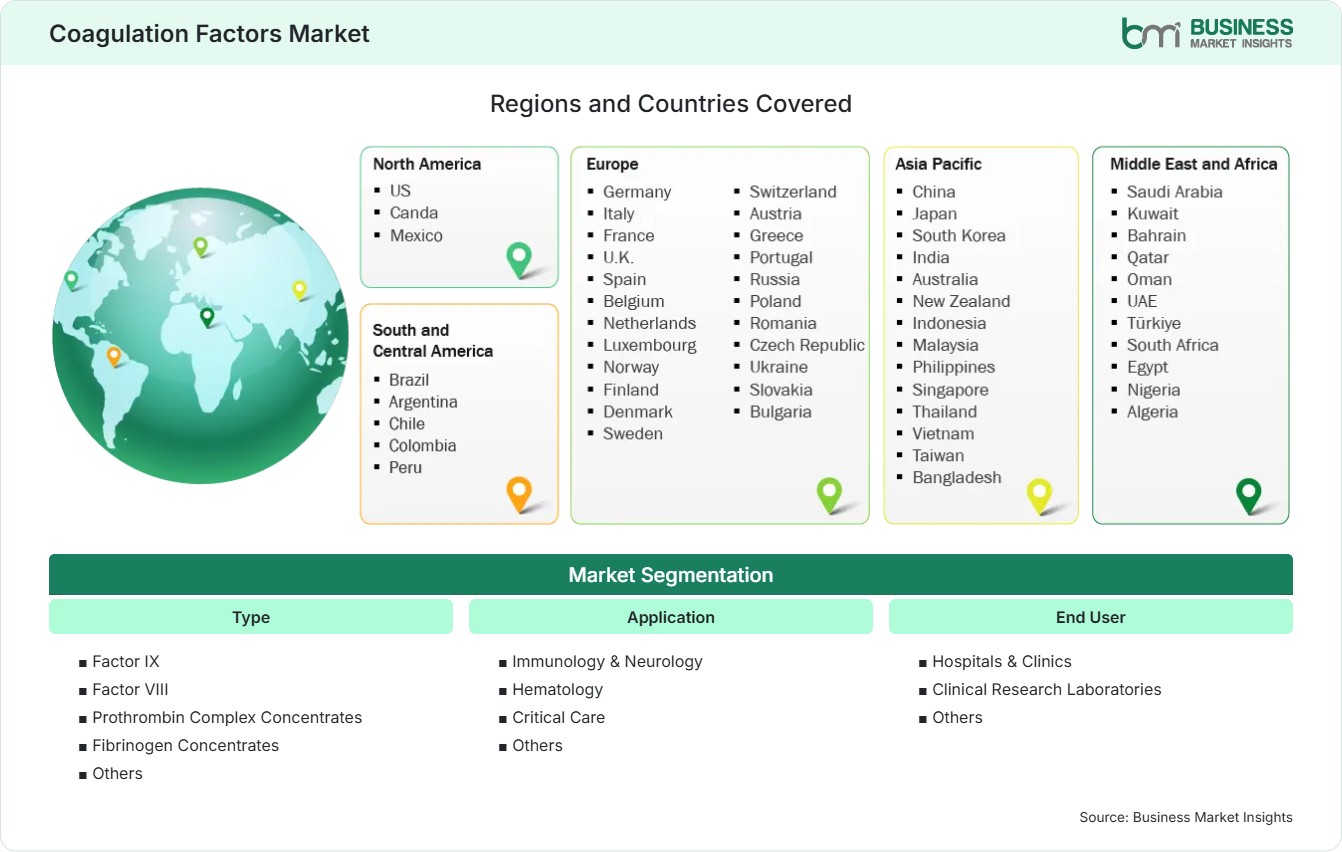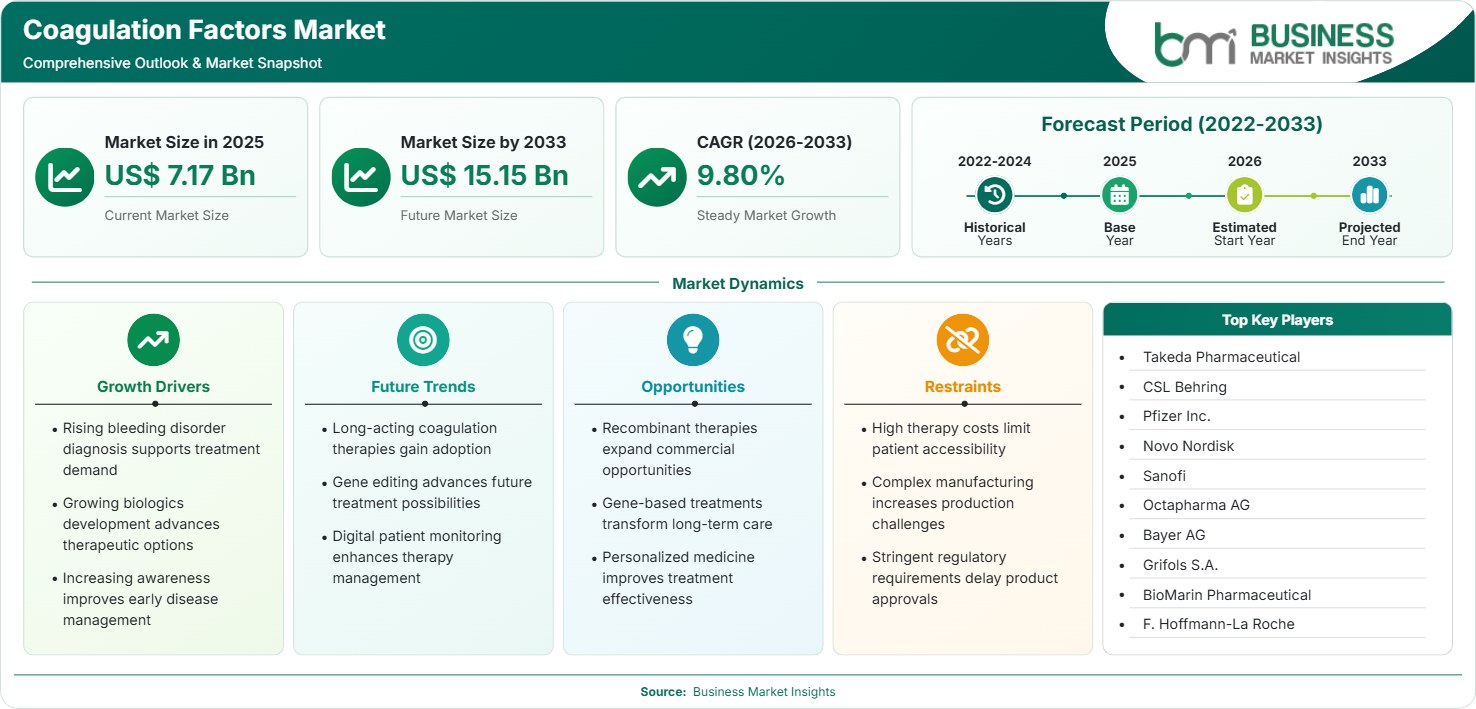
Coagulation Factors Market Regional Highlights
North America Coagulation Factors Market
North America accounts for 38%–41% Coagulation Factors Market share in 2025 and is expected to grow at a CAGR of 9.2%–9.7% during 2026–2033. The region benefits from advanced hematology infrastructure, high adoption of biologic therapies, established reimbursement systems, and strong research activity. The United States represents the dominant contributor, supported by specialized hemophilia centers, pharmaceutical innovation, and increasing availability of advanced treatment options.
- Rising adoption of recombinant coagulation therapies continues improving treatment outcomes for hemophilia patients.
- Strong healthcare reimbursement systems support access to expensive specialty treatments.
- Pharmaceutical research investments accelerate development of next-generation coagulation products.
- Advanced diagnostic capabilities enable earlier detection and management of bleeding disorders.
US Coagulation Factors Market
The United States contributes 82%–85% of North American demand and is projected to expand at a CAGR of 9.3%–9.8% through 2033. Strong clinical infrastructure, high healthcare expenditure, and rapid adoption of innovative therapies continue supporting market development. The presence of leading pharmaceutical companies and specialized treatment centers further strengthens commercialization opportunities.
- Hemophilia treatment programs continue expanding through specialized healthcare networks.
- Increasing clinical research activities support development of advanced coagulation therapies.
- Favorable reimbursement mechanisms improve patient access to specialty medicines.
- Biotechnology investments accelerate commercialization of innovative treatment approaches.
Europe Coagulation Factors Market
Europe represents 28%–31% market share in 2025 and is expected to register a CAGR of 8.9%–9.5% during 2026–2033. Strong public healthcare systems, increasing rare disease awareness, and supportive regulatory frameworks contribute to regional growth. Germany, the United Kingdom, and France remain key markets due to advanced healthcare infrastructure and established hematology treatment networks.
- European healthcare systems continue improving access to rare disease therapies.
- Regulatory support encourages development of innovative biological treatment solutions.
- Increasing patient monitoring programs improve long-term disease management.
- Research collaborations support advancement of personalized coagulation therapies.
Asia Pacific Coagulation Factors Market
Asia Pacific holds 22%–25% market share in 2025 and is projected to achieve the highest CAGR of 10.5%–11.1% during 2026–2033. Expanding healthcare infrastructure, rising diagnosis rates, and increasing awareness of bleeding disorders are supporting regional growth. China, India, and Japan are major contributors, with growing investments in specialty healthcare and biotechnology development.
- Improving diagnostic capabilities increase identification of previously untreated patients.
- Healthcare modernization supports adoption of advanced coagulation therapies.
- Local pharmaceutical production strengthens regional treatment availability.
- Rising healthcare expenditure creates new opportunities for specialty medicines.
Rest of World Coagulation Factors Market
The Rest of World region accounts for 5%–8% market share in 2025 and is expected to grow at a CAGR of 9.6%–10.2% during 2026–2033. Latin America, the Middle East, and Africa are improving healthcare access through investments in specialty treatment infrastructure and disease awareness programs. Expanding healthcare partnerships are supporting broader availability of coagulation therapies.
- Brazil and Mexico represent important Latin American markets due to improving healthcare access.
- Middle Eastern countries are investing in advanced specialty care facilities.
- Healthcare initiatives improve diagnosis rates across developing economies.
- International partnerships support availability of rare disease treatments.