Cloning Mutagenesis Market Regional Highlights
North America Cloning Mutagenesis Market
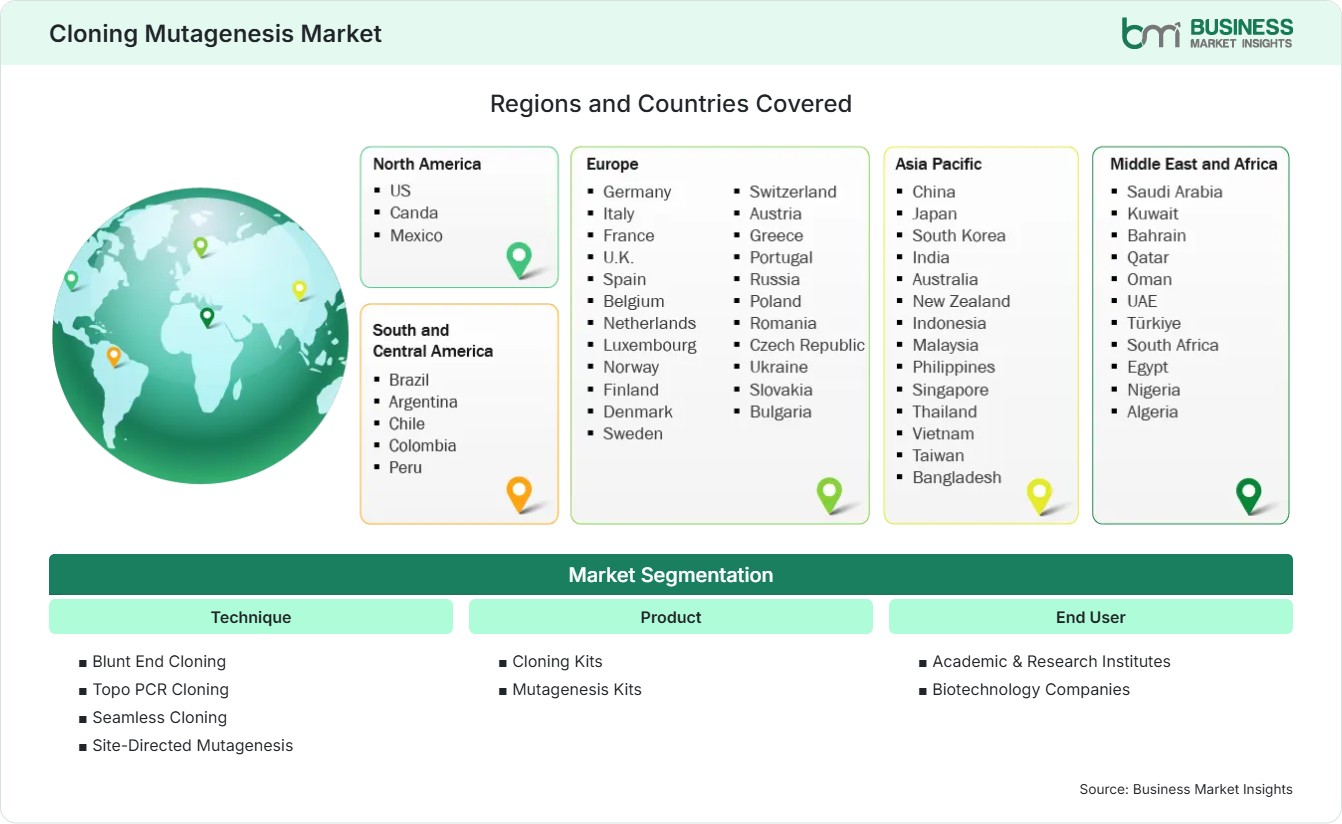
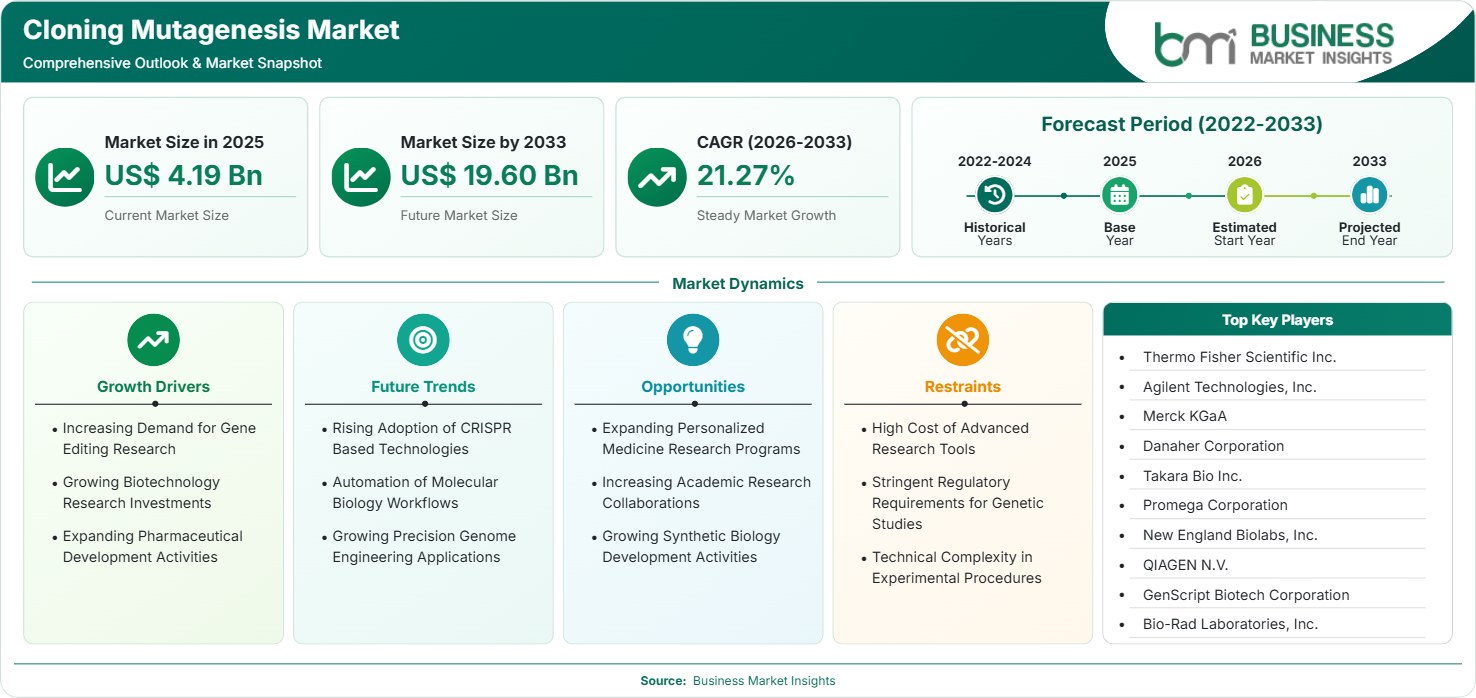
North America accounted for 38%–41% share in 2025 and is projected to expand at a CAGR of 20.0%–21.5% during 2026–2033. The region maintains leadership due to advanced biotechnology infrastructure, strong academic research networks, and significant pharmaceutical R&D expenditure. The Cloning Mutagenesis Market share in North America is supported by widespread adoption of molecular biology tools, increasing gene therapy programs, and collaborations between research institutes and biotechnology companies.
- The US biotechnology ecosystem drives adoption through extensive genomic research, pharmaceutical innovation, and demand for high-precision molecular engineering platforms.
- Canada is expanding life science research capabilities through government-supported biotechnology programs and increasing investments in advanced genetic technologies.
- Academic institutions across North America are adopting advanced cloning workflows to accelerate molecular discovery and biological research activities.
- Pharmaceutical companies are increasing investments in biologics and gene-based therapies, supporting demand for accurate mutagenesis solutions.
- Strong presence of leading technology providers enables continuous innovation in cloning kits, reagents, and automated research platforms.
US Cloning Mutagenesis Market
The US represented 32%–35% share of the global market in 2025 and is expected to register a CAGR of 20.5%–22.0% during 2026–2033. The country benefits from strong biotechnology commercialization, extensive genomic research funding, and a mature pharmaceutical development ecosystem. The US Cloning Mutagenesis Market demonstrates increasing usage in drug discovery, synthetic biology, and academic research applications supported by advanced laboratory infrastructure.
- Major pharmaceutical and biotechnology companies are expanding genetic engineering programs, increasing demand for advanced cloning and mutagenesis technologies.
- Federal and private research funding supports molecular biology innovation across universities, medical institutions, and biotechnology startups.
- Growing adoption of precision medicine approaches is increasing requirements for reliable genetic modification and validation workflows.
- Research laboratories are integrating automation technologies to improve efficiency, reproducibility, and scalability of cloning procedures.
Europe Cloning Mutagenesis Market
Europe held 23%–26% share in 2025 and is projected to grow at a CAGR of 19.0%–20.5% during 2026–2033. The region benefits from established life science research infrastructure, biotechnology innovation programs, and strong regulatory frameworks supporting genetic research. Germany, the United Kingdom, and France remain leading contributors, while Switzerland and the Netherlands demonstrate increasing biotechnology investment. The market growth in Europe is influenced by expanding pharmaceutical research and molecular diagnostics.
- Germany’s biotechnology sector supports adoption through advanced research institutions, pharmaceutical development, and molecular engineering applications.
- The United Kingdom is strengthening genomics capabilities through research collaborations and investments in biotechnology innovation platforms.
- France is expanding genetic research activities through pharmaceutical partnerships and academic biotechnology initiatives.
- Switzerland’s life science industry contributes through advanced therapeutic research and precision medicine development programs.
- European regulatory support for innovative healthcare technologies encourages adoption of advanced molecular biology tools.
Asia Pacific Cloning Mutagenesis Market
Asia Pacific represented 27%–30% share in 2025 and is anticipated to achieve a CAGR of 22.5%–24.0% from 2026–2033. The region is the fastest-growing market due to biotechnology expansion, pharmaceutical manufacturing growth, and increasing research investments. China, Japan, South Korea, and India are major contributors, with China and South Korea demonstrating rapid technology adoption. The Cloning Mutagenesis Market share is increasing through expanding scientific capabilities.
- China’s biotechnology sector is increasing demand for molecular engineering tools through pharmaceutical innovation and genomics research expansion.
- Japan’s advanced life science research ecosystem supports adoption of cloning technologies in therapeutic and academic applications.
- South Korea is investing in biotechnology infrastructure, supporting genetic engineering research and biologics development initiatives.
- India is strengthening biotechnology capabilities through expanding pharmaceutical research and increasing academic laboratory investments.
- Regional governments are supporting life science innovation through funding programs and biotechnology development strategies.
Rest of World Cloning Mutagenesis Market
South and Central America together with Middle East and Africa accounted for 8%–11% share in 2025 and are expected to expand at a CAGR of 18.0%–19.5% during 2026–2033. Growth is supported by improving research infrastructure, healthcare modernization, and biotechnology adoption. Brazil, Mexico, the UAE, and South Africa are emerging markets investing in scientific capabilities and pharmaceutical development.
Regional biotechnology development is creating opportunities for technology suppliers through partnerships with universities, research centers, and healthcare organizations. Increasing focus on genomic research and biological innovation is improving adoption prospects across developing markets.
- Brazil is expanding biotechnology research capabilities through academic initiatives and increasing investment in molecular biology infrastructure.
- Mexico benefits from pharmaceutical manufacturing growth, supporting adoption of advanced genetic engineering tools.
- Middle Eastern countries are investing in research centers and healthcare innovation programs requiring advanced laboratory technologies.
- South Africa is developing biotechnology capabilities through academic research and life science collaborations.
- International partnerships are improving access to advanced cloning and mutagenesis technologies across emerging economies.