Centrifugal Compressor Market Regional Highlights
North America Centrifugal Compressor Market
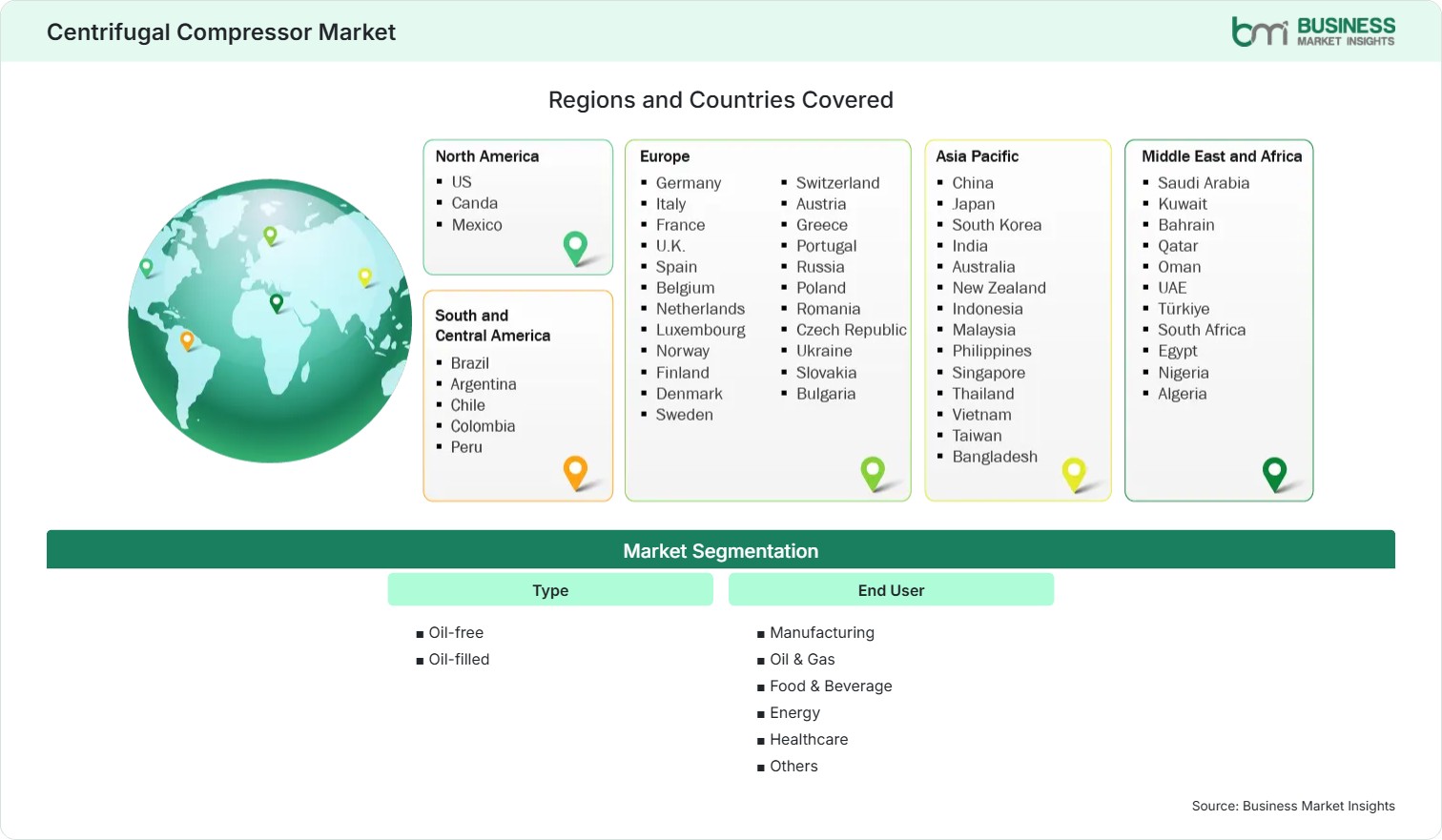
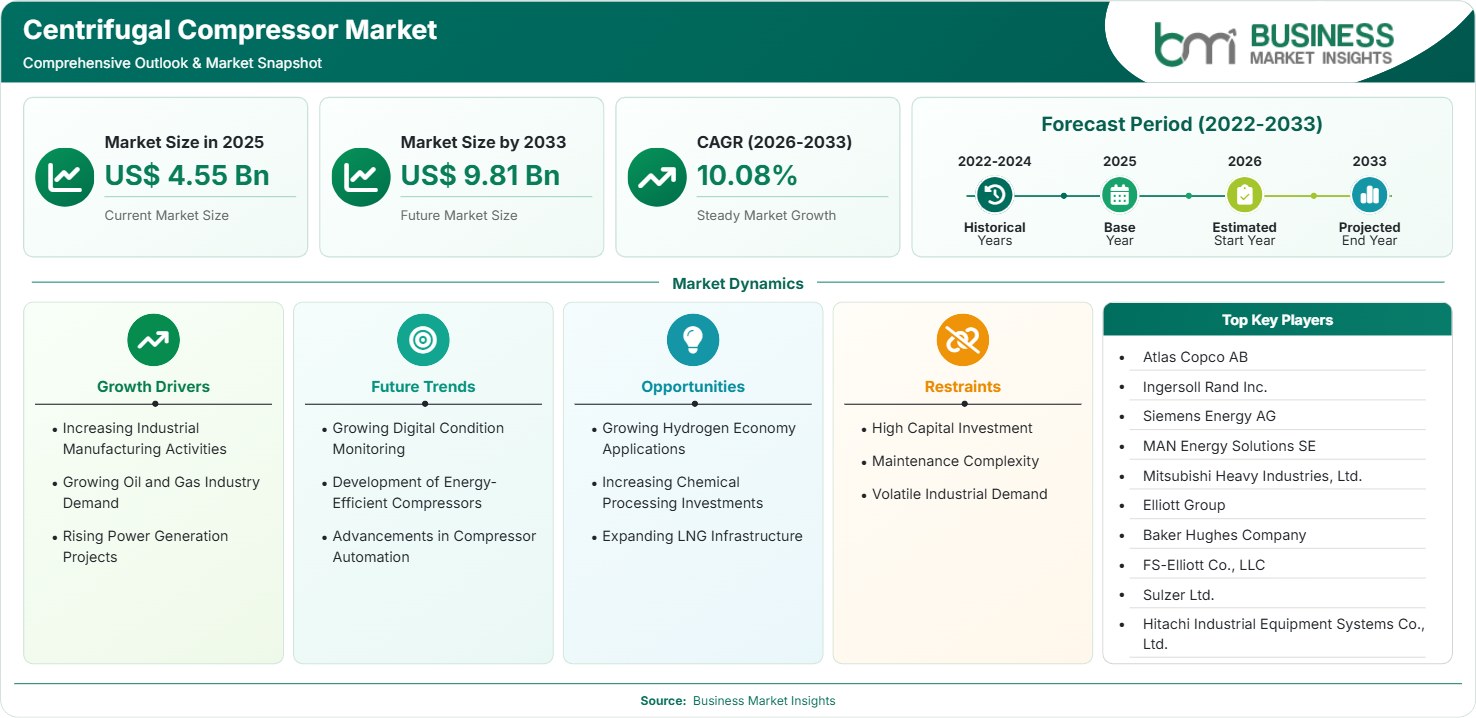
North America accounted for a 32%–36% share in 2025 and is projected to expand at a CAGR of 9.50%–10.20% during 2026–2033. The region benefits from established energy infrastructure, refinery upgrades, industrial automation, and increasing investments in hydrogen and LNG projects. The Centrifugal Compressor Market share remains supported by replacement demand and modernization initiatives across manufacturing facilities. The United States and Canada are major contributors due to advanced industrial operations and energy transition programs.
- Rising LNG infrastructure investments are increasing compressor demand across North American energy facilities, with operators prioritizing efficient systems capable of supporting high-volume gas processing and transportation requirements.
- Industrial manufacturers are adopting digitally enabled compression systems to improve operational efficiency, reduce maintenance costs, and enhance equipment reliability through predictive analytics and remote monitoring capabilities.
- Hydrogen development initiatives are creating opportunities for advanced compressor technologies designed for clean energy applications, supporting investments in next-generation industrial compression solutions.
- Refinery modernization projects are driving replacement demand as companies upgrade aging equipment with energy-efficient systems that meet evolving environmental performance requirements.
US Centrifugal Compressor Market
The United States represented a 26%–30% share of the North American region in 2025, expanding at a CAGR of 9.70%–10.30% through 2033. Strong demand originates from natural gas processing, petrochemical facilities, power generation, and advanced manufacturing sectors. The country’s industrial base supports continuous adoption of efficient compression systems. Growing energy transition investments are also encouraging deployment in hydrogen, carbon management, and renewable energy infrastructure projects.
- Expansion of natural gas processing facilities is supporting demand for high-capacity compressors capable of maintaining stable operations across upstream and midstream applications.
- Manufacturing companies are upgrading production facilities with energy-efficient equipment to improve productivity and align with industrial sustainability objectives.
- Government-supported clean energy programs are encouraging investments in hydrogen-related compression technologies and specialized industrial equipment.
- Service providers are expanding maintenance networks to support installed compressor fleets and improve lifecycle performance for industrial customers.
Europe Centrifugal Compressor Market
Europe held a 27%–31% share in 2025 and is expected to grow at a CAGR of 9.80%–10.40% between 2026–2033. The region’s demand is supported by industrial decarbonization, renewable energy integration, and modernization of chemical and manufacturing facilities. Germany, France, the United Kingdom, and Italy represent leading markets, while hydrogen infrastructure development is accelerating adoption. The market share is influenced by stringent efficiency regulations and sustainability-focused industrial investments.
- Germany continues to drive demand through advanced manufacturing, chemical processing, and industrial automation applications requiring reliable compression solutions.
- Hydrogen economy investments across Europe are creating new opportunities for specialized compressors supporting storage, transportation, and production infrastructure.
- Chemical and pharmaceutical industries are adopting advanced systems to improve process efficiency and meet strict operational standards.
- Energy transition policies are encouraging industries to replace inefficient equipment with modern, digitally controlled compression technologies.
Asia Pacific Centrifugal Compressor Market
Asia Pacific captured a 34%–38% share in 2025 and is projected to record a CAGR of 10.80%–11.40% during 2026–2033. The region represents the fastest-growing market due to rapid industrialization, expanding manufacturing capacity, and infrastructure investments. China, India, Japan, and South Korea are major contributors. The Centrifugal Compressor Market growth in this region is supported by petrochemical expansion, power generation projects, and increasing demand for energy-efficient industrial equipment.
- China’s expanding industrial manufacturing base is generating demand for large-scale compression systems across chemical, energy, and processing industries.
- India’s infrastructure development and rising manufacturing investments are supporting adoption of advanced industrial equipment with improved efficiency.
- Japan and South Korea are focusing on hydrogen and clean energy applications, creating opportunities for specialized compressor technologies.
- Southeast Asian economies are attracting industrial investments requiring reliable compression systems for new manufacturing and energy facilities.
Rest of World Centrifugal Compressor Market
South and Central America, along with the Middle East and Africa, represented a 10%–14% share in 2025 and are anticipated to grow at a CAGR of 8.80%–9.60% during 2026–2033. Brazil, Saudi Arabia, the United Arab Emirates, and South Africa are key markets due to energy investments and industrial expansion. The Centrifugal Compressor Market share in these regions is supported by oil and gas projects, mining operations, and infrastructure development.
- Middle Eastern countries are investing in LNG, petrochemical, and hydrogen projects requiring high-performance compression systems for large-scale industrial operations.
- Brazil’s energy sector modernization and industrial expansion are supporting demand for efficient compressor solutions across multiple applications.
- African industrial development programs are increasing adoption of compression technologies in energy and manufacturing facilities.
- Regional infrastructure projects are encouraging suppliers to establish stronger service networks and localized support capabilities.