Cement Fly Ash Market Regional Highlights
North America Cement Fly Ash Market
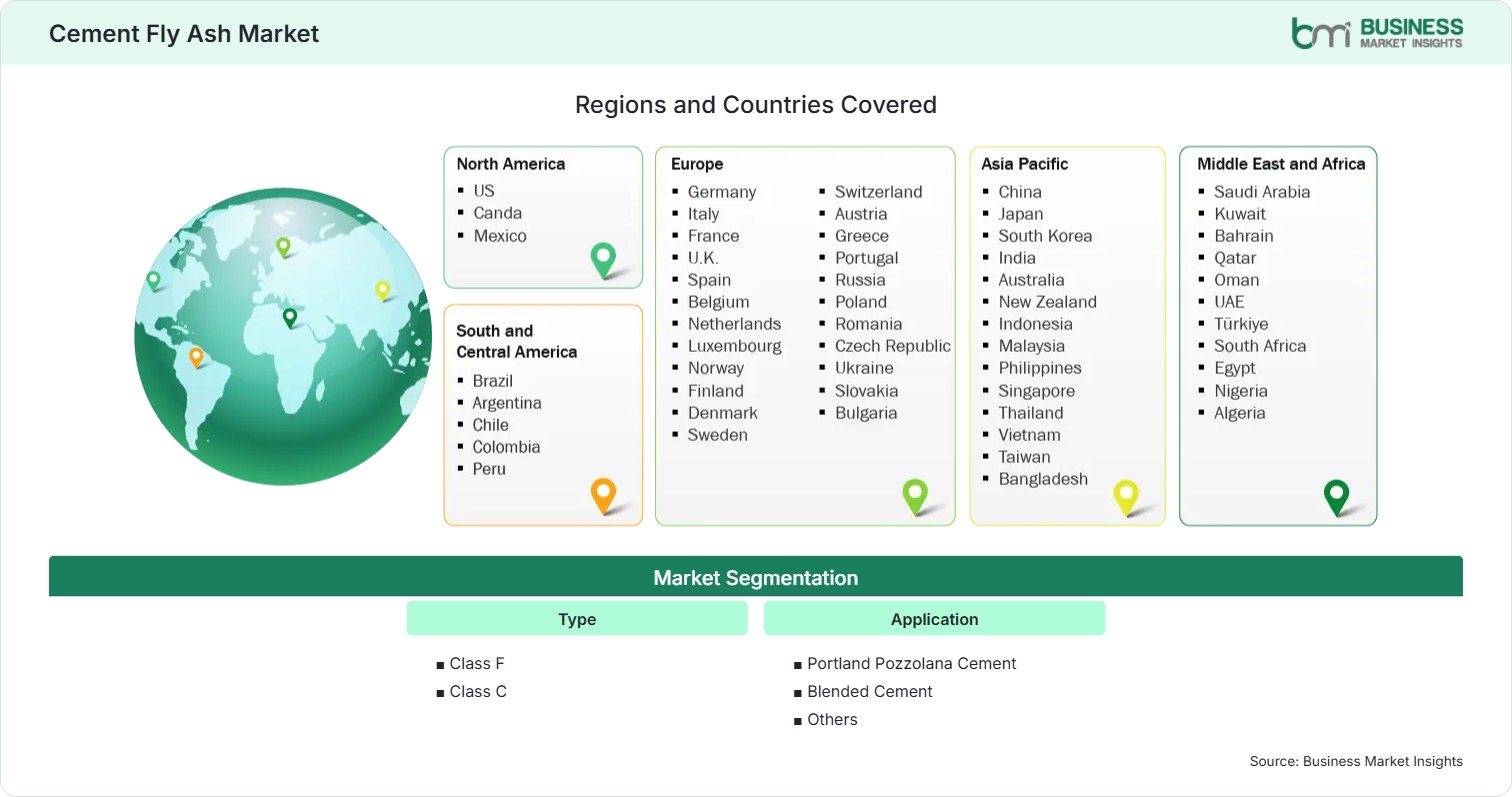
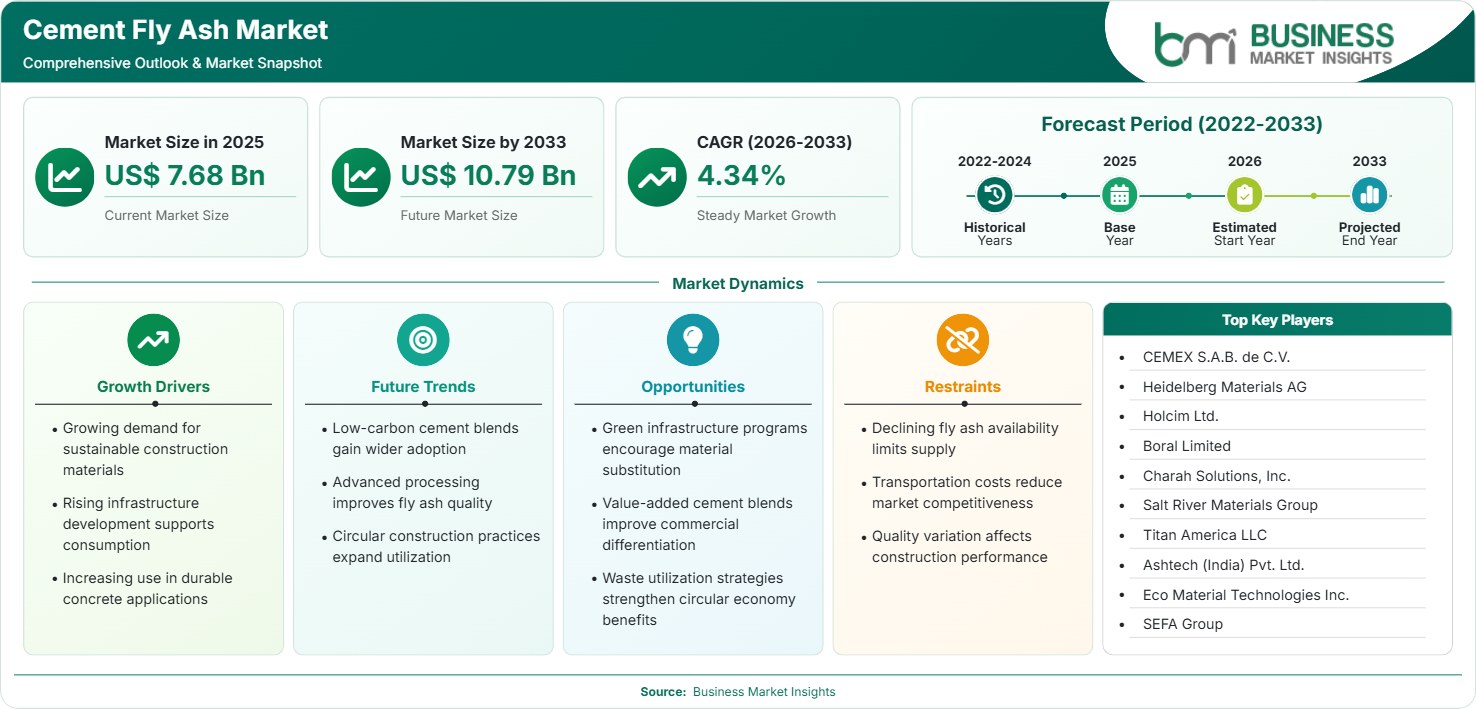
North America accounts for 29%–32% Cement Fly Ash Market share in 2025 and is expected to register a CAGR of 4.1%–4.5% during 2026–2033. Growing investment in transportation infrastructure, commercial developments, and sustainable construction continues supporting demand for fly ash-based cement products. Regulatory emphasis on reducing carbon emissions and increasing the use of supplementary cementitious materials further strengthens market expansion across the region.
- Infrastructure rehabilitation projects continue increasing consumption of blended cement products with enhanced durability and lower environmental impact.
- Public investment in highways, bridges, airports, and utility projects supports wider adoption of fly ash in concrete production.
- Cement manufacturers continue investing in processing technologies that improve fly ash quality and production consistency.
- Sustainability commitments encourage contractors to incorporate environmentally responsible construction materials into large public infrastructure projects.
US Cement Fly Ash Market
The United States contributes 81%–84% of North American revenue and is forecast to expand at a CAGR of 4.2%–4.6% during 2026–2033. Strong federal infrastructure investment, modernization of transportation networks, and growing emphasis on sustainable construction continue supporting long-term market development.
- Highway and bridge modernization projects increase demand for durable blended cement products.
- Cement producers continue expanding supplementary cementitious material processing capacity.
- Sustainability initiatives encourage broader use of low-carbon construction materials.
- Commercial construction remains an important contributor to regional cement consumption.
Europe Cement Fly Ash Market
Europe represents 23%–26% market share in 2025 and is expected to record a CAGR of 3.9%–4.3% during the forecast period. Carbon reduction policies, circular economy objectives, and strict environmental regulations continue encouraging wider use of fly ash in cement production. Germany remains the leading regional market, while Poland records the fastest growth through expanding infrastructure modernization and industrial development.
- Carbon reduction targets continue supporting adoption of supplementary cementitious materials.
- Infrastructure renovation projects increase demand for durable blended cement formulations.
- Manufacturers invest in sustainable cement technologies to reduce clinker consumption.
- Circular economy strategies encourage productive utilization of industrial by-products.
Asia Pacific Cement Fly Ash Market
Asia Pacific holds 42%–45% market share in 2025 and is projected to achieve the fastest 4.8%–5.3% CAGR through 2026–2033. Rapid urbanization, large infrastructure investments, industrial expansion, and increasing residential construction continue driving regional demand. China remains the largest consumer, while India records the strongest growth owing to expanding transportation and housing development projects.
- Government-funded infrastructure projects continue driving blended cement demand.
- Urban housing developments increase consumption of durable concrete materials.
- Cement manufacturers invest in advanced fly ash processing and quality improvement technologies.
- Sustainable construction policies encourage higher utilization of industrial waste materials.
Rest of World Cement Fly Ash Market
The Rest of World region accounts for 6%–9% market share in 2025 and is expected to register a CAGR of 4.2%–4.7% during 2026–2033. Growing infrastructure investment, industrial development, and urban expansion continue supporting demand across Latin America, the Middle East, and Africa.
- Brazil leads regional demand through ongoing infrastructure and commercial construction projects.
- GCC countries increasingly adopt sustainable cement materials for large-scale development projects.
- Industrial diversification supports higher consumption of blended cement products.
- Investments in transportation and public infrastructure continue strengthening long-term regional demand.
Top of Form
Bottom of Form