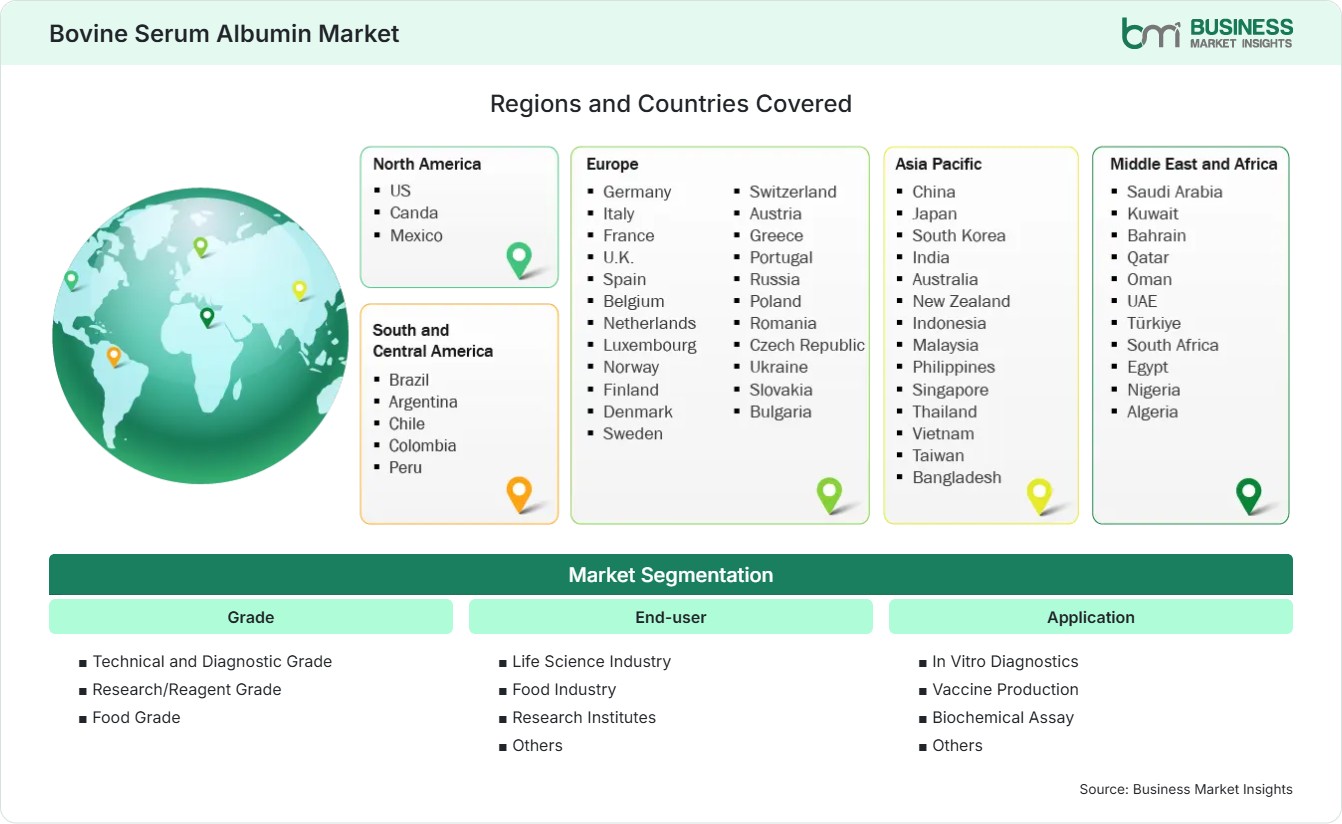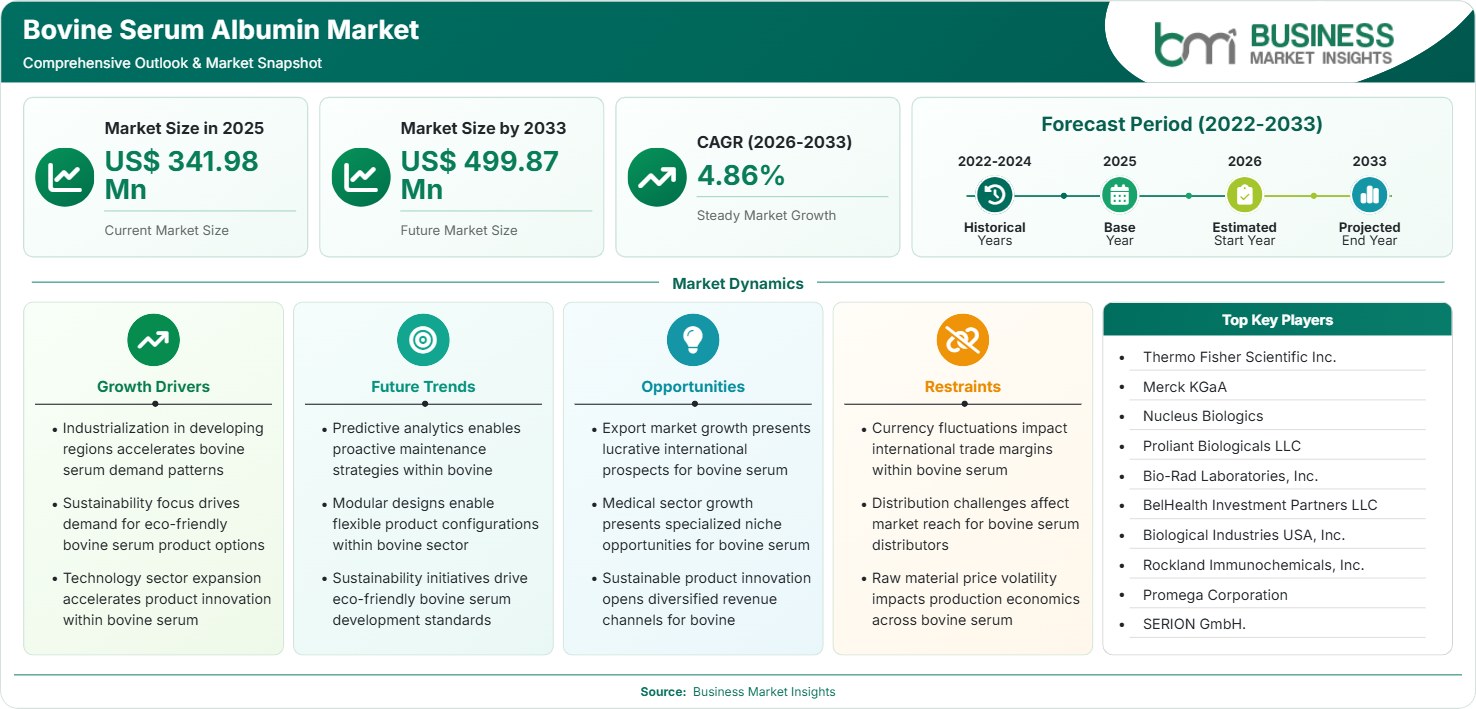
Bovine Serum Albumin Market Regional Highlights
North America Bovine Serum Albumin Market
North America accounts for approximately 38%–41% of the global Bovine Serum Albumin Market demand in 2025 and is projected to expand at a CAGR of 4.4%–4.8% through 2033. The region benefits from advanced biotechnology infrastructure, strong pharmaceutical manufacturing activity, and extensive academic research networks. Growth is supported by biologics development programs, increasing laboratory spending, and sustained demand for diagnostic reagents. Regulatory oversight and quality-focused procurement practices continue encouraging adoption of premium-grade albumin products across commercial and institutional end users.
- Extensive biologics manufacturing facilities across the United States and Canada support continuous demand for high-purity ingredients used in cell culture, protein stabilization, and vaccine production applications.
- Research funding from federal agencies and private organizations supports innovation activities requiring reliable laboratory-grade protein products and standardized reagents for reproducible scientific outcomes.
- Expansion of personalized medicine programs increases demand for analytical testing and diagnostic platforms incorporating specialized biochemical reagents and protein stabilizers.
- Strong quality assurance requirements encourage procurement of highly characterized products with comprehensive documentation, traceability records, and regulatory compliance credentials.
US Bovine Serum Albumin Market
The United States represents approximately 78%–82% of regional consumption and is forecast to grow at a CAGR of 4.5%–4.9% through 2033. Large-scale pharmaceutical manufacturing, advanced biotechnology research, and strong clinical trial activity sustain product demand. The country hosts numerous biologics developers, contract manufacturing organizations, and research institutions requiring premium-grade protein products. Bovine Serum Albumin Market share remains concentrated within life science and pharmaceutical applications where consistency, purity, and regulatory compliance remain critical procurement considerations.
- Expanding biologics pipelines increase requirements for raw materials supporting formulation development, cell culture processes, and analytical testing throughout product development lifecycles.
- Federal investments in biomedical research continue supporting laboratory activities requiring validated protein reagents and standardized assay components across multiple disciplines.
- Growing diagnostic testing volumes strengthen demand for albumin-based stabilizers used in immunoassays, calibration systems, and quality control materials.
- Contract development and manufacturing organizations are expanding production capabilities, increasing procurement of high-quality ingredients supporting commercial-scale operations.
Europe Bovine Serum Albumin Market
Europe holds approximately 28%–31% Bovine Serum Albumin Market share in 2025 and is expected to expand at a CAGR of 4.3%–4.7% through 2033. Strong pharmaceutical manufacturing capabilities, advanced academic research ecosystems, and established diagnostic industries support demand. Germany leads regional consumption with growth near 4.6%–5.0%, while Ireland and selected Nordic countries demonstrate comparatively faster expansion. Investments in biopharmaceutical production and research infrastructure continue strengthening regional competitiveness across scientific and commercial applications.
- Germany's pharmaceutical and biotechnology industries maintain significant procurement volumes due to extensive biologics production and research activities.
- European research institutions increasingly emphasize reproducibility standards, supporting demand for highly characterized laboratory reagents and protein products.
- Regulatory requirements regarding quality documentation encourage suppliers to invest in advanced purification technologies and traceability systems.
- Expansion of vaccine research programs across several countries supports increased utilization in formulation and production processes.
- Contract manufacturing growth across Ireland and Central Europe creates additional opportunities for specialty protein suppliers.
Asia Pacific Bovine Serum Albumin Market
Asia Pacific captures 24%–27% of global Bovine Serum Albumin Market demand in 2025 and records the fastest CAGR of 5.8%–6.4% through 2033. China remains the leading regional market, while India demonstrates the highest growth trajectory. Expanding biotechnology investments, increasing vaccine manufacturing capacity, and rising government support for scientific research contribute to strong demand. Pharmaceutical localization strategies and growing contract manufacturing activities further enhance consumption across academic, clinical, and industrial applications throughout the region.
- China continues investing heavily in biotechnology infrastructure, supporting demand for cell culture ingredients and laboratory reagents.
- India’s rapidly expanding vaccine manufacturing industry increases procurement requirements for high-quality biochemical materials and production inputs.
- Rising research expenditure across universities and public institutions supports adoption of laboratory-grade protein products.
- Growing biosimilar development activities create opportunities for suppliers serving pharmaceutical research and manufacturing programs.
- Regional governments are promoting domestic biotechnology innovation through funding programs and infrastructure investments.
Regional Trends and Share Analysis (Continued)
Rest of World Bovine Serum Albumin Market
The Rest of World region accounts for approximately 8%–11% of global Bovine Serum Albumin Market demand in 2025 and is projected to expand at a CAGR of 4.7%–5.2% through 2033. South & Central America benefits from growing pharmaceutical production and research investments, while the Middle East & Africa gains momentum from healthcare modernization initiatives. Expanding diagnostic capabilities, vaccine manufacturing ambitions, and increasing biotechnology collaborations support regional adoption. Governments and private investors continue funding laboratory infrastructure and life science development programs.
South & Central America is led by Brazil, supported by pharmaceutical manufacturing and public health research activities. The Middle East & Africa region sees increasing participation from the United Arab Emirates and Saudi Arabia through biotechnology investments and healthcare diversification strategies.
- Brazil's expanding pharmaceutical sector supports demand for laboratory reagents and biologics manufacturing inputs across research and commercial facilities.
- Healthcare modernization programs across Gulf countries are encouraging investment in biotechnology laboratories and diagnostic infrastructure.
- International partnerships support technology transfer initiatives and strengthen access to advanced life science materials.
- Growth in public health preparedness programs encourages procurement of vaccine-related production materials and testing reagents.
- Expanding university research networks contribute to steady adoption of specialized protein products across scientific disciplines.